


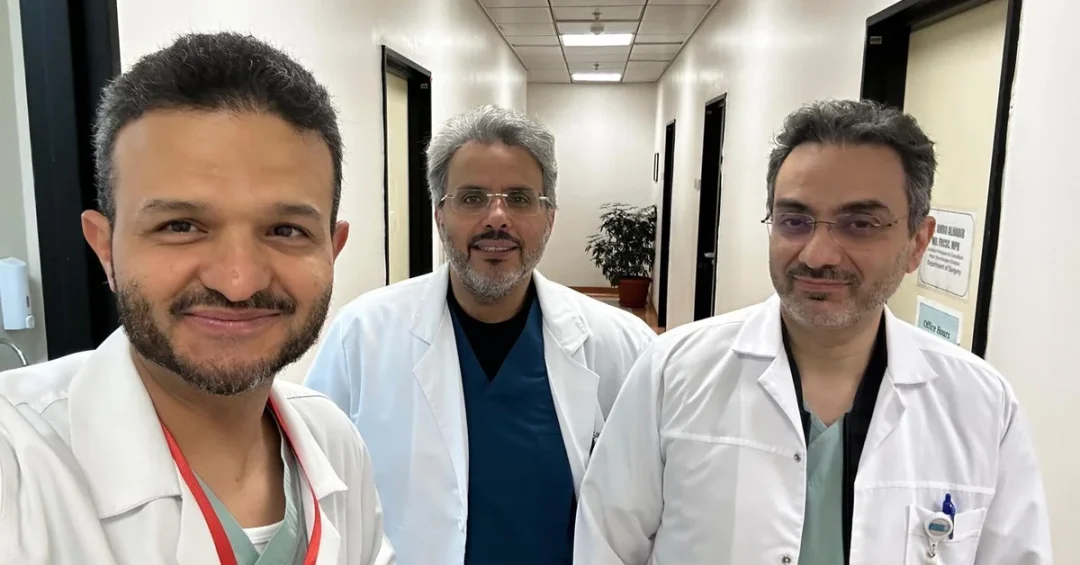
A Saudi medical team has developed a groundbreaking supportive surgical implant to facilitate procedures related to neck spine conditions, marking a significant milestone for the Kingdom’s medical sector, the Saudi Press Agency reported on January 14, 2025. The team, comprising Spinal Surgery Consultant Dr. Amro Faiz Al Habib and Pediatric Surgery Consultant Dr. Ayman Hassan Al Jazaeri from King Saud University Medical City, along with Spinal Surgery Consultant Dr. Sami Ibrahim Al-Issa from King Abdulaziz Medical City, conducted the first intricate surgery using the new implant on a man in his forties. The patient, who had been experiencing spinal stenosis in his neck vertebrae, causing hand numbness, weakness, balance issues, difficulty walking, and severe neck pain, showed significant improvement post-surgery. His neck pain disappeared, and he regained the ability to walk normally.
Could a single innovation transform how surgeons around the world treat one of the most delicate regions of the human body? The answer, according to official Saudi sources, appears to be yes. This advanced technique surpasses the latest global methods in the field, simplifying the surgical procedure and reducing associated complications. It eliminates the need for both anterior and posterior surgeries, which can increase risks and prolong recovery time. The surgical implant took approximately seven years to develop, during which the team progressed through different stages, from the initial concept to creating preliminary and secondary designs, manufacturing multiple prototypes, and conducting essential tests to ensure safety and effectiveness. The medical team later secured a license from the Saudi Food and Drug Authority for clinical use of the device, making it the first locally developed precision device to receive such approval. Furthermore, the team has obtained two patents from the United States Patent and Trademark Office and is currently collaborating with specialized medical firms to market the device globally.
Context and Background
Why does a breakthrough in spinal surgery matter so much for patients in Saudi Arabia and beyond? Cervical spinal stenosis is a condition in which the spinal canal narrows and compresses the spinal cord or nerve roots in the neck. It affects millions of people worldwide, particularly adults over the age of fifty, and can lead to debilitating symptoms including chronic pain, loss of coordination, and in severe cases, paralysis. Traditional surgical treatment for complex cases often requires a combined approach: an anterior procedure through the front of the neck and a posterior procedure through the back. This dual approach, while effective, carries higher risks of infection, longer operating times, and extended hospital stays. The new implant developed by the Saudi team addresses these challenges directly by enabling a single, less invasive intervention.
The development of this implant did not happen overnight. It reflects a sustained, seven-year research and development effort led by Saudi clinicians who identified a gap in existing global solutions and set out to fill it. The team moved methodically from concept to prototype, testing multiple designs before arriving at a final version that met rigorous safety and efficacy standards. The Saudi Food and Drug Authority, the Kingdom’s regulatory body for medical devices and pharmaceuticals, granted a license for clinical use after reviewing the evidence. This regulatory milestone is significant because it validates the device not only as an academic exercise but as a practical tool ready for use in operating rooms.
How does this fit into the broader story of Saudi Arabia’s healthcare transformation? Under Vision 2030, the Kingdom has made healthcare a central pillar of its national development strategy. The vision calls for a comprehensive, world-class health system that improves quality of life for citizens and residents while reducing reliance on imported medical technology. The spinal implant project aligns directly with these goals. It demonstrates that Saudi institutions, including King Saud University Medical City and King Abdulaziz Medical City, are not merely consumers of global medical innovation but active creators of it. The collaboration between two major medical cities also highlights the value of interdisciplinary teamwork, bringing together spinal surgery and pediatric surgery expertise to solve a complex problem.
Key Details
What exactly does this new implant do, and how does it improve on existing options? According to official information released via the Saudi Press Agency, the implant is designed to support the cervical spine during surgery for conditions such as spinal stenosis. In the first procedure, the patient was a man in his forties who had been suffering from severe symptoms: numbness in his hands, weakness, balance problems, difficulty walking, and intense neck pain. After the surgery using the new implant, his neck pain disappeared entirely, and he regained the ability to walk normally. These outcomes were described as significant improvements, and they underscore the device’s potential to restore function and quality of life for patients with similar conditions.
The technique’s main advantage is that it eliminates the need for both anterior and posterior surgeries. In conventional treatment, surgeons may need to operate from both the front and back of the neck to fully decompress the spinal cord and stabilize the spine. This dual approach increases surgical trauma, raises the risk of complications such as infection or nerve damage, and requires a longer recovery period. By contrast, the new implant simplifies the procedure, allowing surgeons to achieve the same or better results through a single approach. This reduces operating time, minimizes blood loss, and shortens hospital stays. For patients, that translates into less pain, faster rehabilitation, and a quicker return to normal life.
How did the team ensure the device would be safe and effective? The development process spanned approximately seven years and involved multiple stages. The team began with an initial concept, then created preliminary and secondary designs. They manufactured several prototypes, each time refining the design based on test results. Essential tests were conducted to verify safety and effectiveness before the device could be considered for clinical use. The Saudi Food and Drug Authority license was a critical step, as it confirmed that the implant met the Kingdom’s stringent regulatory requirements. Notably, this is the first locally developed precision device to receive such approval, a distinction that highlights the novelty and quality of the work. The team also secured two patents from the United States Patent and Trademark Office, providing international recognition of the implant’s originality and potential.
International and Regional Impact
What does this breakthrough mean for Saudi Arabia’s standing in the global medical community? The Kingdom has long been a leader in healthcare within the Middle East, but this development signals a shift from excellence in service delivery to excellence in innovation. By creating a device that surpasses current global methods, the Saudi team has positioned the Kingdom as a contributor to the global medical device market. The two United States patents are particularly important because they protect the intellectual property and open the door to international collaboration. The team is already working with specialized medical firms to market the device globally, which could lead to its adoption in hospitals across Asia, Europe, and the Americas. This kind of technology transfer is a hallmark of advanced healthcare ecosystems.
Regionally, the impact could be even more immediate. Countries in the Gulf Cooperation Council and the broader Middle East often rely on imported medical technology. A locally developed, Saudi-made implant offers a more accessible and potentially more affordable option. It also strengthens regional supply chains for critical medical devices, an issue that gained prominence during the COVID-19 pandemic. Moreover, the success of this project could inspire other Saudi clinicians and researchers to pursue their own innovations. When a team from King Saud University Medical City and King Abdulaziz Medical City achieves a world-first, it sends a powerful message that Saudi Arabia has the talent, infrastructure, and regulatory support to bring complex medical technologies from idea to market. That message resonates across the region and beyond.
Economic and Strategic Significance
How does a medical device innovation contribute to Saudi Arabia’s economic diversification? Under Vision 2030, the Kingdom is working to reduce its dependence on oil revenues by developing high-value sectors, including healthcare and biotechnology. The medical device industry is a prime example of a knowledge-intensive, high-growth sector that can create skilled jobs, attract investment, and generate export revenue. By developing and patenting a novel implant, Saudi Arabia is building domestic capacity in a field that has traditionally been dominated by a handful of multinational corporations. The collaboration with specialized medical firms to market the device globally indicates a strategic approach: rather than simply licensing the technology, the team aims to retain a stake in its commercialization, ensuring that the economic benefits flow back to the Kingdom.
Strategically, the implant also enhances Saudi Arabia’s public health resilience. When a country can design and manufacture its own critical medical devices, it is less vulnerable to global supply chain disruptions. This is particularly important for surgical implants, which must meet strict quality standards and are often subject to complex import regulations. A domestically produced, Saudi Food and Drug Authority-approved device provides a reliable alternative. Furthermore, the project showcases the value of the Kingdom’s investment in research and development infrastructure. The seven-year journey from concept to clinical use required sustained funding, access to advanced testing facilities, and a regulatory environment that supports innovation. These are the building blocks of a modern, diversified economy, and the spinal implant is a tangible return on that investment.
Vision 2030 Alignment
How does this achievement connect to the broader ambitions of Vision 2030? The vision’s health sector transformation program aims to improve the quality and efficiency of healthcare, with a focus on innovation and local content. The spinal implant project directly supports these objectives by increasing local content in a high-tech medical field, improving patient outcomes, and elevating the Kingdom’s reputation as a center of medical excellence. It also contributes to the vision’s human capability development goal, as the team members represent the next generation of Saudi medical leaders. Their success demonstrates that Saudi Arabia can nurture and retain top talent, and that Saudi institutions can compete on the world stage.
Looking ahead, what does the future hold for this technology and for Saudi healthcare innovation? The team’s collaboration with specialized medical firms suggests that the implant will soon be available to a wider network of hospitals. As more surgeons use the device, data will accumulate on its performance, potentially leading to further refinements and new applications. The patents from the United States Patent and Trademark Office provide a foundation for international expansion, and the Saudi Food and Drug Authority license serves as a model for how other Saudi innovations can navigate the regulatory pathway. Ultimately, this breakthrough is more than a single device; it is a proof of concept for a new era of Saudi-led medical innovation. It shows that with vision, persistence, and collaboration, the Kingdom can solve complex health challenges and share the benefits with the world. As Saudi Arabia continues its journey toward Vision 2030, achievements like this will be remembered not just for their clinical impact, but for the confidence they instill in a generation of Saudi scientists, doctors, and entrepreneurs.
20 Questions
Q1. What did the Saudi medical team develop?
A1. The team developed a groundbreaking supportive surgical implant to facilitate procedures related to neck spine conditions, marking a significant milestone for the Kingdom’s medical sector.
Q2. Who were the key members of the medical team?
A2. The team included Spinal Surgery Consultant Dr. Amro Faiz Al Habib and Pediatric Surgery Consultant Dr. Ayman Hassan Al Jazaeri from King Saud University Medical City, and Spinal Surgery Consultant Dr. Sami Ibrahim Al-Issa from King Abdulaziz Medical City.
Q3. What condition did the first patient have?
A3. The patient, a man in his forties, had spinal stenosis in his neck vertebrae, causing hand numbness, weakness, balance issues, difficulty walking, and severe neck pain.
Q4. How did the patient improve after surgery?
A4. The patient’s neck pain disappeared, and he regained the ability to walk normally, showing significant improvement post-surgery.
Q5. How does the new implant improve on existing methods?
A5. It surpasses the latest global methods by simplifying the surgical procedure, reducing complications, and eliminating the need for both anterior and posterior surgeries.
Q6. Why is avoiding dual surgery beneficial?
A6. Eliminating the need for both anterior and posterior surgeries reduces risks such as infection, shortens recovery time, and minimizes surgical trauma for patients.
Q7. How long did the implant take to develop?
A7. The surgical implant took approximately seven years to develop, progressing from initial concept to preliminary and secondary designs, prototypes, and essential testing.
Q8. What regulatory approval did the team secure?
A8. The team secured a license from the Saudi Food and Drug Authority for clinical use, making it the first locally developed precision device to receive such approval.
Q9. What international patents were obtained?
A9. The team obtained two patents from the United States Patent and Trademark Office, recognizing the implant’s originality and protecting its intellectual property.
Q10. What are the next steps for the device?
A10. The team is collaborating with specialized medical firms to market the device globally, aiming to make it available to hospitals worldwide.
Q11. What is cervical spinal stenosis?
A11. Cervical spinal stenosis is a condition where the spinal canal narrows and compresses the spinal cord or nerve roots in the neck, causing pain and other symptoms.
Q12. How common is this condition?
A12. It affects millions of people worldwide, particularly adults over fifty, and can lead to debilitating symptoms if left untreated.
Q13. What is the traditional surgical approach for this condition?
A13. Traditional treatment often requires a combined anterior and posterior approach, which carries higher risks, longer operating times, and extended hospital stays.
Q14. How does the new implant change the surgical approach?
A14. It enables a single, less invasive intervention, reducing operating time, blood loss, and hospital stays while improving patient outcomes.
Q15. What role did Saudi Food and Drug Authority play?
A15. The authority reviewed the evidence and granted a license for clinical use, validating the device’s safety and efficacy for practical use in operating rooms.
Q16. How does this align with Vision 2030?
A16. It supports Vision 2030’s health sector transformation by increasing local content, improving patient outcomes, and elevating Saudi Arabia’s reputation for medical excellence.
Q17. What economic benefits could this bring?
A17. It can create skilled jobs, attract investment, generate export revenue, and reduce reliance on imported medical technology, supporting economic diversification.
Q18. How does this impact Saudi Arabia’s global standing?
A18. It positions the Kingdom as a contributor to the global medical device market and showcases Saudi talent and innovation on the world stage.
Q19. What does this mean for patients in the region?
A19. It offers a more accessible and potentially more affordable option, strengthens regional supply chains, and inspires other clinicians to pursue innovations.
Q20. What is the long-term significance of this achievement?
A20. It proves that Saudi Arabia can lead in medical innovation, serving as a model for future breakthroughs and contributing to the Kingdom’s Vision 2030 goals.
Reader Feedback
We value your thoughts. Please share your feedback on this article.
Your feedback helps us improve our coverage.
Related articles
 Saudi Red Crescent Showcases Advanced Technologies for Pilgrims at Hajj Conference
 Over 100 Health Practitioners Complete SDAIA/KSU AI Program
 KFSHRC Launches Precision Medicine in Family Clinics
 Tarshid Launches Energy Efficiency Project at Al-Qurayyat General Hospital
 12 Families Donate Organs, Saving 24 Lives in Saudi Arabia
 KSrelief-Backed Dialysis Center in Yemen Serves 126 in December