


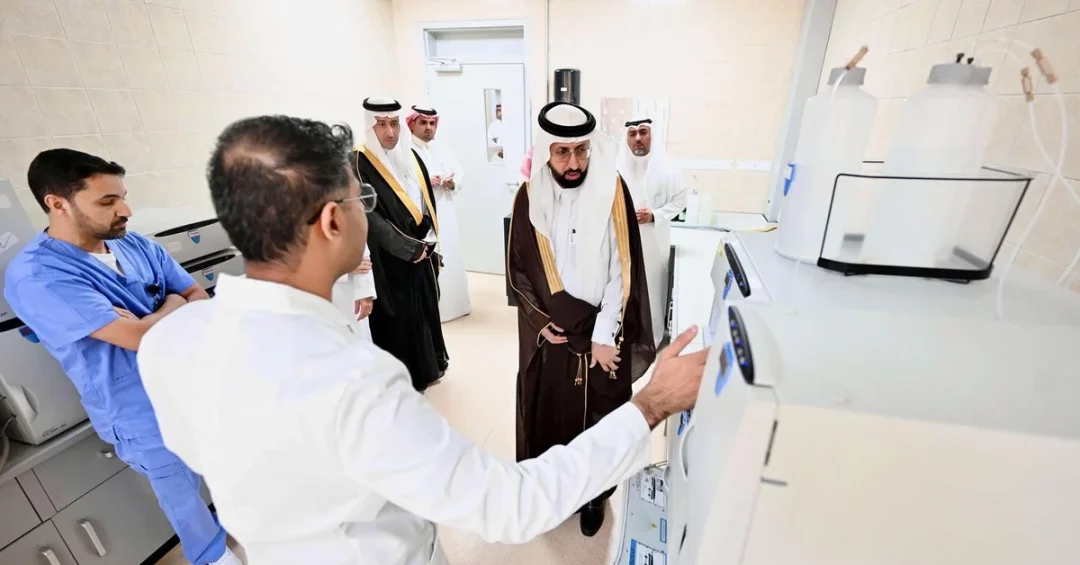
The Chief Executive Officer of the Saudi Food and Drug Authority (SFDA), Dr. Hisham Aljadhey, conducted an official inspection visit to several of the authority’s facilities in Jeddah, including its regional branch office, to monitor operational progress and confirm the effectiveness of the Kingdom’s product safety safeguards. The visit, reported by the Saudi Press Agency (SPA), forms part of the SFDA’s continuing program of field oversight, through which senior leadership reviews the performance of laboratories, inspection teams, and service centers that protect consumers across Saudi Arabia. Dr. Aljadhey was briefed on site on laboratory initiatives dedicated to detecting mycotoxins, including aflatoxin, contaminants that can develop in food commodities when storage conditions are not properly controlled.
Why does a single leadership visit to Jeddah matter for consumers thousands of kilometers away? Because the SFDA sits at the center of a national system that regulates food, drugs, medical devices, and cosmetics entering one of the Middle East’s largest and fastest-growing markets. Jeddah, home to the Red Sea port that handles a substantial share of the Kingdom’s inbound cargo, is a critical checkpoint in that system. During the visit, the CEO underscored the importance of employing qualified personnel and using advanced equipment to prevent non-compliant products from reaching local markets, and he reaffirmed the authority’s commitment to improving service quality and enhancing the customer experience as part of its ongoing efforts to elevate performance standards. The inspection reflects a hands-on management style that Saudi officials have increasingly emphasized as the Kingdom modernizes its regulatory institutions under Vision 2030.
Context and Background
What stands behind the SFDA’s decision to conduct such inspections at the highest level? The authority was established in 2003 as the Kingdom’s independent regulator for food, drugs, medical devices, and other health products, and it has since grown into one of the region’s most active agencies of its kind. Its mandate covers the entire product lifecycle, from import licensing and factory inspection to market surveillance, laboratory testing, and recall enforcement. The Jeddah branch is one of several regional offices that extend the authority’s reach beyond its Riyadh headquarters, placing inspectors and scientists closer to ports, warehouses, and distribution hubs where risks most often emerge. By visiting these facilities in person, the CEO can assess whether national standards are being applied consistently at the front line, where goods first enter the country.
The timing of the visit also reflects a broader pattern of institutional strengthening. Saudi Arabia has invested heavily in food safety infrastructure in recent years, expanding laboratory capacity, adopting risk-based inspection models, and tightening coordination with customs and municipal authorities. Mycotoxin detection, in particular, has become a priority because aflatoxin and related compounds can contaminate grains, nuts, spices, and animal feed when temperature and humidity are poorly managed during transport or storage. Jeddah’s climate and its role as a gateway for imported staples make it a logical focus for this kind of technical capability. The SFDA’s leadership has repeatedly stressed that prevention at the border and in storage facilities is more effective, and less costly, than reacting to contamination after products have already reached consumers.
Key Details
What exactly did the inspection cover? According to the Saudi Press Agency, Dr. Aljadhey toured several facilities, including the authority’s Jeddah branch office, and received briefings on laboratory initiatives aimed at detecting mycotoxins such as aflatoxin. These tests rely on advanced analytical equipment and trained specialists who can identify contaminants at very low concentrations, allowing the authority to act before suspect consignments are released into the market. The CEO emphasized that qualified personnel and modern technology are essential to keeping non-compliant products out of the local market, a message that links staffing and equipment decisions directly to consumer protection outcomes. He also highlighted the authority’s commitment to service quality and customer experience, signaling that regulatory rigor and user-friendly service are treated as complementary goals rather than competing ones.
The visit further illustrates how the SFDA combines inspection, testing, and enforcement within a single operational framework. Branch offices like the one in Jeddah handle a high volume of import documentation and coordinate with port authorities to prioritize high-risk shipments. Laboratory teams, meanwhile, provide the scientific evidence that underpins decisions to release, detain, or reject products. When the CEO reviews these functions on site, he is effectively auditing the chain of custody that begins with an overseas supplier and ends with a product on a Saudi shelf. Officials have noted that such reviews help identify bottlenecks, whether in staffing, equipment maintenance, or digital systems, and allow corrective measures to be introduced quickly. The emphasis on customer experience also reflects a wider government effort to make regulatory services more transparent and efficient for businesses and individuals alike.
International and Regional Impact
How does Saudi Arabia’s food safety work resonate beyond its borders? The Kingdom is a major importer of food and pharmaceutical products, sourcing goods from dozens of countries across Europe, Asia, the Americas, and Africa. When the SFDA strengthens its inspection and laboratory capabilities, exporters and foreign regulators take notice, because compliance with Saudi standards is a condition of market access. A robust mycotoxin testing program, for example, sends a clear signal to suppliers that storage and transport conditions will be scrutinized, encouraging better practices along global supply chains. For regional neighbors, the SFDA’s approach offers a model of risk-based regulation that other Gulf states have watched closely as they develop their own food safety systems.
The Jeddah visit also carries weight because of the city’s position as a commercial and logistical hub serving pilgrims, residents, and businesses. Any disruption to the safety of food or medical products in Jeddah would have consequences that extend well beyond the city, given the volume of goods that move through its port and the millions of visitors who pass through the region each year. By maintaining visible oversight, the authority helps preserve confidence among consumers, retailers, and international partners. That confidence is an economic asset in its own right, supporting trade flows and reinforcing Saudi Arabia’s reputation as a reliable, well-regulated market. Regional media and industry publications frequently cite SFDA announcements as benchmarks, further extending the reach of the authority’s work.
Economic and Strategic Significance
Why should investors and business leaders pay attention to a regulatory inspection? Food and drug safety is a foundational element of any modern economy, and Saudi Arabia’s regulatory environment is a factor that multinational companies weigh when deciding where to invest, manufacture, or distribute. A predictable, science-based approval and inspection regime reduces uncertainty for importers and local producers, while strong enforcement protects legitimate businesses from unfair competition from substandard goods. The SFDA’s investment in laboratory technology and personnel therefore contributes directly to the Kingdom’s business climate, complementing broader efforts to diversify the economy and attract foreign direct investment. For Saudi companies in food processing, logistics, and retail, clear standards also create opportunities to build trusted brands at home and abroad.
Strategically, the inspection visit aligns with a national emphasis on resilience and self-reliance in essential supplies. Saudi Arabia has pursued food security through a combination of strategic reserves, domestic production initiatives, and diversified import partnerships, and each of these pillars depends on reliable safety oversight. Advanced testing for aflatoxin and other contaminants helps protect public health while also safeguarding the reputation of Saudi agricultural and food products in export markets. The CEO’s message about qualified personnel and modern equipment reflects an understanding that regulatory capacity is a form of national infrastructure, as important to the economy as ports, roads, and digital networks. Maintaining that capacity requires continuous training, equipment upgrades, and field-level accountability, all of which were on display during the Jeddah tour.
Vision 2030 Alignment
How does this work connect to Saudi Arabia’s long-term transformation? Vision 2030 places the well-being of citizens and residents, economic diversification, and government excellence at the heart of the national agenda, and the SFDA’s mission touches all three. A safe food and drug supply supports the quality of life that the Vision promises, while efficient regulation and strong institutions underpin the investment climate that new industries require. The authority’s focus on customer experience mirrors the wider public-sector push to make government services faster, clearer, and more responsive. In this sense, a routine inspection in Jeddah is part of a much larger effort to build the institutional foundations of a modern, diversified economy.
Looking ahead, the SFDA is expected to continue expanding its laboratory network, adopting digital tools for tracking and traceability, and deepening cooperation with international counterparts. Each of these steps reinforces the Kingdom’s position as a regional leader in health and product safety, and each contributes to the confidence that consumers, businesses, and global partners place in Saudi Arabia. Dr. Aljadhey’s visit to Jeddah serves as a reminder that Vision 2030 is not only about megaprojects and new cities, but also about the everyday systems that keep people safe. By holding its institutions to high standards and reviewing performance at the front line, Saudi Arabia is demonstrating the kind of governance that sustains long-term prosperity and global engagement.
20 Questions
Q1. Who conducted the inspection visit to Jeddah facilities?
A1. Dr. Hisham Aljadhey, the CEO of the Saudi Food and Drug Authority (SFDA), conducted the inspection visit to several facilities in Jeddah, including the authority’s branch office, according to the Saudi Press Agency.
Q2. What was the main purpose of the visit?
A2. The visit was intended to monitor operational progress and ensure the effectiveness of the authority’s efforts to safeguard product safety in the Kingdom, reflecting the SFDA’s commitment to rigorous field oversight.
Q3. What laboratory initiatives was the CEO briefed on?
A3. He was briefed on laboratory initiatives focused on detecting mycotoxins, such as aflatoxin, which can arise from improper storage conditions in food commodities and animal feed.
Q4. Why is aflatoxin detection important for Saudi Arabia?
A4. Aflatoxin can contaminate grains, nuts, spices, and feed when storage conditions are poor, so detecting it early helps prevent harmful products from reaching Saudi consumers and protects public health.
Q5. What did the CEO emphasize about personnel and equipment?
A5. He underscored the importance of employing qualified personnel and utilizing advanced equipment to prevent non-compliant products from entering local markets, linking staffing and technology directly to consumer protection.
Q6. How does the SFDA describe its commitment to service quality?
A6. The authority emphasized its commitment to improving service quality and enhancing the customer experience, in line with its ongoing efforts to elevate performance standards across its operations.
Q7. Where is the SFDA headquartered?
A7. The SFDA is headquartered in Riyadh, with regional branch offices including the one in Jeddah that extends its regulatory reach to ports, warehouses, and distribution hubs across the Kingdom.
Q8. Why is Jeddah significant for food safety oversight?
A8. Jeddah hosts a major Red Sea port that handles a substantial share of Saudi Arabia’s inbound cargo, making it a critical checkpoint for imported food, drugs, and other regulated products.
Q9. When was the SFDA established?
A9. The Saudi Food and Drug Authority was established in 2003 as the Kingdom’s independent regulator for food, drugs, medical devices, and other health products, and has grown into a leading regional agency.
Q10. What products does the SFDA regulate?
A10. The SFDA regulates food, drugs, medical devices, cosmetics, and other health products, covering the entire lifecycle from import licensing and factory inspection to market surveillance and recall enforcement.
Q11. How does the visit support Vision 2030?
A11. The visit supports Vision 2030 by strengthening institutions, improving government service quality, protecting quality of life, and reinforcing the investment climate that economic diversification requires.
Q12. What role do laboratories play in the SFDA’s work?
A12. Laboratories provide the scientific evidence that underpins decisions to release, detain, or reject products, using advanced analytical equipment and trained specialists to identify contaminants at very low concentrations.
Q13. How does the SFDA coordinate with other agencies?
A13. The SFDA coordinates with customs and municipal authorities to prioritize high-risk shipments and ensure that inspection, testing, and enforcement functions operate within a single, coherent operational framework.
Q14. What message does the inspection send to international exporters?
A14. It signals that Saudi Arabia applies rigorous, science-based standards and will scrutinize storage and transport conditions, encouraging better practices along global supply chains that serve the Kingdom.
Q15. How does food safety affect Saudi Arabia’s economy?
A15. A predictable, science-based regulatory regime reduces uncertainty for importers and producers, protects legitimate businesses from substandard competition, and contributes to a favorable investment climate.
Q16. What is the SFDA’s approach to enforcement?
A16. The authority combines inspection, laboratory testing, and enforcement, using risk-based models to focus resources on high-risk products and acting before suspect consignments reach the market.
Q17. How does the visit reflect government modernization?
A17. The CEO’s hands-on review of front-line operations reflects a broader public-sector push to make government services faster, clearer, and more responsive to businesses and individuals.
Q18. What are mycotoxins and why do they matter?
A18. Mycotoxins are toxic compounds produced by molds that can develop in improperly stored food, and they matter because they pose health risks and can affect trade in agricultural commodities.
Q19. What future steps is the SFDA expected to take?
A19. The authority is expected to continue expanding its laboratory network, adopting digital tools for tracking and traceability, and deepening cooperation with international counterparts to maintain high safety standards.
Q20. What is the significance of leadership field visits?
A20. Field visits allow senior leadership to assess whether national standards are applied consistently at the front line, identify bottlenecks, and introduce corrective measures quickly to uphold product safety.
Reader Feedback
We value your thoughts. Please share your feedback on this article.
Your feedback helps us improve our coverage.
Related articles
 Saudi Medical Team Develops Groundbreaking Spinal Implant
 Saudi Red Crescent Showcases Advanced Technologies for Pilgrims at Hajj Conference
 Over 100 Health Practitioners Complete SDAIA/KSU AI Program
 KFSHRC Launches Precision Medicine in Family Clinics
 Tarshid Launches Energy Efficiency Project at Al-Qurayyat General Hospital
 12 Families Donate Organs, Saving 24 Lives in Saudi Arabia