


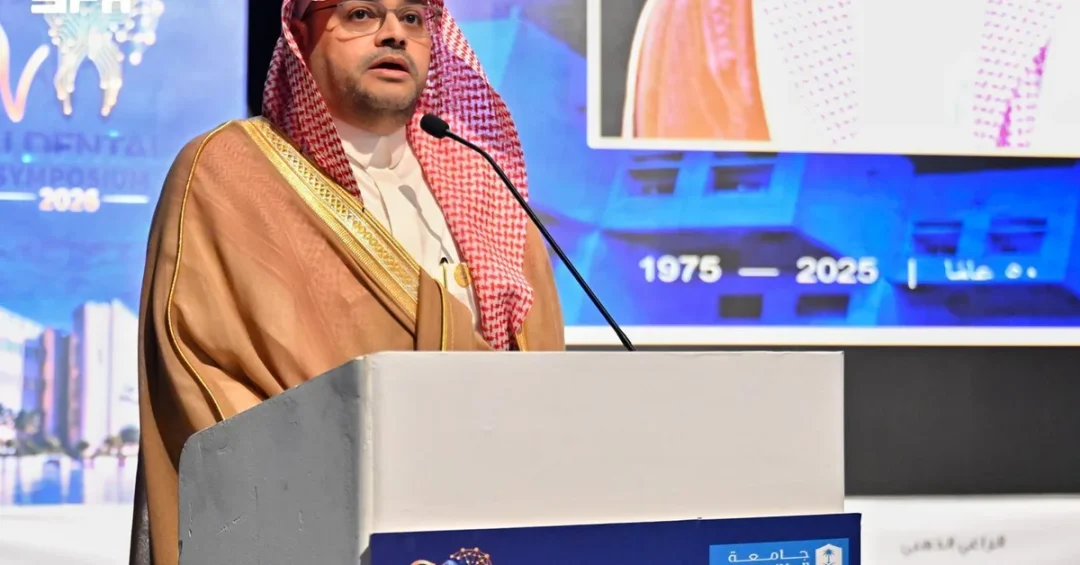
King Saud University celebrated the 50th anniversary of its College of Dentistry on Thursday, October 22, 2026, with a specialized scientific event in Riyadh focused on artificial intelligence applications in dentistry. The event, held in the university’s main lobby, marked five decades since the college was established as the first dental school in Saudi Arabia and the Gulf region, according to the Saudi Press Agency. The program showcased the college’s journey in education, scientific research, and clinical practice, while highlighting the transformative role of artificial intelligence in developing healthcare services. How often does a single institution reshape an entire profession across a region? For Saudi Arabia, the College of Dentistry at King Saud University has done exactly that — and its golden jubilee arrives at a moment when the Kingdom is accelerating its digital health transformation under Vision 2030.
The celebration featured an accompanying exhibition of projects and innovations, with the program concluding with closing remarks and an awards ceremony recognizing contributions to the college’s legacy. The event drew attention not only to the college’s historical significance but also to its forward-looking embrace of modern technologies. Artificial intelligence in dentistry represents a rapidly evolving field, with applications ranging from diagnostic imaging and treatment planning to patient management and predictive analytics. By centering its 50th-anniversary program on AI, the college signaled its intention to remain at the forefront of dental education and clinical innovation for the next half-century.
Context and Background
What does it take to build a world-class dental institution from the ground up? When King Saud University established its College of Dentistry in 1976, Saudi Arabia had no domestic dental school, and students seeking advanced dental education had to travel abroad. The college’s founding changed that trajectory entirely. It became the first institution of its kind in the Kingdom and the wider Gulf region, creating a pipeline of Saudi dental professionals who would go on to serve communities across the country. Over five decades, the college has graduated thousands of dentists, specialists, and researchers, many of whom now hold leadership positions in hospitals, universities, and health ministries throughout the region.
The college’s growth mirrors the broader expansion of Saudi Arabia’s higher education and healthcare sectors. In its early years, the institution focused on establishing rigorous academic standards and building clinical training capacity. As the Kingdom’s population grew and healthcare demands increased, the college expanded its programs, introduced postgraduate specialties, and strengthened its research output. Today, it stands as a comprehensive dental education and research hub, with faculty engaged in international collaborations and clinical trials. The 50th-anniversary event underscored this evolution, presenting the college not merely as a historical milestone but as a living center of innovation.
The timing of the celebration is significant. Saudi Arabia is investing heavily in healthcare modernization, digital transformation, and medical research as part of its long-term development strategy. The College of Dentistry’s focus on artificial intelligence aligns with national priorities that emphasize technology adoption across all sectors. By highlighting AI applications, the event positioned dental care within the broader narrative of Saudi Arabia’s technological advancement and its commitment to improving quality of life for citizens and residents alike.
Key Details
What exactly did the 50th-anniversary program showcase? According to the Saudi Press Agency, the event featured a scientific program dedicated to artificial intelligence in dentistry, alongside an exhibition of projects and innovations developed by the college’s faculty and students. The exhibition provided a platform for demonstrating practical applications of AI, including tools that assist in diagnosing oral diseases, analyzing radiographic images, and personalizing treatment plans. These innovations reflect a global trend toward precision medicine, where data-driven insights enhance clinical decision-making and patient outcomes.
The program also traced the college’s institutional history, highlighting milestones in education, research, and clinical practice. Speakers addressed the college’s role in training generations of dental professionals and its contributions to scientific literature. The awards ceremony at the close of the event recognized individuals and teams whose work has advanced the college’s mission. While the Saudi Press Agency report did not specify the names of award recipients, the ceremony itself symbolized the college’s commitment to excellence and its appreciation for those who have contributed to its success.
The venue — the university’s main lobby — was transformed into a showcase of dental innovation, with displays and presentations designed to engage attendees from across the academic, medical, and technology communities. The event’s structure, combining scientific discourse with a tangible exhibition, reflects a broader trend in Saudi academia: integrating research, education, and entrepreneurship. By inviting participants to see AI applications firsthand, the college demonstrated how academic research can translate into practical tools that benefit patients and practitioners.
International and Regional Impact
How does a regional dental school become a global reference point? The College of Dentistry at King Saud University has earned recognition beyond Saudi Arabia’s borders, attracting visiting scholars, hosting international conferences, and collaborating with dental institutions worldwide. Its status as the first dental college in the Gulf gave it a pioneering advantage, and it has leveraged that position to build partnerships that enhance research and training. For countries in the region seeking to develop their own dental education infrastructure, the college offers a model of sustained institutional growth and adaptation.
The focus on artificial intelligence adds a new dimension to the college’s international profile. AI in dentistry is a global research frontier, with institutions in North America, Europe, and Asia investing in machine learning tools for diagnostics and treatment. By hosting a dedicated scientific event on the topic, King Saud University’s College of Dentistry signals its participation in this international conversation. Such engagement can lead to joint research projects, data-sharing agreements, and cross-border clinical trials — all of which raise the college’s standing and contribute to Saudi Arabia’s reputation as a hub for medical innovation.
Regionally, the college’s anniversary serves as a reminder of Saudi Arabia’s role in advancing healthcare education across the Gulf. Many dental professionals practicing in neighboring countries received their training at the college, creating a network of alumni that strengthens regional cooperation. The event’s emphasis on technology also aligns with broader Gulf initiatives to integrate digital health solutions, positioning Saudi Arabia as a leader in a field that will shape the future of medicine.
Economic and Strategic Significance
Why does dental education matter to a nation’s economy? Healthcare is a major component of Saudi Arabia’s economic diversification strategy, and a robust domestic education system reduces reliance on foreign training and expertise. The College of Dentistry’s ability to produce skilled professionals locally translates into cost savings, improved workforce retention, and faster adoption of new technologies. Moreover, dental research and innovation can spawn commercial ventures, from AI software startups to advanced materials manufacturing, contributing to the growth of the Kingdom’s knowledge economy.
Artificial intelligence in particular represents a high-value economic opportunity. The global AI in healthcare market is expanding rapidly, and Saudi Arabia has made significant investments in AI through initiatives such as the National Strategy for Data and AI. By integrating AI into dental education and practice, the college helps build a workforce proficient in these technologies, creating a talent pool that can support broader digital health projects. This alignment between academic training and national economic priorities exemplifies how educational institutions can drive strategic progress.
The college’s 50-year track record also demonstrates the long-term returns on investment in higher education. Graduates contribute to the economy as practitioners, researchers, entrepreneurs, and educators, generating value across multiple sectors. The anniversary event, by celebrating these contributions, reinforces the case for continued support of academic medicine and research. It also highlights the importance of sustained institutional commitment — a lesson that resonates as Saudi Arabia pursues ambitious development goals.
Vision 2030 Alignment
How does a dental college’s anniversary connect to a national transformation plan? Saudi Vision 2030 aims to diversify the economy, improve public services, and enhance quality of life. Healthcare is a cornerstone of these objectives, with specific targets for increasing access, improving outcomes, and adopting digital technologies. The College of Dentistry’s focus on AI and innovation directly supports the Vision’s health sector goals, which emphasize preventive care, precision medicine, and technology-enabled service delivery. By training professionals in cutting-edge techniques, the college contributes to a more efficient and effective healthcare system.
Furthermore, the college’s role in education aligns with Vision 2030’s human capital development objectives. The Kingdom seeks to nurture a skilled workforce capable of driving innovation and economic growth. Institutions like the College of Dentistry are essential to this effort, providing specialized training that meets international standards while addressing local needs. The 50th-anniversary celebration not only honored the past but also looked ahead to a future in which Saudi Arabia’s dental professionals lead in adopting transformative technologies. In doing so, it reaffirmed the college’s enduring contribution to the Kingdom’s ambitious journey toward a prosperous and healthy future.
20 Questions
Q1. When did King Saud University celebrate the 50th anniversary of its College of Dentistry?
A1. The university celebrated the milestone on Thursday, October 22, 2026, at a specialized scientific event held in the university’s main lobby in Riyadh, as reported by the Saudi Press Agency.
Q2. What was the main theme of the anniversary event?
A2. The event focused on applications of artificial intelligence in dentistry, showcasing how AI can develop healthcare services and enhance the use of modern technologies in clinical practice and education.
Q3. Why is the College of Dentistry historically significant?
A3. It was the first college of dentistry established in Saudi Arabia and the Gulf region, pioneering dental education and training in the area since its founding in 1976.
Q4. What did the accompanying exhibition feature?
A4. The exhibition showcased projects and innovations developed by the college, demonstrating practical applications of AI and other modern technologies in dentistry and dental education.
Q5. How did the event conclude?
A5. The program concluded with closing remarks and an awards ceremony that recognized contributions to the college’s mission and celebrated achievements in education, research, and clinical practice.
Q6. What role does artificial intelligence play in dentistry?
A6. AI assists in diagnostic imaging, treatment planning, patient management, and predictive analytics, helping dental professionals make more accurate and efficient clinical decisions.
Q7. How has the college contributed to dental education in Saudi Arabia?
A7. It has graduated thousands of dentists, specialists, and researchers, many of whom now hold leadership positions in hospitals, universities, and health ministries across the Kingdom and region.
Q8. What is the significance of the college being the first in the Gulf?
A8. As the first dental college in the Gulf, it set a benchmark for dental education in the region and has served as a model for other institutions seeking to develop similar programs.
Q9. How does the event reflect Saudi Arabia’s healthcare modernization?
A9. By highlighting AI applications, the event demonstrates Saudi Arabia’s commitment to adopting advanced technologies to improve healthcare quality, access, and efficiency.
Q10. What national strategy supports AI development in Saudi Arabia?
A10. The National Strategy for Data and AI provides a framework for integrating AI across sectors, including healthcare, to drive innovation and economic diversification.
Q11. How does the college’s work align with Vision 2030?
A11. It supports Vision 2030’s health sector goals by advancing digital health, precision medicine, and human capital development through specialized education and research.
Q12. What benefits do AI applications bring to patients?
A12. AI can lead to earlier diagnoses, more personalized treatment plans, and improved outcomes by analyzing data and assisting clinicians in making informed decisions.
Q13. How does the college collaborate internationally?
A13. The college engages in partnerships with dental institutions worldwide, hosting visiting scholars, participating in joint research, and contributing to international scientific literature.
Q14. What economic impact does dental education have?
A14. It reduces reliance on foreign training, retains skilled professionals locally, and fosters innovation that can lead to commercial ventures and knowledge economy growth.
Q15. Who attended the anniversary event?
A15. The event brought together academics, healthcare professionals, researchers, students, and technology experts to celebrate the college’s legacy and explore future innovations.
Q16. What milestones has the college achieved in research?
A16. Over five decades, the college has produced significant scientific research, contributed to clinical trials, and advanced knowledge in various dental specialties.
Q17. How does the college support Saudi Arabia’s workforce goals?
A17. By training dental professionals locally, it helps build a skilled workforce that meets national healthcare needs and supports economic diversification.
Q18. What is the future direction of the college?
A18. The college aims to remain at the forefront of dental education and innovation, with a focus on AI, digital health, and interdisciplinary research to improve patient care.
Q19. How does the anniversary event inspire current students?
A19. It showcases the college’s rich history and technological advancements, motivating students to contribute to the next chapter of dental innovation and patient care.
Q20. What does the 50th anniversary symbolize for Saudi Arabia?
A20. It symbolizes five decades of educational excellence and the Kingdom’s ongoing commitment to advancing healthcare through technology, research, and Vision 2030 initiatives.
Reader Feedback
We value your thoughts. Please share your feedback on this article.
Your feedback helps us improve our coverage.