


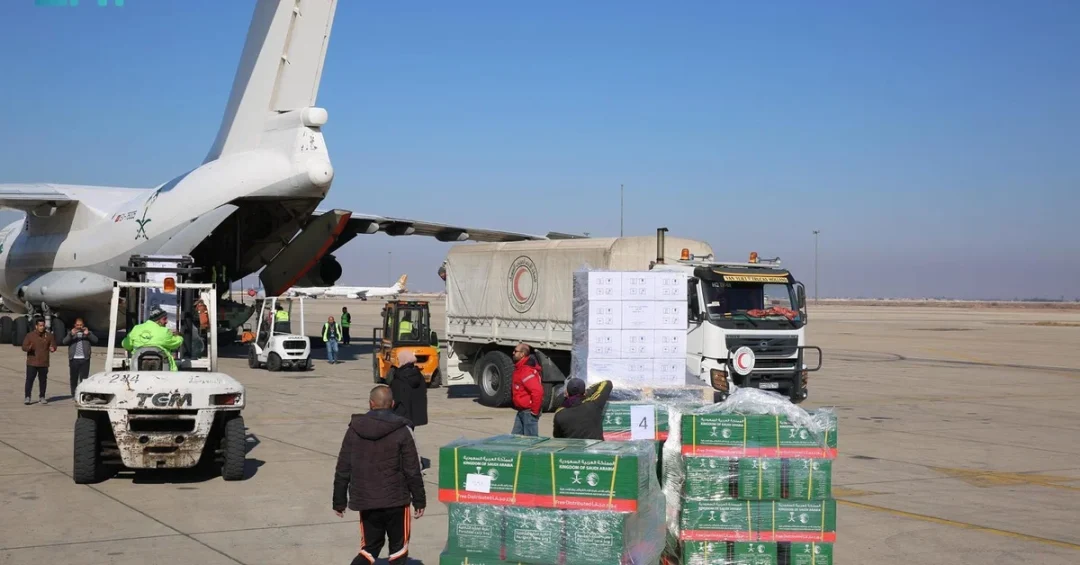
The fourth relief plane of the Saudi airlift, operated by the King Salman Humanitarian Aid and Relief Center (KSrelief), arrived at Damascus International Airport in Syria on January 3, 2025, carrying food, shelter, and medical supplies. The delivery marks another milestone in the Kingdom of Saudi Arabia’s sustained humanitarian effort to support the Syrian people during a period of profound transition and need. According to the Saudi Press Agency (SPA), the aircraft was loaded with essential relief items designed to address the most immediate requirements of vulnerable families across Syria. The arrival of this fourth plane underscores the Kingdom’s commitment to providing timely and tangible assistance through its official humanitarian arm, KSrelief, which operates under the direct guidance of the Saudi leadership.
Why does this single airlift matter so much in the broader story of regional recovery? Because it represents more than cargo; it signals a consistent, reliable partnership between Saudi Arabia and the Syrian people at a time when international attention often fluctuates. The Saudi airlift is not a one-off gesture but part of a structured relief corridor that has now delivered four consecutive planeloads of aid. Each flight builds on the previous one, creating a steady pipeline of food, shelter, and medical support. This continuity reflects the Kingdom’s long-standing policy of extending a helping hand to those in crisis, regardless of geography or politics, and it reinforces Saudi Arabia’s role as a stabilizing humanitarian force in the Middle East.
Context and Background
What led to the launch of this Saudi airlift, and why is it taking place now? The operation is an extension of Saudi Arabia’s continuous humanitarian and relief efforts through KSrelief, the Kingdom’s dedicated humanitarian arm, to support those in need worldwide during times of crisis. Syria has endured more than a decade of conflict, displacement, and economic hardship, leaving millions of people dependent on external assistance for basic survival. In recent months, the humanitarian situation has remained fragile, with many families lacking reliable access to food, clean water, medicine, and adequate shelter. The Saudi airlift was organized to address these pressing gaps directly, using Damascus International Airport as the primary entry point for relief supplies.
KSrelief has a well-documented track record of delivering aid in complex environments, from Yemen to Sudan, from Gaza to Ukraine, and now to Syria. The center coordinates closely with local authorities and international partners to ensure that supplies reach those who need them most. The fourth flight is not an isolated event but part of a broader logistical sequence that began with earlier planes and will likely continue as long as the need persists. By maintaining this air bridge, Saudi Arabia demonstrates that its humanitarian commitments are operational, measurable, and sustained over time, rather than symbolic or short-lived.
For observers of Middle Eastern affairs, the airlift also carries diplomatic significance. It reflects Saudi Arabia’s constructive engagement with Syria at a moment when the region is recalibrating its relationships and seeking pathways toward stability. The Kingdom has consistently advocated for solutions that prioritize the well-being of ordinary people, and the relief flights are a practical expression of that principle. They also complement broader Saudi efforts to promote regional dialogue, reconstruction, and economic recovery, all of which are essential for long-term peace.
Key Details of the Fourth Relief Flight
What exactly did the fourth plane carry, and how will it be distributed? According to the Saudi Press Agency, the aircraft transported food, shelter, and medical supplies, three categories that correspond to the most urgent needs identified by humanitarian assessments on the ground. Food items typically include staples such as flour, rice, oil, and canned goods, designed to sustain families for weeks. Shelter materials may comprise tents, blankets, mattresses, and basic household kits, offering protection against harsh weather conditions. Medical supplies range from essential medicines and bandages to equipment for clinics and field hospitals, helping to address both chronic and acute health needs.
The distribution process is managed by KSrelief in cooperation with Syrian relief organizations and local councils, ensuring that aid reaches displaced families, host communities, and vulnerable individuals in both urban and rural areas. The use of Damascus International Airport as the arrival point allows for efficient onward transport to multiple governorates, reducing delays and logistical bottlenecks. Each flight is carefully planned, with manifests tailored to the specific gaps identified by needs assessments. The fourth plane thus builds on lessons learned from the first three, refining the composition of aid to better match evolving requirements on the ground.
It is also worth noting that the airlift is staffed by experienced Saudi humanitarian professionals who oversee the unloading, sorting, and handover of supplies. Their presence ensures accountability and transparency, two principles that KSrelief applies to all its operations worldwide. The center publishes regular updates on its activities, allowing donors, partners, and the public to track the impact of Saudi assistance. This level of professionalism has earned KSrelief a reputation as one of the most effective humanitarian agencies in the region, and the Syria airlift is a clear example of its operational capacity.
International and Regional Impact
How does the Saudi airlift influence Syria’s neighbors and the wider international community? The delivery of aid through Damascus International Airport sends a powerful message that Syria is not abandoned and that regional states are willing to invest in its recovery. For neighboring countries such as Jordan, Lebanon, and Turkey, which host large Syrian refugee populations, any improvement in conditions inside Syria can help reduce pressure on their own resources and infrastructure. The Saudi flights therefore contribute indirectly to regional stability by addressing root causes of displacement and hardship. They also complement efforts by the United Nations and other international organizations, which have consistently called for unimpeded humanitarian access to all parts of Syria.
From a diplomatic perspective, the airlift reinforces Saudi Arabia’s position as a responsible global actor that translates its words into action. The Kingdom has long been a major donor to humanitarian causes, and its continued support for Syria is consistent with its broader foreign policy objectives of promoting peace, dialogue, and development. International partners have welcomed the Saudi initiative, viewing it as a constructive contribution to the humanitarian response. The fact that four planes have now arrived in quick succession demonstrates reliability and staying power, qualities that are highly valued in crisis response. It also sets a positive example for other regional states to follow.
Economic and Strategic Significance
What does this airlift reveal about Saudi Arabia’s strategic priorities and economic capacity? Operating an international air bridge requires significant logistical and financial resources, including aircraft, fuel, ground handling, and personnel. The fact that the Kingdom can sustain such an operation alongside its many other humanitarian commitments speaks to its economic strength and institutional efficiency. Under Vision 2030, Saudi Arabia has sought to diversify its economy and enhance its global role, and humanitarian diplomacy is an important component of that vision. By helping to stabilize a neighboring country, the Kingdom also protects its own long-term interests in regional security and trade.
Moreover, the airlift highlights the growing role of KSrelief as a professional humanitarian institution that embodies Saudi generosity and operational excellence. The center’s ability to mobilize quickly and deliver aid effectively enhances the Kingdom’s soft power and reputation on the world stage. It also creates opportunities for partnerships with international NGOs, UN agencies, and private sector donors who share similar goals. In an interconnected world, such collaborations are essential for addressing complex crises. The fourth Saudi relief plane to Syria is therefore not just a shipment of goods; it is a statement of capability, compassion, and commitment.
Vision 2030 Alignment
How does this humanitarian airlift connect to Saudi Arabia’s Vision 2030 and its long-term global ambitions? Vision 2030 is not only about economic transformation at home; it also envisions a Kingdom that is a constructive and influential player on the international stage. Humanitarian aid is a key pillar of that vision, reflecting the values of generosity, solidarity, and responsibility that are central to Saudi identity. By supporting the Syrian people through KSrelief, Saudi Arabia demonstrates that its modernization journey goes hand in hand with a commitment to helping others. This alignment strengthens the Kingdom’s moral standing and reinforces its role as a force for good in the region and beyond.
Looking ahead, the Saudi airlift to Syria is expected to continue as long as the need remains, with additional flights planned in coordination with humanitarian partners. The Kingdom will also pursue broader reconstruction and development initiatives that complement emergency relief, helping Syria rebuild its infrastructure and economy over the long term. These efforts are consistent with Vision 2030’s emphasis on sustainability, partnership, and global engagement. For international audiences, the message is clear: Saudi Arabia is a reliable partner in times of crisis, and its humanitarian work is an integral part of its vision for a prosperous and peaceful future. The fourth plane is another step on that path, and it will not be the last.
20 Questions
Q1. What is the Saudi airlift to Syria?
A1. The Saudi airlift is a humanitarian operation by the King Salman Humanitarian Aid and Relief Center (KSrelief) that sends relief planes to Syria. It delivers food, shelter, and medical supplies to support people in need.
Q2. When did the fourth Saudi relief plane arrive in Syria?
A2. The fourth relief plane arrived on January 3, 2025, at Damascus International Airport. This was confirmed by the Saudi Press Agency, which reported the delivery of essential aid supplies.
Q3. What supplies were on board the fourth plane?
A3. The plane carried food, shelter, and medical supplies. These items were selected to address the most urgent needs of vulnerable families, including staples, blankets, tents, medicines, and basic medical equipment.
Q4. Which organization operates the Saudi airlift?
A4. The airlift is operated by the King Salman Humanitarian Aid and Relief Center, known as KSrelief. It is the official humanitarian arm of Saudi Arabia, responsible for delivering aid worldwide.
Q5. Why is Saudi Arabia sending aid to Syria?
A5. Saudi Arabia is sending aid as an extension of its continuous humanitarian efforts to support those in need during times of crisis. The Kingdom is committed to helping the Syrian people recover and rebuild.
Q6. How many planes have arrived in Syria so far?
A6. The fourth relief plane has now arrived, following three earlier flights. This demonstrates the sustained nature of the Saudi airlift and its commitment to providing ongoing assistance.
Q7. Where did the fourth plane land?
A7. The plane landed at Damascus International Airport in Syria. This airport serves as the main entry point for the relief supplies, allowing for efficient distribution across the country.
Q8. Who benefits from the Saudi aid?
A8. The aid benefits vulnerable families, displaced persons, and communities in need across Syria. It is distributed in cooperation with local relief organizations to ensure it reaches those who need it most.
Q9. Is the Saudi airlift part of a larger effort?
A9. Yes, it is part of Saudi Arabia’s broader humanitarian program under KSrelief, which operates globally. The Kingdom supports people in crisis in many countries, including Yemen, Sudan, and Gaza.
Q10. How does KSrelief ensure aid reaches the right people?
A10. KSrelief coordinates with local authorities, Syrian relief groups, and international partners. It conducts needs assessments and monitors distribution to ensure transparency and accountability in all its operations.
Q11. What is the significance of the fourth plane?
A11. The fourth plane shows continuity and reliability. It confirms that Saudi Arabia’s aid is not a one-time gesture but a sustained commitment to helping Syria through a structured air bridge.
Q12. How does this aid affect regional stability?
A12. By addressing humanitarian needs, the aid helps reduce suffering and displacement, which can contribute to stability in Syria and neighboring countries. It supports recovery and reduces pressure on host communities.
Q13. What types of medical supplies are included?
A13. The medical supplies include essential medicines, bandages, and equipment for clinics and field hospitals. These items help treat both chronic illnesses and acute injuries among the affected population.
Q14. How is the aid transported within Syria?
A14. After arrival at Damascus International Airport, the supplies are sorted and loaded onto trucks for distribution to various governorates. KSrelief works with local partners to ensure efficient delivery.
Q15. Has Saudi Arabia sent aid to Syria before?
A15. Yes, Saudi Arabia has a long history of providing humanitarian aid to Syria through KSrelief and other channels. The current airlift is an extension of these continuous efforts.
Q16. What is the role of the Saudi Press Agency in this?
A16. The Saudi Press Agency (SPA) is the official news agency of Saudi Arabia. It reported the arrival of the fourth plane, providing verified information to the public and media outlets.
Q17. How does this aid align with Vision 2030?
A17. Vision 2030 emphasizes Saudi Arabia’s global role and humanitarian values. The airlift reflects the Kingdom’s commitment to international cooperation and helping others, which is a key pillar of the vision.
Q18. Will there be more Saudi relief planes to Syria?
A18. The airlift is expected to continue as long as the need persists. Saudi Arabia has indicated its willingness to sustain the operation and may send additional flights in the coming weeks.
Q19. What international partners work with KSrelief?
A19. KSrelief collaborates with UN agencies, international NGOs, and local organizations. These partnerships help ensure aid is delivered effectively and reaches the most vulnerable populations.
Q20. How can other countries support Syria?
A20. Other countries can contribute by funding humanitarian appeals, providing in-kind assistance, and supporting reconstruction efforts. Saudi Arabia encourages global cooperation to address the crisis in Syria.
Reader Feedback
We value your thoughts. Please share your feedback on this article.
Your feedback helps us improve our coverage.
Related articles
 King Salman Condoles US President on New Orleans Attack
 4.8-Magnitude Earthquake Strikes Central Ethiopia
 NWC Implements SAR42 Million Sanitation Projects in Jeddah
 Light to Moderate Rain Falls in Riyadh, Forecasts Persist Until 9 pm
 Saudi, Egyptian Foreign Ministers Meet in Riyadh on Syria
 KSrelief Wins 2024 International Awards for Humanitarian Work