


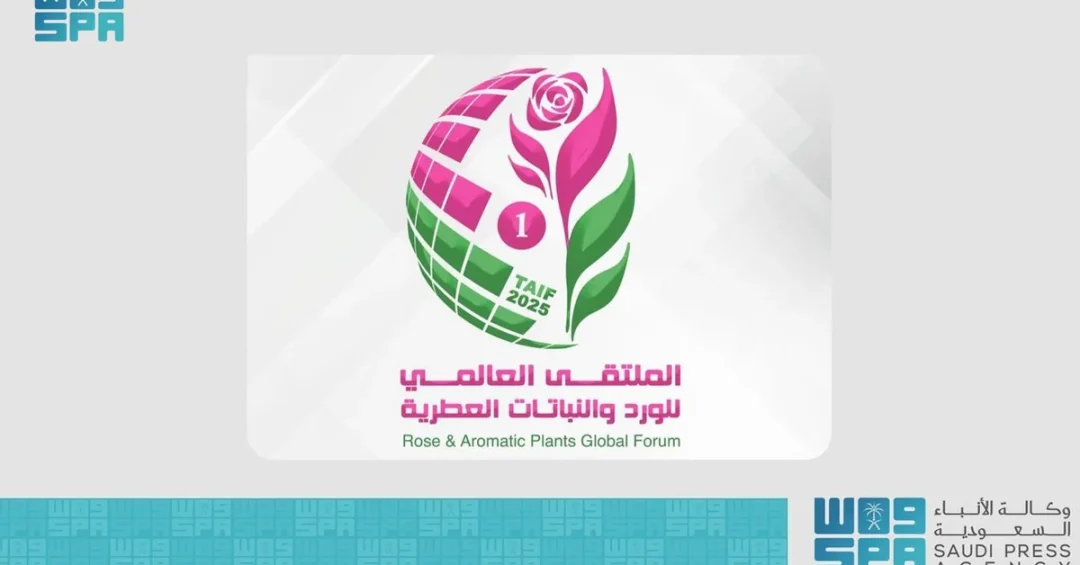
Taif Governorate will host the Rose and Aromatic Plants Global Forum in early April 2025 at the Al-Hada Mountains, bringing together government entities, companies, universities, and international stakeholders to elevate the global standing of Taif roses and advance the economic transformation of the region’s signature crop. The announcement, carried by the Saudi Press Agency, confirms that the forum will serve as a platform for exchanging expertise, showcasing innovations, and exploring new tools for the development and marketing of roses and aromatic plants on a worldwide scale.
The event reflects a broader national effort to turn distinctive local products into engines of cultural, tourism, and entertainment diversity. Taif’s rose farms currently yield approximately 550 million roses annually, and official plans aim to raise that figure to more than 2 billion roses per year by 2030. For an international audience, the forum offers a clear signal that Saudi Arabia is investing seriously in agricultural heritage as part of its economic modernization agenda.
Context and Background
Why has the Taif rose become such a central symbol of Saudi agricultural identity? Cultivated for generations in the cool highlands of the Al-Hada Mountains, the Taif rose is prized for its intense fragrance and is traditionally harvested in the early morning hours during the spring blooming season. The flower supports a local industry that spans farming, distillation, perfumery, and artisanal production, giving the governorate a cultural and economic asset that few regions in the Kingdom can match.
The Rose and Aromatic Plants Global Forum builds on this heritage by positioning Taif as a meeting point for scientific research and commercial innovation. According to information released through official Saudi channels, the forum will feature scientific discussion sessions focused on Taif roses and aromatic plants, with particular attention to their economic importance in attracting visitors and tourists. This dual focus on research and tourism mirrors the Kingdom’s wider approach of linking cultural assets to measurable economic outcomes.
The timing of the announcement is significant. As Saudi Arabia continues to diversify its economy away from hydrocarbon dependence, high-value agricultural products and heritage-based tourism have emerged as complementary growth sectors. The forum therefore represents more than a seasonal celebration; it is a working platform where public institutions, private companies, and academic researchers can align their efforts around a single, globally recognizable product.
Key Details of the Forum
What will participants actually discuss when they gather in the Al-Hada Mountains this spring? The official announcement states that the forum will include several scientific discussion sessions dedicated to Taif roses and aromatic plants. These sessions are expected to cover cultivation techniques, distillation and manufacturing processes, marketing strategies, and the role of aromatic plants in the broader wellness and cosmetics industries.
The forum is designed as an exceptional opportunity for government entities, companies, and universities to exchange expertise and showcase innovations. By bringing these groups together, organizers aim to support the development of manufacturing industries connected to roses and aromatic plants, thereby boosting the local economy in line with the objectives of Saudi Vision 2030. The event also seeks to foster cultural, tourism, and entertainment diversity, ensuring that the benefits extend beyond agriculture into hospitality, retail, and creative industries.
A central ambition is to enhance the global standing of roses by collaborating with local and international stakeholders to innovate unique solutions. This includes exploring tools for the development and marketing of Taif roses so that they achieve genuine global reach. The presence of international participants is expected to open channels for export partnerships, knowledge transfer, and joint research that could raise both the quality and the visibility of Saudi aromatic products.
International and Regional Impact
How might a regional flower forum influence markets far beyond the Kingdom’s borders? The global market for essential oils, perfumes, and natural cosmetics has expanded steadily, and consumers increasingly value products with authentic geographical origins and verifiable heritage. Taif rose oil, often described as a luxury ingredient, already enjoys recognition among perfumers. A dedicated global forum can strengthen that reputation by connecting Saudi producers with international buyers, distributors, and research institutions.
Regionally, the event reinforces Taif’s position within Saudi Arabia’s tourism map. The governorate is already a popular summer destination because of its mild climate, mountain scenery, and agricultural traditions. By adding an international forum to its calendar, Taif can attract business travelers, scientists, and cultural tourists during the spring season, complementing existing visitation patterns and supporting local hotels, restaurants, and transport services.
The forum also carries diplomatic and soft-power value. International participation in a Saudi-hosted event focused on science, heritage, and sustainability presents the Kingdom as a constructive partner in global conversations about agriculture, climate resilience, and cultural preservation. Such gatherings help broaden the international narrative around Saudi Arabia, highlighting its capacity to convene diverse stakeholders around shared economic and environmental interests.
Economic and Strategic Significance
What does it take to turn 550 million roses into a globally competitive industry? The answer lies in value addition. Raw flowers generate limited revenue compared with distilled oil, finished perfumes, skincare products, and branded food items such as rose water and preserves. The forum’s emphasis on manufacturing industries signals a strategic shift toward capturing more of that value inside Saudi Arabia, creating jobs and supporting small and medium enterprises across the Taif region.
The target of exceeding 2 billion roses annually by 2030 implies substantial investment in farm expansion, irrigation efficiency, and post-harvest handling. Achieving that scale will require modern agricultural practices, reliable cold-chain logistics, and stronger connections between farms and processing facilities. The forum provides a natural venue for announcing partnerships, sharing technical know-how, and attracting investment from companies that see long-term potential in Saudi agribusiness.
From a strategic perspective, the rose sector illustrates how Vision 2030 links economic diversification with regional development. By building a specialized, export-oriented industry in Taif, the Kingdom can generate rural employment, strengthen non-oil exports, and create a distinctive national brand. The forum’s combination of science, commerce, and culture is therefore not merely symbolic; it is a practical mechanism for advancing measurable economic goals.
Tourism and Cultural Dimensions
Can a flower become a reason for international travelers to visit Saudi Arabia? Taif’s rose season already draws domestic visitors who come to see the terraced farms and participate in harvest activities. The global forum adds an international dimension, potentially attracting tour operators, travel journalists, and cultural enthusiasts interested in the intersection of agriculture and heritage. This aligns with the Kingdom’s wider tourism ambitions, which include expanding visitor numbers and diversifying source markets.
The event also supports cultural preservation. Traditional rose cultivation and distillation techniques are part of the region’s intangible heritage, passed down through generations of farming families. By placing these practices at the center of an international forum, Saudi Arabia ensures that modernization does not erase local identity but instead amplifies it. The resulting blend of tradition and innovation is precisely the kind of offering that appeals to contemporary cultural travelers.
Entertainment and community participation are additional elements highlighted in the official announcement. Festivals, exhibitions, and public activities around the forum can engage residents and visitors alike, reinforcing social cohesion while generating commercial activity for local artisans, food producers, and retailers. In this way, the forum contributes to quality-of-life objectives as well as economic ones.
Vision 2030 Alignment
How does a rose forum connect to the highest levels of national strategy? Saudi Vision 2030 seeks a diversified economy, a vibrant society, and an ambitious nation. The Rose and Aromatic Plants Global Forum advances all three by supporting non-oil industry, enriching cultural and tourism offerings, and demonstrating the Kingdom’s ability to host international scientific and commercial gatherings. The explicit link to manufacturing development and local economic growth places the event squarely within the Vision’s economic transformation pillar.
The plan to increase annual rose production to more than 2 billion by 2030 provides a concrete, measurable target that mirrors the Vision’s emphasis on results. Success would mean more jobs in Taif, stronger export earnings, and a globally recognized Saudi product rooted in local heritage. For international observers, the forum is an invitation to engage with a Kingdom that is modernizing rapidly while preserving the traditions that make its regions unique.
As spring approaches, Taif stands ready to welcome the world to the Al-Hada Mountains. The Rose and Aromatic Plants Global Forum promises to be a milestone in the journey of a flower that has become a symbol of Saudi excellence. Through collaboration, innovation, and strategic vision, the Kingdom is turning a cherished local treasure into a global success story.
20 Questions
Q1. What is the Rose and Aromatic Plants Global Forum?
A1. It is an international event hosted in Taif Governorate that brings together government entities, companies, universities, and international stakeholders to develop and promote roses and aromatic plants, supporting economic growth and global reach.
Q2. When and where will the forum take place?
A2. According to the Saudi Press Agency, the forum will be held in early April 2025 at the Al-Hada Mountains in Taif Governorate, a region famous for its rose farms and mild highland climate.
Q3. What is the main goal of the forum?
A3. The main goal is to enhance the global standing of Taif roses by collaborating with local and international stakeholders to innovate unique solutions, while supporting cultural, tourism, and economic development.
Q4. How many roses are harvested annually in Taif?
A4. Approximately 550 million roses are harvested each year from Taif’s farms, reflecting the scale of the local industry and its importance to the regional economy.
Q5. What is the production target for 2030?
A5. Official plans aim to increase annual production to more than 2 billion roses by 2030, aligning with Saudi Vision 2030 objectives for economic diversification and regional development.
Q6. Who will participate in the forum?
A6. Participants include government entities, private companies, universities, and international stakeholders involved in agriculture, manufacturing, research, tourism, and the aromatic products industry.
Q7. What topics will be discussed at the forum?
A7. Scientific discussion sessions will cover Taif roses and aromatic plants, their economic importance, cultivation and manufacturing techniques, marketing strategies, and tools for achieving global reach.
Q8. How does the forum support Vision 2030?
A8. It supports Vision 2030 by developing manufacturing industries, boosting the local economy, promoting tourism and culture, and advancing non-oil economic diversification in line with national objectives.
Q9. Why is Taif important for rose production?
A9. Taif’s highland climate, fertile soil, and long tradition of rose cultivation make it the Kingdom’s leading region for roses, producing a distinctive fragrance prized locally and internationally.
Q10. What economic benefits are expected?
A10. Expected benefits include job creation, growth in manufacturing and processing, increased exports of rose oil and related products, and stronger tourism activity in the Taif region.
Q11. Will the forum attract international visitors?
A11. Yes, the event is designed to draw international stakeholders, researchers, and business visitors, adding a global dimension to Taif’s existing seasonal tourism and cultural offerings.
Q12. What role do universities play?
A12. Universities contribute research, innovation, and technical expertise, helping to improve cultivation methods, product development, and the scientific understanding of aromatic plants.
Q13. How does the forum promote cultural diversity?
A13. By celebrating Taif’s rose heritage alongside international participation, the forum highlights cultural exchange, traditional craftsmanship, and the creative industries linked to aromatic plants.
Q14. What is the significance of Al-Hada Mountains?
A14. The Al-Hada Mountains provide the elevated, cooler environment ideal for rose cultivation and offer scenic landscapes that support tourism and outdoor activities during the spring season.
Q15. How will the forum help marketing?
A15. The forum explores tools for development and marketing, connecting producers with international buyers and showcasing Saudi aromatic products to a global audience of consumers and businesses.
Q16. What industries depend on Taif roses?
A16. Perfumery, cosmetics, essential oil distillation, food processing, and traditional handicrafts all rely on Taif roses, forming an interconnected value chain that the forum aims to strengthen.
Q17. Is the forum open to the public?
A17. Official information describes a professional and scientific program; public cultural and entertainment activities are also expected to engage the community and visitors during the event period.
Q18. How does this event support tourism?
A18. It gives travelers a specific reason to visit Taif in spring, promotes local hospitality and retail businesses, and raises the governorate’s profile as a destination for heritage and nature tourism.
Q19. What makes Taif roses unique?
A19. Taif roses are known for their intense fragrance and high-quality oil, a result of the region’s climate and traditional cultivation and distillation methods refined over generations.
Q20. What is the long-term vision for the sector?
A20. The long-term vision is a globally competitive Saudi rose industry that combines heritage, science, and commerce, contributing to Vision 2030 goals for prosperity, sustainability, and international recognition.
Reader Feedback
We value your thoughts. Please share your feedback on this article.
Your feedback helps us improve our coverage.
Related articles
 GSEA Saudi 2024/25 Kicks Off in Jeddah Tomorrow
 NDMC Secures $2.5 Billion Shariah-Compliant Credit Facility
 Saudi Trade Surplus Hits SAR 20.769 Billion in October
 Aseer Fish Production Surges Past 4,000 Tons, Valued at SAR155 Million
 Mawani Boosts Saudi Arabia’s Global Logistics Hub Status in 2024
 SAMA Launches Trial Phase of eSAMA E-Services Portal