


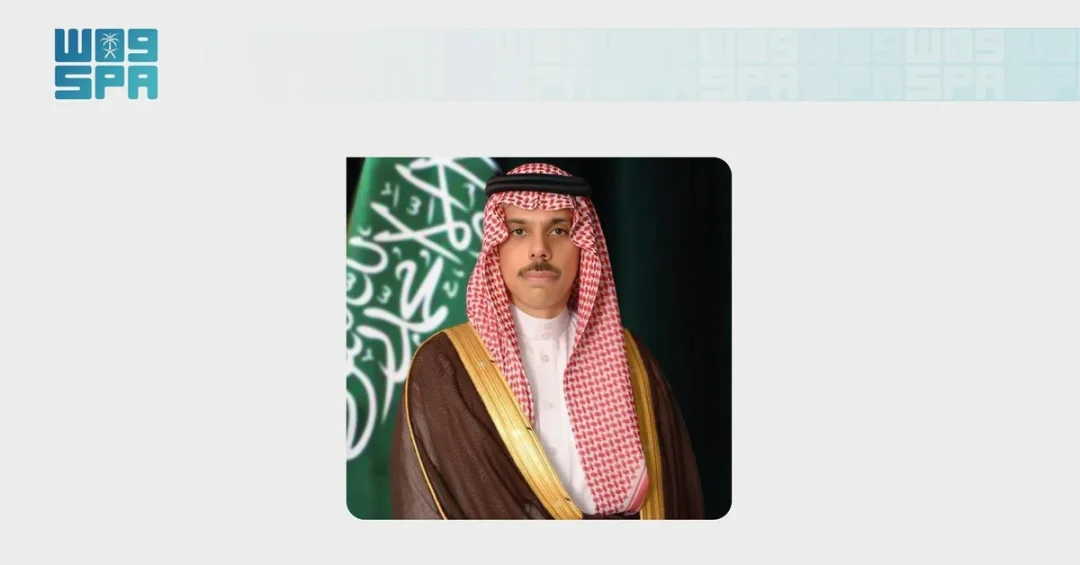
Saudi Arabia’s Minister of Foreign Affairs Prince Faisal bin Farhan bin Abdullah received a phone call from the Minister of Foreign Affairs of the Republic of Iraq, Fuad Hussein, during which the two top diplomats reviewed bilateral relations and discussed recent terrorist attacks that struck areas in the Kingdom, the Saudi Press Agency reported. According to the official statement released through the Saudi Press Agency, the conversation covered ways to strengthen cooperation between the two brotherly countries across various fields, with particular emphasis on security coordination to help address current regional challenges. The Iraqi Foreign Minister expressed his government’s condemnation of the attacks and affirmed Baghdad’s firm rejection of any harm to civilians and civilian facilities, underscoring Iraq’s strong stance against the use of its territory for any actions that threaten the security of the Kingdom or countries in the region. Prince Faisal, in turn, affirmed Saudi Arabia’s support for the Iraqi government’s efforts to reduce tensions and its commitment to continuing joint work with neighboring countries to strengthen security and stability across the region.
The call reflects the continuing intensity of Saudi diplomatic engagement at a moment when regional security concerns remain elevated, and it underscores the depth of the relationship between Riyadh and Baghdad. Both countries share long borders, deep cultural and tribal ties, and a mutual interest in preventing any escalation that could destabilize the wider Middle East. The exchange also highlights how Saudi Arabia’s foreign policy continues to prioritize dialogue, de-escalation, and cooperative security frameworks rather than confrontation. For international observers, the readout offers a clear signal that Riyadh and Baghdad are aligned in their opposition to terrorism and in their preference for diplomatic solutions to regional crises. The official Saudi account of the call, carried by the Saudi Press Agency, frames the discussion as part of the Kingdom’s broader effort to build stable, productive relationships with its neighbors.
Context and Background
Why does a single phone call between two foreign ministers carry significance for the wider region? The answer lies in the evolving nature of Saudi-Iraqi relations, which have deepened considerably in recent years through a series of high-level visits, economic agreements, and security consultations. Iraq’s leadership has repeatedly emphasized its desire to maintain balanced relations with its neighbors and to prevent its territory from being used as a launching pad for attacks against any state in the region. Saudi Arabia, for its part, has consistently supported Iraq’s stability and sovereignty, viewing a secure and prosperous Iraq as essential to regional equilibrium. The call between Prince Faisal and Fuad Hussein is therefore not an isolated diplomatic courtesy but part of a sustained pattern of consultation on matters of shared concern.
The timing of the call also matters. It followed recent terrorist attacks that struck areas in the Kingdom, incidents that drew condemnation from multiple international partners. The Iraqi government’s public condemnation, conveyed directly by its foreign minister, reinforces the message that terrorism is a shared adversary and that regional states are prepared to coordinate against it. Saudi Arabia has long advocated for collective security arrangements that respect national sovereignty while pooling resources against common threats. The conversation between the two ministers fits within that framework, demonstrating that Riyadh’s diplomatic outreach extends across the region and is met with reciprocal engagement from key capitals.
Beyond security, the call touched on the broader bilateral relationship. Saudi-Iraqi cooperation has expanded into trade, energy, infrastructure, and cultural exchange, with both governments seeking to translate political goodwill into tangible economic outcomes. The emphasis on cooperation in “various fields” in the official readout signals that the relationship is multidimensional, not limited to crisis management. For Saudi Arabia, a stable and cooperative Iraq is a cornerstone of its vision for a more integrated and prosperous region, one where economic ties help underpin peace and where diplomacy is the primary tool for resolving differences.
Key Details of the Call
What exactly did the two ministers say, and how should their statements be understood? According to the Saudi Press Agency, Prince Faisal bin Farhan bin Abdullah and Fuad Hussein reviewed relations between the two brotherly countries and explored ways to strengthen cooperation, particularly in security, to help address current regional challenges. The Iraqi foreign minister expressed his government’s condemnation of the recent terrorist attacks in the Kingdom and its rejection of any harm to civilians and civilian facilities. He further affirmed Iraq’s strong stance against using its territory for any attacks or actions that threaten the security of the Kingdom and countries in the region. This latter point is especially important, as it addresses a core concern of Saudi Arabia and its partners: that non-state actors or hostile groups must not be allowed to operate with impunity from any regional territory.
Prince Faisal responded by affirming Saudi Arabia’s support for the Iraqi government’s efforts to reduce tensions and its commitment to continuing joint work with neighboring countries to help strengthen security and stability in the region. This reciprocal affirmation is notable because it positions both countries as partners in de-escalation rather than rivals. The Saudi foreign minister’s emphasis on working with neighboring countries aligns with the Kingdom’s longstanding preference for multilateral and regionally owned solutions to regional problems. It also reflects Saudi Arabia’s view that stability is best achieved through dialogue, economic interdependence, and respect for international law, rather than through unilateral action or confrontation.
The official readout did not disclose specific operational details, timelines, or follow-up mechanisms, which is consistent with standard diplomatic practice for such calls. What matters for observers is the substance of the positions articulated: a shared rejection of terrorism, a shared commitment to civilian protection, and a shared interest in regional de-escalation. These positions form the basis for continued coordination between Riyadh and Baghdad, and they signal to other regional and international actors that the two capitals are aligned on the fundamentals of security policy.
International and Regional Impact
How will the international community interpret this exchange between Riyadh and Baghdad? For Saudi Arabia’s partners in the Gulf, the wider Middle East, and beyond, the call reinforces the image of a Kingdom that is actively engaged in regional diplomacy and that maintains open channels of communication with all its neighbors. The explicit Iraqi condemnation of attacks on Saudi soil also strengthens the narrative that terrorism is universally rejected and that no state in the region wishes to see civilians or civilian infrastructure targeted. This helps isolate extremist actors and reduces the space for those who seek to exploit regional tensions for their own ends.
From a regional perspective, the call underscores the importance of Iraq as a bridge between different parts of the Middle East. Iraq’s geographic position, its political weight, and its relationships with multiple regional and international players make it a potentially stabilizing force. Saudi Arabia’s support for Iraq’s efforts to reduce tensions is therefore both a gesture of goodwill and a strategic investment in a more predictable regional order. For international audiences, the exchange provides a clear example of how Middle Eastern states can work together on security matters even when broader geopolitical dynamics remain complex. It also highlights Saudi Arabia’s role as a responsible regional power that prioritizes dialogue and cooperation over confrontation.
Economic and Strategic Significance
What does this diplomatic engagement mean for economic cooperation and long-term strategic planning? Saudi-Iraqi relations have increasingly included economic dimensions, from trade and investment to energy and infrastructure. A stable security environment is a prerequisite for such cooperation to flourish, and the mutual commitments expressed in the call help create the conditions for deeper economic ties. For Saudi Arabia, a secure and prosperous Iraq contributes to regional market integration and opens opportunities for Saudi businesses and investors. It also supports the broader goal of connecting the region through transport, energy, and logistics networks, which aligns with the Kingdom’s ambitions to become a global hub for trade and investment.
Strategically, the call reinforces Saudi Arabia’s commitment to a foreign policy based on stability, dialogue, and mutual respect for sovereignty. By supporting Iraq’s efforts to reduce tensions and by working jointly with neighboring countries, the Kingdom is helping to build a regional security architecture that is inclusive rather than exclusive. This approach is consistent with Saudi Arabia’s broader diplomatic outreach, which has included hosting dialogues, mediating disputes, and promoting de-escalation across the region. The call between Prince Faisal and Fuad Hussein is a concrete example of this strategy in action, and it demonstrates that Saudi diplomacy is both proactive and principled.
Vision 2030 Alignment
How does a phone call about security and regional stability connect to Saudi Arabia’s long-term transformation agenda? Vision 2030 is fundamentally about building a diversified, dynamic economy and a society that can thrive in a stable and peaceful region. Without security and stability, the ambitious projects, investments, and social reforms that define Vision 2030 cannot reach their full potential. By engaging with Iraq and other neighbors on security matters, Saudi Arabia is protecting the environment in which its transformation is taking place. The call also reflects the Vision 2030 emphasis on international partnerships and on positioning the Kingdom as a responsible global actor that contributes to peace and prosperity beyond its borders.
Moreover, the diplomatic engagement with Iraq supports the Vision 2030 goal of deepening regional economic integration. As Saudi Arabia develops giga-projects, expands its tourism sector, and attracts foreign investment, it benefits from a neighborhood that is stable and cooperative. Iraq is a natural partner in this effort, given its proximity, its market size, and its potential as a trade corridor. The mutual commitments expressed in the call help lay the groundwork for future collaboration that can serve both countries’ development goals. In this sense, the conversation between the two foreign ministers is not only about responding to a specific incident but also about building the long-term relationships that Vision 2030 requires.
As Saudi Arabia continues to advance its Vision 2030 objectives, its foreign policy will remain focused on creating a secure, stable, and prosperous region. The call between Prince Faisal bin Farhan bin Abdullah and Fuad Hussein is a reminder that diplomacy, dialogue, and mutual respect are the tools through which this vision is realized. For international observers, it offers a clear signal that the Kingdom is committed to working with its neighbors to address shared challenges and to build a future in which security and prosperity reinforce one another.
20 Questions
Q1. Who received the phone call from Iraq’s Foreign Minister Fuad Hussein?
A1. Saudi Arabia’s Minister of Foreign Affairs Prince Faisal bin Farhan bin Abdullah received the call, according to the Saudi Press Agency. The conversation focused on bilateral relations and recent terrorist attacks in the Kingdom.
Q2. What was the main purpose of the call between the two foreign ministers?
A2. The two ministers reviewed relations between their countries and discussed ways to strengthen cooperation, particularly in security, to address current regional challenges, including recent terrorist attacks that struck areas in Saudi Arabia.
Q3. How did Iraq’s Foreign Minister respond to the terrorist attacks in Saudi Arabia?
A3. Fuad Hussein expressed the Iraqi government’s condemnation of the attacks and its rejection of any harm to civilians and civilian facilities, affirming Iraq’s strong stance against the use of its territory for actions threatening regional security.
Q4. What did Prince Faisal affirm regarding Iraq’s efforts?
A4. Prince Faisal affirmed Saudi Arabia’s support for the Iraqi government’s efforts to reduce tensions and its commitment to continuing joint work with neighboring countries to strengthen security and stability in the region.
Q5. Why is the Saudi-Iraqi relationship important for regional stability?
A5. Both countries share long borders, cultural ties, and a mutual interest in preventing escalation. Their cooperation supports a more stable Middle East and helps counter terrorism and other shared security threats.
Q6. What does Iraq’s rejection of the use of its territory for attacks signify?
A6. It signals Iraq’s commitment to sovereignty and regional security, reassuring neighbors that its land will not be used to threaten Saudi Arabia or other countries, which strengthens trust and cooperation.
Q7. How does this call reflect Saudi Arabia’s foreign policy approach?
A7. It demonstrates Saudi Arabia’s preference for dialogue, de-escalation, and cooperative security frameworks, reinforcing the Kingdom’s role as a responsible regional power that prioritizes diplomacy over confrontation.
Q8. What fields of cooperation were highlighted in the call?
A8. The ministers emphasized security cooperation to address regional challenges, while also reviewing broader bilateral relations and ways to strengthen ties across various fields of mutual interest.
Q9. How might this call affect Saudi-Iraqi economic relations?
A9. By reinforcing security and stability, the call helps create conditions for deeper economic ties, including trade, investment, and infrastructure cooperation that benefit both countries and the wider region.
Q10. What message does the call send to the international community?
A10. It shows that Middle Eastern states can cooperate on security and counterterrorism, and that Saudi Arabia is actively engaged in regional diplomacy aimed at peace, stability, and mutual respect.
Q11. Did the call include any discussion of specific operational measures?
A11. The official readout did not disclose specific operational details, timelines, or follow-up mechanisms, which is consistent with standard diplomatic practice for such high-level calls.
Q12. How does this engagement align with Saudi Arabia’s Vision 2030?
A12. Vision 2030 depends on a stable and secure region. By fostering cooperation with Iraq, Saudi Arabia protects the environment needed for economic diversification, investment, and social transformation.
Q13. What role does the Saudi Press Agency play in reporting such diplomatic calls?
A13. The Saudi Press Agency is the official state news agency that provides authoritative readouts of diplomatic engagements, ensuring accurate and timely information for domestic and international audiences.
Q14. How does Iraq benefit from supporting Saudi Arabia on security matters?
A14. Iraq strengthens its own security by preventing its territory from being used for attacks, builds trust with a key neighbor, and supports regional stability that is essential for its own economic and political development.
Q15. What does the call suggest about the future of Saudi-Iraqi relations?
A15. It suggests continued deepening of ties, with both countries committed to dialogue, security cooperation, and economic collaboration that can contribute to a more stable and prosperous region.
Q16. How does this call fit into Saudi Arabia’s broader regional diplomacy?
A16. It is part of Saudi Arabia’s sustained outreach to neighbors, promoting de-escalation, dialogue, and cooperative security as foundations for regional peace and development.
Q17. What is the significance of the term “brotherly countries” in the official readout?
A17. The term reflects the close cultural, historical, and geographic ties between Saudi Arabia and Iraq, and it underscores the warmth and depth of the bilateral relationship.
Q18. How can other countries support regional stability alongside Saudi Arabia and Iraq?
A18. Other countries can support stability by respecting sovereignty, rejecting terrorism, encouraging dialogue, and participating in cooperative security and economic initiatives that benefit the entire region.
Q19. What are the potential risks if regional cooperation on security fails?
A19. Failure could lead to increased terrorist activity, heightened tensions, and economic disruption, underscoring the importance of continued dialogue and coordination among regional states.
Q20. What is the key takeaway from the call for international observers?
A20. The key takeaway is that Saudi Arabia and Iraq are aligned in rejecting terrorism and committed to regional de-escalation, demonstrating the power of diplomacy in addressing shared security challenges.
Reader Feedback
We value your thoughts. Please share your feedback on this article.
Your feedback helps us improve our coverage.