


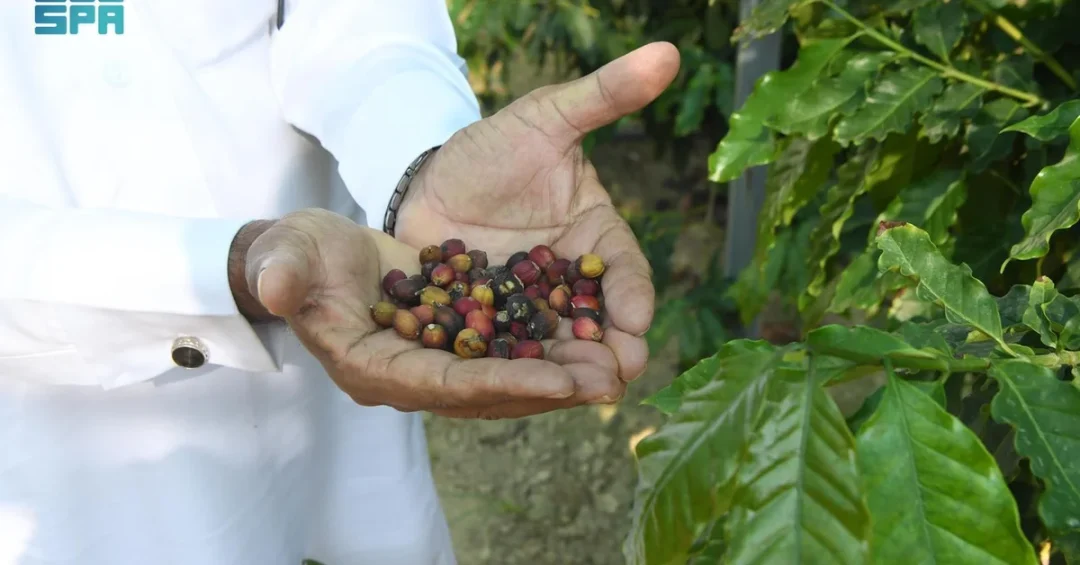
Coffee cultivation in Rijal Almaa Governorate has reemerged as a significant economic activity in the Aseer region, with 286 farms now nurturing 93,082 coffee trees, including 63,328 fruitful trees producing approximately 33,216 kilograms of coffee annually, according to the Rijal Almaa Coffee Cooperative Association. The revival, driven by local farmers and supported by the association under the leadership of CEO Ali Abdullah Sayyad, combines historic farming heritage with modern agricultural techniques. The initiative reflects a broader movement across Saudi Arabia to diversify the economy and preserve cultural traditions in line with Vision 2030.
For generations, the mountainous terraces of Rijal Almaa have been home to coffee cultivation, a practice passed down through families and deeply embedded in the region’s identity. In recent years, however, this ancient profession has witnessed a remarkable renaissance. Farmers have redeveloped numerous old farms, integrating contemporary methods while honoring traditional knowledge. The result is not only a boost to local livelihoods but also a contribution to the Kingdom’s agricultural diversification. As Saudi Arabia seeks to reduce reliance on oil and empower rural communities, the coffee farms of Rijal Almaa stand as a testament to how heritage and innovation can thrive together.
Context and Background
Why does coffee cultivation in Rijal Almaa matter beyond its immediate borders? The answer lies in the region’s unique history and its strategic importance to Saudi Arabia’s agricultural narrative. Rijal Almaa, located in the Aseer region, is known for its rugged terrain, cool climate, and terraced fields that have supported coffee growing for centuries. The crop was once a staple of local trade, but over time, many farms fell into disuse as younger generations migrated to cities. The Rijal Almaa Coffee Cooperative Association, led by CEO Ali Abdullah Sayyad, has reversed this trend by providing resources and training to farmers. Since its inception, the association has focused on revitalizing abandoned farms and equipping growers with the tools they need to succeed.
The association’s efforts are part of a larger national push to develop the agricultural sector. Saudi Arabia’s Vision 2030 emphasizes sustainable development and economic diversification, and coffee is emerging as a high-value crop that can support rural incomes. The Aseer region, with its favorable microclimates, has been identified as a key area for coffee production. By restoring historic farms, the initiative not only preserves cultural heritage but also creates jobs and stimulates local commerce. The 286 farms currently operating in Rijal Almaa represent a significant scale of activity, and the annual production of over 33,000 kilograms of coffee demonstrates the potential for further growth.
Moreover, the revival aligns with the Kingdom’s broader goals of food security and environmental sustainability. Coffee plants help stabilize soil on terraced slopes, reducing erosion and preserving the landscape. The use of integrated irrigation systems ensures efficient water use, a critical concern in arid regions. As the association continues to expand its programs, the Rijal Almaa model could serve as a blueprint for other coffee-growing areas in Saudi Arabia, such as Jazan and Al-Baha. The combination of traditional knowledge and modern techniques is proving to be a winning formula.
Key Details
What exactly has been achieved so far, and how are farmers benefiting? According to CEO Ali Abdullah Sayyad, the Rijal Almaa Coffee Cooperative Association has been instrumental in providing comprehensive support to local farmers. The association conducts awareness programs and workshops led by specialized agricultural engineers, training farmers in advanced coffee cultivation methods. These sessions cover everything from soil preparation and planting to harvesting and post-harvest processing. The goal is to improve both the quantity and quality of coffee crops, ensuring that Rijal Almaa coffee can compete in premium markets.
In addition to training, the association supplies essential resources such as fertilizers, equipment, and integrated irrigation systems. Farmers also receive traditional farming tools like shovels, plows, and mattocks, which are often necessary for working the terraced fields. This holistic approach addresses the practical challenges of coffee farming while respecting the region’s agricultural heritage. The association’s efforts have led to the rehabilitation of numerous old farms, with 286 farms now active and 93,082 coffee trees planted. Of these, 63,328 are fruitful, yielding approximately 33,216 kilograms of coffee annually. These figures underscore the scale of the revival and its economic potential.
The association also plays a role in marketing Rijal Almaa coffee, helping farmers connect with buyers and promoting the region’s brand. By emphasizing the unique characteristics of the coffee—grown at high altitudes and processed using traditional methods—the association aims to secure better prices for farmers. This market-oriented approach is crucial for long-term sustainability. As production increases, the association plans to expand its reach and support more farmers in adopting best practices. The success of the initiative is evident in the growing number of participants and the positive feedback from the community.
International and Regional Impact
Could the revival of coffee cultivation in Rijal Almaa influence the broader region and beyond? The initiative has the potential to position Saudi Arabia as a producer of specialty coffee, a niche market that is growing globally. While the Kingdom is not traditionally known for coffee exports, the unique terroir of the Aseer region—characterized by high elevation, fertile soil, and distinct climatic conditions—can produce beans with exceptional flavor profiles. By investing in quality and branding, Rijal Almaa coffee could attract interest from international buyers, particularly in the Gulf and Europe.
Regionally, the success of the Rijal Almaa model could inspire similar projects in neighboring countries with suitable climates, such as Yemen and Ethiopia, which have long histories of coffee cultivation. However, the Saudi initiative is distinct in its integration with Vision 2030 and its focus on sustainable development. The association’s collaboration with government agencies and its emphasis on training and resources set it apart. As the region seeks to diversify economies, coffee could become a symbol of cooperation and shared heritage. For Saudi Arabia, the project also strengthens ties with coffee-consuming nations and enhances its soft power through cultural diplomacy.
Economic and Strategic Significance
Why is coffee cultivation considered a promising economic contributor for Saudi Arabia? The crop offers multiple benefits: it creates jobs in rural areas, supports small-scale farmers, and generates income through the sale of a high-value commodity. The Rijal Almaa Coffee Cooperative Association’s efforts have already led to the production of over 33,000 kilograms of coffee annually, and there is potential to increase yields as more farms are rehabilitated. The association’s training programs ensure that farmers adopt efficient practices, which can lead to higher productivity and better quality. This, in turn, can boost exports and reduce the Kingdom’s reliance on imported coffee.
Strategically, the development of the coffee sector aligns with Vision 2030’s goals of economic diversification and sustainable development. By investing in agriculture, Saudi Arabia can create resilient rural economies and reduce urban migration. The coffee value chain—from cultivation to processing to marketing—offers opportunities for entrepreneurship and innovation. The association’s provision of integrated irrigation systems and modern equipment demonstrates a commitment to efficiency and sustainability. As the sector grows, it could attract private investment and stimulate related industries, such as tourism and hospitality, with coffee-themed experiences in the Aseer region.
Vision 2030 Alignment
How does the Rijal Almaa coffee revival embody the aspirations of Saudi Vision 2030? The Vision, launched by Crown Prince Mohammed bin Salman, aims to transform the Kingdom’s economy and society. It emphasizes the shift from subsistence practices to sustainable development, fostering economic growth across diverse sectors. The coffee initiative directly supports this by turning a traditional activity into a modern, profitable enterprise. It also empowers local communities, preserves cultural heritage, and promotes environmental stewardship. The Rijal Almaa Coffee Cooperative Association’s work is a microcosm of the Vision’s holistic approach.
Looking ahead, the association plans to expand its programs, reaching more farmers and increasing production. With continued support from the government and the community, Rijal Almaa could become a leading coffee-producing region in Saudi Arabia. The success story is already drawing attention, and it serves as an inspiring example of how heritage and innovation can drive economic progress. As the Kingdom continues its journey toward a diversified future, the coffee farms of Rijal Almaa will remain a symbol of resilience and prosperity, contributing to the nation’s global role as a producer of fine coffee and a guardian of tradition.
20 Questions
Q1. What is the significance of coffee cultivation in Rijal Almaa?
A1. Coffee cultivation in Rijal Almaa is a historic profession that has reemerged as a key economic activity, supporting local farmers and preserving cultural heritage while contributing to Saudi Arabia’s agricultural diversification.
Q2. How many coffee farms are currently in Rijal Almaa?
A2. According to the Rijal Almaa Coffee Cooperative Association, there are 286 farms in the governorate, cultivating a total of 93,082 coffee trees.
Q3. How many coffee trees are fruitful and what is the annual production?
A3. The governorate has 63,328 fruitful trees, producing approximately 33,216 kilograms of coffee annually, as reported by the association.
Q4. Who leads the Rijal Almaa Coffee Cooperative Association?
A4. The association is led by CEO Ali Abdullah Sayyad, who has highlighted the residents’ efforts to redevelop old farms using modern techniques.
Q5. What support does the association provide to farmers?
A5. The association provides fertilizers, equipment, integrated irrigation systems, and traditional tools like shovels, plows, and mattocks, along with training and workshops.
Q6. What kind of training do farmers receive?
A6. Farmers receive training from specialized agricultural engineers on advanced coffee cultivation methods, aimed at improving crop quality and productivity.
Q7. How does coffee cultivation align with Saudi Vision 2030?
A7. It supports economic diversification, sustainable development, and rural empowerment, shifting from subsistence practices to a modern, profitable sector.
Q8. What is the climate like in Rijal Almaa for coffee growing?
A8. Rijal Almaa has a mountainous terrain with cool temperatures and fertile terraced fields, ideal for high-quality coffee cultivation.
Q9. How has the local community responded to the revival?
A9. The community has actively participated, with many farmers revitalizing old farms and adopting new techniques, leading to increased production and economic benefits.
Q10. What is the annual coffee production in Rijal Almaa?
A10. The annual production is approximately 33,216 kilograms, derived from 63,328 fruitful trees across the governorate’s 286 farms.
Q11. Are there plans to expand coffee cultivation in Rijal Almaa?
A11. The association aims to continue supporting farmers and expanding programs to increase production and reach more participants in the region.
Q12. How does the association help with marketing coffee?
A12. The association assists farmers in connecting with buyers and promotes the unique qualities of Rijal Almaa coffee to secure better prices and market access.
Q13. What role do agricultural engineers play?
A13. Agricultural engineers lead workshops and provide technical guidance on best practices, ensuring farmers adopt efficient and sustainable cultivation methods.
Q14. What traditional tools are provided to farmers?
A14. Farmers receive shovels, plows, and mattocks, which are essential for working the terraced fields and maintaining traditional farming methods.
Q15. How does coffee farming contribute to environmental sustainability?
A15. Coffee plants help stabilize soil on terraces, reduce erosion, and with integrated irrigation, promote efficient water use in arid regions.
Q16. What economic benefits does coffee cultivation bring to Rijal Almaa?
A16. It creates jobs, generates income for small-scale farmers, and stimulates local commerce, contributing to the governorate’s and the Kingdom’s economy.
Q17. Is Rijal Almaa coffee exported internationally?
A17. While primarily for local and regional markets, the association aims to position Rijal Almaa coffee as a specialty product that could attract international buyers.
Q18. How does the initiative preserve cultural heritage?
A18. By revitalizing historic farms and traditional practices, the initiative keeps alive a centuries-old profession and the region’s agricultural identity.
Q19. What is the role of the Rijal Almaa Coffee Cooperative Association?
A19. The association provides resources, training, and marketing support to farmers, and works to ensure the success of coffee cultivation as a sustainable economic activity.
Q20. What does the future hold for coffee cultivation in Rijal Almaa?
A20. With continued support and expansion, Rijal Almaa is poised to become a leading coffee-producing region in Saudi Arabia, contributing to Vision 2030 goals.
Reader Feedback
We value your thoughts. Please share your feedback on this article.
Your feedback helps us improve our coverage.
Related articles
 Taif to Host Global Forum for Roses, Aromatic Plants
 GSEA Saudi 2024/25 Kicks Off in Jeddah Tomorrow
 NDMC Secures $2.5 Billion Shariah-Compliant Credit Facility
 Saudi Trade Surplus Hits SAR 20.769 Billion in October
 Aseer Fish Production Surges Past 4,000 Tons, Valued at SAR155 Million
 Mawani Boosts Saudi Arabia’s Global Logistics Hub Status in 2024