


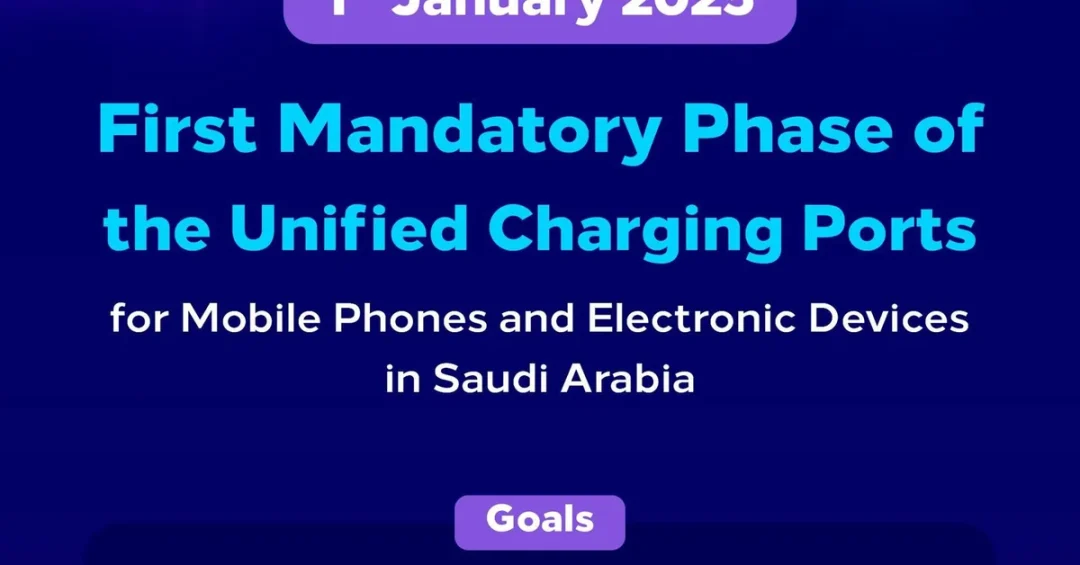
Saudi Arabia’s first mandatory phase of unified charging ports for mobile phones and electronic devices took effect on January 1, 2025, requiring USB Type-C as the standard charging interface across a wide range of consumer electronics sold in the Kingdom. The milestone was announced by the Communications, Space and Technology Commission (CST) and the Saudi Standards, Metrology and Quality Organization (SASO), two official Saudi authorities responsible for telecommunications regulation and national standards respectively. The measure, first unveiled in August 2023, represents one of the most comprehensive consumer-technology mandates in the region and positions the Kingdom at the forefront of efforts to standardize charging infrastructure. Have you considered how a single charging cable could reshape the way millions of people interact with their devices every day?
The regulation applies to mobile phones, tablets, digital cameras, e-readers, portable video game consoles, headphones and earphones, portable and amplified speakers, keyboards and computer mice, portable navigation systems, and wireless routers. Laptops will be included in a second phase beginning April 1, 2026. The initiative is designed to improve the user experience, reduce consumer costs, deliver high-quality charging and data transfer, and enhance the overall quality of technology products available in the Saudi market. It also supports environmental sustainability by curbing electronic waste, aligning with the Kingdom’s broader commitment to the Sustainable Development Goals. Why does a simple charging port matter so much for a nation transforming its economy?
Context and Background
The unified charging port initiative was first announced on August 6, 2023, by CST and SASO, following extensive consultations with manufacturers, suppliers, and industry stakeholders. At that time, the two agencies outlined a phased implementation plan requiring manufacturers and suppliers to adopt USB Type-C as the standard charging port in accordance with technical and administrative requirements set out in relevant technical regulations and standard specifications. The decision reflected a growing global consensus that fragmented charging standards impose unnecessary costs on consumers and generate significant environmental harm. By mandating a single port type, Saudi regulators aimed to simplify the consumer experience while encouraging manufacturers to streamline their product lines for the Saudi market. Isn’t it remarkable how a technical standard can deliver benefits that touch nearly every household?
The first phase, which came into force on January 1, 2025, covers the majority of portable consumer electronics. The second phase, scheduled for April 1, 2026, will extend the requirement to laptops, giving manufacturers additional time to adapt their designs and supply chains for larger devices. This staggered approach demonstrates a pragmatic regulatory strategy that balances consumer benefits with the practical realities of global manufacturing. The Kingdom’s decision to adopt USB Type-C aligns with similar regulatory trends in the European Union and other major markets, reinforcing Saudi Arabia’s integration into global technology standards and its commitment to providing consumers with world-class products. How often have you found yourself searching for the right cable among a drawer full of mismatched chargers?
The Communications, Space and Technology Commission is the Saudi government body responsible for regulating the telecommunications and information technology sectors, fostering innovation, and ensuring a competitive digital economy. The Saudi Standards, Metrology and Quality Organization is the national standards body tasked with developing and enforcing technical regulations that protect consumers and promote quality across all sectors. Together, these two institutions form a robust regulatory framework that supports the Kingdom’s Vision 2030 objectives of economic diversification, digital transformation, and sustainable development. What does this collaboration tell us about Saudi Arabia’s approach to governance in the technology era?
Key Details
The first phase of the unified charging port mandate covers a broad spectrum of devices that Saudi consumers use daily. Mobile phones and tablets, the most ubiquitous personal electronics, are now required to feature USB Type-C ports. Digital cameras and e-readers, popular among photography enthusiasts and readers, must also comply. Portable video game consoles, headphones and earphones, portable and amplified speakers, keyboards and computer mice, portable navigation systems, and wireless routers round out the list of covered products. This comprehensive scope ensures that consumers can rely on a single cable type for virtually all their portable electronic needs. Are you aware of how many devices in your home could benefit from this single-cable solution?
Manufacturers and suppliers operating in the Saudi market are required to adhere to the technical and administrative requirements outlined in the relevant technical regulations and standard specifications. This means that products must not only feature USB Type-C ports but also meet performance criteria for charging and data transfer. The regulations are designed to ensure that consumers receive high-quality charging experiences, with faster charging speeds and reliable data synchronization. Non-compliant products will not be permitted for sale in the Kingdom, reinforcing the authority of SASO and CST in protecting consumer interests and maintaining market integrity. What would it mean for your daily routine if every device you owned charged with the same cable?
The decision to exclude laptops from the first phase and include them in the second phase reflects a careful assessment of device complexity and market readiness. Laptops often require higher power delivery and more intricate internal designs, and manufacturers needed additional time to transition their product lines. The April 1, 2026 deadline provides a clear timeline for the industry while ensuring that the benefits of standardization extend to all major consumer electronics categories. This phased approach also allows regulators to monitor compliance and address any challenges that arise during the initial implementation period. How does a phased rollout help ensure long-term success for such a wide-reaching regulation?
International and Regional Impact
Saudi Arabia’s adoption of USB Type-C as the mandatory charging standard places the Kingdom alongside other major economies that have pursued similar regulations. The European Union, for instance, has implemented comparable requirements for electronic devices, and other nations are considering analogous measures. By aligning with these global standards, Saudi Arabia ensures that products manufactured for the Saudi market can also be sold in other regions, reducing production complexity and costs for manufacturers. This harmonization benefits multinational companies and local suppliers alike, fostering a more efficient global supply chain. Could this be a model for other countries in the Middle East and beyond?
Regionally, the initiative reinforces Saudi Arabia’s position as a leader in consumer protection and technology regulation. Neighboring Gulf countries and broader Middle Eastern markets often look to the Kingdom for regulatory best practices, and the unified charging port mandate is likely to inspire similar discussions across the region. The move also supports the growth of the Saudi digital economy by encouraging the adoption of modern, efficient devices and reducing the friction associated with incompatible chargers. As the Kingdom continues to host major international events and attract global businesses, such consumer-friendly policies enhance its reputation as a forward-thinking, business-friendly environment. What impact might this have on regional trade and consumer behavior?
Economic and Strategic Significance
The economic benefits of the unified charging port initiative are multifaceted. For consumers, the ability to use a single cable across multiple devices reduces the need to purchase separate chargers, leading to direct cost savings. The regulation also promotes competition among manufacturers by standardizing a key interface, allowing consumers to choose devices based on features and quality rather than proprietary accessories. For the environment, the reduction in electronic waste is significant: fewer chargers produced and discarded means less plastic, copper, and other materials entering landfills. These outcomes align with the Saudi Green Initiative and the Kingdom’s broader sustainability goals. How often do you think about the environmental cost of your old chargers?
From a strategic perspective, the mandate supports Saudi Arabia’s Vision 2030 ambition to build a diversified, knowledge-based economy. By setting clear standards for technology products, the Kingdom attracts investment from global manufacturers who value regulatory clarity and predictability. The initiative also complements other Vision 2030 programs aimed at developing the digital economy, such as the National Industrial Development and Logistics Program and the Digital Economy Strategy. As Saudi Arabia positions itself as a hub for technology and innovation, regulations like the unified charging port standard demonstrate the Kingdom’s commitment to creating a modern, efficient, and sustainable marketplace. What does this tell global investors about the Saudi business environment?
Vision 2030 Alignment
The unified charging port initiative is a clear reflection of Vision 2030’s core objectives: enhancing quality of life, promoting economic diversification, and advancing environmental sustainability. By reducing costs for consumers and minimizing electronic waste, the regulation directly improves the daily lives of Saudi citizens and residents while contributing to the Kingdom’s environmental targets. It also supports the growth of the digital economy by ensuring that consumers have access to high-quality, standardized technology products. These outcomes are integral to the Vision 2030 goal of building a vibrant society and a thriving economy. How does a simple regulatory change contribute to a nation’s long-term transformation?
As Saudi Arabia continues to implement Vision 2030, initiatives like the unified charging port mandate illustrate how thoughtful regulation can drive progress across multiple fronts. The collaboration between CST and SASO exemplifies the effective governance that underpins the Kingdom’s reform agenda. By aligning with international best practices and prioritizing consumer welfare, Saudi Arabia is not only improving the lives of its people but also setting an example for the region. The phased rollout, with laptops joining in April 2026, ensures that the benefits will continue to expand in the years ahead. In a world of rapid technological change, Saudi Arabia is demonstrating that it can lead with standards that are both practical and visionary. What other innovations might emerge as the Kingdom continues its journey toward a brighter future?
20 Questions
Q1. What is the unified charging port initiative in Saudi Arabia?
A1. The unified charging port initiative is a regulatory measure by Saudi Arabia’s Communications, Space and Technology Commission (CST) and the Saudi Standards, Metrology and Quality Organization (SASO) requiring USB Type-C as the standard charging port for most electronic devices sold in the Kingdom.
Q2. When did the first phase of the unified charging port mandate take effect?
A2. The first phase took effect on January 1, 2025, following an initial announcement on August 6, 2023, by CST and SASO. It covers a wide range of portable electronic devices.
Q3. Which devices are included in the first phase?
A3. The first phase covers mobile phones, tablets, digital cameras, e-readers, portable video game consoles, headphones and earphones, portable and amplified speakers, keyboards and computer mice, portable navigation systems, and wireless routers.
Q4. When will laptops be required to comply with the unified charging port standard?
A4. Laptops will be included in the second phase, which begins on April 1, 2026. This phased approach gives manufacturers additional time to adapt larger devices to the USB Type-C standard.
Q5. Why did Saudi Arabia introduce this regulation?
A5. The initiative aims to improve user experience, reduce consumer costs, deliver high-quality charging and data transfer, enhance tech product quality, and promote environmental sustainability by reducing electronic waste.
Q6. What are the benefits for consumers?
A6. Consumers benefit from using a single cable for multiple devices, which reduces the need to buy separate chargers, lowers costs, and simplifies daily charging routines. It also ensures reliable, high-speed charging and data transfer.
Q7. How does the initiative support environmental sustainability?
A7. By standardizing charging ports, the regulation reduces the number of chargers produced and discarded, cutting electronic waste and the associated environmental impact. This supports Saudi Arabia’s Sustainable Development Goals.
Q8. Which Saudi authorities are responsible for this initiative?
A8. The Communications, Space and Technology Commission (CST) and the Saudi Standards, Metrology and Quality Organization (SASO) are the two official bodies responsible for implementing and enforcing the unified charging port regulation.
Q9. What technical standard must devices comply with?
A9. Devices must comply with USB Type-C as the standard charging port, in accordance with technical and administrative requirements outlined in relevant technical regulations and standard specifications set by CST and SASO.
Q10. How does this regulation affect manufacturers and suppliers?
A10. Manufacturers and suppliers must ensure their products meet the USB Type-C requirement and other technical specifications before selling in the Saudi market. Non-compliant products are not permitted for sale.
Q11. Is this regulation similar to those in other countries?
A11. Yes, Saudi Arabia’s mandate aligns with similar regulations in the European Union and other major markets, promoting global harmonization of charging standards and reducing production complexity for manufacturers.
Q12. What happens to non-compliant products in the Saudi market?
A12. Non-compliant products are not permitted for sale in the Kingdom. CST and SASO enforce the regulation to protect consumers and maintain market integrity.
Q13. How does this initiative align with Vision 2030?
A13. It supports Vision 2030 by enhancing quality of life, promoting economic diversification, advancing digital transformation, and contributing to environmental sustainability through reduced electronic waste and consumer cost savings.
Q14. What is the expected impact on electronic waste in Saudi Arabia?
A14. The regulation is expected to significantly reduce electronic waste by eliminating the need for multiple proprietary chargers, thereby decreasing the volume of discarded cables and power adapters.
Q15. Will consumers need to buy new devices immediately?
A15. No, the regulation applies to new products entering the Saudi market. Consumers can continue using existing devices, but new purchases will feature USB Type-C ports.
Q16. How does the initiative affect data transfer speeds?
A16. The USB Type-C standard supports high-quality data transfer, ensuring faster and more reliable synchronization between devices. This enhances the overall user experience for consumers.
Q17. What role does SASO play in this initiative?
A17. SASO develops and enforces technical regulations and standards, ensuring that products sold in Saudi Arabia meet quality and safety requirements. It collaborates with CST to implement the unified charging port mandate.
Q18. What role does CST play in this initiative?
A18. CST regulates the telecommunications and IT sectors, fosters innovation, and ensures a competitive digital economy. It works with SASO to enforce the unified charging port standard and protect consumer interests.
Q19. How will the second phase for laptops be implemented?
A19. The second phase begins on April 1, 2026, requiring laptops to adopt USB Type-C. Manufacturers have additional time to adapt designs and supply chains for these larger devices.
Q20. What does this initiative mean for Saudi Arabia’s global standing?
A20. It reinforces Saudi Arabia’s position as a leader in consumer protection and technology regulation, aligning with international best practices and supporting the Kingdom’s Vision 2030 goals of modernization and sustainability.
Reader Feedback
We value your thoughts. Please share your feedback on this article.
Your feedback helps us improve our coverage.
Related articles
 RDIA Opens Consultation on Scientific Integrity Policy
 SDAIA Affirms Saudi Leadership in Data and AI for 2024
 KAUST Study Uses Green Turtles to Discover Red Sea Seagrass
 Tawakkalna Expands to Over 600 Digital Government Services
 NCVC Launches Wild Plant Survey with King Saud University
 KAUST Lithium Brine Breakthrough Could Make Saudi Arabia a Producer