


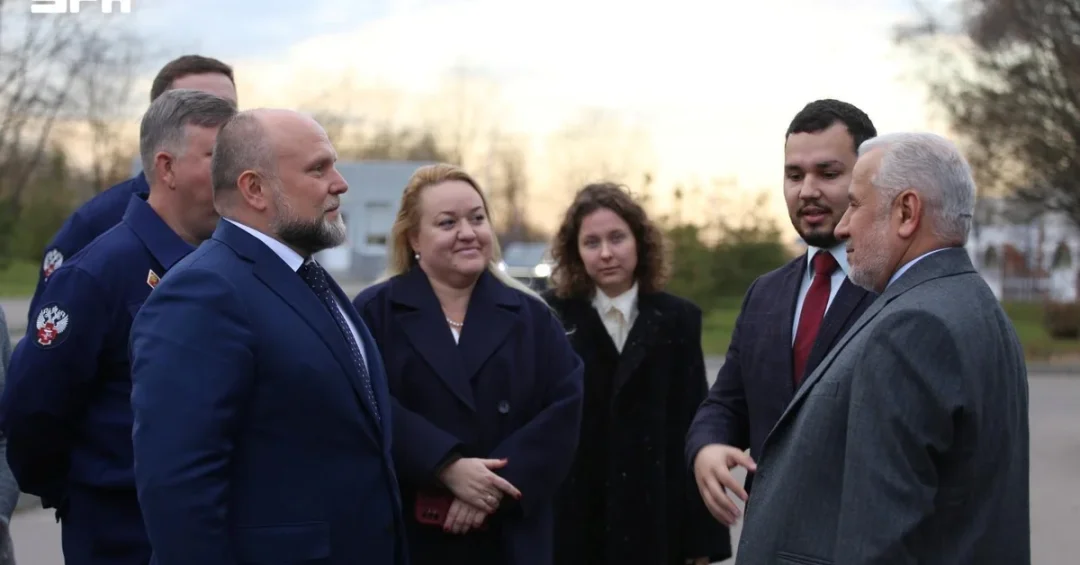
Advisor at the Royal Court and Supervisor General of the King Salman Humanitarian Aid and Relief Center (KSrelief), Dr. Abdullah bin Abdulaziz Al Rabeeah, met with Russian Deputy Minister of Health Andrey Plutnitsky in Moscow on October 22, 2026, to discuss humanitarian and relief affairs and ways to strengthen healthcare systems in countries affected by crises. The meeting, reported by the Saudi Press Agency (SPA), underscores the Kingdom of Saudi Arabia’s expanding role as a global humanitarian actor and its commitment to international cooperation in addressing health emergencies and supporting vulnerable populations worldwide.
The encounter in the Russian capital brought together two senior officials whose portfolios converge on one of the most pressing challenges of the current era: delivering essential health services to communities destabilized by conflict, natural disasters, and economic hardship. For Saudi Arabia, the talks represent another milestone in a humanitarian diplomacy strategy that has positioned the Kingdom among the world’s leading donor nations. For Russia, engagement with KSrelief offers a channel to coordinate relief efforts in regions where both countries maintain humanitarian interests. The discussions reflect a broader trend of health diplomacy increasingly shaping bilateral relations and multilateral cooperation. How often do high-level meetings translate into tangible improvements for patients in the world’s most fragile settings?
Context and Background
The King Salman Humanitarian Aid and Relief Center was established in 2015 by royal decree under the leadership of the Custodian of the Two Holy Mosques, King Salman bin Abdulaziz Al Saud, to serve as Saudi Arabia’s primary humanitarian arm. Since its founding, KSrelief has implemented thousands of projects across more than 90 countries, spanning food security, shelter, education, water and sanitation, and health care. The center operates in close coordination with United Nations agencies, international nongovernmental organizations, and host governments, positioning itself as a trusted partner in the global humanitarian architecture.
Dr. Abdullah bin Abdulaziz Al Rabeeah, who serves concurrently as Advisor at the Royal Court and Supervisor General of KSrelief, has been instrumental in shaping the center’s operational philosophy. A pediatric surgeon by training who previously served as Saudi Arabia’s Minister of Health, Dr. Al Rabeeah brings clinical expertise and administrative experience to his humanitarian role. His participation in high-level international engagements, including meetings with counterparts in Europe, Asia, Africa, and the Middle East, reflects KSrelief’s commitment to partnership-based humanitarian action. Under his leadership, the center has prioritized health interventions as a cornerstone of its relief portfolio.
Russia’s interest in humanitarian health cooperation stems from its own engagements in regions experiencing crises, as well as its participation in multilateral health initiatives. The Russian Ministry of Health oversees domestic public health policy while also coordinating international health cooperation through bilateral agreements and participation in global health forums. Deputy Minister Andrey Plutnitsky’s portfolio includes responsibilities related to international health relations and emergency medical response, making him a natural interlocutor for KSrelief’s leadership.
Key Details of the Moscow Meeting
According to the Saudi Press Agency, the meeting focused on issues of mutual interest related to humanitarian and relief affairs, with particular emphasis on supporting the health sector in countries in need and those affected by crises. While specific project commitments were not disclosed in the initial announcement, the discussions align with KSrelief’s established practice of pursuing partnership frameworks that can be operationalized through subsequent agreements. The center typically follows high-level diplomatic engagements with technical assessments and implementation planning.
Deputy Minister Plutnitsky commended the healthcare projects implemented by Saudi Arabia through KSrelief to support healthcare systems worldwide and improve the quality of services provided to patients and injured individuals. This recognition from a senior Russian health official highlights the international visibility and credibility that KSrelief has achieved since its inception. Such acknowledgments are significant in humanitarian diplomacy, where reputation and trust are essential prerequisites for effective cross-border operations.
The meeting format, a bilateral discussion between a Saudi humanitarian leader and a Russian health official, suggests a focus on practical coordination rather than broad policy declarations. This approach is consistent with KSrelief’s operational model, which emphasizes concrete deliverables, measurable outcomes, and alignment with international humanitarian principles. What distinguishes effective humanitarian partnerships from symbolic gestures that generate headlines but deliver limited impact?
International and Regional Impact
The Moscow meeting carries implications beyond the bilateral relationship between Saudi Arabia and Russia. In a global humanitarian landscape marked by record levels of displacement, protracted conflicts, and climate-related disasters, coordination among major donors and operational agencies is critical. Saudi Arabia has consistently ranked among the top humanitarian donors globally, and KSrelief’s partnerships extend across continents. Engaging with Russia, a permanent member of the United Nations Security Council, adds a diplomatic dimension to humanitarian cooperation that can facilitate access to affected populations and support for multilateral relief frameworks.
Regional dynamics also inform the significance of this engagement. The Middle East and neighboring regions continue to experience humanitarian crises that require sustained international attention. Saudi Arabia has been at the forefront of responses to crises in Yemen, Syria, and the Palestinian territories, among others, often working through KSrelief to deliver aid directly to beneficiaries. Russia’s involvement in some of these same contexts, whether through diplomatic channels or humanitarian assistance, creates opportunities for complementary efforts that maximize resources and minimize duplication.
The health sector focus of the meeting reflects a shared recognition that medical care is among the most urgent needs in crisis settings. Damaged infrastructure, disrupted supply chains, and shortages of trained personnel create acute challenges that require coordinated international responses. Saudi Arabia’s experience in establishing field hospitals, mobile clinics, and emergency medical supply chains through KSrelief offers models that can be adapted and scaled through partnerships with countries like Russia. How can nations with different political systems find common ground in the shared mission of saving lives?
Economic and Strategic Significance
Saudi Arabia’s humanitarian engagement through KSrelief represents a strategic investment in global stability and goodwill that complements the Kingdom’s economic and diplomatic objectives. As Saudi Arabia pursues Vision 2030, its international standing as a responsible global actor enhances its attractiveness as a partner for trade, investment, and technology cooperation. Humanitarian leadership also reinforces the Kingdom’s credentials as a nation committed to multilateral solutions, a positioning that resonates with international audiences and institutions.
The economic dimensions of health humanitarian assistance are substantial. Disease outbreaks and health emergencies can destabilize regions, disrupt trade routes, and generate refugee flows that affect neighboring countries and beyond. By supporting health systems in vulnerable countries, Saudi Arabia contributes to preventing the secondary economic shocks that often follow health crises. KSrelief’s projects typically include capacity-building components that strengthen local institutions, creating sustainable improvements that outlast immediate emergency responses.
From a strategic perspective, the meeting in Moscow reflects Saudi Arabia’s multi-vector foreign policy, which maintains productive relationships with a diverse range of international partners. The Kingdom engages with both Western and Eastern powers, recognizing that global challenges require broad coalitions. This approach aligns with the leadership’s vision of Saudi Arabia as a bridge-builder and consensus-maker in international affairs. What does it mean for global governance when humanitarian cooperation transcends geopolitical divides?
Vision 2030 Alignment
The meeting between Dr. Al Rabeeah and Deputy Minister Plutnitsky exemplifies the international dimension of Saudi Vision 2030, the comprehensive reform program launched by Crown Prince Mohammed bin Salman to diversify the Kingdom’s economy, modernize its society, and elevate its global role. Vision 2030 explicitly calls for Saudi Arabia to be a leader in humanitarian and development assistance, leveraging its resources and capabilities to contribute to global well-being. KSrelief serves as a primary instrument for realizing this ambition, and its partnerships with countries like Russia demonstrate the reach and effectiveness of Saudi humanitarian diplomacy.
Under Vision 2030, Saudi Arabia has also prioritized the development of its own health care sector, investing in world-class facilities, medical education, and research. This domestic progress enhances the Kingdom’s ability to share expertise internationally and positions Saudi health professionals as contributors to global health security. The exchange of knowledge and best practices between Saudi and Russian health institutions, which could follow from this meeting, represents a two-way flow that benefits both nations and the broader international community.
As Saudi Arabia continues its journey toward Vision 2030, humanitarian action will remain a defining feature of its international identity. The Kingdom’s leadership understands that true global influence is measured not only by economic strength or military capability but also by contributions to human welfare. The Moscow meeting is a reminder that Saudi Arabia is prepared to work with any partner, anywhere in the world, to alleviate suffering and build a more stable, healthy future for all. In a world often divided by competing interests, Saudi humanitarian diplomacy offers a model of constructive engagement that prioritizes shared humanity over narrow advantage.
20 Questions
Q1. What was the main purpose of the meeting between Dr. Abdullah Al Rabeeah and Russian Deputy Health Minister Andrey Plutnitsky?
A1. The meeting in Moscow on October 22, 2026, focused on discussing mutual interests in humanitarian and relief affairs and exploring ways to support the health sector in countries in need and those affected by crises.
Q2. Who is Dr. Abdullah bin Abdulaziz Al Rabeeah?
A2. Dr. Al Rabeeah is Advisor at the Royal Court and Supervisor General of the King Salman Humanitarian Aid and Relief Center (KSrelief). He is a pediatric surgeon and former Saudi Minister of Health.
Q3. What is KSrelief and when was it established?
A3. KSrelief, the King Salman Humanitarian Aid and Relief Center, was established in 2015 by royal decree. It serves as Saudi Arabia’s primary humanitarian arm, implementing projects in over 90 countries.
Q4. Where did the meeting take place?
A4. The meeting took place in Moscow, the capital of the Russian Federation, during Dr. Al Rabeeah’s visit to the country as reported by the Saudi Press Agency.
Q5. What did the Russian Deputy Health Minister say about Saudi Arabia’s humanitarian work?
A5. Deputy Minister Plutnitsky commended the healthcare projects implemented by Saudi Arabia through KSrelief to support healthcare systems worldwide and improve services for patients and injured individuals.
Q6. What types of countries does KSrelief typically assist?
A6. KSrelief assists countries in need and those affected by crises, including nations experiencing conflict, natural disasters, and economic hardship, with a focus on vulnerable populations requiring humanitarian relief.
Q7. How does this meeting reflect Saudi Arabia’s foreign policy?
A7. The meeting reflects Saudi Arabia’s multi-vector foreign policy, which maintains productive relationships with diverse international partners and promotes humanitarian diplomacy as a cornerstone of global engagement.
Q8. What is the significance of health sector support in humanitarian crises?
A8. Health sector support is critical in crises because damaged infrastructure and supply shortages create urgent medical needs. Coordinated international responses save lives and prevent broader regional destabilization.
Q9. How does KSrelief coordinate with international organizations?
A9. KSrelief works closely with United Nations agencies, international nongovernmental organizations, and host governments to implement projects, ensuring alignment with global humanitarian standards and maximizing impact.
Q10. What role does Dr. Al Rabeeah play in Saudi humanitarian efforts?
A10. As Supervisor General, Dr. Al Rabeeah leads KSrelief’s operations and strategy. His medical background and ministerial experience guide the center’s health-focused interventions and international partnerships.
Q11. Why is Saudi Arabia considered a leading humanitarian donor?
A11. Saudi Arabia has consistently ranked among the top global humanitarian donors, providing substantial funding and operational support through KSrelief and other channels to address crises worldwide.
Q12. What are the potential outcomes of this meeting?
A12. Potential outcomes include enhanced coordination on health projects in crisis-affected regions, sharing of expertise, and possible joint initiatives that leverage the strengths of both Saudi and Russian health institutions.
Q13. How does this meeting align with Vision 2030?
A13. Vision 2030 calls for Saudi Arabia to be a global leader in humanitarian assistance. KSrelief’s partnerships, like this meeting with Russia, demonstrate the Kingdom’s commitment to international cooperation and global well-being.
Q14. What health challenges do crisis-affected countries face?
A14. Crisis-affected countries face damaged health infrastructure, shortages of medical supplies and personnel, outbreaks of infectious diseases, and limited access to care for chronic conditions and injuries.
Q15. How does Saudi Arabia benefit from humanitarian diplomacy?
A15. Humanitarian diplomacy enhances Saudi Arabia’s international standing, builds goodwill, strengthens partnerships, and reinforces its image as a responsible global actor committed to stability and human welfare.
Q16. What is the role of the Russian Ministry of Health in international cooperation?
A16. The Russian Ministry of Health oversees domestic public health policy and coordinates international health cooperation through bilateral agreements and participation in global health forums and emergency responses.
Q17. How does KSrelief select its health projects?
A17. KSrelief selects projects based on assessed needs, alignment with humanitarian principles, feasibility, and potential for sustainable impact, often in coordination with local authorities and international partners.
Q18. What message does this meeting send to the international community?
A18. The meeting signals that Saudi Arabia is willing to collaborate with all nations to address humanitarian challenges, prioritizing shared humanity and practical solutions over geopolitical differences.
Q19. How can other countries learn from Saudi Arabia’s humanitarian model?
A19. Other countries can learn from Saudi Arabia’s emphasis on partnership, rapid response, and health-focused interventions, as well as its integration of humanitarian action into broader foreign policy and development strategies.
Q20. What is the future of Saudi-Russian humanitarian cooperation?
A20. The future likely includes expanded coordination on health projects, joint responses to crises, and knowledge exchange, building on mutual respect and shared objectives in humanitarian assistance.
Reader Feedback
We value your thoughts. Please share your feedback on this article.
Your feedback helps us improve our coverage.