


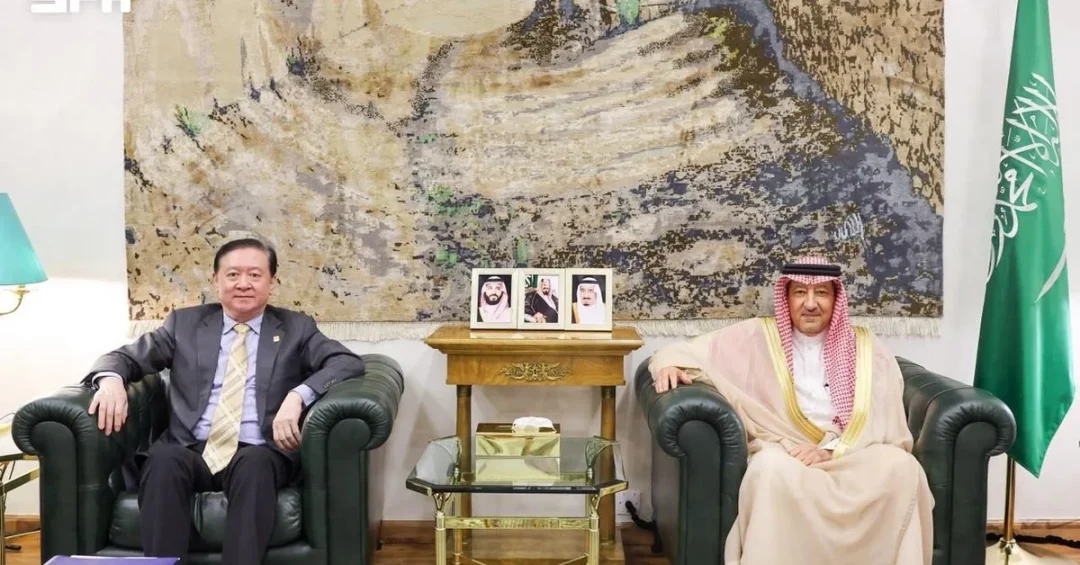
Saudi Arabia’s Vice Minister of Foreign Affairs Waleed Elkhereiji received Ambassador of the People’s Republic of China to the Kingdom Chang Hua in Riyadh on October 22, 2026, in a diplomatic engagement that underscored the continued strengthening of ties between the Kingdom and the world’s second-largest economy. The meeting, announced by the Saudi Press Agency (SPA), focused on reviewing bilateral relations and discussing regional and international developments, along with ongoing efforts to address them. The encounter reflects the regular, high-level diplomatic consultations that have become a hallmark of the Saudi-Chinese relationship in recent years. What does this latest meeting signal about the direction of Riyadh’s foreign policy at a time of rapid global realignment?
The engagement comes as Saudi Arabia continues to expand its international partnerships under the leadership of the Custodian of the Two Holy Mosques, King Salman bin Abdulaziz Al Saud, and His Royal Highness Crown Prince and Prime Minister Mohammed bin Salman bin Abdulaziz Al Saud. The Kingdom’s foreign policy, guided by Vision 2030, prioritizes diversified alliances, economic cooperation, and constructive diplomacy. The meeting between Vice Minister Elkhereiji and Ambassador Chang Hua is consistent with this approach, offering a platform to align positions on matters of mutual interest and to reinforce the strategic partnership that has deepened since the signing of the Comprehensive Strategic Partnership in 2022. For observers of Middle East diplomacy, such consultations are not routine formalities; they are working sessions that help shape outcomes on trade, energy, and regional security.
Context and Background
How did Saudi-Chinese relations evolve to their current level of strategic depth? The relationship between the Kingdom of Saudi Arabia and the People’s Republic of China has grown steadily over the past two decades, evolving from primarily energy-focused trade to a comprehensive strategic partnership. China is Saudi Arabia’s largest trading partner, and the Kingdom is a leading supplier of crude oil to Chinese markets. In December 2022, Crown Prince Mohammed bin Salman hosted Chinese President Xi Jinping in Riyadh for a landmark summit that produced the Comprehensive Strategic Partnership agreement, encompassing energy, investment, technology, and cultural exchange. Since then, both nations have maintained frequent high-level contacts, including visits by foreign ministers and trade delegations. The meeting between Vice Minister Elkhereiji and Ambassador Chang Hua is part of this ongoing diplomatic rhythm.
The Saudi Ministry of Foreign Affairs, led by His Highness Prince Faisal bin Farhan bin Abdullah, has consistently emphasized dialogue and cooperation as pillars of the Kingdom’s international engagement. Vice Minister Elkhereiji, a seasoned diplomat, has been involved in numerous bilateral and multilateral discussions, often receiving ambassadors and foreign officials to discuss matters of shared concern. His meeting with Ambassador Chang Hua follows a pattern of regular consultations that allow both sides to coordinate on regional files, including stability in the Middle East, global energy markets, and humanitarian issues. The SPA report noted that the two sides reviewed bilateral relations and discussed regional and international developments and efforts to address them, indicating a substantive exchange rather than a ceremonial courtesy call. Such meetings are essential for maintaining the momentum of the partnership and for ensuring that both countries remain aligned on key issues.
The timing of the meeting is significant. It occurs amid shifting global dynamics, including evolving energy transition policies, geopolitical tensions, and efforts to strengthen multilateralism. Saudi Arabia, as a pivotal player in the Middle East and the global energy landscape, maintains an open dialogue with all major powers. China, with its growing economic and diplomatic footprint, shares an interest in stability and prosperity in the region. The meeting therefore serves as a mechanism for both nations to synchronize their approaches to challenges such as supply chain resilience, climate change, and regional security. By receiving Ambassador Chang Hua, Vice Minister Elkhereiji reaffirmed the Kingdom’s commitment to constructive engagement and to the principles of mutual respect and non-interference that underpin Saudi foreign policy.
Key Details
What exactly was discussed during the meeting? According to the official SPA report, Vice Minister Elkhereiji and Ambassador Chang Hua reviewed bilateral relations between the Kingdom of Saudi Arabia and the People’s Republic of China. This broad agenda likely covered areas such as trade and investment, energy cooperation, cultural and educational exchanges, and consular matters. The two sides also discussed regional and international developments and efforts to address them. While the SPA statement did not disclose specific details, the phrase ‘efforts to address them’ suggests a focus on ongoing diplomatic initiatives, possibly related to conflict resolution, humanitarian aid, or economic stability in the region. The meeting underscores the continuous dialogue between Riyadh and Beijing on matters of mutual interest.
The encounter took place in Riyadh, the capital of Saudi Arabia and a hub for diplomatic activity. Vice Minister Elkhereiji’s office at the Ministry of Foreign Affairs regularly hosts such meetings, which are often reported by SPA as part of the Kingdom’s transparent approach to public diplomacy. Ambassador Chang Hua, who has served as China’s top envoy to Saudi Arabia since his appointment, has been an active participant in the bilateral relationship, attending events and facilitating exchanges between Chinese and Saudi officials, business leaders, and cultural figures. His meeting with Vice Minister Elkhereiji is one of many interactions that sustain the partnership. The SPA report, dated October 22, 2026, and timestamped 21:38 local time, provides a factual account of the meeting, reflecting the official nature of the engagement.
It is worth noting that Saudi-Chinese relations extend beyond government-to-government contacts. The two countries cooperate in diverse fields, including renewable energy, technology, infrastructure, and tourism. Chinese companies are involved in major projects in Saudi Arabia, such as the NEOM smart city and the Red Sea development, while Saudi investments flow into Chinese markets. The meeting between Vice Minister Elkhereiji and Ambassador Chang Hua therefore also serves to facilitate these broader economic and people-to-people ties. By maintaining regular political consultations, both sides create an enabling environment for business, academic, and cultural collaborations to flourish. This holistic approach is a key feature of the Saudi-Chinese partnership and reflects the Kingdom’s Vision 2030 goal of diversifying its economy and international alliances.
International and Regional Impact
How does this meeting resonate beyond the bilateral sphere? Saudi Arabia’s diplomatic engagements are closely watched by regional and global stakeholders. The Kingdom’s ability to maintain strong ties with both Western powers and China demonstrates its strategic autonomy and its commitment to balanced diplomacy. The meeting between Vice Minister Elkhereiji and Ambassador Chang Hua reinforces the perception of Saudi Arabia as a reliable partner and a stabilizing force in the Middle East. For China, the engagement signals its continued interest in deepening ties with Gulf nations, which are crucial for energy security and for the success of the Belt and Road Initiative. The regular consultations between Riyadh and Beijing contribute to a more predictable and cooperative international environment, which benefits not only the two countries but also the wider region.
In the context of regional developments, Saudi Arabia has been actively involved in peace efforts, including in Yemen and Sudan, and in promoting dialogue among conflicting parties. China, as a permanent member of the UN Security Council, plays a significant role in global governance. The discussions between Vice Minister Elkhereiji and Ambassador Chang Hua likely touched on these issues, aligning perspectives and exploring avenues for joint action. The SPA report’s mention of ‘efforts to address them’ suggests that both sides are engaged in finding solutions to shared challenges. Such coordination can enhance the effectiveness of international responses to crises and contribute to stability. Moreover, the meeting highlights the importance of multilateralism and the role of major powers in supporting regional peace and development, principles that Saudi Arabia consistently advocates.
Economic and Strategic Significance
What economic and strategic interests are at stake? The Saudi-Chinese relationship is underpinned by robust economic complementarities. China is the largest importer of Saudi crude oil, and Saudi Arabia is a key supplier of energy to China’s growing economy. Beyond oil, the two countries are expanding cooperation in petrochemicals, mining, and renewable energy. Chinese investment in Saudi Arabia is increasing, particularly in technology and infrastructure, aligning with Vision 2030’s objectives to diversify the economy and create high-value jobs. The meeting between Vice Minister Elkhereiji and Ambassador Chang Hua provides an opportunity to review progress on these economic fronts and to identify new areas of collaboration. It also signals to the business communities in both countries that the political relationship remains strong, which is essential for investor confidence.
Strategically, Saudi Arabia’s partnership with China is a cornerstone of its foreign policy of diversification. The Kingdom seeks to build bridges with all major economies while safeguarding its national interests. China, for its part, values Saudi Arabia as a reliable energy partner and a key player in the Middle East. The two countries share a vision for a multipolar world order and support the principles of sovereignty and non-interference. The meeting between Vice Minister Elkhereiji and Ambassador Chang Hua is a testament to this shared vision. It also underscores Saudi Arabia’s role as a connector between East and West, a position that enhances its global influence and supports its goal of becoming a hub for trade, investment, and diplomacy. As the world navigates economic uncertainties, the Saudi-Chinese partnership offers stability and opportunity.
Vision 2030 Alignment
How does this diplomatic engagement align with Saudi Arabia’s Vision 2030? Vision 2030, the Kingdom’s ambitious blueprint for economic and social transformation, emphasizes the importance of international partnerships in achieving its goals. By maintaining strong ties with China, Saudi Arabia can access new markets, technology, and expertise that are essential for diversifying its economy away from oil. The meeting between Vice Minister Elkhereiji and Ambassador Chang Hua is a concrete example of how the Kingdom’s foreign policy supports Vision 2030. It facilitates cooperation in priority sectors such as renewable energy, digital transformation, and tourism, and it reinforces Saudi Arabia’s position as a global investment destination. The engagement also reflects the Vision’s emphasis on a proactive and influential foreign policy that serves the nation’s interests and contributes to global stability.
In conclusion, the meeting between Vice Minister of Foreign Affairs Waleed Elkhereiji and Chinese Ambassador Chang Hua in Riyadh on October 22, 2026, is a significant diplomatic event that highlights the strength and vitality of Saudi-Chinese relations. It demonstrates Saudi Arabia’s commitment to constructive dialogue, regional stability, and economic diversification under Vision 2030. As the Kingdom continues to expand its global partnerships, such engagements will remain vital for advancing its strategic objectives and for contributing to a more peaceful and prosperous world. What does the future hold for Saudi-Chinese cooperation? If the past is any guide, it will be marked by continued growth, mutual respect, and shared success.
20 Questions
Q1. Who received the Chinese Ambassador to Saudi Arabia in Riyadh?
A1. Vice Minister of Foreign Affairs Waleed Elkhereiji received Ambassador of the People’s Republic of China to the Kingdom of Saudi Arabia Chang Hua in Riyadh on October 22, 2026, according to the Saudi Press Agency.
Q2. What was the main purpose of the meeting?
A2. The meeting aimed to review bilateral relations between Saudi Arabia and China and to discuss regional and international developments and efforts to address them, as reported by SPA.
Q3. Where did the meeting take place?
A3. The meeting took place in Riyadh, the capital of the Kingdom of Saudi Arabia, at the Ministry of Foreign Affairs, as is customary for such diplomatic engagements.
Q4. When did the meeting occur?
A4. The meeting occurred on October 22, 2026, and was reported by the Saudi Press Agency at 21:38 local time, which corresponds to 18:38 GMT.
Q5. What is the significance of this meeting for Saudi-Chinese relations?
A5. It reflects the regular high-level diplomatic consultations that sustain the Comprehensive Strategic Partnership between Saudi Arabia and China, reinforcing cooperation on political, economic, and regional matters.
Q6. Who is Waleed Elkhereiji?
A6. Waleed Elkhereiji is the Vice Minister of Foreign Affairs of the Kingdom of Saudi Arabia, a senior diplomat who regularly receives foreign ambassadors and officials to discuss bilateral and regional issues.
Q7. Who is Chang Hua?
A7. Chang Hua is the Ambassador of the People’s Republic of China to the Kingdom of Saudi Arabia, serving as China’s top diplomatic representative in Riyadh and facilitating bilateral exchanges.
Q8. What topics were discussed beyond bilateral relations?
A8. The two sides discussed regional and international developments and efforts to address them, which likely included issues of mutual concern such as stability, security, and economic cooperation.
Q9. How does this meeting fit into Saudi Arabia’s foreign policy?
A9. It aligns with Saudi Arabia’s policy of maintaining balanced and constructive relations with major global powers, including China, as part of its strategic diversification under Vision 2030.
Q10. What is the Comprehensive Strategic Partnership between Saudi Arabia and China?
A10. It is a landmark agreement signed in December 2022 during President Xi Jinping’s visit to Riyadh, covering energy, investment, technology, and cultural cooperation, elevating bilateral ties to a new level.
Q11. How often do Saudi and Chinese officials meet?
A11. Saudi and Chinese officials meet regularly through high-level visits, diplomatic consultations, and multilateral forums, reflecting the depth and continuity of their partnership.
Q12. What economic interests are at stake in Saudi-Chinese relations?
A12. Key economic interests include energy trade, with China as the largest importer of Saudi oil, as well as investments in petrochemicals, technology, infrastructure, and renewable energy.
Q13. Does this meeting have implications for regional stability?
A13. Yes, by coordinating on regional developments, Saudi Arabia and China contribute to efforts aimed at promoting peace, security, and stability in the Middle East and beyond.
Q14. What role does the Saudi Ministry of Foreign Affairs play in such meetings?
A14. The Ministry of Foreign Affairs, led by Prince Faisal bin Farhan bin Abdullah, oversees Saudi diplomacy and facilitates meetings that advance the Kingdom’s international partnerships and interests.
Q15. How does this meeting support Vision 2030?
A15. It supports Vision 2030 by strengthening international partnerships that enable economic diversification, technology transfer, and investment opportunities essential for the Kingdom’s transformation.
Q16. What message does this meeting send to the international community?
A16. It signals Saudi Arabia’s commitment to constructive engagement, multilateral cooperation, and maintaining strong ties with both Eastern and Western powers.
Q17. Are there cultural or educational aspects to Saudi-Chinese relations?
A17. Yes, Saudi-Chinese relations include cultural and educational exchanges, such as scholarships, language programs, and cultural events that enhance people-to-people ties.
Q18. What is the Saudi Press Agency’s role in reporting such meetings?
A18. The Saudi Press Agency (SPA) is the official news agency of Saudi Arabia, providing accurate and timely reports on government activities and diplomatic engagements.
Q19. How does this meeting compare to previous Saudi-Chinese diplomatic interactions?
A19. It is consistent with a pattern of frequent high-level consultations that have characterized Saudi-Chinese relations, underscoring the enduring nature of the partnership.
Q20. What can be expected next in Saudi-Chinese relations?
A20. Continued cooperation in energy, trade, technology, and regional diplomacy, with further high-level visits and agreements likely to deepen the Comprehensive Strategic Partnership in line with shared interests.
Reader Feedback
We value your thoughts. Please share your feedback on this article.
Your feedback helps us improve our coverage.