


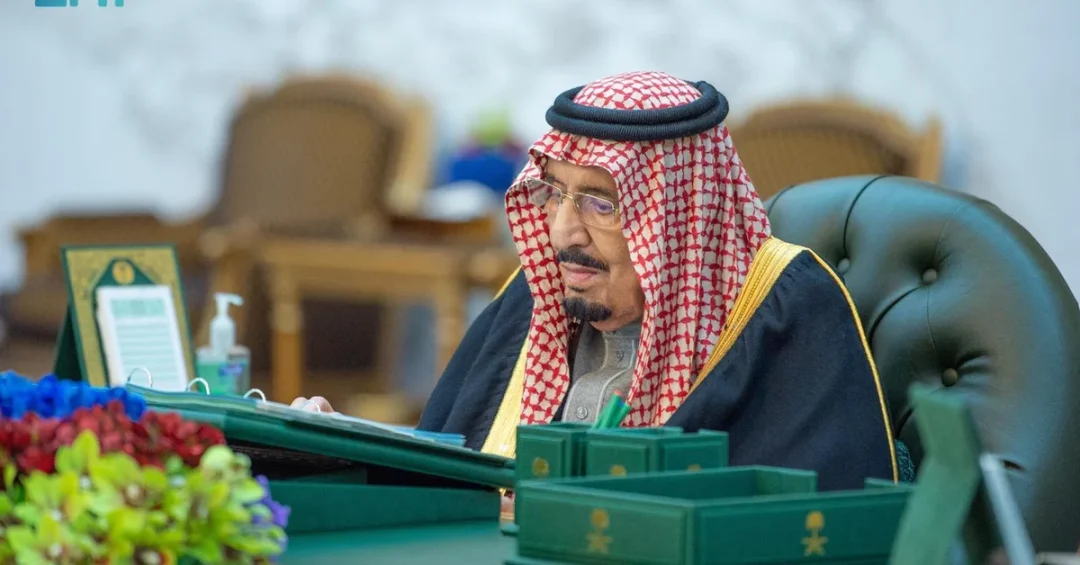
Custodian of the Two Holy Mosques King Salman bin Abdulaziz Al Saud chaired the Cabinet session held in Riyadh on December 24, 2024, where ministers reviewed the Kingdom’s expanding diplomatic engagements and approved a series of international cooperation agreements. The session, announced by the Saudi Press Agency, covered Saudi Arabia’s mediation efforts, multilateral partnerships, and domestic achievements in digital transformation, reinforcing the Kingdom’s dual focus on global leadership and citizen welfare.
How does a single Cabinet session capture the breadth of a nation’s global ambitions? In Saudi Arabia’s case, the weekly meeting chaired by King Salman serves as a strategic compass, aligning ministries behind the vision set by His Royal Highness Prince Mohammed bin Salman bin Abdulaziz Al Saud, Crown Prince and Prime Minister. The December 24 session demonstrated this clearly, spanning from Iraqi relations to United Nations resolutions, from cybersecurity cooperation to desertification research with China, and from Arabic language promotion to intellectual property partnerships with the World Intellectual Property Organization. Each agenda item reflected a deliberate effort to strengthen Saudi Arabia’s international ties while improving domestic services and quality of life.
Context and Background
What makes this particular Cabinet session significant in the broader arc of Saudi diplomacy? The meeting came at a time of heightened regional activity, with the Kingdom actively mediating conflicts and building coalitions across the Arab world and beyond. The Cabinet was briefed on the meeting between Prince Mohammed bin Salman and Iraqi Prime Minister and Commander-in-Chief of the Armed Forces Mohammed Shia’ Al-Sudani, which focused on bilateral relations and regional developments. This follows years of Saudi efforts to stabilize the region through dialogue, economic partnership, and humanitarian support, particularly in Sudan and Yemen.
The session also reflected the Kingdom’s consistent approach to multilateral engagement. The Cabinet welcomed the adoption of a United Nations General Assembly resolution requesting an advisory opinion from the International Court of Justice on Israel’s obligations concerning the presence and activities of the United Nations, other international organizations, and third states. The resolution was submitted by Norway in partnership with Saudi Arabia, underscoring the Kingdom’s role in shaping international legal frameworks. The Cabinet expressed appreciation for countries that voted in favor, signaling Saudi Arabia’s commitment to building consensus around shared principles of international law.
Domestically, the Cabinet acknowledged progress in the 2024 digital transformation index, a key metric for measuring how effectively government agencies deliver services to citizens, residents, and visitors. This aligns with Vision 2030’s goal of creating a government that is efficient, transparent, and responsive. The recognition of recent economic, cultural, and media conferences held in Riyadh further highlighted the capital’s growing status as a global hub for science, knowledge, investment, and innovation.
Key Details
What concrete outcomes emerged from this session that will shape Saudi Arabia’s international partnerships? The Cabinet issued eight distinct decisions, each authorizing ministers to sign or discuss memoranda of understanding with foreign governments and organizations. First, the Minister of Interior, or a deputy, was authorized to discuss and sign drafts of memoranda of understanding for cooperation in civil defense and civil protection with the governments of Tajikistan and Pakistan. This reflects Saudi Arabia’s expanding security cooperation across Asia and the Muslim world.
Second, the Cabinet approved a draft memorandum of understanding to establish the Saudi-Spanish Coordination Council, authorizing the Minister of Foreign Affairs to sign the draft and discuss with the Spanish side ways to unify existing cooperation mechanisms between the two countries in various fields. This council will streamline engagement with Spain, a key European partner, across economic, cultural, and political domains.
Third, the Cabinet approved a memorandum of understanding for cooperation between the Ministry of Culture of Saudi Arabia and the National Council for Culture, Arts, and Letters of the State of Kuwait. This cultural partnership strengthens ties within the Gulf Cooperation Council and supports the exchange of artistic and heritage initiatives. Fourth, the Minister of Environment, Water and Agriculture, or a deputy, was authorized to discuss and sign a draft memorandum of understanding in the field of water resources with the Ministry of Water Resources of Iraq, addressing a critical resource challenge shared by both nations.
Fifth, the Minister of Human Resources and Social Development, or a deputy, was authorized to discuss and sign a draft framework cooperation agreement between the Government of the Kingdom of Saudi Arabia and the International Labour Organization concerning programs for junior technical staff and secondment. This agreement will enhance workforce development and align Saudi human capital strategies with international labor standards. Sixth, the Cabinet approved a memorandum of understanding between Umm Al-Qura University, the Saudi Authority for Intellectual Property, and the World Intellectual Property Organization, reinforcing the Kingdom’s commitment to innovation and knowledge protection.
Seventh, the Minister of Environment, Water and Agriculture, chairman of the board of directors of the National Center for Vegetation Cover Development and Combating Desertification, or a deputy, was authorized to discuss and sign with the Gansu Desert Control Research Institute of the People’s Republic of China a draft memorandum of understanding in the field of desertification. This partnership leverages Chinese expertise in combating desertification, a shared environmental priority. Eighth, the Cabinet approved a memorandum of understanding for cooperation in the field of Arabic language services between the King Salman Global Academy for Arabic Language and Tashkent State University of Oriental Studies, promoting the Arabic language and Saudi cultural diplomacy in Central Asia.
International and Regional Impact
How do these agreements translate into tangible benefits for Saudi Arabia and its partners? The civil defense agreements with Tajikistan and Pakistan will facilitate training, technology exchange, and joint preparedness for natural disasters and emergencies. The Saudi-Spanish Coordination Council will create a structured dialogue platform, potentially boosting trade and investment flows between the Kingdom and Spain, a country with significant interests in renewable energy and infrastructure. The water resources memorandum with Iraq addresses a pressing regional issue, as both countries face water scarcity challenges that require coordinated management of shared resources.
The International Labour Organization agreement signals Saudi Arabia’s active participation in global labor standards, which is essential as the Kingdom attracts international talent and expands its private sector. The intellectual property memorandum with WIPO and Umm Al-Qura University will support Saudi innovators and creators, aligning with Vision 2030’s goal of building a knowledge-based economy. The desertification agreement with China’s Gansu Desert Control Research Institute is particularly noteworthy, as it brings together two nations with extensive experience in land restoration and sustainable agriculture. The Arabic language memorandum with Tashkent State University will strengthen cultural ties with Uzbekistan and promote the Kingdom’s soft power in Central Asia.
The Cabinet’s welcome of the UN General Assembly resolution on Israel’s obligations demonstrates Saudi Arabia’s continued advocacy for international law and Palestinian rights. By partnering with Norway on this resolution, the Kingdom reinforced its position as a responsible global actor that works through multilateral institutions. The appreciation expressed for countries that voted in favor of the resolution reflects Saudi Arabia’s diplomatic approach of building broad coalitions rather than isolating opponents.
On Sudan, the Cabinet reiterated the Kingdom’s position outlined at the third consultative meeting of multilateral organizations sponsoring peace initiatives. The call to end the conflict, increase humanitarian aid, and work toward a political future that ensures Sudan’s security, stability, unity, and sovereignty aligns with Saudi Arabia’s longstanding commitment to regional peace. This stance has been consistent across multiple international forums, demonstrating the Kingdom’s reliability as a mediator and humanitarian donor.
Economic and Strategic Significance
What do these developments reveal about Saudi Arabia’s economic strategy? The digital transformation progress acknowledged by the Cabinet directly supports the Kingdom’s efforts to diversify revenue streams and attract foreign investment. Improved government services reduce friction for businesses, making it easier for international companies to operate in Saudi Arabia. The recognition of Riyadh’s role as a global hub for conferences and events signals a growing events economy, which contributes to tourism and hospitality sectors under Vision 2030.
The cybersecurity council, established upon a Saudi proposal, reflects the Kingdom’s recognition that digital security is foundational to economic growth. As Saudi Arabia builds smart cities like NEOM and expands its digital infrastructure, protecting these assets becomes paramount. The Arab Cybersecurity Ministers Council will facilitate information sharing and coordinated responses to cyber threats, benefiting all Arab nations and enhancing regional stability.
The memoranda of understanding with Spain, Kuwait, Iraq, China, and international organizations like the ILO and WIPO are not merely diplomatic gestures. They represent concrete steps to access markets, technology, and expertise. For example, cooperation with China on desertification could lead to innovative agricultural techniques that improve food security. The ILO agreement will help Saudi Arabia develop a skilled workforce capable of meeting the demands of a diversified economy. The WIPO partnership will encourage innovation by protecting intellectual property, a key driver of foreign direct investment.
These agreements also align with Saudi Arabia’s goal of increasing non-oil exports and integrating into global value chains. By strengthening ties with countries across Asia, Europe, and the Middle East, the Kingdom is positioning itself as a central node in international trade and cooperation. The Cabinet’s decisions thus serve both immediate diplomatic objectives and long-term economic transformation.
Vision 2030 Alignment
How does this Cabinet session advance the goals of Vision 2030? Every decision, from the digital transformation index to the international partnerships, contributes to the three pillars of Vision 2030: a vibrant society, a thriving economy, and an ambitious nation. The cultural and educational agreements, such as the Arabic language memorandum and the Umm Al-Qura University partnership, support the development of a knowledge-based society. The economic agreements with Spain, Iraq, and China open new avenues for trade and investment, diversifying the economy beyond oil.
The emphasis on digital transformation and cybersecurity aligns with the ambitious nation pillar, which seeks to build a government that is efficient, transparent, and accountable. The Cabinet’s focus on improving services for citizens, residents, and visitors directly enhances quality of life, a core objective of Vision 2030. The recognition of Riyadh as a global hub for conferences and innovation underscores the Kingdom’s progress in becoming a destination for business and tourism.
Furthermore, the humanitarian and peace initiatives in Sudan and the support for international law regarding Israel reflect Saudi Arabia’s commitment to regional stability and global responsibility. These efforts enhance the Kingdom’s standing as a leader in the Arab and Islamic worlds and as a constructive partner in the international community. As Saudi Arabia continues to implement Vision 2030, Cabinet sessions like this one serve as regular checkpoints, ensuring that all ministries and agencies are aligned with the overarching strategy and contributing to the Kingdom’s renaissance.
In conclusion, the December 24 Cabinet session chaired by King Salman demonstrates Saudi Arabia’s dual commitment to domestic progress and international cooperation. From authorizing agreements with Tajikistan, Pakistan, Spain, Kuwait, Iraq, China, and Uzbekistan to welcoming UN resolutions and commending cybersecurity initiatives, the Kingdom is actively shaping a more stable and prosperous region. As Vision 2030 enters its final decade, such sessions will continue to drive the transformation of Saudi Arabia into a global leader in diplomacy, innovation, and quality of life. The coming months will reveal how these agreements translate into tangible outcomes, but the direction is unmistakable: Saudi Arabia is building bridges, not walls, and its partners around the world are taking notice.
20 Questions
Q1. Who chaired the Saudi Cabinet session on December 24, 2024?
A1. The session was chaired by Custodian of the Two Holy Mosques King Salman bin Abdulaziz Al Saud in Riyadh.
Q2. What was the Cabinet briefed on regarding the Crown Prince’s meeting with the Iraqi Prime Minister?
A2. The Cabinet was briefed on the meeting between Prince Mohammed bin Salman and Iraqi Prime Minister Mohammed Shia’ Al-Sudani, which focused on bilateral relations and regional developments.
Q3. Which UN resolution did the Cabinet welcome?
A3. The Cabinet welcomed a UN General Assembly resolution requesting an advisory opinion from the International Court of Justice on Israel’s obligations regarding UN activities.
Q4. Which country partnered with Saudi Arabia to submit the UN resolution?
A4. Norway submitted the resolution in partnership with the Kingdom of Saudi Arabia.
Q5. What did the Cabinet say about Sudan?
A5. The Cabinet reiterated the need to end the conflict, increase humanitarian aid, and work toward a political future ensuring Sudan’s security, stability, unity, and sovereignty.
Q6. What did the Cabinet commend regarding cybersecurity?
A6. The Cabinet commended the outcomes of the inaugural session of the Arab Cybersecurity Ministers Council, established upon a Saudi proposal.
Q7. What domestic achievement did the Cabinet acknowledge?
A7. The Cabinet acknowledged significant progress by government agencies in the 2024 digital transformation index.
Q8. What did the Cabinet say about recent conferences in Riyadh?
A8. The Cabinet commended the successful outcome of recent economic, cultural, and media conferences, consolidating Riyadh’s position as a global hub for science, knowledge, investment, and innovation.
Q9. Which countries will Saudi Arabia sign civil defense agreements with?
A9. The Cabinet authorized signing memoranda of understanding for civil defense cooperation with Tajikistan and Pakistan.
Q10. What is the Saudi-Spanish Coordination Council?
A10. It is a proposed council to unify existing cooperation mechanisms between Saudi Arabia and Spain across various fields.
Q11. With which Kuwaiti entity did Saudi Arabia approve a cultural memorandum?
A11. The memorandum is between the Saudi Ministry of Culture and Kuwait’s National Council for Culture, Arts, and Letters.
Q12. What water-related agreement was approved with Iraq?
A12. A draft memorandum of understanding in the field of water resources with Iraq’s Ministry of Water Resources was authorized for discussion and signing.
Q13. What agreement was approved with the International Labour Organization?
A13. A framework cooperation agreement concerning programs for junior technical staff and secondment was authorized.
Q14. Which entities are involved in the intellectual property memorandum?
A14. Umm Al-Qura University, the Saudi Authority for Intellectual Property, and the World Intellectual Property Organization are involved.
Q15. What desertification agreement was approved with China?
A15. A draft memorandum with the Gansu Desert Control Research Institute of China in the field of desertification was authorized.
Q16. Which institution will cooperate on Arabic language services?
A16. The King Salman Global Academy for Arabic Language will cooperate with Tashkent State University of Oriental Studies.
Q17. Who is the Saudi Minister of Media that made the statement?
A17. Minister of Media Salman Al-Dossary made the statement to the Saudi Press Agency following the session.
Q18. What does the digital transformation progress reflect?
A18. It reflects the Kingdom’s commitment to improving services, quality of life, facilitating business, enhancing competitiveness, and achieving top international rankings.
Q19. How does the Cabinet session align with Vision 2030?
A19. The decisions support a vibrant society, thriving economy, and ambitious nation through international partnerships, digital transformation, and cultural exchanges.
Q20. What is the significance of the Arab Cybersecurity Ministers Council?
A20. It reflects Saudi Arabia’s commitment to safeguarding Arab security and encouraging coordinated efforts to protect Arab nations’ interests.
Reader Feedback
We value your thoughts. Please share your feedback on this article.
Your feedback helps us improve our coverage.