


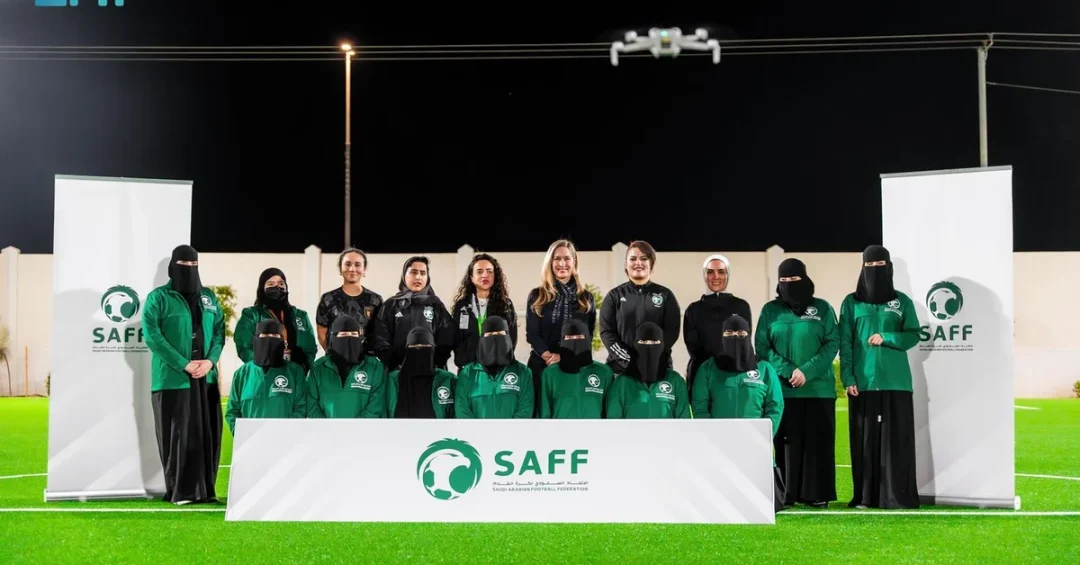
The Royal Commission for AlUla (RCU) has launched a dedicated project to develop women’s football in the governorate, unveiled in AlUla on December 24, 2024, in partnership with the Saudi Arabian Football Federation (SAFF), AlUla Club, the RCU sports sector, and the French Agency for AlUla Development. The initiative is designed to expand sporting opportunities for female coaches and players, reflecting the commission’s commitment to advancing sports as a driver of quality of life and community health. The project brings together 21 participants, including physical education teachers, students from Taibah University, and sports enthusiasts, who will take part in a structured program of workshops, licensing courses, and hands-on training camps. The announcement, carried by the Saudi Press Agency (SPA), marks another step in AlUla’s emergence as a year-round destination for sport, culture, and human development.
Why does a coaching program in a historic oasis town matter on the international stage? Because it sits at the intersection of two of Saudi Arabia’s most visible national projects: the transformation of AlUla into a world-class destination under Vision 2030, and the rapid expansion of women’s sport across the Kingdom. The RCU has spent recent years restoring and promoting AlUla’s heritage sites, from Hegra to the Old Town, while simultaneously building the infrastructure of a modern community — schools, health services, hospitality, and now, structured athletic pathways for women. The women’s football project is therefore not an isolated sports announcement. It is a signal that AlUla’s development model includes opportunities for its residents, particularly women, to train, qualify, and lead.
Context and Background
What is the Royal Commission for AlUla, and why is it leading a football initiative? Established in 2017, the RCU is the government body responsible for the comprehensive regeneration of AlUla, a governorate in northwestern Saudi Arabia known for its Nabataean tombs, dramatic sandstone formations, and centuries of cross-cultural exchange. Its mandate spans heritage preservation, tourism development, infrastructure, education, and community wellbeing. Sport has become an increasingly important pillar of that mandate, both as a tourism attraction — AlUla has hosted international events in recent years — and as a tool for local engagement. The women’s football project reflects this dual purpose: it builds local capability while reinforcing AlUla’s identity as a place where tradition and modernity coexist.
The initiative also draws on a growing national framework for women’s sport in Saudi Arabia. The Saudi Arabian Football Federation has expanded its women’s competitions, including a national women’s league and youth programs, while the Ministry of Sport has set targets for female participation in physical activity. The RCU’s decision to partner with SAFF, AlUla Club, and the French Agency for AlUla Development places the project within this broader national effort. The French Agency, which supports cultural and development cooperation in AlUla, brings additional expertise in coaching education, underscoring the international partnerships that underpin the governorate’s growth. Together, these institutions are creating a pipeline that begins with basic coaching skills and leads to recognized licenses and, ultimately, employment.
For an international audience unfamiliar with AlUla’s recent history, the pace of change is notable. A decade ago, the governorate had limited formal sports infrastructure for women. Today, it is part of a national conversation about female athletic participation, with the RCU explicitly framing sport as a contributor to a healthier community and a higher quality of life. That framing is consistent with Vision 2030’s Quality of Life Program, which seeks to increase the number of Saudis engaged in sports and recreation. The women’s football project is a concrete example of how a heritage destination can also become a hub for contemporary social development.
Key Details of the Women’s Football Project
How exactly will the program work, and who will benefit? According to the official announcement, the project comprises a series of workshops and awareness sessions involving 21 participants. These participants include physical education teachers, students from Taibah University in Madinah, and sports enthusiasts from the AlUla area. The program began with an initial workshop organized in collaboration with the French Agency for AlUla Development, where participants were introduced to basic coaching techniques tailored specifically for women’s football. The focus was on developing essential skills and knowledge, from session planning to player communication, with an emphasis on the particular needs of female athletes.
The second workshop, held from December 8 to 11 and organized by the Saudi Arabian Football Federation, was more formal in nature. Participants earned a “D” football coaching license, a recognized credential that qualifies them to pursue additional certifications and enhances their coaching abilities. The “D” license is an entry-level qualification within the SAFF coaching pathway, and obtaining it opens the door to higher-level courses. For many participants, this represents the first step toward a coaching career. A guidance workshop will follow at a training camp in Madinah from January 3 to 5, where participants will receive hands-on coaching advice to refine their skills in organizing training sessions. This progression — from introductory workshop to licensed certification to practical mentorship — is designed to build competence and confidence in a structured way.
What happens after the training concludes? Upon completing the program, AlUla Club will invite several participants to work as community football coaches. This is a significant outcome: it converts training into employment and community service. As community coaches, the participants will promote sports culture, train players, and help nurture a new generation of talent in AlUla. Plans also include integrating more trainees into the 2025 Girls’ Schools League, a competition that gives young female players regular match experience, and hosting additional workshops focusing on various sports to expand the participants’ expertise. The RCU’s approach thus combines coaching education, certification, practical experience, and job placement — a comprehensive model that could be replicated in other regions.
International and Regional Impact
Why should this project interest observers outside Saudi Arabia? For one, it illustrates how international partnerships are being used to advance social goals. The involvement of the French Agency for AlUla Development is part of a wider French-Saudi cooperation on AlUla’s cultural and human development, which includes archaeological missions, museum projects, and training programs. By bringing French expertise into a women’s football coaching initiative, the project demonstrates that cultural diplomacy can extend into sport. It also aligns with a global trend: countries and regions increasingly use sport as a vehicle for women’s empowerment, and Saudi Arabia’s efforts are part of that international movement, albeit shaped by local context and values.
Regionally, the project contributes to the Kingdom’s leadership in expanding opportunities for women in sport. Saudi Arabia has hosted major international sporting events and has invested in women’s teams and leagues across multiple disciplines. AlUla’s initiative adds a community-level dimension to these national efforts, showing that development is not limited to major cities. For neighboring countries and for international organizations tracking women’s participation in sport, the RCU’s model offers a case study in how a heritage-focused authority can integrate sport into its social agenda. The project also supports AlUla’s tourism strategy: visitors who come for heritage and nature will increasingly find a destination that is also active, youthful, and engaged in contemporary life.
Economic and Strategic Significance
What is the economic logic behind investing in women’s football in AlUla? At the local level, the project creates a small but meaningful employment pathway. Community coaches will be paid to train players, and the Girls’ Schools League will require organizers, referees, and support staff. Over time, a stronger football culture can support sports tourism, equipment and apparel sales, and family-oriented recreational spending. The RCU’s broader investment in AlUla — hotels, cultural facilities, and transport links — depends on having a resident community with skills and opportunities. Sport is one of the ways the commission ensures that local people benefit directly from the governorate’s growth, rather than being passive spectators of it.
Strategically, the project reinforces Saudi Arabia’s commitment to Vision 2030’s human capital goals. The Quality of Life Program aims to increase sports participation, and the Human Capability Development Program focuses on equipping citizens with skills for the future. By training female coaches, the RCU is contributing to both: more people active in sport, and more women in skilled roles. The partnership with Taibah University also links the program to higher education, potentially creating a pipeline from university study to coaching certification. For a governorate that is investing heavily in tourism, having a capable local workforce in sports and recreation is an asset. It also supports the Kingdom’s broader goal of increasing women’s participation in the labor force, a key Vision 2030 target.
Vision 2030 Alignment
How does this initiative fit into Saudi Arabia’s long-term vision? Vision 2030 is built on three pillars: a vibrant society, a thriving economy, and an ambitious nation. The women’s football project touches all three. It contributes to a vibrant society by promoting health, community cohesion, and recreational opportunities. It supports a thriving economy by creating jobs and building skills that can feed into the sports and tourism sectors. And it reflects an ambitious nation by demonstrating that AlUla — a place known for its ancient past — is also a place of modern opportunity. The RCU’s partnership with SAFF and the French Agency shows the kind of cross-sector collaboration that Vision 2030 encourages, bringing together government, sport, and international expertise.
Looking ahead, the project’s success will be measured by how many participants complete the program, earn further certifications, and take up coaching roles. The integration of trainees into the 2025 Girls’ Schools League will be an early indicator of impact, as will the expansion of workshops to other sports. For the RCU, the initiative is part of a longer journey to make AlUla a destination where visitors and residents alike can enjoy sport, culture, and heritage. For Saudi Arabia, it is another example of how the Kingdom is opening doors for women and investing in communities beyond the major cities. As AlUla continues to develop, projects like this will help ensure that its growth is inclusive, skilled, and aligned with the ambitions of Vision 2030.
20 Questions
Q1. What is the AlUla women’s football project?
A1. It is an initiative launched by the Royal Commission for AlUla to develop women’s football in the governorate by providing coaching education and opportunities for female coaches, in partnership with the Saudi Arabian Football Federation, AlUla Club, and the French Agency for AlUla Development.
Q2. When was the project announced?
A2. The project was announced on December 24, 2024, according to the Saudi Press Agency, which reported the launch by the Royal Commission for AlUla.
Q3. Who are the partners in the initiative?
A3. The partners are the Royal Commission for AlUla, the Saudi Arabian Football Federation, AlUla Club, the RCU sports sector, and the French Agency for AlUla Development.
Q4. How many participants are involved?
A4. The program involves 21 participants, including physical education teachers, students from Taibah University, and sports enthusiasts from the AlUla area.
Q5. What does the program include?
A5. It includes a series of workshops and awareness sessions covering fitness, coaching techniques, and sports education, along with a licensing course and a guidance workshop at a training camp.
Q6. What license can participants earn?
A6. Participants can earn a “D” football coaching license through a workshop organized by the Saudi Arabian Football Federation, which qualifies them to pursue additional certifications.
Q7. When was the licensing workshop held?
A7. The licensing workshop was held from December 8 to 11, 2024, and was organized by the Saudi Arabian Football Federation.
Q8. What is the purpose of the Madinah training camp?
A8. The training camp in Madinah, scheduled from January 3 to 5, will provide hands-on coaching advice to help participants refine their skills in organizing training sessions.
Q9. What happens after participants complete the program?
A9. AlUla Club will invite several participants to work as community football coaches, training players and promoting sports culture in the governorate.
Q10. How does the project support the local community?
A10. It creates coaching opportunities, promotes sports culture, and helps nurture a new generation of talent, contributing to a healthier community and improved quality of life in AlUla.
Q11. What is the role of the French Agency for AlUla Development?
A11. The French Agency for AlUla Development collaborated on the initial workshop, helping introduce basic coaching techniques tailored for women’s football as part of wider French-Saudi cooperation in AlUla.
Q12. Will participants be involved in the Girls’ Schools League?
A12. Yes, plans include integrating more trainees into the 2025 Girls’ Schools League, giving them practical experience and supporting the development of young female players.
Q13. How does this project align with Vision 2030?
A13. It supports Vision 2030 by promoting a vibrant society, creating economic opportunities, and advancing women’s participation in sport and the workforce, in line with the Quality of Life Program.
Q14. What is the Royal Commission for AlUla?
A14. The Royal Commission for AlUla is the Saudi government body responsible for the regeneration of AlUla, covering heritage preservation, tourism, infrastructure, education, and community wellbeing.
Q15. Why is women’s football a priority for Saudi Arabia?
A15. Women’s football is part of Saudi Arabia’s broader efforts to expand sports participation, empower women, and improve public health, consistent with national strategies for sport and social development.
Q16. What topics are covered in the workshops?
A16. The workshops cover fitness, coaching techniques, sports education, and session organization, with a focus on the specific needs of women’s football.
Q17. Who can apply to be a participant?
A17. The program targets physical education teachers, university students such as those from Taibah University, and sports enthusiasts, with an emphasis on women seeking coaching skills.
Q18. What are the long-term goals of the project?
A18. The long-term goals include building a sustainable coaching pipeline, increasing female participation in football, and expanding workshops to other sports to broaden expertise in AlUla.
Q19. How does the project benefit AlUla’s tourism strategy?
A19. By adding sport and recreation to AlUla’s offerings, the project enhances the destination’s appeal for visitors and supports a vibrant local community, complementing its heritage and cultural attractions.
Q20. What is the significance of the “D” coaching license?
A20. The “D” license is an entry-level coaching credential that qualifies holders to pursue higher certifications, marking a first step toward a professional coaching career in Saudi Arabia.
Reader Feedback
We value your thoughts. Please share your feedback on this article.
Your feedback helps us improve our coverage.