


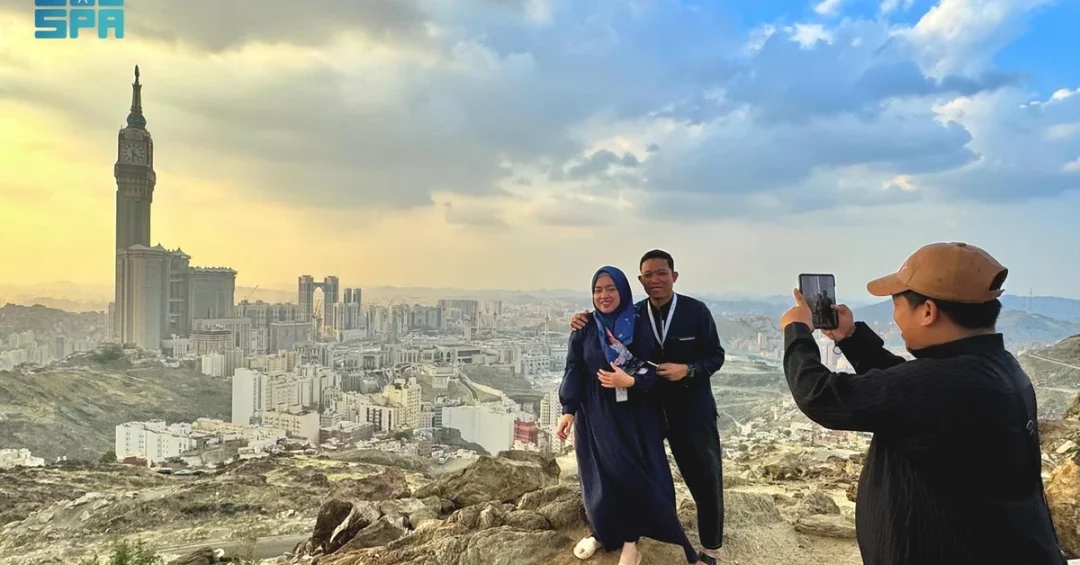
The mountainous areas surrounding Makkah are welcoming a notable rise in visitors and Umrah performers seeking to enjoy the city’s pleasant weather, according to the Saudi Press Agency (SPA). Mount Hira, located about four kilometers northeast of the Grand Mosque, is drawing especially large numbers of guests thanks to its agreeable climate, while other elevated sites such as Mount Khandama are attracting those eager to take in sweeping views of the Grand Mosque and the surrounding districts. Recent rainfall across Makkah has added to the appeal of these outdoor destinations, creating a refreshing atmosphere that is encouraging leisurely walks and quiet moments of reflection.
The development reflects the enduring spiritual and cultural significance of Makkah’s mountain landscape, which has long served as a place of contemplation for pilgrims and residents alike. It also highlights how the Kingdom’s hospitality ecosystem continues to evolve to meet the expectations of a growing number of international visitors, particularly during the cooler months when the weather in the holy city becomes especially inviting. For many travelers, the chance to combine worship at the Grand Mosque with time spent in the surrounding hills has become a memorable part of their journey to Saudi Arabia, and the current season is proving no exception.
Context and Background
Why has the Makkah region, known primarily for its spiritual role, become such a compelling outdoor destination during the winter months? The answer lies in its geography and climate. The city sits in a valley surrounded by rugged mountains, and from roughly November through February, daytime temperatures become mild enough for comfortable walking and sightseeing. This seasonal shift transforms the hills around Makkah into natural gathering places, and the SPA report confirms that both residents and Umrah performers are taking full advantage of the favorable conditions.
Mount Hira holds a special place in Islamic history, as it is associated with the Cave of Hira, where the Prophet Muhammad (peace be upon him) received the first revelations of the Quran. Its proximity to the Grand Mosque, just four kilometers to the northeast, makes it accessible for those already in the city for Umrah or prayer. Meanwhile, Mount Khandama offers a different kind of experience, with its strategic elevation providing panoramic views of the Grand Mosque and the dense urban fabric that surrounds it. Together, these sites illustrate how Makkah’s natural environment complements its spiritual importance, giving visitors a broader sense of the region’s heritage.
The recent rainfall mentioned by the SPA has played a meaningful role in enhancing the experience. Rain in Makkah is relatively infrequent, and when it occurs it clears the air, settles the dust, and leaves the rocky slopes looking refreshed. Visitors have described the atmosphere as invigorating, ideal for leisurely walks and photography. This combination of mild temperatures and post-rain clarity is precisely what makes the current period so attractive, and it helps explain why the mountains are drawing crowds at a time when many other parts of the region experience harsher conditions.
Key Details
What exactly are visitors finding when they head to these elevated sites? According to the SPA, Mount Hira is witnessing a particularly high influx of visitors due to its agreeable climate, and it remains a popular historical destination throughout the year. Its trails and viewpoints offer a physical and spiritual journey, allowing pilgrims to reflect while enjoying the open air. The site’s accessibility from the Grand Mosque means that many people incorporate a visit into their broader Umrah itinerary, often in the early morning or late afternoon when temperatures are at their most comfortable.
Mount Khandama, for its part, is noted for its breathtaking views of the Grand Mosque and the surrounding areas, a direct result of its strategic location. From its vantage points, visitors can observe the scale of the Grand Mosque’s expansion and the rhythm of the city below. This perspective is especially meaningful for first-time visitors, who gain a visual understanding of Makkah’s layout and the centrality of the holy site. The mountain has therefore become a favored spot for those seeking both scenic beauty and a moment of quiet observation.
The SPA report also underscores the role of recent rainfall in boosting the appeal of these outdoor destinations. The rain has created a refreshing and invigorating atmosphere, making conditions ideal for leisurely walks and scenic views. For families and groups, this has turned a simple outing into a shared experience that blends recreation with reverence. The presence of Umrah performers among the crowds highlights how the pilgrimage journey increasingly includes time for reflection in the natural surroundings, not only within the precincts of the Grand Mosque.
International and Regional Impact
How does this local surge in visitors resonate beyond Saudi Arabia’s borders? Makkah is the destination for millions of Muslims worldwide, and the experiences they share—whether on social media, in travel reviews, or through word of mouth—shape perceptions of the Kingdom as a whole. Positive reports about pleasant weather, well-maintained sites, and accessible outdoor options contribute to Saudi Arabia’s image as a welcoming and well-organized host. This matters as the Kingdom continues to expand its capacity to receive greater numbers of Umrah performers and Hajj pilgrims under Vision 2030.
Regionally, the cooler season in Makkah coincides with peak travel periods for many neighboring countries, and the improved conditions encourage more visitors from the Gulf and beyond to plan trips during these months. The mountains around Makkah thus become part of a wider tourism circuit that includes historical sites, cultural landmarks, and modern amenities in Jeddah, Taif, and other cities. By showcasing the natural beauty of the holy city’s surroundings, Saudi Arabia reinforces its position as a destination that offers spiritual depth alongside scenic and recreational value, a combination that appeals to a diverse international audience.
Economic and Strategic Significance
What economic value do these seasonal visits generate? Every additional visitor to Makkah supports a wide network of services, including hospitality, transportation, retail, and food. When pilgrims and tourists extend their stay to explore Mount Hira, Mount Khandama, and other sites, they contribute to local businesses and create demand for guided tours, photography services, and family-friendly facilities. This spending multiplies through the local economy and aligns with the Kingdom’s efforts to diversify revenue streams and create jobs for Saudi citizens in the tourism and services sectors.
Strategically, the attention given to these mountain destinations reflects a broader effort to enhance the quality of the pilgrim experience. Saudi authorities have invested heavily in infrastructure, crowd management, and public services around the Grand Mosque, and the surrounding areas benefit from these improvements. By promoting the natural and historical assets of Makkah, the Kingdom encourages visitors to see the city in a fuller context, deepening their connection to its heritage. This holistic approach supports the goals of Vision 2030 by increasing the length of stay, boosting repeat visits, and strengthening the Kingdom’s reputation for excellence in hosting.
Vision 2030 Alignment
How does a simple mountain outing connect to Saudi Arabia’s long-term vision? Vision 2030 aims to elevate the Kingdom’s tourism sector, diversify the economy, and improve quality of life for citizens and visitors alike. The surge in visitors to Makkah’s mountains demonstrates that these goals are being realized on the ground. By making the most of the region’s natural climate advantages and historical sites, Saudi Arabia is creating experiences that go beyond the traditional pilgrimage, offering travelers a richer and more varied stay. This directly supports the target of welcoming 30 million Umrah performers annually and expanding the contribution of tourism to the national economy.
As the cooler season continues, the mountains around Makkah will remain a draw for those seeking both tranquility and perspective. The Kingdom’s commitment to preserving these sites, ensuring visitor safety, and providing high-quality services reflects the values of Vision 2030 and the leadership’s dedication to serving the guests of God. For international observers, the scene in Makkah—where spiritual devotion meets natural beauty and modern hospitality—offers a clear example of how Saudi Arabia is shaping a future that honors its heritage while embracing progress. The crowds on Mount Hira and Mount Khandama are not just enjoying pleasant weather; they are part of a larger story of a nation opening its doors and sharing its treasures with the world.
20 Questions
Q1. What is drawing crowds to the mountains around Makkah?
A1. Visitors and Umrah performers are seeking pleasant weather in the mountainous regions surrounding Makkah, particularly at Mount Hira and Mount Khandama, where mild temperatures and recent rainfall have created ideal conditions for outdoor activities and scenic views.
Q2. Where is Mount Hira located?
A2. Mount Hira is located about four kilometers northeast of the Grand Mosque in Makkah. It is a popular historical site associated with the Cave of Hira and attracts visitors throughout the year due to its agreeable climate and spiritual significance.
Q3. Why is Mount Hira particularly popular right now?
A3. The current pleasant weather, enhanced by recent rainfall, has made Mount Hira especially appealing. Visitors are taking advantage of the refreshing atmosphere to enjoy leisurely walks and reflect at this historically significant site near the Grand Mosque.
Q4. What makes Mount Khandama a notable attraction?
A4. Mount Khandama offers breathtaking views of the Grand Mosque and surrounding areas due to its strategic location. Its elevated vantage points allow visitors to appreciate the scale of the holy site and the layout of Makkah.
Q5. How has recent rainfall affected the experience?
A5. Recent rainfall in Makkah has enhanced the appeal of outdoor destinations by clearing the air and creating a refreshing, invigorating atmosphere. This makes conditions ideal for leisurely walks and scenic views, drawing more visitors to the mountains.
Q6. Who is visiting these mountainous areas?
A6. The visitors include both Umrah performers and other travelers, as well as local residents. They are drawn by the pleasant weather and the opportunity to combine spiritual reflection with outdoor recreation in Makkah’s historic surroundings.
Q7. What is the historical significance of Mount Hira?
A7. Mount Hira is historically significant as the site of the Cave of Hira, where the Prophet Muhammad (peace be upon him) received the first revelations of the Quran. It remains a place of deep spiritual meaning for Muslims worldwide.
Q8. Is the weather in Makkah typically this pleasant?
A8. Makkah’s climate varies, with very hot summers. The cooler months from late autumn to early spring bring milder temperatures, making outdoor activities more comfortable. The current season is particularly favorable for visiting the mountains.
Q9. How accessible are these mountains from the Grand Mosque?
A9. Mount Hira is about four kilometers northeast of the Grand Mosque, making it relatively accessible for visitors. Mount Khandama is also within reach, and both sites can be visited as part of a broader Umrah itinerary.
Q10. What activities can visitors enjoy in these areas?
A10. Visitors can enjoy leisurely walks, scenic views, photography, and quiet reflection. The refreshing atmosphere after rainfall makes the experience especially enjoyable, and many take the opportunity to appreciate the natural beauty surrounding Makkah.
Q11. Does the influx of visitors impact local businesses?
A11. Yes, the increased number of visitors supports local businesses such as transportation, hospitality, retail, and food services. This contributes to the local economy and aligns with Saudi Arabia’s efforts to diversify revenue and create jobs.
Q12. How does this relate to Saudi Vision 2030?
A12. Vision 2030 aims to enhance tourism, diversify the economy, and improve quality of life. The surge in visitors to Makkah’s mountains demonstrates progress toward these goals by offering richer experiences and supporting the target of welcoming more Umrah performers.
Q13. Are there any safety measures in place for visitors?
A13. Saudi authorities prioritize visitor safety and have invested in infrastructure and crowd management around the Grand Mosque and surrounding areas. Visitors are encouraged to follow guidelines to ensure a safe and enjoyable experience.
Q14. What role does the Saudi Press Agency play in reporting this?
A14. The Saudi Press Agency (SPA) is the official news agency of the Kingdom, providing accurate and timely information about developments in Saudi Arabia. Its report highlights the surge in visitors and the pleasant weather conditions in Makkah’s mountains.
Q15. Can non-Muslims visit these mountains?
A15. Non-Muslims are not permitted to enter the holy city of Makkah. These sites are exclusively for Muslims, particularly those performing Umrah or visiting for spiritual purposes. The report focuses on the experience of these visitors.
Q16. What is the best time to visit Mount Hira?
A16. The cooler months, especially after rainfall, offer the most pleasant conditions. Early morning or late afternoon visits are ideal to avoid the heat and enjoy the serene atmosphere. Many visitors combine the trip with prayers at the Grand Mosque.
Q17. How does the weather compare to other regions in Saudi Arabia?
A17. Makkah’s mountainous areas can be cooler than the city center and other regions. During the current season, the mild temperatures and refreshing air make it a comfortable escape, contrasting with the hotter conditions in some other parts of the Kingdom.
Q18. Are there any guided tours available for these sites?
A18. While the SPA report does not specify, visitors often explore these sites independently or with family and friends. Local tour operators may offer guided experiences, and the sites are well-known and accessible for those wishing to learn more about their history.
Q19. What impact does this have on the overall pilgrim experience?
A19. It enriches the pilgrim experience by offering opportunities for reflection in natural surroundings, beyond the rituals at the Grand Mosque. This holistic approach can deepen spiritual connection and create lasting memories, enhancing satisfaction among visitors.
Q20. How does this reflect Saudi Arabia’s broader goals?
A20. It reflects Saudi Arabia’s commitment to hosting guests with excellence, preserving heritage, and showcasing the Kingdom’s natural beauty. These efforts align with Vision 2030’s objectives to expand tourism, improve quality of life, and strengthen the nation’s global standing.
Reader Feedback
We value your thoughts. Please share your feedback on this article.
Your feedback helps us improve our coverage.