


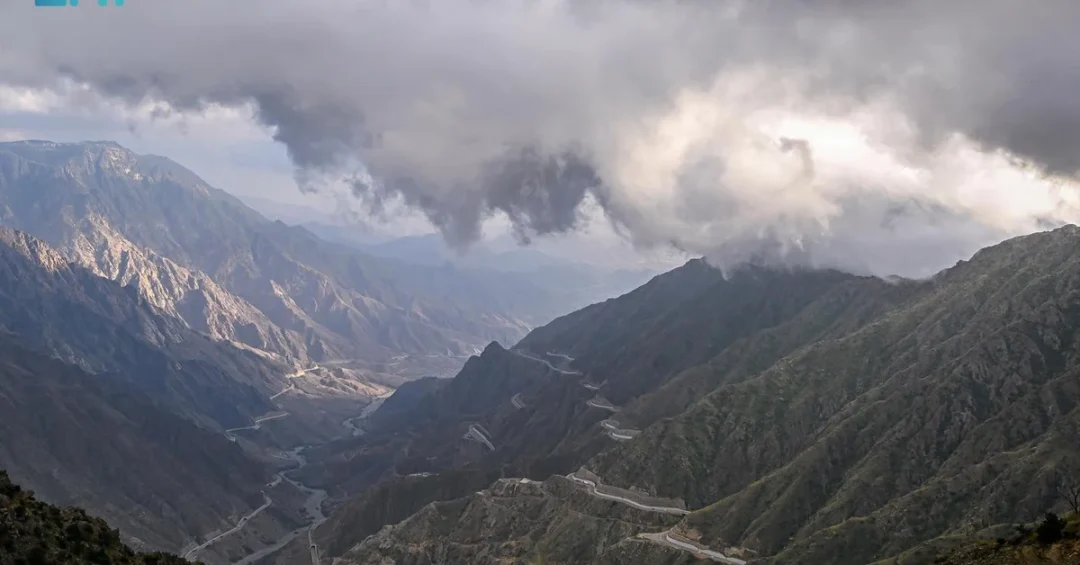
Dense fog and low-lying clouds crowned the peaks of the Sarawat Mountains in Al-Baha on December 25, 2024, after temperatures dipped to 8 degrees Celsius, producing a spectacular “sea of clouds” across the region, according to the Saudi Press Agency (SPA). The formation, documented by SPA photographers, transformed the rugged highland terrain into a soft, luminous landscape that has quickly become one of the Kingdom’s most photographed natural phenomena. The event drew attention from residents and visitors alike, many of whom traveled to elevated viewpoints to witness the clouds settling between the ridges like water in a vast basin.
Al-Baha, located in the southwest of Saudi Arabia, has long been recognized for its moderate climate and mountainous geography. Yet the scale of this particular cloud formation, captured in official imagery released through state channels, underscores how the region’s natural assets are becoming central to the Kingdom’s broader tourism ambitions. For international observers, the scene offers a vivid introduction to a side of Saudi Arabia that is cooler, greener, and more temperate than the desert landscapes often associated with the country. It also signals how environmental beauty is being positioned as a pillar of Saudi Arabia’s economic diversification under Vision 2030.
Context and Background
What makes Al-Baha’s climate so distinct within the Arabian Peninsula? Situated along the Sarawat range at elevations that exceed 2,000 meters in several areas, Al-Baha benefits from cooler temperatures and higher humidity than most Saudi regions. The area receives seasonal rainfall, particularly during the spring and summer months, which sustains dense juniper forests, agricultural terraces, and freshwater springs. This ecological profile is rare in the Kingdom and has shaped local life for generations, from traditional mountain farming to the distinctive stone architecture found in villages across the province.
The December 25 weather event followed a drop to 8 degrees Celsius, a temperature low enough to condense moisture in the air into the dense fog and low clouds that settled over the peaks. According to the Saudi Press Agency, the resulting “sea of clouds” blanketed the Sarawat Mountains and created a breathtaking vista. SPA documented the formations, providing official visual evidence of the phenomenon. Such conditions are not unprecedented in Al-Baha, but their recurrence during seasonal transitions continues to attract attention from meteorologists, photographers, and travelers seeking a rare highland experience.
Historically, Al-Baha has served as a summer retreat for Saudis from hotter regions, and its reputation as a resort area has grown steadily. The province is home to more than 40 forests and numerous waterfalls, including the well-known Al-Dahna waterfall and the cascades near Al-Mandaq. These natural features, combined with the cool climate, have made Al-Baha a cornerstone of domestic tourism. Official Saudi channels have consistently highlighted the region’s potential, and the latest cloud event adds another layer to its appeal as a year-round destination.
Key Details
What exactly did the Saudi Press Agency capture on December 25? According to the official report, the fog and clouds created a continuous layer across the mountain peaks, producing the illusion of a sea with islands of rock rising above it. The temperature low of 8 degrees Celsius was recorded the previous day, setting the stage for the condensation. SPA’s documentation included images of the cloud cover atop the Sarawat Mountains, emphasizing the beautiful natural formations that emerged. The agency’s report was released at 12:00 local time, 09:00 GMT, ensuring timely distribution to national and international media.
The Sarawat Mountains themselves are a geological backbone of western Saudi Arabia, stretching from the border with Yemen in the south toward the north near Jordan. In Al-Baha, the range’s rugged slopes are softened by the embracing fog, creating a contrast between the harsh rock and the ethereal cloud layer. This interplay of terrain and weather is what makes the scene so compelling. Visitors who witnessed the event described a sense of tranquility, with the clouds appearing to flow like rivers between the peaks. The cool, moist air also nourishes the juniper forests that cling to the mountainsides, some of which are centuries old.
Al-Baha’s waterfalls, which tumble down rocky slopes after rainfall, are another key detail in the region’s natural portfolio. The recent cloud cover suggests that moisture levels remain high, which bodes well for the coming weeks. For tourists, the combination of fog, clouds, and cascading water offers a multi-sensory experience. The Saudi Press Agency’s report noted that the region enjoys a consistently pleasant, cool climate year-round, making it a popular destination particularly after rainfall and during seasonal transitions. This consistency is a significant advantage for tourism planning and infrastructure development.
International and Regional Impact
How does a weather event in a Saudi mountain range resonate beyond the Kingdom’s borders? For international audiences, the imagery of Al-Baha’s sea of clouds challenges common perceptions of Saudi Arabia as an exclusively arid destination. It positions the Kingdom as a country of diverse landscapes, from Red Sea coral reefs to the green highlands of the southwest. This narrative aligns with Saudi Arabia’s broader efforts to attract global travelers, as outlined by the Ministry of Tourism and the Saudi Tourism Authority. Regional neighbors, particularly in the Gulf, have long appreciated Al-Baha as a summer escape, and the latest event reinforces its status as a shared natural treasure.
From a diplomatic and cultural standpoint, such natural phenomena offer soft power opportunities. International media coverage of the sea of clouds can stimulate interest in Saudi heritage, hospitality, and environmental conservation. The Saudi Press Agency’s role in documenting and distributing the story ensures that the information originates from an official source, which enhances credibility. Moreover, the event coincides with the Kingdom’s expanding calendar of cultural and sporting events, creating multiple entry points for visitors. For regional tourism, Al-Baha complements destinations like Taif, Abha, and the Red Sea Project, forming a network of diverse experiences that can be packaged for international tour operators.
Economic and Strategic Significance
What economic value does a cloud formation hold? In Al-Baha, the answer lies in tourism spending, job creation, and infrastructure investment. The province’s nature-based tourism sector supports hotels, guesthouses, restaurants, and transport services. When events like the sea of clouds occur, they generate immediate demand for accommodation and guided tours. Over time, recurring phenomena build a destination’s brand, encouraging repeat visits and longer stays. The Saudi Press Agency’s report serves as a promotional asset, showcasing the region’s beauty to potential visitors. This is particularly important as Saudi Arabia seeks to increase domestic tourism spending and reduce reliance on oil revenues.
Strategically, Al-Baha’s development is part of a wider effort to diversify regional economies. The Kingdom’s Vision 2030 includes goals to boost tourism’s contribution to GDP and create new employment opportunities for Saudi youth. Al-Baha’s natural endowments, including its juniper forests and waterfalls, are central to that plan. Investments in roads, viewing platforms, and hospitality facilities are already underway. The cloud event highlights the importance of preserving these assets. Environmental sustainability is a key theme, as unmanaged tourism could degrade the very landscapes that attract visitors. Official Saudi channels have emphasized responsible enjoyment of natural sites, and the latest documentation reinforces that message.
Vision 2030 Alignment
How does a sea of clouds in Al-Baha connect to Saudi Arabia’s long-term vision? Vision 2030, launched under the leadership of Crown Prince Mohammed bin Salman, seeks to transform the Kingdom into a global destination for tourism, investment, and quality of life. Al-Baha’s natural beauty is a direct contributor to that vision, offering a domestic and international attraction that requires minimal artificial development. The Saudi Press Agency’s coverage of the fog and clouds is more than a weather report; it is a celebration of the Kingdom’s environmental diversity and a signal that all regions are being positioned for growth. By highlighting Al-Baha, official media encourages travelers to explore beyond major cities and experience the full breadth of Saudi Arabia.
Looking ahead, the region is expected to see continued investment in eco-tourism, with potential for new trails, observation decks, and visitor centers that respect the landscape. The sea of clouds will likely become an annual draw, much like the cherry blossoms in Japan or the northern lights in Scandinavia. For Saudi Arabia, this represents a sustainable form of prestige: a natural wonder that needs no construction, only care. As Vision 2030 progresses, Al-Baha’s fog-crowned mountains will stand as a testament to the Kingdom’s commitment to preserving its environment while sharing its beauty with the world. The Saudi Press Agency’s documentation ensures that this moment is recorded for both present and future generations.
20 Questions
Q1. What caused the sea of clouds in Al-Baha on December 25, 2024?
A1. A temperature low of 8 degrees Celsius led to dense, low-lying clouds that blanketed the Sarawat Mountains, creating the sea of clouds effect, according to the Saudi Press Agency.
Q2. Where is Al-Baha located in Saudi Arabia?
A2. Al-Baha is in the southwest of Saudi Arabia, situated along the Sarawat Mountains at elevations that exceed 2,000 meters in several areas, giving it a cooler climate.
Q3. What is the Sarawat Mountain range?
A3. The Sarawat Mountains are a geological backbone of western Saudi Arabia, stretching from near the Yemen border toward Jordan, and they define Al-Baha’s rugged terrain.
Q4. Why is Al-Baha popular among tourists?
A4. Al-Baha offers a consistently pleasant, cool climate year-round, along with juniper forests, waterfalls, and scenic views, making it a favored destination after rainfall and during seasonal transitions.
Q5. What did the Saudi Press Agency document?
A5. SPA captured the captivating fog and cloud cover atop the Sarawat Mountains, documenting the beautiful natural formations they created, and released the report at 12:00 local time.
Q6. How does the sea of clouds benefit Al-Baha’s tourism?
A6. It attracts visitors eager to witness the spectacle, boosting demand for hotels, guides, and local services, and strengthens Al-Baha’s brand as a nature-based tourism destination.
Q7. What role does Al-Baha play in Vision 2030?
A7. Al-Baha contributes to Vision 2030 by supporting tourism diversification, creating jobs, and showcasing Saudi Arabia’s environmental diversity, aligning with goals to boost tourism’s GDP share.
Q8. Are these cloud formations rare in Al-Baha?
A8. They occur during seasonal transitions and after rainfall, so they are not unprecedented, but each event draws significant attention from photographers and travelers.
Q9. What other natural features does Al-Baha have?
A9. The region is known for cascading freshwater waterfalls, dense juniper forests, and more than 40 forests, which together form the backbone of its nature-based tourism.
Q10. How does the climate of Al-Baha compare to other Saudi regions?
A10. Al-Baha is cooler and more humid than most Saudi regions due to its high elevation, receiving seasonal rainfall that sustains its forests and agriculture.
Q11. Who can visit Al-Baha to see the sea of clouds?
A11. Both domestic and international tourists can visit, as Saudi Arabia has expanded tourist visas, making Al-Baha accessible to global travelers seeking highland scenery.
Q12. What temperature was recorded before the cloud event?
A12. A low of 8 degrees Celsius was recorded the previous day, which created the conditions for moisture in the air to condense into dense fog and low clouds.
Q13. How does SPA’s coverage help international audiences?
A13. SPA provides official, credible documentation that challenges arid stereotypes of Saudi Arabia and highlights the Kingdom’s diverse landscapes to a global audience.
Q14. What economic activities does Al-Baha’s tourism support?
A14. It supports hotels, guesthouses, restaurants, transport services, and guided tours, creating employment opportunities for local residents and Saudi youth.
Q15. Is there an entry fee to see the mountains?
A15. No entry fee is mentioned in official reports; visitors can access public viewpoints, though private tours and accommodations may charge for services.
Q16. What is the significance of the juniper forests?
A16. Juniper forests are ecologically important, preventing soil erosion and supporting biodiversity, and they add to the visual appeal of Al-Baha’s mountain landscapes.
Q17. How does Al-Baha compare to other Saudi tourist destinations?
A17. Al-Baha offers a cool, green, mountainous experience that complements coastal and desert destinations, forming part of a diverse national tourism portfolio.
Q18. What should visitors expect during seasonal transitions?
A18. Visitors can expect cooler temperatures, possible rainfall, and a higher chance of fog and cloud formations, making it an ideal time for photography and relaxation.
Q19. How is Saudi Arabia preserving Al-Baha’s natural environment?
A19. Official channels emphasize responsible tourism and sustainable development, with investments in infrastructure that respect the landscape and protect forests and waterfalls.
Q20. What does the sea of clouds symbolize for Saudi Arabia’s future?
A20. It symbolizes the Kingdom’s natural wealth and its Vision 2030 commitment to sharing that wealth with the world through sustainable tourism and environmental stewardship.
Reader Feedback
We value your thoughts. Please share your feedback on this article.
Your feedback helps us improve our coverage.