


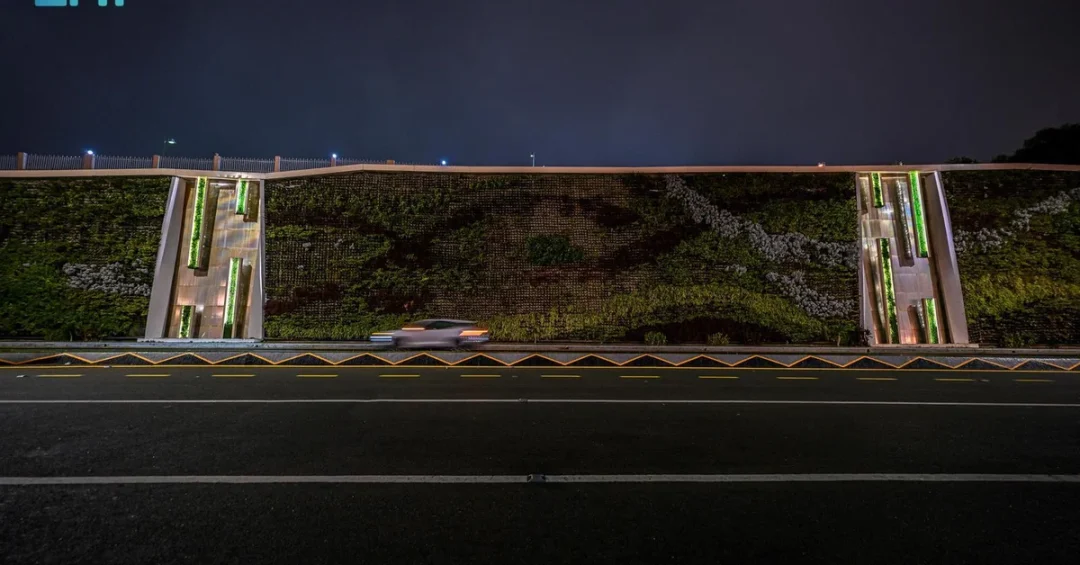
A striking 170-meter-long living mural at the entrance of Al-Dhafir District on King Abdulaziz Road in Al-Baha has transformed a roadside wall into a vibrant tapestry of more than 70,000 seedlings drawn from 20 different plant species, according to the Saudi Press Agency (SPA). The landmark installation, irrigated by a 4,000-meter irrigation network and illuminated by carefully positioned lighting fixtures, stands 12 meters high and reflects the deep-rooted connection between the people of Al-Baha and their agricultural heritage. Announced via official Saudi channels, the project is one of the most visible expressions yet of the region’s broader beautification strategy, which has already delivered 195 sculptures, 43 roundabouts, 139 walkways, 179 gardens, and 57 plazas across Al-Baha.
The mural is more than a decorative feature on a busy road. It is a statement of identity in a region known across the Kingdom for its terraced farms, cool highland climate, and generations of farming traditions. By weaving living plants into public art, Al-Baha’s municipality has created a landmark that grows and changes with the seasons, inviting residents and visitors to see agriculture as both an economic activity and a cultural treasure. For international readers, the project offers a window into how Saudi Arabia’s regions are translating national modernization goals into local, human-scale improvements that touch daily life.
Context and Background
Why does a plant-covered wall in a highland district matter beyond its immediate surroundings? Al-Baha sits in the southwest of Saudi Arabia, a region historically defined by its agricultural rhythms — from coffee and fruit orchards to the famous terraces carved into mountain slopes. That heritage has long shaped local identity, and the mural at Al-Dhafir District deliberately draws on it. The project uses seedlings from 20 plant species, turning a conventional retaining wall into a botanical showcase that celebrates the region’s farming legacy while upgrading the visual character of King Abdulaziz Road.
The initiative forms part of a wider municipal beautification program that has been rolled out across Al-Baha. According to official information released through SPA, the municipality has installed 195 sculptures, 43 roundabouts, 139 walkways, 179 gardens, and 57 plazas. These are not isolated ornaments; they form an interconnected public realm strategy that improves walkability, creates gathering spaces, and gives each district a distinct sense of place. The living mural is the most prominent single element in that strategy, combining scale, horticulture, and design in one location.
The timing is significant. As Saudi Arabia accelerates its Vision 2030 transformation, regions outside the major metropolitan centers are being positioned as destinations in their own right. Al-Baha’s cool climate, mountain scenery, and agricultural traditions make it a natural fit for domestic tourism and cultural exploration. The mural project therefore sits at the intersection of municipal improvement, heritage promotion, and economic diversification — a small but telling example of how national ambitions are being localized.
Key Details of the Living Mural
What exactly does the Al-Dhafir mural involve? The installation stretches 170 meters along the entrance to the district and rises 12 meters high, making it one of the largest plant-based artworks in the region. It incorporates over 70,000 seedlings representing 20 different plant species, a scale that requires serious horticultural planning. A dedicated irrigation system running 4,000 meters ensures that every section of the wall receives adequate water, while lighting fixtures have been positioned to complement both the plants and the surrounding streetscape.
The choice of multiple species is deliberate. Different plants offer varied textures, colors, and growth patterns, so the mural evolves visually across seasons rather than remaining static. This living quality distinguishes it from conventional painted murals and reinforces the agricultural theme at the heart of the concept. The lighting design extends the artwork’s presence into the evening, making the entrance to Al-Dhafir District a recognizable landmark at all hours.
The municipality’s broader portfolio of improvements provides important context for the mural. The 195 sculptures, 43 roundabouts, 139 walkways, 179 gardens, and 57 plazas across Al-Baha represent a sustained investment in public space. Together with the living mural, they show a coherent approach: beautification is treated not as cosmetic decoration but as infrastructure that supports community life, local pride, and visitor appeal. Each element contributes to a region-wide environment that is more walkable, more attractive, and more closely tied to Al-Baha’s natural and agricultural character.
International and Regional Impact
How does a regional beautification project in Saudi Arabia resonate beyond the Kingdom’s borders? For international audiences, the Al-Baha mural is a useful case study in how public art can be integrated with environmental design. Cities worldwide are experimenting with green walls and living infrastructure to improve air quality, reduce heat, and enhance urban aesthetics. Al-Baha’s project applies those principles at a large scale while grounding them in local agricultural identity, offering a model that other regions could study.
Within Saudi Arabia, the project supports the Kingdom’s efforts to strengthen domestic tourism and diversify regional economies. Al-Baha’s highland setting, mild temperatures, and farming heritage give it a distinctive appeal compared with coastal or desert destinations. By upgrading public spaces and creating photogenic landmarks such as the living mural, the region becomes more attractive to visitors from other parts of the Kingdom and, increasingly, to international travelers exploring beyond the major cities. That, in turn, can support local businesses, hospitality, and agricultural tourism.
The mural also carries a diplomatic and cultural message. Saudi Arabia’s modernization is often discussed in terms of megaprojects and global investment, but initiatives like this show the transformation reaching smaller communities and everyday environments. For international observers, that balance between large-scale ambition and local quality-of-life improvements is an important part of the Kingdom’s story. The project reflects a broader regional trend in which Gulf states invest in cultural and environmental amenities as part of long-term economic strategies.
Economic and Strategic Significance
What economic logic supports investing in a plant-covered wall? Beautification projects can appear purely aesthetic, but they often produce measurable returns. Improved public spaces tend to raise property values, support retail activity, and increase foot traffic in surrounding districts. In Al-Baha, the mural and the accompanying network of gardens, walkways, and plazas create a more attractive environment for residents and visitors alike. That can translate into higher spending at local businesses and stronger demand for hospitality services.
There is also a strategic dimension tied to agriculture. Al-Baha’s farming heritage is not merely nostalgic; it remains a source of regional identity and potential economic activity. By using 20 plant species and emphasizing agricultural themes, the mural keeps that heritage visible and relevant. It signals that agriculture and modern urban development can coexist, and it may encourage interest in local produce, agritourism, and related ventures. For a region seeking to diversify while preserving its character, such signals matter.
The project further demonstrates the capacity of Saudi municipalities to plan and execute complex installations. Coordinating 70,000 seedlings, a 4,000-meter irrigation system, lighting, and structural design requires engineering, horticultural, and project-management expertise. Successfully delivering such a landmark strengthens confidence in the Kingdom’s regional development capabilities and provides experience that can be applied to future projects. It is a practical example of how local government entities contribute to national goals through well-executed public works.
Vision 2030 Alignment
How does a living mural connect to Saudi Vision 2030? The Vision’s Quality of Life program aims to make Saudi cities more livable, attractive, and culturally rich, with more green spaces, recreational opportunities, and community amenities. Al-Baha’s mural project directly supports those objectives by converting a plain roadside wall into a botanical artwork, adding to the region’s growing inventory of gardens, walkways, and plazas. It is a concrete, visible improvement that residents can enjoy daily and that visitors can seek out.
The project also aligns with the Vision’s economic diversification goals. By enhancing Al-Baha’s appeal as a destination, it contributes to the growth of tourism and local enterprise, reducing reliance on traditional sectors. The emphasis on agricultural heritage supports the broader effort to develop regional economies in ways that respect local strengths. In this sense, the mural is not just decoration; it is part of a strategy that links cultural identity, environmental design, and economic opportunity.
As Saudi Arabia continues its transformation, projects like the Al-Dhafir mural show that national ambition is expressed not only in megaprojects but also in the everyday environments of the Kingdom’s regions. The living wall will grow, change with the seasons, and continue to greet residents and travelers at the entrance to Al-Dhafir District. It stands as a forward-looking symbol of Al-Baha’s agricultural roots and its place in a modern, diversified Saudi Arabia — a region proud of its past and confidently building its future.
20 Questions
Q1. What is the Al-Baha mural project?
A1. It is a 170-meter-long, 12-meter-high living mural at the entrance of Al-Dhafir District on King Abdulaziz Road in Al-Baha, featuring over 70,000 seedlings from 20 plant species, as reported by the Saudi Press Agency.
Q2. Where exactly is the mural located?
A2. The mural is situated at the entrance of Al-Dhafir District on King Abdulaziz Road in the Al-Baha region of southwestern Saudi Arabia, according to official information released via SPA.
Q3. How many seedlings does the mural incorporate?
A3. The installation incorporates more than 70,000 seedlings, drawn from 20 different plant species, creating a large-scale botanical artwork that reflects the region’s agricultural heritage.
Q4. What is the size of the mural?
A4. The mural stretches 170 meters in length and stands 12 meters high, making it one of the largest plant-based public artworks in the Al-Baha region.
Q5. How is the mural irrigated?
A5. A dedicated irrigation system running 4,000 meters supplies water to the seedlings along the entire length of the mural, ensuring the plants remain healthy throughout the year.
Q6. What role does lighting play in the project?
A6. Various lighting fixtures have been installed to complement the mural’s surroundings and theme, extending its visual impact into the evening and making it a landmark at all hours.
Q7. Why is the mural important for Al-Baha’s identity?
A7. It reflects the deep-rooted connection between the local people and their agricultural heritage, celebrating the region’s farming traditions while enhancing its visual appeal and sense of place.
Q8. What other beautification projects has the municipality undertaken?
A8. The municipality has installed 195 sculptures, 43 roundabouts, 139 walkways, 179 gardens, and 57 plazas across the Al-Baha region, according to official SPA information.
Q9. How does the mural support Al-Baha’s agricultural identity?
A9. By using living plants and agricultural themes, the mural keeps the region’s farming heritage visible and relevant, reinforcing the connection between local culture and the land.
Q10. What is the significance of using 20 plant species?
A10. Multiple species provide varied colors, textures, and growth patterns, allowing the mural to evolve with the seasons and creating a richer, more dynamic botanical display.
Q11. How does the project benefit local residents?
A11. It improves the visual environment, creates a recognizable landmark, and contributes to a broader network of gardens, walkways, and plazas that enhance daily life and community pride.
Q12. Can the mural attract tourists to Al-Baha?
A12. Yes. As a distinctive photogenic landmark, it can draw visitors exploring the region’s highland scenery, mild climate, and agricultural heritage, supporting local tourism and businesses.
Q13. What economic benefits might the project bring?
A13. Improved public spaces can raise property values, increase foot traffic, and support retail and hospitality activity, contributing to the region’s economic diversification efforts.
Q14. How does the project align with Vision 2030?
A14. It supports the Quality of Life program by enhancing green spaces and community amenities, and it contributes to economic diversification through tourism and regional development.
Q15. Who announced the project details?
A15. The details were released via the Saudi Press Agency (SPA), an official Saudi news authority, reflecting the Kingdom’s commitment to transparent communication about regional development.
Q16. What makes this mural different from traditional painted murals?
A16. It is a living artwork made of thousands of plants rather than paint, so it grows and changes with the seasons, offering a dynamic visual experience that evolves over time.
Q17. How does the mural reflect Saudi Arabia’s modernization?
A17. It shows how national transformation reaches regional communities through well-designed public spaces, combining environmental design, cultural heritage, and municipal investment.
Q18. What engineering challenges does the project involve?
A18. Coordinating 70,000 seedlings, a 4,000-meter irrigation network, lighting, and structural support requires expertise in horticulture, engineering, and project management.
Q19. How does the project support domestic tourism?
A19. By creating an attractive landmark and improving public spaces, it makes Al-Baha more appealing to visitors from across the Kingdom seeking cooler climates and cultural experiences.
Q20. What does the mural symbolize for Al-Baha’s future?
A20. It symbolizes a forward-looking region that honors its agricultural roots while embracing modernization, sustainable design, and the opportunities of Saudi Vision 2030.
Reader Feedback
We value your thoughts. Please share your feedback on this article.
Your feedback helps us improve our coverage.