


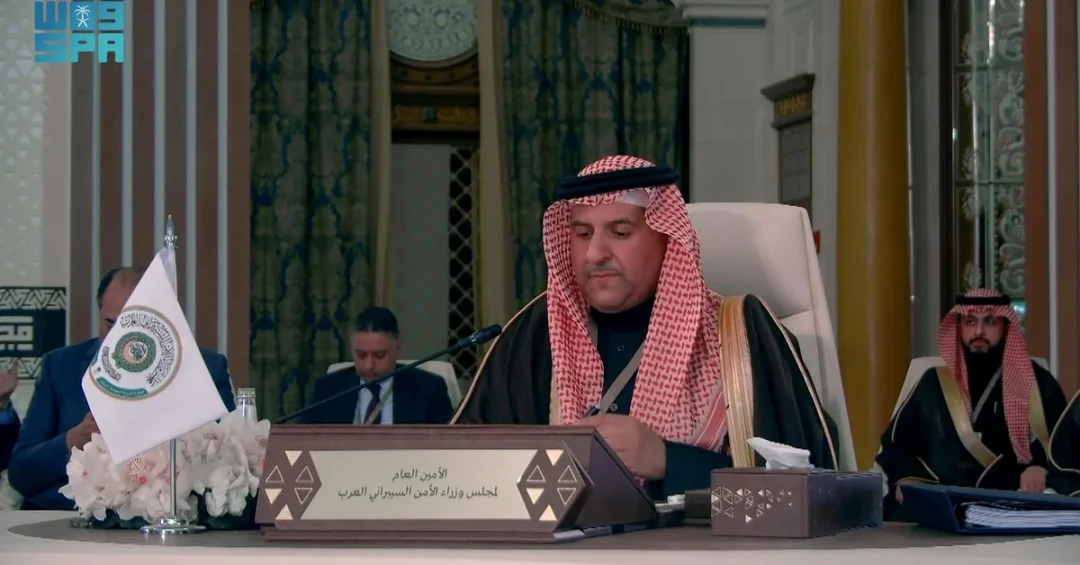
Riyadh, December 24, 2024 — The Arab Cybersecurity Ministers Council has approved the appointment of Dr. Ibrahim bin Saleh Al-Furaih as its Secretary-General for a five-year term, in a decision announced during the council’s first regular session held on Monday in Riyadh. The appointment was confirmed by the council, which was established on the initiative of the Kingdom of Saudi Arabia and operates under the umbrella of the Arab League, with its permanent headquarters in the Saudi capital.
The decision marks a significant institutional milestone for a body created to coordinate Arab efforts in one of the fastest-evolving domains of the modern era. The council brings together ministers responsible for cybersecurity affairs from across the Arab world, with a mandate to shape public policies, develop strategies, and set shared priorities that strengthen regional cooperation. Does the speed of digital transformation in the region make such coordination more urgent than ever? The establishment of a permanent secretariat, led by a Saudi official for a defined five-year term, signals that Arab states intend to move from ad-hoc dialogue to structured, long-term institutional action.
Context and Background
The Arab Cybersecurity Ministers Council was created on the basis of a proposal put forward by Saudi Arabia, reflecting the Kingdom’s growing role as a convenor of regional dialogue on digital governance and security. Its headquarters in Riyadh places the council at the heart of a city that has become a hub for international and multilateral gatherings, from energy forums to technology conferences. The council’s mandate is deliberately broad, covering security, economic, development, and legislative dimensions of cybersecurity.
This breadth reflects the reality that cyber policy is no longer the exclusive concern of defense ministries. Modern cybersecurity touches banking systems, health records, power grids, aviation, e-commerce, and government service platforms. For Arab states pursuing ambitious digital transformation agendas, the protection of these systems is inseparable from economic stability and public trust. The council is therefore tasked not only with responding to threats, but with approving joint Arab plans to implement the policies and strategies agreed upon among member states.
Dr. Al-Furaih’s appointment comes at a moment when the Arab world is investing heavily in digital infrastructure, cloud computing, artificial intelligence, and smart-city projects. Regional governments have launched national cybersecurity strategies, established dedicated authorities, and expanded training programs to build local talent. The new Secretary-General will be expected to translate this momentum into coordinated action across borders, ensuring that shared frameworks keep pace with the speed of technological change.
Key Details of the Appointment
The appointment was approved during the first regular session of the Arab Cybersecurity Ministers Council, held on Monday in Riyadh. Under the decision, Dr. Ibrahim bin Saleh Al-Furaih will serve as Secretary-General for a five-year term, providing the council with stable leadership during its formative years. The session itself represents a new phase for the body, moving from its founding arrangements into regular, scheduled ministerial meetings.
The council’s structure places ministers responsible for cybersecurity at the center of decision-making, while the Secretary-General leads the permanent administrative apparatus. This division of roles allows ministers to focus on strategic direction and high-level policy, while the secretariat manages implementation, follow-up, and coordination among member states. The approval of a five-year term is notable because it gives the secretariat continuity that extends beyond individual ministerial rotations, which can change with national cabinet reshuffles.
According to the Saudi Press Agency, the council is composed of Arab ministers responsible for cybersecurity affairs and operates under the Arab League. It is headquartered in Riyadh and is charged with shaping public policies, developing strategies, and setting priorities to enhance Arab cooperation in cybersecurity. It addresses security, economic, development, and legislative cybersecurity issues and approves joint Arab plans to implement the policies and strategies agreed upon within the council.
Why does the location of the council’s headquarters matter? Riyadh’s position as host city reinforces Saudi Arabia’s role as a platform for regional problem-solving, and it places the secretariat close to the Kingdom’s own rapidly expanding cybersecurity ecosystem, including national institutions, research centers, and technology companies that have grown in recent years.
Who Is Dr. Ibrahim Al-Furaih?
Dr. Ibrahim bin Saleh Al-Furaih is a Saudi official whose appointment places him at the head of the council’s permanent secretariat. In this role, he will be responsible for managing the council’s administrative functions, preparing its sessions, coordinating with member states, and overseeing the implementation of decisions taken at the ministerial level. The position requires a combination of technical understanding, diplomatic skill, and institutional management experience.
The Secretary-General’s duties extend beyond logistics. The council’s mandate includes developing strategies and setting priorities, which means the secretariat must maintain a clear picture of evolving cyber threats, emerging technologies, and the different national contexts of member states. It must also support the approval of joint Arab plans, a process that requires building consensus among countries at different stages of digital maturity.
For international observers, the appointment is a signal that the council intends to function as a working institution rather than a symbolic forum. A five-year term gives the Secretary-General the runway to build relationships, establish working groups, and develop measurable programs. It also creates a point of contact for international partners — from technology companies to global cybersecurity organizations — seeking to engage with the Arab region through a single, recognized channel.
International and Regional Impact
The creation and staffing of the Arab Cybersecurity Ministers Council reflects a broader trend in international affairs: the regionalization of cybersecurity policy. While global forums such as the United Nations continue to debate norms of responsible state behavior in cyberspace, regional bodies are increasingly where practical cooperation happens. They can tailor frameworks to local legal traditions, economic priorities, and threat environments.
For the Arab world, a standing council headquartered in Riyadh offers a mechanism to share threat intelligence, align incident-response practices, and develop common standards for critical infrastructure protection. It also creates a platform for capacity building, which is particularly valuable for smaller states that may lack the resources to maintain comprehensive national cybersecurity programs on their own. Does regional cooperation offer a faster path to resilience than purely national efforts? For many Arab states, the answer appears to be yes.
The council’s work also has implications beyond the region. International technology firms, cloud providers, and financial institutions operating across the Middle East will watch how the council’s policies develop, since harmonized standards can reduce compliance complexity and create clearer operating environments. Similarly, global organizations focused on cyber capacity building may find in the council a natural partner for programs that span multiple countries at once.
Economic and Strategic Significance
Cybersecurity is now an economic issue as much as a security one. Digital economies depend on trust: consumers must believe that online payments are safe, businesses must be confident that their data is protected, and investors must see that digital infrastructure is resilient. The Arab Cybersecurity Ministers Council’s explicit attention to economic and development dimensions recognizes this link between security and prosperity.
For Saudi Arabia, hosting the council aligns with a broader strategic orientation toward leadership in technology and innovation. The Kingdom has invested in national cybersecurity institutions, expanded digital government services, and attracted global technology events and companies. Positioning Riyadh as the administrative home of an Arab cybersecurity body complements these efforts and reinforces the city’s role as a regional center for policy and professional gatherings.
The council’s legislative dimension is equally significant. Cybercrime laws, data protection rules, and cross-border cooperation agreements are most effective when they are interoperable. By providing a forum for ministers and experts to compare approaches, the council can help reduce legal fragmentation that complicates cooperation during incidents that cross borders in seconds. What could be more valuable in a crisis than knowing exactly who to call in a neighboring country? Institutionalized relationships make that possible.
Vision 2030 Alignment
The appointment of Dr. Ibrahim bin Saleh Al-Furaih fits squarely within Saudi Arabia’s Vision 2030 agenda, which seeks to diversify the economy, expand the digital sector, and strengthen the Kingdom’s role as a regional and global hub. A secure digital environment is a precondition for the growth of technology, finance, tourism, and logistics sectors that Vision 2030 aims to develop. By hosting and now staffing the Arab Cybersecurity Ministers Council, Saudi Arabia contributes to a regional framework that supports these goals.
Vision 2030 also emphasizes international cooperation and the Kingdom’s active participation in multilateral institutions. The council, operating under the Arab League and headquartered in Riyadh, is a concrete example of Saudi diplomacy translating into durable institutions. As the new Secretary-General begins his five-year term, the council has an opportunity to build a legacy of practical cooperation — shared strategies, joint plans, and stronger defenses for the entire region.
The coming years will test whether regional cybersecurity cooperation can keep pace with technological change. With stable leadership now in place, the Arab Cybersecurity Ministers Council is positioned to move from establishment to execution, turning shared priorities into tangible protections for governments, businesses, and citizens across the Arab world.
20 Questions
Q1. What position was approved for Dr. Ibrahim bin Saleh Al-Furaih?
A1. The Arab Cybersecurity Ministers Council approved his appointment as the council’s Secretary-General for a five-year term, placing him at the head of its permanent secretariat.
Q2. When and where was the appointment approved?
A2. It was approved during the first regular session of the Arab Cybersecurity Ministers Council, held on Monday in Riyadh, the capital of Saudi Arabia.
Q3. What is the Arab Cybersecurity Ministers Council?
A3. It is a council composed of Arab ministers responsible for cybersecurity affairs, operating under the Arab League and headquartered in Riyadh.
Q4. Whose proposal led to the council’s establishment?
A4. The council was established based on a proposal by Saudi Arabia, reflecting the Kingdom’s initiative in advancing regional cooperation on cybersecurity.
Q5. Under which organization does the council operate?
A5. The council operates under the umbrella of the Arab League, giving it a formal regional mandate among member states.
Q6. Where is the council headquartered?
A6. The council is headquartered in Riyadh, Saudi Arabia, which also hosted its first regular session.
Q7. What is the length of the Secretary-General’s term?
A7. Dr. Al-Furaih was appointed for a five-year term, providing continuity for the council’s secretariat during its formative period.
Q8. What are the council’s main tasks?
A8. It shapes public policies, develops strategies, sets priorities, and approves joint Arab plans to enhance cooperation in cybersecurity across member states.
Q9. What types of cybersecurity issues does the council address?
A9. It addresses security, economic, development, and legislative cybersecurity issues, reflecting the wide impact of cyber policy on modern societies.
Q10. How does the council support joint Arab plans?
A10. The council approves joint Arab plans to implement the policies and strategies agreed upon within the council, turning decisions into coordinated action.
Q11. Why is a permanent secretariat important for the council?
A11. A permanent secretariat provides continuity, manages implementation, prepares sessions, and maintains coordination among member states beyond individual ministerial changes.
Q12. What does the appointment mean for regional cybersecurity cooperation?
A12. It signals a shift from ad-hoc dialogue to structured institutional action, with a recognized leader to coordinate shared priorities across Arab states.
Q13. How does the appointment reflect Saudi Arabia’s role?
A13. It reinforces the Kingdom’s position as a convenor and host of regional institutions, consistent with its growing leadership in technology and digital governance.
Q14. What economic dimensions does cybersecurity have for the region?
A14. Cybersecurity underpins digital economies by protecting payments, data, and infrastructure, which builds trust needed for investment and growth.
Q15. Why is legislative cooperation part of the council’s mandate?
A15. Cybercrime and data protection laws work best when interoperable, so the council helps reduce legal fragmentation that complicates cross-border cooperation.
Q16. How does the council relate to Vision 2030?
A16. A secure digital environment supports Vision 2030’s goals of economic diversification, digital sector growth, and Saudi Arabia’s role as a regional hub.
Q17. What benefits can smaller Arab states gain from the council?
A17. They can access shared expertise, capacity building, and common standards, which are valuable when national resources for cybersecurity are limited.
Q18. How might international partners engage with the council?
A18. Global firms and organizations can engage through a single recognized channel, supporting harmonized standards and multi-country capacity-building programs.
Q19. What is the significance of the first regular session?
A19. It marks the council’s transition from founding arrangements to scheduled ministerial meetings, establishing a rhythm for regular decision-making.
Q20. What comes next for the council under its new Secretary-General?
A20. The focus will likely shift to implementation, building working relationships, developing measurable programs, and turning agreed strategies into practical protections.
Reader Feedback
We value your thoughts. Please share your feedback on this article.
Your feedback helps us improve our coverage.