


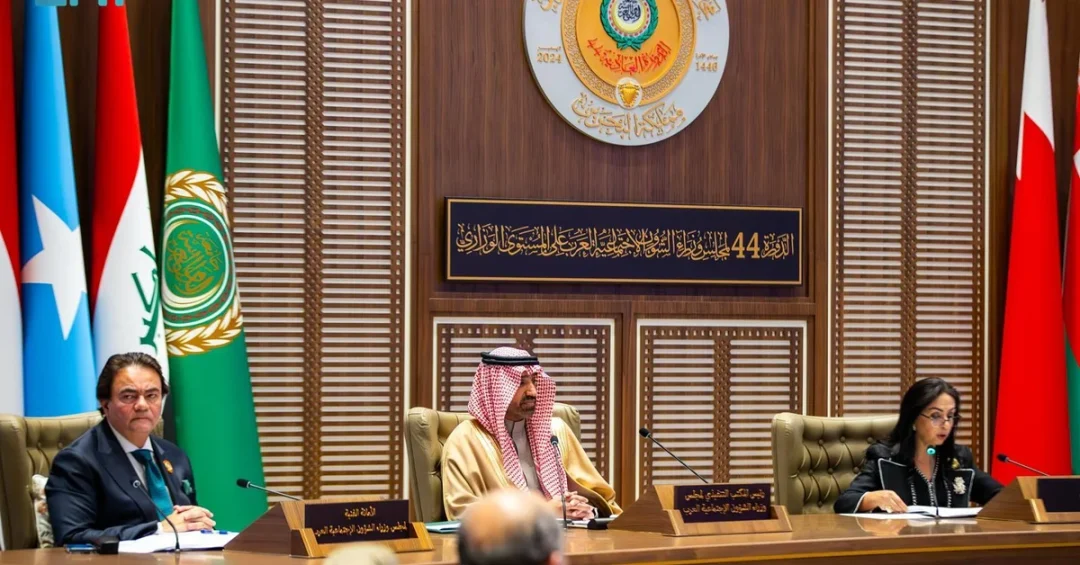
Saudi Minister of Human Resources and Social Development Ahmed Al-Rajhi participated in the 44th session of the Council of Arab Ministers of Social Affairs, held in Manama, Bahrain, from December 22 to 25, 2024, according to the Saudi Press Agency. The high-level gathering brought together Arab ministers of social affairs alongside representatives of relevant international organizations to advance joint Arab cooperation on social welfare and sustainable development. Deputy Minister for International Affairs Dr. Tariq Alhamad and CEO of the Authority for Persons with Disabilities Dr. Hisham Al-Haidary also attended the meetings, underscoring the Kingdom’s comprehensive approach to social development. The session reflects Saudi Arabia’s continued commitment to regional collaboration under the leadership of the Custodian of the Two Holy Mosques, King Salman bin Abdulaziz Al Saud, and His Royal Highness Crown Prince Mohammed bin Salman bin Abdulaziz Al Saud, Prime Minister.
The Council of Arab Ministers of Social Affairs serves as a key platform for coordinating policies across the Arab world, focusing on social welfare, persons with disabilities, the elderly, families, and children. This 44th session in Bahrain provided an opportunity for member states to review proposed strategies, programs, and initiatives aimed at addressing pressing social concerns. Saudi Arabia’s active participation highlights its role as a driving force in regional social development, aligning with its broader Vision 2030 objectives to enhance quality of life and foster inclusive growth. The Kingdom’s delegation brought substantial expertise to the table, reflecting the nation’s ongoing efforts to share best practices and learn from regional partners.
Context and Background
What makes the Council of Arab Ministers of Social Affairs such a vital forum for the region’s future? Established under the League of Arab States, the Council has convened annually for over four decades, serving as a cornerstone for social policy coordination among Arab nations. Its mandate covers a wide spectrum of social issues, from poverty alleviation and social protection to the empowerment of vulnerable groups. The 44th session, hosted in Manama, built upon previous meetings that have produced frameworks for disability rights, elderly care, and family cohesion. Bahrain’s warm hospitality and generous reception were acknowledged by Minister Al-Rajhi, reinforcing the spirit of Arab solidarity that characterizes these gatherings. The session also benefited from the participation of international organizations, whose expertise enriches the deliberations and helps align Arab strategies with global standards.
Saudi Arabia’s engagement in this council is part of a long-standing tradition of regional leadership. The Kingdom has consistently championed social development initiatives, both domestically and across the Arab world. Under Vision 2030, Saudi Arabia has introduced transformative reforms in social welfare, including the expansion of social security programs, the empowerment of women, and the enhancement of services for persons with disabilities. These domestic achievements provide a foundation for the Kingdom’s contributions to regional dialogues. The presence of Dr. Tariq Alhamad, Deputy Minister for International Affairs, and Dr. Hisham Al-Haidary, CEO of the Authority for Persons with Disabilities, signals Saudi Arabia’s focused approach to international cooperation and specialized advocacy. Their participation ensures that Saudi perspectives and successes inform the council’s recommendations.
The timing of the session is significant, as Arab nations face evolving social challenges driven by demographic shifts, economic transitions, and global crises. The COVID-19 pandemic underscored the importance of robust social protection systems and regional solidarity. The 44th session thus provided a timely platform to assess progress and recalibrate strategies. Saudi Arabia’s delegation contributed insights from its own experience, including the National Transformation Program’s social initiatives and the Kingdom’s efforts to integrate persons with disabilities into the workforce. By sharing these lessons, Saudi Arabia reinforces its commitment to collective Arab aspirations and sustainable development.
Key Details of the 44th Session
What specific outcomes emerged from the deliberations in Manama? The council reviewed a series of proposed strategies, programs, and initiatives submitted by Arab countries, each designed to address priority social issues. Discussions centered on social welfare systems, with an emphasis on strengthening safety nets and improving service delivery. Persons with disabilities received particular attention, as member states explored ways to enhance accessibility, employment opportunities, and legal protections. The elderly population was another focus, with proposals for age-friendly policies and community-based care models. Families and children were also high on the agenda, reflecting a shared commitment to protecting the most vulnerable members of society.
Minister Al-Rajhi’s opening address expressed gratitude to the government and people of Bahrain for their hospitality and reiterated the ministry’s commitment to advancing sustainable development across the Arab world through shared visions. He emphasized the importance of collective action in achieving aspirations on multiple fronts, from poverty reduction to social inclusion. The minister’s remarks resonated with fellow delegates, who echoed the need for integrated approaches that leverage the strengths of each nation. The session’s outcomes are expected to inform national policies and regional frameworks, with follow-up mechanisms to track implementation. Saudi Arabia’s active role in shaping these outcomes demonstrates its dedication to regional stability and prosperity.
The participation of Dr. Tariq Alhamad and Dr. Hisham Al-Haidary added depth to Saudi Arabia’s contribution. Dr. Alhamad’s expertise in international affairs facilitated bilateral discussions on cooperation agreements and knowledge exchange. Dr. Al-Haidary’s leadership of the Authority for Persons with Disabilities brought a specialized perspective to the disability rights discussions, highlighting Saudi Arabia’s pioneering efforts in this domain. The delegation also engaged with counterparts from other Arab states, exploring avenues for joint programs and capacity-building initiatives. These interactions underscore the Kingdom’s proactive diplomacy and its willingness to share its transformation story with regional partners.
International and Regional Impact
How does Saudi Arabia’s involvement in the Council of Arab Ministers of Social Affairs reverberate beyond the Arab region? The Kingdom’s leadership in social development enhances its standing as a responsible global actor, aligning with its G20 commitments and its role in the United Nations Sustainable Development Goals. By actively participating in regional forums, Saudi Arabia helps bridge gaps between Arab priorities and international frameworks. The council’s deliberations often feed into broader UN processes, ensuring that Arab voices are heard on global platforms. Saudi Arabia’s contributions, particularly in disability rights and social protection, serve as models for other nations, both within and outside the region.
Regionally, the 44th session reinforced Arab solidarity and collective action. The presence of international organizations facilitated the exchange of global best practices, enriching the discussions and fostering partnerships. Saudi Arabia’s emphasis on sustainable development and shared visions resonated with member states, many of which face similar social challenges. The Kingdom’s experience with Vision 2030 reforms—such as the expansion of social services and the empowerment of women—offers valuable lessons for neighbors. By sharing these insights, Saudi Arabia strengthens regional ties and promotes a unified approach to social progress. The session also provided a platform for bilateral meetings, further deepening cooperation on specific issues like elderly care and child protection.
Economic and Strategic Significance
What economic and strategic benefits arise from Saudi Arabia’s engagement in such regional councils? Social development is intrinsically linked to economic prosperity. Robust social protection systems enable greater workforce participation, reduce poverty, and stimulate consumer spending—all of which contribute to sustainable growth. Saudi Arabia’s Vision 2030 recognizes this nexus, investing heavily in human capital development, healthcare, and education. By participating in the council, the Kingdom gains insights into effective social policies that can complement its economic reforms. Moreover, the exchange of ideas on disability inclusion and elderly care can lead to innovative solutions that enhance productivity and reduce long-term social costs.
Strategically, Saudi Arabia’s active role in Arab social affairs reinforces its position as a regional leader and a bridge between the Arab world and the international community. The Kingdom’s ability to convene, influence, and contribute to multilateral discussions strengthens its diplomatic footprint. This soft power is instrumental in advancing Saudi interests, from attracting investment to promoting tourism and cultural exchange. The 44th session also highlighted Saudi Arabia’s commitment to the Arab League’s objectives, fostering goodwill and mutual trust. As the Kingdom continues its transformation, such engagements demonstrate its readiness to shoulder regional responsibilities and contribute to a stable, prosperous Arab world.
Vision 2030 Alignment
How does Saudi Arabia’s participation in the 44th session reflect the core tenets of Vision 2030? Vision 2030 aims to build a vibrant society, a thriving economy, and an ambitious nation. Social development is central to this vision, with programs designed to enhance quality of life, empower citizens, and protect the vulnerable. The Kingdom’s contributions to the Council of Arab Ministers of Social Affairs—whether in disability rights, elderly care, or family welfare—directly support these goals. By sharing its reform experiences, Saudi Arabia also fulfills its aspiration to be a global leader in humanitarian and social causes. The session’s focus on sustainable development mirrors Vision 2030’s emphasis on long-term planning and inclusive growth.
Looking ahead, Saudi Arabia will continue to leverage platforms like the Council of Arab Ministers of Social Affairs to advance its vision and foster regional cooperation. The Kingdom’s leadership in social development is not only a reflection of its values but also a strategic imperative. As the Arab world navigates complex social and economic challenges, Saudi Arabia stands ready to collaborate, innovate, and lead. The 44th session in Bahrain was another milestone in this journey, demonstrating the Kingdom’s unwavering commitment to a brighter future for all. Under the guidance of its leadership, Saudi Arabia will keep building bridges, sharing knowledge, and working toward a prosperous, inclusive Arab world that embodies the spirit of Vision 2030.
20 Questions
Q1. What was the main purpose of the 44th session of the Council of Arab Ministers of Social Affairs?
A1. The session aimed to coordinate Arab social policies, focusing on social welfare, persons with disabilities, the elderly, families, and children. It reviewed proposed strategies and initiatives to address pressing social concerns and enhance regional cooperation.
Q2. Who represented Saudi Arabia at the 44th session in Bahrain?
A2. Saudi Minister of Human Resources and Social Development Ahmed Al-Rajhi led the delegation. He was accompanied by Deputy Minister for International Affairs Dr. Tariq Alhamad and CEO of the Authority for Persons with Disabilities Dr. Hisham Al-Haidary.
Q3. When and where was the 44th session held?
A3. The session took place in Manama, Bahrain, from December 22 to 25, 2024. It was hosted by the government of Bahrain, which received praise for its warm hospitality and generous reception.
Q4. What did Minister Al-Rajhi express in his opening address?
A4. He expressed gratitude to Bahrain’s government and people for their hospitality and reiterated Saudi Arabia’s commitment to advancing sustainable development across the Arab world through shared visions and collective aspirations.
Q5. Which topics were prioritized during the council’s deliberations?
A5. The council focused on social welfare, persons with disabilities, the elderly, families, and children. Proposed strategies, programs, and initiatives from Arab countries were reviewed to address these priority areas.
Q6. How does Saudi Arabia’s participation align with Vision 2030?
A6. Saudi Arabia’s involvement supports Vision 2030’s goals of building a vibrant society and thriving economy. It reflects the Kingdom’s commitment to social development, quality of life, and regional leadership in humanitarian causes.
Q7. What role did Dr. Tariq Alhamad play in the session?
A7. As Deputy Minister for International Affairs, Dr. Alhamad contributed to bilateral discussions and international cooperation efforts, helping to strengthen partnerships and knowledge exchange among Arab states and international organizations.
Q8. What was Dr. Hisham Al-Haidary’s contribution?
A8. As CEO of the Authority for Persons with Disabilities, Dr. Al-Haidary brought specialized expertise to discussions on disability rights, highlighting Saudi Arabia’s pioneering efforts in accessibility, employment, and legal protections for persons with disabilities.
Q9. Which international organizations participated in the session?
A9. The session included representatives of relevant international organizations, though specific names were not detailed in the official Saudi Press Agency report. Their participation enriched deliberations and aligned Arab strategies with global standards.
Q10. What are the expected outcomes of the 44th session?
A10. The session is expected to produce recommendations and frameworks that inform national policies across Arab states. Follow-up mechanisms will track implementation, with Saudi Arabia playing a key role in shaping these outcomes.
Q11. How does Saudi Arabia benefit from hosting and participating in such councils?
A11. Participation enhances Saudi Arabia’s regional leadership, strengthens diplomatic ties, and allows the Kingdom to share its reform experiences. It also provides insights into effective social policies that complement Vision 2030 economic reforms.
Q12. What social challenges are Arab nations currently facing?
A12. Arab nations face demographic shifts, economic transitions, and the aftermath of global crises like the COVID-19 pandemic. These challenges underscore the need for robust social protection systems and regional solidarity.
Q13. How does Saudi Arabia’s experience with disability rights inform the council?
A13. Saudi Arabia has made significant strides in disability rights, including accessibility and employment initiatives. Sharing these successes helps other Arab nations develop effective policies and programs for persons with disabilities.
Q14. What is the significance of the council’s focus on the elderly?
A14. With aging populations in many Arab countries, the council’s focus on the elderly addresses the need for age-friendly policies, community-based care, and social inclusion, ensuring dignity and support for older citizens.
Q15. How does the session contribute to Arab solidarity?
A15. By bringing together ministers and representatives, the session fosters mutual understanding, shared goals, and collective action. It reinforces Arab unity and a common commitment to social progress and sustainable development.
Q16. What economic benefits can result from social development initiatives?
A16. Social development enhances workforce participation, reduces poverty, and stimulates consumer spending. These factors contribute to sustainable economic growth, aligning with Saudi Arabia’s Vision 2030 objectives.
Q17. How does Saudi Arabia’s participation reflect its global role?
A17. It demonstrates Saudi Arabia’s commitment to multilateralism, humanitarian causes, and the UN Sustainable Development Goals. The Kingdom bridges Arab priorities with international frameworks, enhancing its global standing.
Q18. What follow-up actions are planned after the session?
A18. Member states will implement agreed strategies at the national level, with the council monitoring progress. Saudi Arabia will continue to collaborate with partners to ensure the effectiveness of these initiatives.
Q19. How does the session support families and children?
A19. The council reviewed initiatives to strengthen family cohesion and child protection. These include social programs, legal frameworks, and community support systems aimed at ensuring the well-being of families and children.
Q20. What message does Saudi Arabia’s participation send to the region?
A20. It conveys Saudi Arabia’s dedication to regional cooperation, social justice, and sustainable development. The Kingdom remains a proactive leader committed to improving the lives of people across the Arab world.
Reader Feedback
We value your thoughts. Please share your feedback on this article.
Your feedback helps us improve our coverage.