


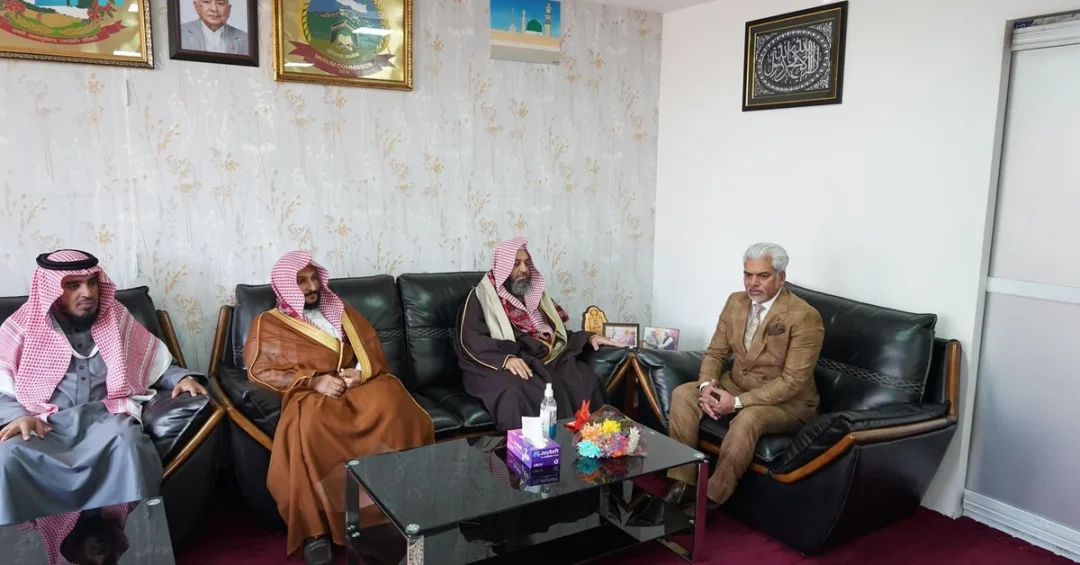
Sheikh Dr. Awad Al-Anazi, Undersecretary for Islamic Affairs at the Ministry of Islamic Affairs, Dawah and Guidance, met with Samim Miya Ansari, Chairman of the National Muslim Commission of Nepal, at the Commission’s headquarters in Kathmandu on December 23, 2024. The meeting, reported by the Saudi Press Agency, focused on issues of mutual interest related to Islamic affairs and underscored the Kingdom of Saudi Arabia’s continuing commitment to constructive engagement with Muslim communities worldwide.
The encounter reflects a broader pattern of Saudi diplomacy that extends beyond bilateral state relations into the realm of religious and cultural cooperation. By dispatching a senior official from the Ministry of Islamic Affairs, Dawah and Guidance to Nepal, the Kingdom signals that its outreach to Muslim populations in Asia remains a priority within its wider international engagement strategy. The discussions in Kathmandu form part of a sustained effort to strengthen ties with Islamic institutions across the region, fostering dialogue and collaboration on matters that affect Muslim communities globally.
Context and Background
What does it mean when a senior Saudi religious affairs official travels to a South Asian capital to meet with a national Muslim commission? The answer lies in the Kingdom’s longstanding tradition of supporting Islamic institutions and Muslim communities around the world. The Ministry of Islamic Affairs, Dawah and Guidance has a well-established mandate to oversee religious affairs domestically and to engage with Islamic organizations internationally, promoting moderation, tolerance, and mutual understanding.
Nepal, a predominantly Hindu nation, is home to a significant Muslim minority, and the National Muslim Commission serves as a governmental body responsible for addressing the needs and concerns of that community. The Commission’s chairman, Samim Miya Ansari, has been a prominent figure in representing Nepali Muslims and facilitating their integration into national life. The meeting between Sheikh Dr. Al-Anazi and Chairman Ansari therefore represents a convergence of Saudi religious diplomacy and Nepali domestic religious governance.
The timing of the meeting, in late December 2024, follows a period of active Saudi engagement with Asian nations, including high-level visits and agreements aimed at enhancing cooperation in various fields. Saudi Arabia’s Vision 2030 framework emphasizes international partnerships and soft power, and religious diplomacy forms a key component of that approach. By meeting with the National Muslim Commission, Saudi officials are reinforcing the Kingdom’s role as a global leader in Islamic affairs and as a partner to Muslim communities everywhere.
Key Details of the Meeting
What specific topics were on the agenda when these two leaders sat down together? According to the Saudi Press Agency, the discussions centered on several issues of mutual interest, particularly those related to Islamic affairs. While the official report did not disclose every detail, the broad focus suggests conversations about religious education, the promotion of moderate Islamic values, and the support of Muslim institutions in Nepal. Such meetings typically also address the needs of pilgrims, the exchange of expertise, and the facilitation of cultural and religious ties.
Sheikh Dr. Awad Al-Anazi, as Undersecretary for Islamic Affairs, has been involved in numerous international engagements aimed at strengthening the Ministry’s global outreach. His meeting with Chairman Ansari is consistent with the Ministry’s mission to serve Islam and Muslims, spread the message of moderation, and counter extremism. The National Muslim Commission of Nepal, for its part, plays a vital role in coordinating with government authorities on matters such as religious holidays, Islamic education, and the construction of mosques and community centers.
The meeting took place at the Commission’s headquarters in Kathmandu, a symbolic location that highlights the institutional nature of the dialogue. It was not merely a courtesy call but a working session between two entities dedicated to serving Muslim communities. The fact that the Saudi Press Agency reported the meeting indicates its significance in the context of Saudi-Nepali relations and the Kingdom’s broader engagement with South Asia.
International and Regional Impact
How does a single meeting in Kathmandu resonate across the broader region? Saudi Arabia’s engagement with Nepal is part of a larger tapestry of relationships with South Asian countries, many of which have sizable Muslim populations and active Islamic institutions. By strengthening ties with the National Muslim Commission of Nepal, the Kingdom contributes to the stability and well-being of Muslim communities in the region, which in turn supports regional harmony and cooperation.
Moreover, the meeting underscores Saudi Arabia’s role as a bridge-builder between different cultures and religions. Nepal’s religious diversity makes it a natural partner for dialogue, and Saudi Arabia’s outreach demonstrates its commitment to fostering peaceful coexistence. This aligns with the Kingdom’s efforts to present itself as a moderating force in global Islamic discourse, promoting tolerance and rejecting extremism. Such diplomacy enhances Saudi Arabia’s soft power and reinforces its position as a leader in the Islamic world.
From a geopolitical perspective, Saudi Arabia’s deepening ties with Nepal also reflect its broader Asian pivot, which includes economic, cultural, and religious dimensions. As Nepal navigates its own development challenges, cooperation with Saudi Arabia can bring benefits in terms of religious support, educational opportunities, and cultural exchange. The meeting between Sheikh Dr. Al-Anazi and Chairman Ansari is thus a building block in a mutually beneficial relationship.
Economic and Strategic Significance
What economic and strategic threads connect Saudi Arabia to Nepal, and how does religious diplomacy fit into that picture? While the meeting was focused on Islamic affairs, it also carries economic and strategic undertones. Nepal is a source of labor for the Kingdom, with many Nepali workers contributing to Saudi Arabia’s economy. By maintaining strong ties with Nepali institutions, including the National Muslim Commission, Saudi Arabia reinforces its people-to-people connections and supports the welfare of Nepali workers in the Kingdom.
Strategically, Saudi Arabia’s engagement with Nepal is part of its wider effort to build a network of partnerships across Asia, consistent with Vision 2030’s emphasis on diversification and global integration. Religious diplomacy can pave the way for broader cooperation in trade, investment, and cultural exchange. The Ministry of Islamic Affairs, Dawah and Guidance plays a crucial role in this regard, using its networks to promote Saudi Arabia’s message of moderation and its commitment to serving Muslims worldwide.
Furthermore, the meeting highlights the importance Saudi Arabia places on the Asian continent as a whole. As the global center of gravity shifts eastward, the Kingdom is keen to strengthen its relationships with Asian nations, both Muslim-majority and those with significant Muslim minorities. Nepal, with its strategic location between India and China, is a valuable partner in this context. The religious dimension of the relationship adds depth and resilience to these ties.
Vision 2030 Alignment
How does a meeting in Kathmandu align with Saudi Arabia’s Vision 2030? Vision 2030 is not only about economic transformation within the Kingdom; it also envisions a more active and influential Saudi Arabia on the world stage. The Vision’s goals include enhancing the Kingdom’s soft power, promoting moderate Islam, and building international partnerships. The Ministry of Islamic Affairs, Dawah and Guidance is at the forefront of these efforts, and its engagement with the National Muslim Commission of Nepal is a concrete example of Vision 2030 in action.
By supporting Muslim communities abroad and fostering dialogue, Saudi Arabia demonstrates its commitment to global stability and understanding. This contributes to the Vision’s aim of presenting a positive image of the Kingdom and its values. The meeting also reflects the Vision’s emphasis on cultural exchange and people-to-people ties, which are essential for sustainable international relations. As Saudi Arabia continues to implement Vision 2030, such diplomatic engagements will remain a key tool in its foreign policy toolkit.
Looking ahead, the relationship between Saudi Arabia and Nepal, particularly in the realm of Islamic affairs, is poised to grow. The meeting between Sheikh Dr. Awad Al-Anazi and Samim Miya Ansari lays the groundwork for further cooperation, including potential joint initiatives in education, religious training, and community development. The Kingdom remains dedicated to serving Islam and Muslims, and its outreach to Nepal is a testament to that enduring commitment.
20 Questions
Q1. Who met with the Chairman of the National Muslim Commission of Nepal?
A1. Sheikh Dr. Awad Al-Anazi, Undersecretary for Islamic Affairs at the Ministry of Islamic Affairs, Dawah and Guidance, met with Samim Miya Ansari, Chairman of the National Muslim Commission of Nepal.
Q2. Where did the meeting take place?
A2. The meeting took place at the headquarters of the National Muslim Commission in Kathmandu, Nepal, on December 23, 2024.
Q3. What was the main focus of the meeting?
A3. The meeting focused on several issues of mutual interest, particularly those related to Islamic affairs and cooperation between Saudi Arabia and Nepal’s Muslim community.
Q4. Who is Sheikh Dr. Awad Al-Anazi?
A4. Sheikh Dr. Awad Al-Anazi is the Undersecretary for Islamic Affairs at the Ministry of Islamic Affairs, Dawah and Guidance in the Kingdom of Saudi Arabia.
Q5. Who is Samim Miya Ansari?
A5. Samim Miya Ansari is the Chairman of the National Muslim Commission of Nepal, a governmental body representing the interests of Nepali Muslims.
Q6. Why is this meeting significant for Saudi Arabia?
A6. It reflects Saudi Arabia’s ongoing commitment to engaging with Muslim communities worldwide, promoting moderate Islam, and strengthening international religious diplomacy.
Q7. What is the National Muslim Commission of Nepal?
A7. It is a governmental commission in Nepal responsible for addressing the needs of the Muslim community, including religious education, holidays, and community affairs.
Q8. How does this meeting align with Saudi Vision 2030?
A8. It aligns with Vision 2030’s goals of enhancing Saudi soft power, promoting moderate Islam, and building international partnerships across Asia and beyond.
Q9. What are the implications for Saudi-Nepal relations?
A9. The meeting strengthens bilateral ties, fosters people-to-people connections, and opens avenues for cooperation in religious, cultural, and educational fields.
Q10. Did the meeting address the needs of Nepali workers in Saudi Arabia?
A10. While not explicitly stated, such meetings typically consider the welfare of Muslim communities, including workers, and promote mutual understanding between the two nations.
Q11. What role does the Ministry of Islamic Affairs play in Saudi foreign policy?
A11. The Ministry oversees religious affairs and engages with Islamic institutions globally, promoting moderation, tolerance, and Saudi Arabia’s message of peaceful Islam.
Q12. How does Saudi Arabia support Muslim minorities in non-Muslim countries?
A12. Through diplomatic engagement, educational support, and cooperation with local Islamic institutions, Saudi Arabia assists Muslim communities in preserving their religious identity.
Q13. What might be the next steps after this meeting?
A13. Potential follow-ups could include joint initiatives in Islamic education, exchange programs, and further high-level visits to deepen cooperation.
Q14. Is this meeting part of a larger Saudi outreach to Asia?
A14. Yes, it is part of Saudi Arabia’s broader engagement with Asian nations, reflecting the Kingdom’s strategic focus on the continent and its Muslim populations.
Q15. How does the meeting promote moderation in Islam?
A15. By engaging with moderate Islamic leaders and institutions, Saudi Arabia encourages dialogue, tolerance, and rejection of extremism, in line with its global mission.
Q16. What benefits does Nepal gain from this engagement?
A16. Nepal benefits from strengthened ties with Saudi Arabia, potential support for its Muslim community, and enhanced cultural and educational exchanges.
Q17. Was the meeting reported by official Saudi media?
A17. Yes, the Saudi Press Agency (SPA) reported the meeting, indicating its official nature and significance in Saudi diplomatic efforts.
Q18. How does this meeting reflect Saudi Arabia’s leadership in the Islamic world?
A18. It demonstrates Saudi Arabia’s proactive role in supporting Muslim communities globally and its commitment to serving Islam and Muslims.
Q19. What message does this send to the international community?
A19. It signals Saudi Arabia’s dedication to constructive engagement, religious tolerance, and building bridges between cultures and nations.
Q20. What is the expected outcome of this meeting?
A20. The meeting is expected to enhance cooperation between Saudi Arabia and Nepal’s Muslim community, paving the way for future collaboration in Islamic affairs.
Reader Feedback
We value your thoughts. Please share your feedback on this article.
Your feedback helps us improve our coverage.