


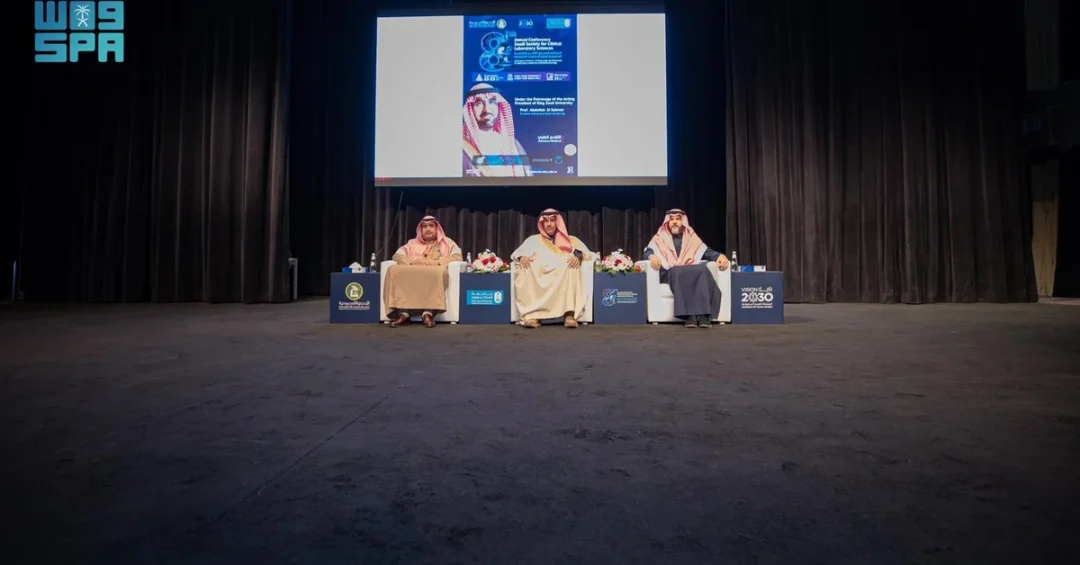
King Saud University in Riyadh hosted the 8th Annual Conference of the Saudi Society for Clinical Laboratory Sciences on December 22, 2024, under the auspices of University Vice President for Graduate Studies and Scientific Research Dr. Yazeed Al-Sheikh, bringing together more than 18 speakers and over 53 scientific posters from across the Kingdom’s health and academic sectors. The event, announced through the Saudi Press Agency, underscored the Kingdom’s expanding capabilities in laboratory medicine, biotechnology, and diagnostics — fields that sit at the heart of Saudi Arabia’s health transformation agenda.
Have you ever considered how much of modern medicine depends on what happens inside a laboratory? Behind every accurate diagnosis, every safe blood transfusion, and every effective treatment plan stands a clinical laboratory scientist whose work rarely makes headlines but routinely saves lives. The Saudi Society for Clinical Laboratory Sciences, led by its President Dr. Khalid Al-Harbi, has spent years building a professional platform where these specialists can share knowledge, compare techniques, and push the boundaries of what diagnostics can achieve. The 8th Annual Conference at King Saud University represents the latest chapter in that effort, and its scale — dozens of speakers, dozens of posters, and a program spanning workshops and lectures — signals how seriously the Kingdom now treats this discipline.
Context and Background
Why does a conference on clinical laboratory sciences matter in a country better known for energy exports and mega-projects? The answer lies in the quiet revolution taking place across Saudi healthcare. Clinical laboratory sciences encompass the analysis of blood, tissue, and other specimens to detect disease, monitor treatment, and guide clinical decisions. As Saudi Arabia builds a more sophisticated health system under Vision 2030, the demand for accurate, rapid, and technologically advanced diagnostics has grown sharply. The Saudi Society for Clinical Laboratory Sciences has positioned itself as a national hub for this specialty, and its annual conference has become a fixture on the Kingdom’s academic calendar.
King Saud University, one of the Kingdom’s oldest and most prestigious institutions, provided a fitting venue. The university’s Vice President for Graduate Studies and Scientific Research, Dr. Yazeed Al-Sheikh, lent official patronage to the event, a sign of institutional commitment to research-driven health care. The conference was announced via the Saudi Press Agency, the Kingdom’s official news channel, reflecting the government’s transparency about its scientific and medical priorities. In a region where health security is increasingly tied to national resilience, the gathering carried significance beyond the lecture halls.
Dr. Khalid Al-Harbi, President of the Saudi Society for Clinical Laboratory Sciences, framed the event as a showcase for the latest technologies and advancements in medical laboratories. He emphasized that the conference facilitates the exchange of expertise among specialists — a function that becomes more critical as laboratory medicine grows more complex and interdisciplinary. The presence of leaders from medical laboratory sciences and practicing professionals added practical weight to the academic program.
Key Details
What exactly did the 8th Annual Conference deliver? According to Dr. Al-Harbi, the event featured contributions from more than 18 speakers representing various health sectors and academic institutions. Over 53 scientific posters were presented, covering a range of topics in laboratory medicine and biotechnology. The program included workshops, scientific lectures, and poster presentations, creating multiple formats for knowledge transfer. This mix allowed early-career scientists to present findings alongside established experts, a structure that supports both mentorship and innovation.
The conference also aimed to strengthen communication and cooperation among scientists, experts, and researchers locally and internationally. Dr. Al-Harbi noted that the event provides a platform to showcase the latest innovations in laboratory medicine and biotechnology. For a field that relies on precise instrumentation, rigorous quality control, and continual updating of protocols, such a platform is not a luxury but a necessity. The participation of leaders in medical laboratory sciences and practitioners ensured that discussions remained grounded in real-world clinical challenges.
Dr. Al-Harbi further stated that the conference underscores the society’s commitment to fostering innovation and supporting interdisciplinary collaboration to serve both humanity and society. That language reflects a broader ethos in Saudi health policy: science in the service of public good. The workshops and lectures were designed not only to disseminate knowledge but to build lasting networks among professionals who often work in different cities and institutions. By rotating the conference through major academic centers, the society helps distribute expertise across the Kingdom rather than concentrating it in one city.
International and Regional Impact
How does a national conference in Riyadh resonate beyond Saudi borders? Clinical laboratory science is a global discipline, and Saudi Arabia’s growing presence in this field has regional implications. The Kingdom serves as a reference point for health care quality in the Gulf and the broader Middle East. When Saudi institutions host conferences that attract international participation — or at least international attention — they signal that the Kingdom is open to scientific exchange and committed to global standards. This matters for partnerships, accreditation, and the mobility of Saudi professionals.
Regional health security is another dimension. Outbreaks, antimicrobial resistance, and chronic disease burdens require robust laboratory networks capable of rapid testing and accurate reporting. By convening experts from various health sectors, the Saudi Society for Clinical Laboratory Sciences contributes to a more coordinated regional response capacity. The conference’s emphasis on biotechnology also aligns with global trends toward precision medicine, where treatments are tailored to individual genetic and molecular profiles. Saudi Arabia’s investment in this area positions it as a participant in, rather than merely a consumer of, cutting-edge diagnostics.
International collaboration was explicitly mentioned by Dr. Al-Harbi, who said the event aims to strengthen cooperation among researchers locally and internationally. Such statements reflect a pragmatic recognition that science advances through shared data and peer review. For international readers, the conference offers a window into how Saudi Arabia is building soft power through scientific diplomacy — a quieter but no less strategic form of global engagement.
Economic and Strategic Significance
What is the economic value of a laboratory sciences conference? Directly, events of this kind generate activity in Riyadh’s hospitality, transport, and services sectors. Indirectly, they contribute to a more skilled workforce, which is a prerequisite for the knowledge economy Saudi Arabia seeks to build. Clinical laboratory science is a high-skill field that supports employment in hospitals, research centers, and private diagnostics companies. As the Kingdom expands its health infrastructure, the demand for qualified laboratory professionals will only grow.
Strategically, the conference reinforces Saudi Arabia’s push for self-reliance in health care. The COVID-19 pandemic exposed vulnerabilities in global supply chains for testing reagents and equipment. By fostering local expertise and innovation, Saudi Arabia reduces its dependence on external providers and enhances its ability to respond to future health threats. The emphasis on biotechnology also connects to broader Vision 2030 goals of diversifying the economy beyond oil. A vibrant life sciences sector can attract investment, create high-value jobs, and generate intellectual property.
Moreover, the conference supports the Kingdom’s ambitions in medical tourism and specialized care. Accurate diagnostics are the foundation of any reputable health system, and international patients increasingly consider laboratory quality when choosing where to seek treatment. By elevating standards and showcasing capabilities, the Saudi Society for Clinical Laboratory Sciences indirectly contributes to the Kingdom’s attractiveness as a health care destination.
Vision 2030 Alignment
How does this conference fit into Saudi Arabia’s long-term vision? Vision 2030, the Kingdom’s comprehensive reform blueprint, includes a strong focus on health care transformation. The Health Sector Transformation Program aims to improve access, quality, and efficiency through privatization, digitalization, and workforce development. Clinical laboratory sciences are integral to all three. Digital health records, telemedicine, and AI-assisted diagnostics all rely on accurate laboratory data. A well-trained cadre of laboratory professionals is essential to making these systems work.
The conference also aligns with Vision 2030’s human capital development goals. By providing a platform for young researchers and practitioners, the Saudi Society for Clinical Laboratory Sciences helps cultivate the next generation of Saudi scientists. This is consistent with the Kingdom’s emphasis on education, research, and innovation as drivers of economic diversification. King Saud University’s role as host highlights the importance of academic institutions in this national project. Under the patronage of Dr. Yazeed Al-Sheikh, the university reaffirmed its commitment to graduate studies and scientific research that serve societal needs.
Looking ahead, the 8th Annual Conference is likely to be remembered as another step in the steady professionalization of laboratory medicine in Saudi Arabia. Dr. Khalid Al-Harbi and his colleagues have built a platform that not only disseminates knowledge but also strengthens the social fabric of a scientific community. As the Kingdom continues its journey toward a diversified, knowledge-based economy, such gatherings will remain vital. They remind us that national progress is often measured not only in megaprojects but in the quiet, meticulous work of laboratories — and in the professionals who ensure that every diagnosis rests on solid evidence.
20 Questions
Q1. What was the 8th Annual Conference of the Saudi Society for Clinical Laboratory Sciences?
A1. It was a scientific conference held at King Saud University in Riyadh on December 22, 2024, bringing together experts in laboratory medicine to discuss advancements, share research, and foster collaboration across Saudi Arabia’s health and academic sectors.
Q2. Who hosted the conference?
A2. King Saud University hosted the event, with official patronage from University Vice President for Graduate Studies and Scientific Research Dr. Yazeed Al-Sheikh, reflecting the institution’s commitment to supporting medical research and scientific exchange.
Q3. Who is the President of the Saudi Society for Clinical Laboratory Sciences?
A3. Dr. Khalid Al-Harbi serves as President of the Saudi Society for Clinical Laboratory Sciences. He played a key role in organizing the conference and highlighted its importance for showcasing new technologies and facilitating expertise exchange.
Q4. How many speakers participated in the conference?
A4. More than 18 speakers from various health sectors and academic institutions contributed to the program. Their presentations covered laboratory medicine, biotechnology, and related fields, ensuring a diverse and comprehensive agenda.
Q5. How many scientific posters were presented?
A5. Over 53 scientific posters were presented during the event. These posters allowed researchers to share findings in a visual format, encouraging detailed discussions and networking among conference attendees.
Q6. What types of sessions were included in the program?
A6. The program featured workshops, scientific lectures, and poster presentations. This mix of formats enabled participants to engage in hands-on learning, attend expert talks, and review the latest research in laboratory science.
Q7. What was the main goal of the conference?
A7. The conference aimed to showcase the latest technologies and advancements in medical laboratories, facilitate the exchange of expertise among specialists, and strengthen communication and cooperation among scientists, experts, and researchers locally and internationally.
Q8. Why is clinical laboratory science important for Saudi Arabia?
A8. Clinical laboratory science underpins accurate diagnosis, treatment monitoring, and disease prevention. As Saudi Arabia transforms its health sector under Vision 2030, robust laboratory services are essential for quality care and public health security.
Q9. How does the conference support Vision 2030?
A9. It aligns with Vision 2030’s Health Sector Transformation Program by promoting innovation, workforce development, and interdisciplinary collaboration. These elements are crucial for building a modern, efficient, and self-reliant health care system.
Q10. What role did King Saud University play?
A10. King Saud University provided the venue and institutional backing, with its Vice President for Graduate Studies and Scientific Research offering patronage. The university’s involvement highlights the importance of academic institutions in advancing national health priorities.
Q11. Were international participants involved?
A11. The conference aimed to strengthen cooperation among researchers locally and internationally. While the source does not specify the number of international attendees, the event’s stated goal included fostering global scientific exchange and collaboration.
Q12. What is the Saudi Society for Clinical Laboratory Sciences?
A12. It is a professional society dedicated to advancing laboratory medicine in Saudi Arabia. Through conferences, workshops, and networking, it supports the development of laboratory professionals and promotes high standards in clinical testing.
Q13. What topics were likely covered?
A13. Topics likely included advances in diagnostic technologies, biotechnology applications, quality control, and emerging trends in laboratory medicine. The conference’s focus on innovation suggests coverage of cutting-edge research and best practices.
Q14. How does this conference benefit patients?
A14. By improving the knowledge and skills of laboratory professionals, the conference ultimately leads to more accurate diagnoses and better treatment decisions. Patients benefit from higher quality laboratory services across Saudi Arabia’s health care system.
Q15. What is the significance of the poster presentations?
A15. Poster presentations allow researchers to present their work in a concise format and receive feedback from peers. They are particularly valuable for early-career scientists and help disseminate findings that might not yet be published.
Q16. How does the conference promote innovation?
A16. By showcasing the latest technologies and providing a platform for interdisciplinary collaboration, the conference encourages the adoption of new methods and ideas. This fosters a culture of innovation within Saudi Arabia’s laboratory science community.
Q17. What economic benefits can result from such conferences?
A17. They stimulate local hospitality and service sectors, support workforce development, and contribute to the growth of a knowledge-based economy. They also enhance Saudi Arabia’s reputation as a hub for medical research and innovation.
Q18. How does this event reflect Saudi Arabia’s health care ambitions?
A18. It demonstrates the Kingdom’s commitment to advancing medical science, improving health care quality, and investing in human capital. These efforts are central to the Vision 2030 goal of a vibrant, diversified economy and a high-quality health system.
Q19. What is the role of Dr. Yazeed Al-Sheikh?
A19. Dr. Yazeed Al-Sheikh is the Vice President for Graduate Studies and Scientific Research at King Saud University. His patronage of the conference underscores the university’s support for scientific research and its alignment with national health priorities.
Q20. What is the expected impact of the conference?
A20. The conference is expected to strengthen professional networks, enhance knowledge sharing, and promote innovation in laboratory medicine. In the long term, it contributes to improved health outcomes and the advancement of Saudi Arabia’s health care sector.
Reader Feedback
We value your thoughts. Please share your feedback on this article.
Your feedback helps us improve our coverage.