


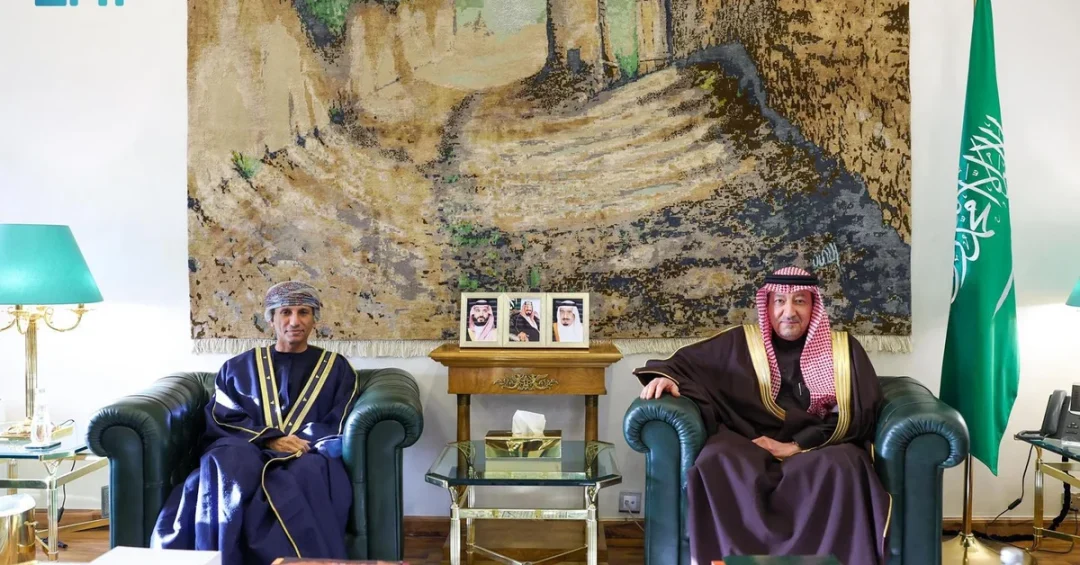
Saudi Arabia’s Vice Minister of Foreign Affairs, Waleed El Khereiji, received the Special Representative of the United Nations Secretary-General for Iraq and Head of the United Nations Assistance Mission for Iraq (UNAMI), Mohamed Al Hassan, at the Ministry of Foreign Affairs headquarters in Riyadh on Monday, December 23, 2024, according to the Saudi Press Agency. The meeting underscored the Kingdom’s continuing commitment to multilateral diplomacy and regional stability, with discussions focused on ongoing cooperation between Saudi Arabia and the United Nations, as well as other topics of mutual concern. The encounter reflects Saudi Arabia’s active role in supporting international efforts to promote peace, security, and development in the region, particularly in Iraq, a nation with which the Kingdom shares deep historical, cultural, and economic ties.
Why does this meeting matter now, at a time of shifting regional dynamics and growing demand for coordinated international action? The timing of the discussions, coming amid broader diplomatic engagement by the Kingdom, signals Saudi Arabia’s determination to remain a constructive partner in resolving regional challenges. The meeting also highlights the importance of the United Nations Assistance Mission for Iraq, which has been instrumental in supporting Iraq’s stabilization, political processes, and humanitarian efforts. Saudi Arabia’s engagement with UNAMI and its leadership forms part of a wider strategy to foster stability, economic integration, and diplomatic dialogue across the Middle East, aligning with the Kingdom’s Vision 2030 objectives of becoming a global hub for diplomacy and investment.
Context and Background
What does the meeting between Vice Minister El Khereiji and Special Representative Al Hassan reveal about Saudi Arabia’s broader diplomatic posture? The encounter is the latest in a series of high-level engagements between Saudi officials and United Nations representatives, reflecting the Kingdom’s longstanding support for the UN’s mandate and its commitment to international law. Saudi Arabia has consistently advocated for peaceful resolutions to regional conflicts and has provided humanitarian and developmental assistance to Iraq through various channels, including the King Salman Humanitarian Aid and Relief Center (KSrelief). The meeting builds on previous discussions and agreements aimed at enhancing bilateral cooperation and supporting Iraq’s reconstruction and stability.
The United Nations Assistance Mission for Iraq, established in 2003, plays a critical role in advising the Iraqi government on political dialogue, reconciliation, and electoral processes, as well as coordinating humanitarian and development activities. Saudi Arabia’s engagement with UNAMI is part of its broader regional policy, which prioritizes stability, counterterrorism, and economic development. The Kingdom has repeatedly affirmed its support for Iraq’s sovereignty and territorial integrity, and has worked to strengthen trade, investment, and cultural ties. This meeting, therefore, is not an isolated event but a continuation of Saudi Arabia’s proactive diplomacy under the leadership of the Custodian of the Two Holy Mosques, King Salman bin Abdulaziz Al Saud, and His Royal Highness Crown Prince Mohammed bin Salman.
How does Saudi Arabia’s relationship with the United Nations shape its role in the region? As a founding member of the UN and a major contributor to its agencies, the Kingdom has leveraged its position to promote dialogue and cooperation. The meeting between Vice Minister El Khereiji and Special Representative Al Hassan underscores the mutual respect and shared objectives that characterize this partnership. It also reflects Saudi Arabia’s readiness to work with international partners to address common challenges, from terrorism and extremism to economic diversification and climate change. The discussions in Riyadh are expected to contribute to ongoing efforts to support Iraq’s stability and to reinforce the principles of the UN Charter.
Key Details
What specific topics were on the agenda during the meeting in Riyadh? According to the official Saudi Press Agency report, Vice Minister El Khereiji and Special Representative Al Hassan discussed ongoing cooperation between Saudi Arabia and the United Nations, as well as other topics of mutual concern. While the statement did not disclose further specifics, the meeting likely covered issues related to Iraq’s political and security situation, humanitarian assistance, and regional stability. The two officials also may have exchanged views on ways to enhance coordination between the Kingdom and UNAMI, particularly in areas such as development, reconstruction, and counterterrorism.
The meeting took place at the Ministry of Foreign Affairs headquarters in Riyadh, a venue that has hosted numerous diplomatic engagements in recent months. Vice Minister El Khereiji, a seasoned diplomat, has been actively involved in Saudi Arabia’s foreign policy initiatives, including efforts to strengthen ties with international organizations and to promote regional peace. Special Representative Al Hassan, who leads UNAMI, brings extensive experience in conflict resolution and international diplomacy. His visit to Riyadh underscores the importance that the United Nations places on Saudi Arabia’s role in the region and its contributions to stability and development.
Why is the Saudi-UN partnership particularly important for Iraq’s future? Iraq continues to face significant challenges, including political fragmentation, economic hardship, and the lingering effects of conflict. Saudi Arabia has been a key supporter of Iraq’s recovery, providing humanitarian aid, hosting Iraqi pilgrims, and facilitating trade and investment. The Kingdom’s engagement with UNAMI helps to coordinate these efforts and ensures that international support is aligned with Iraq’s needs and priorities. The meeting between Vice Minister El Khereiji and Special Representative Al Hassan therefore represents a reaffirmation of Saudi Arabia’s commitment to Iraq’s sovereignty, stability, and prosperity.
International and Regional Impact
How does this meeting resonate beyond Saudi Arabia and Iraq? The discussions in Riyadh are part of a broader pattern of intensified diplomatic activity in the Middle East, as countries in the region seek to de-escalate tensions and foster cooperation. Saudi Arabia’s role as a mediator and bridge-builder has been increasingly recognized, from its efforts to resolve the Yemen conflict to its support for dialogue in Sudan and Lebanon. By engaging with UNAMI, the Kingdom reinforces its position as a responsible international actor and a key partner for the United Nations in addressing regional crises.
The meeting also sends a positive signal to the international community about Saudi Arabia’s commitment to multilateralism and its willingness to work with global institutions. In a world where geopolitical competition often overshadows cooperation, the Saudi-UN partnership stands out as a model of constructive engagement. For Iraq, the support of both Saudi Arabia and the United Nations is crucial as it navigates its post-conflict transition and seeks to rebuild its economy and institutions. The Kingdom’s continued engagement with UNAMI and other UN agencies helps to ensure that Iraq remains on a path toward stability and prosperity.
Economic and Strategic Significance
What economic and strategic benefits flow from Saudi Arabia’s engagement with Iraq and the United Nations? Iraq represents a significant economic opportunity for Saudi Arabia, with potential for increased trade, investment, and energy cooperation. The Kingdom has been exploring ways to enhance economic ties, including through the Saudi-Iraqi Coordination Council, which aims to boost bilateral trade and investment. By supporting Iraq’s stability through diplomatic and humanitarian channels, Saudi Arabia helps to create an environment conducive to economic growth and regional integration.
Strategically, the meeting underscores Saudi Arabia’s commitment to maintaining a stable and secure neighborhood. A stable Iraq is essential for regional security, and Saudi Arabia has a vested interest in ensuring that Iraq does not become a battleground for external powers or extremist groups. The Kingdom’s cooperation with UNAMI is therefore not only a humanitarian gesture but also a strategic investment in regional peace. Moreover, Saudi Arabia’s active diplomacy aligns with its Vision 2030 goal of diversifying its economy and reducing its dependence on oil, as a stable region attracts foreign investment and fosters trade.
Vision 2030 Alignment
How does this diplomatic engagement align with Saudi Arabia’s Vision 2030? Vision 2030, the Kingdom’s ambitious reform program launched by Crown Prince Mohammed bin Salman, seeks to transform Saudi Arabia into a diversified, innovative, and globally connected economy. A key pillar of Vision 2030 is the strengthening of Saudi Arabia’s international partnerships and its role as a leader in the region and the world. The meeting between Vice Minister El Khereiji and Special Representative Al Hassan is a concrete example of this vision in action, demonstrating the Kingdom’s commitment to diplomacy, stability, and cooperation.
By supporting Iraq’s stability and working with the United Nations, Saudi Arabia contributes to a more peaceful and prosperous Middle East, which in turn benefits the Kingdom’s own security and economic interests. Vision 2030 emphasizes the importance of international engagement and the promotion of Saudi Arabia’s soft power. The meeting in Riyadh is thus another step in Saudi Arabia’s journey toward becoming a global hub for diplomacy, trade, and investment, and it reflects the Kingdom’s unwavering dedication to the principles of peace, cooperation, and sustainable development.
20 Questions
Q1. Who met with Vice Minister of Foreign Affairs Waleed El Khereiji?
A1. Vice Minister El Khereiji met with Mohamed Al Hassan, the Special Representative of the United Nations Secretary-General for Iraq and Head of the United Nations Assistance Mission for Iraq (UNAMI), at the Ministry of Foreign Affairs headquarters in Riyadh.
Q2. When did the meeting take place?
A2. The meeting took place on Monday, December 23, 2024, according to the Saudi Press Agency.
Q3. Where was the meeting held?
A3. The meeting was held at the Ministry of Foreign Affairs headquarters in Riyadh, Saudi Arabia.
Q4. What was the main topic of discussion?
A4. The officials discussed ongoing cooperation between Saudi Arabia and the United Nations, as well as other topics of mutual concern.
Q5. Who is Mohamed Al Hassan?
A5. Mohamed Al Hassan is the Special Representative of the United Nations Secretary-General for Iraq and the Head of the United Nations Assistance Mission for Iraq (UNAMI).
Q6. What is UNAMI?
A6. UNAMI is the United Nations Assistance Mission for Iraq, established in 2003 to support Iraq’s political processes, reconciliation, and humanitarian efforts.
Q7. Why is Saudi Arabia engaging with UNAMI?
A7. Saudi Arabia engages with UNAMI to support regional stability, coordinate humanitarian efforts, and promote peace and development in Iraq.
Q8. What is Saudi Arabia’s role in supporting Iraq?
A8. Saudi Arabia provides humanitarian aid, supports Iraq’s sovereignty, and works to strengthen trade, investment, and cultural ties with Iraq.
Q9. How does this meeting reflect Saudi Arabia’s foreign policy?
A9. It reflects Saudi Arabia’s commitment to multilateral diplomacy, regional stability, and cooperation with international organizations like the United Nations.
Q10. What is the significance of the meeting for Saudi-UN relations?
A10. The meeting reinforces the strong partnership between Saudi Arabia and the United Nations and underscores the Kingdom’s active role in international diplomacy.
Q11. How does this meeting align with Vision 2030?
A11. Vision 2030 emphasizes international engagement and diplomacy; this meeting demonstrates Saudi Arabia’s efforts to strengthen global partnerships and promote regional stability.
Q12. What are the economic implications of Saudi Arabia’s engagement with Iraq?
A12. Enhanced engagement can lead to increased trade, investment, and economic cooperation, benefiting both countries and contributing to regional prosperity.
Q13. What other topics might have been discussed?
A13. While not specified, topics could include Iraq’s political situation, humanitarian assistance, counterterrorism, and regional security.
Q14. Who is Waleed El Khereiji?
A14. Waleed El Khereiji is the Vice Minister of Foreign Affairs of Saudi Arabia, involved in shaping and implementing the Kingdom’s foreign policy.
Q15. What is the role of the Ministry of Foreign Affairs in Saudi Arabia?
A15. The Ministry of Foreign Affairs conducts Saudi Arabia’s diplomatic relations, represents the Kingdom abroad, and coordinates international cooperation.
Q16. How does Saudi Arabia support stability in Iraq?
A16. Saudi Arabia supports Iraq through humanitarian aid, diplomatic engagement, and efforts to promote economic development and reconciliation.
Q17. What is the Saudi-Iraqi Coordination Council?
A17. The Saudi-Iraqi Coordination Council is a bilateral body aimed at enhancing cooperation in trade, investment, and other areas of mutual interest.
Q18. How does this meeting impact regional security?
A18. It contributes to regional security by promoting dialogue, supporting Iraq’s stability, and reinforcing international cooperation.
Q19. What message does this meeting send to the international community?
A19. It signals Saudi Arabia’s commitment to multilateralism, peace, and cooperation, and its readiness to work with global partners to address regional challenges.
Q20. What are the next steps following this meeting?
A20. Saudi Arabia and the UN will continue to coordinate on issues related to Iraq, with further engagements expected to build on the discussions held in Riyadh.
Reader Feedback
We value your thoughts. Please share your feedback on this article.
Your feedback helps us improve our coverage.