


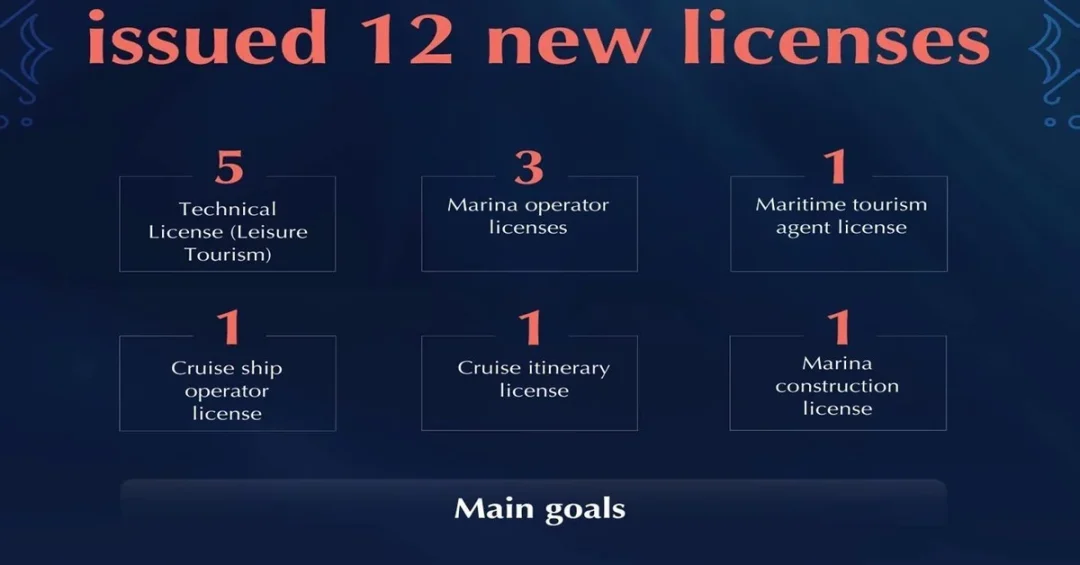
The Saudi Red Sea Authority has issued 12 new licenses covering tourism shipping agents, cruise ship operators, marina operators, and recreational marine activities, in a coordinated push to accelerate the growth of the Kingdom’s coastal tourism sector. The licenses, announced through official Saudi channels, were granted over the past two months and span some of the most prominent destinations along the Red Sea coast, including Sindalah in NEOM, Yanbu, and Jeddah. The move reflects a deliberate effort to mature the regulatory environment for marine tourism as Saudi Arabia positions the Red Sea as a leading global destination for leisure travel, yachting, and cruise tourism. How does a single set of licensing decisions signal such a significant step forward for an entire national industry?
The answer lies in the role the Saudi Red Sea Authority plays as the principal regulator of maritime and coastal tourism activities. By issuing licenses and permits, setting standards for marine tourism marinas, and promoting coastal activities to attract tourists, practitioners, and investors, the authority is building the institutional scaffolding on which a multi-billion-dollar sector can grow. The 12 new licenses are not merely administrative approvals; they are the operational green light for companies that will physically shape the visitor experience on the Red Sea, from the moment a cruise ship docks to the moment a yacht leaves its berth. For an international audience watching Saudi Arabia’s tourism transformation, this is a concrete marker of progress.
Context and Background
What makes these licensing decisions so consequential for the future of Red Sea tourism? The Saudi Red Sea Authority was established to regulate and develop marine and coastal tourism along a coastline that stretches for hundreds of kilometers and encompasses some of the most environmentally rich and historically significant waters in the region. Its mandate includes issuing the necessary licenses and permits to regulate maritime and tourism activities, establishing standards and guidelines for marine tourism marinas, and promoting coastal tourism activities. Each license therefore represents both a regulatory approval and a statement of confidence in the operator receiving it.
The broader context is the Kingdom’s sustained effort to diversify its economy away from hydrocarbon dependence and toward sectors such as tourism, entertainment, and hospitality. The Red Sea coast is central to that strategy. It is home to a growing collection of luxury resorts, island destinations, and marina developments that are designed to attract international travelers seeking pristine coral reefs, warm waters, and high-end services. The regulatory framework must keep pace with that physical development, and the authority’s licensing activity is one of the clearest indicators that it is doing so.
For international readers, it is worth noting that the licensing regime is designed to be transparent and predictable, two qualities that global investors and cruise operators look for before committing capital and vessels to a new market. The issuance of 12 licenses in a two-month window sends a signal that the approval process is functioning, that applications are being reviewed and granted, and that the sector is open for business. What does that mean for the companies already operating or planning to operate on the Red Sea? It means they can schedule sailings, build marinas, and market itineraries with greater certainty.
Key Details of the New Licenses
What exactly has been licensed, and who are the beneficiaries? According to official information, the newly issued licenses include a tourism shipping agent license for Deep Seas Shipping Agency, which will support the logistics and servicing of tourism vessels. Three licenses were granted to marine tourism marina operators: Sindalah Marina in NEOM, Dolphin Beach Resort in Yanbu, and Jeddah Municipality Marina. These approvals allow the marinas to operate within the regulatory framework established by the authority, ensuring that berthing, services, and safety standards meet national requirements.
The package also includes a permit to construct a marine tourism marina for Sindalah Island Marina in NEOM, a cruise ship operator license for Red Sea Cruises (Cruise Saudi), and a route license for cruise ships. These three items are particularly significant because they connect infrastructure development with actual maritime operations. A construction permit for a marina at Sindalah, one of NEOM’s flagship island destinations, indicates that physical capacity is expanding. A cruise ship operator license for Cruise Saudi, the entity tasked with developing the Kingdom’s cruise sector, and a route license for cruise ships together enable the movement of vessels along the coast and beyond.
In addition, five technical recreational tourism licenses were issued, including four for yacht companies and one for AROYA Cruise Limited. These licenses cover the technical and operational requirements for recreational marine activities, an area that is expected to grow rapidly as domestic and international demand for yachting, diving, and water sports increases. Each of these approvals is a building block. A yacht company cannot legally operate without technical licensing; a cruise line cannot schedule routes without a route license. By granting them, the authority is converting interest in Red Sea tourism into lawful, regulated activity.
International and Regional Impact
How will these licenses be felt beyond Saudi Arabia’s borders? The Red Sea is a shared maritime corridor, and its tourism potential is regional as well as national. Cruise itineraries that include Saudi ports can connect with destinations in neighboring countries, creating multi-country voyages that appeal to international travelers. The licensing of Red Sea Cruises (Cruise Saudi) as a cruise ship operator and the granting of a route license for cruise ships are steps toward integrating Saudi Arabia more fully into the global cruise map. For international cruise lines considering the region, the presence of a licensed local operator and a defined route framework reduces operational uncertainty.
For marina operators and yacht companies, the impact is equally international. Sindalah Marina in NEOM and Jeddah Municipality Marina are positioned to serve high-net-worth travelers and yacht owners who move between the Mediterranean, the Red Sea, and the Indian Ocean. Dolphin Beach Resort in Yanbu adds a Red Sea coastal destination with its own marina capacity. When these facilities operate under clear national standards, they become more attractive to international visitors who expect consistent quality and safety. The cumulative effect is a Red Sea coast that is easier to include in global travel itineraries, which in turn raises the region’s profile as a year-round tourism destination.
Economic and Strategic Significance
Why do these licenses matter for Saudi Arabia’s economy? The authority has stated that the licenses contribute to enhancing tourism activities by creating an attractive coastal environment that encourages investment and draws tourists to Red Sea shore destinations, thereby fostering the growth of coastal tourism activities and significantly supporting the national economy. This is not a marginal claim. Coastal tourism generates revenue across multiple layers: marina fees, vessel servicing, hospitality spending, excursion bookings, and the indirect employment that follows visitor traffic. Each licensed operator becomes a node in that value chain.
Strategically, the licensing program supports the Kingdom’s goal of building a promising coastal tourism sector that can compete internationally. The authority’s responsibilities include promoting coastal tourism activities to attract tourists, practitioners, and investors, and the issuance of licenses is one of the most direct ways to do so. When a yacht company receives a technical license, it can invest in vessels and crew. When a marina receives an operating license, it can market berths and services. When a cruise operator receives a route license, it can sell itineraries. These are the commercial activities that transform policy ambitions into economic output.
The licenses also reinforce safety and environmental standards, which are essential for the long-term sustainability of the Red Sea’s marine environment. By regulating who may operate and under what conditions, the authority helps ensure that growth does not come at the expense of the coral reefs and marine life that make the destination unique. For international travelers who increasingly prioritize sustainable tourism, this regulatory discipline is a selling point rather than a constraint.
Vision 2030 Alignment
How do these 12 licenses connect to Saudi Vision 2030? The Vision’s objectives include diversifying the economy, expanding non-oil sectors, and increasing the contribution of tourism to national income. The Red Sea coast is one of the primary geographic theaters for that diversification, and the Saudi Red Sea Authority is one of the key institutions charged with making it work. Every license issued is a small but measurable step toward a tourism sector that can employ citizens, attract foreign visitors, and generate export-like earnings from international spending.
The authority’s work also aligns with the broader modernization of Saudi Arabia’s regulatory environment, which is designed to be business-friendly while maintaining high standards. By issuing licenses to a mix of Saudi and international-facing operators, including Cruise Saudi and AROYA Cruise Limited, the Kingdom is signaling that its coastal tourism sector is open to partnership and investment. As more marinas, cruise routes, and yacht services come online, the Red Sea will increasingly be recognized not just as a natural asset but as a managed, world-class destination. The 12 new licenses are a clear indication that this journey is well underway.
20 Questions
Q1. What did the Saudi Red Sea Authority announce?
A1. The authority issued 12 new licenses for tourism shipping agents, cruise ship operators, marina operators, and recreational marine activities, as part of efforts to enhance the maturity of Saudi Arabia’s coastal tourism sector.
Q2. When were these licenses issued?
A2. The licenses were issued over the past two months, according to official information released through Saudi channels. They cover a range of maritime and tourism activities along the Red Sea coast.
Q3. Which company received a tourism shipping agent license?
A3. Deep Seas Shipping Agency received a tourism shipping agent license. This allows the company to provide shipping agency services for tourism vessels operating in Saudi waters.
Q4. Which marinas received marine tourism marina operator licenses?
A4. Sindalah Marina in NEOM, Dolphin Beach Resort in Yanbu, and Jeddah Municipality Marina received marine tourism marina operator licenses, enabling them to operate within the national regulatory framework.
Q5. What construction permit was granted?
A5. A permit to construct a marine tourism marina for Sindalah Island Marina in NEOM was granted. This supports the expansion of marina infrastructure on Sindalah Island.
Q6. Which entity received a cruise ship operator license?
A6. Red Sea Cruises (Cruise Saudi) received a cruise ship operator license. Cruise Saudi is the entity tasked with developing the Kingdom’s cruise sector.
Q7. What is a route license for cruise ships?
A7. A route license allows cruise ships to operate along approved maritime routes. One such license was issued as part of the 12 new approvals.
Q8. How many technical recreational tourism licenses were issued?
A8. Five technical recreational tourism licenses were issued, including four for yacht companies and one for AROYA Cruise Limited.
Q9. Which yacht companies received licenses?
A9. Four yacht companies received technical recreational tourism licenses. These licenses allow them to operate recreational marine activities in compliance with national standards.
Q10. What is the role of the Saudi Red Sea Authority?
A10. The authority regulates maritime and tourism activities, issues licenses and permits, sets standards for marine tourism marinas, and promotes coastal tourism to attract tourists, practitioners, and investors.
Q11. How do these licenses support the national economy?
A11. They enhance tourism activities, create an attractive coastal environment, encourage investment, draw tourists to Red Sea destinations, and foster growth that supports the national economy.
Q12. What does ‘coastal tourism sector maturity’ mean?
A12. It refers to the development of a well-regulated, investment-ready sector with clear standards, licensed operators, and infrastructure that can reliably serve international and domestic tourists.
Q13. How do these licenses affect international cruise operators?
A13. They signal that Saudi Arabia’s cruise sector is open and regulated, with licensed local operators and route frameworks that reduce uncertainty for international cruise lines considering Red Sea itineraries.
Q14. What is the significance of Sindalah in NEOM?
A14. Sindalah is a flagship island destination in NEOM. The marina operator license and construction permit for Sindalah Island Marina indicate expanding capacity for luxury marine tourism.
Q15. Why is Yanbu included in the licensing program?
A15. Dolphin Beach Resort in Yanbu received a marina operator license, adding a Red Sea coastal destination with marina capacity and supporting regional tourism development.
Q16. What does the Jeddah Municipality Marina license enable?
A16. It allows the marina to operate under national standards, serving yacht owners and visitors in Jeddah and contributing to the city’s coastal tourism offering.
Q17. How do these licenses improve safety for tourists?
A17. By regulating who may operate and under what conditions, the authority helps ensure that marinas, cruise ships, and recreational activities meet safety and environmental standards.
Q18. What is AROYA Cruise Limited’s role?
A18. AROYA Cruise Limited received a technical recreational tourism license, enabling it to operate within the regulated framework for recreational marine activities on the Red Sea.
Q19. How do these licenses align with Vision 2030?
A19. They support economic diversification, expand the non-oil tourism sector, attract international visitors and investment, and help develop the Red Sea coast as a world-class destination.
Q20. What can international travelers expect next?
A20. As licensed operators begin services, travelers can expect more cruise itineraries, marina facilities, and recreational marine options along Saudi Arabia’s Red Sea coast in the coming seasons.
Reader Feedback
We value your thoughts. Please share your feedback on this article.
Your feedback helps us improve our coverage.
Related articles
 Richard Mille AlUla Desert Polo Returns January 17-18, 2025
 Al-Tawil Camp: Solar Power and Ancient Inscriptions in Al-Jouf
 Falcons Draw Crowds at King Abdulaziz Camel Festival
 Saudi Tourism Authority Signs MoU on Content Creator Marketing
 Camping Equipment Shops Help Explorers on Journeys
 Saudi Ministry Expands Awareness Services at Mount Arafat