


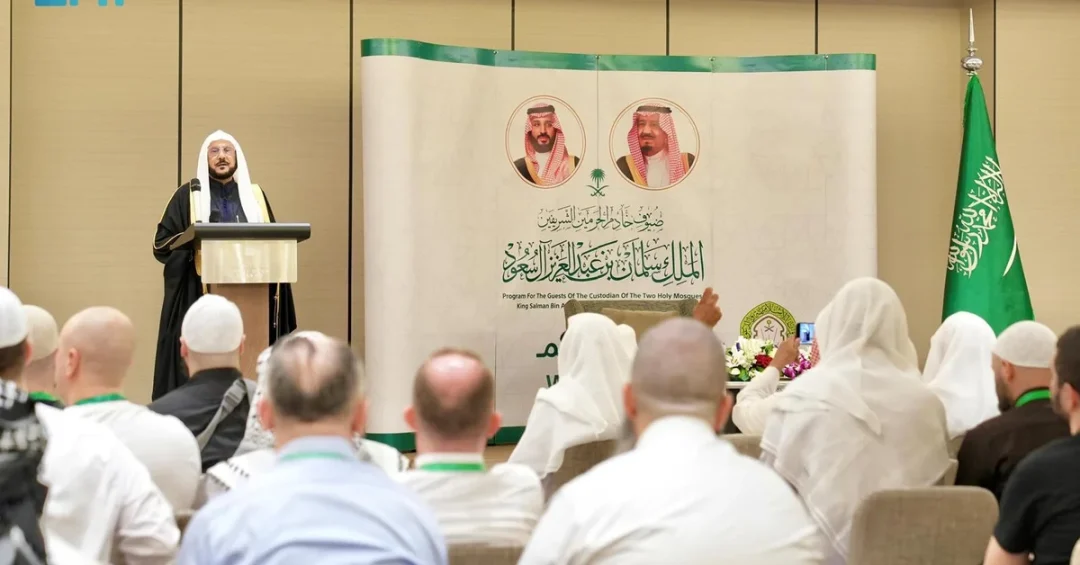
Saudi Arabia’s Ministry of Islamic Affairs, Dawah and Guidance hosted a reception in Makkah on December 26, 2024, honoring the second group of participants in the Custodian of the Two Holy Mosques’ Guests Program for Hajj, Umrah, and Visit, comprising 250 Umrah performers from 14 European countries. The event was attended by Sheikh Dr. Abdullatif Al Alsheikh, Minister of Islamic Affairs, Dawah and Guidance and General Supervisor of the program, who welcomed the guests at their residence and reaffirmed the Kingdom’s enduring commitment to serving Muslims from every corner of the world. The reception underscored the program’s role as a bridge of goodwill between Saudi Arabia and Islamic communities across Europe, reflecting the leadership’s vision of unity and spiritual hospitality. Isn’t it remarkable how a single initiative can bring together hundreds of pilgrims from diverse nations under one umbrella of faith and fellowship?
The Custodian of the Two Holy Mosques’ Guests Program for Hajj, Umrah, and Visit is a flagship initiative that annually invites thousands of Muslims from around the globe to perform pilgrimage at the Kingdom’s expense. This second group, drawn from 14 European countries, represents the program’s expanding reach into communities where Muslims often face unique cultural and logistical challenges in fulfilling their religious duties. By hosting these guests, Saudi Arabia reinforces its historic role as the guardian of Islam’s holiest sites and a steadfast supporter of Muslim unity. The reception in Makkah served not only as a formal welcome but also as a platform for cultural exchange and spiritual reflection, allowing guests to share their experiences and express gratitude for the Kingdom’s generosity.
Context and Background
How did this program come to symbolize Saudi Arabia’s global philanthropic outreach? The Custodian of the Two Holy Mosques’ Guests Program was established decades ago under the visionary leadership of the Saudi monarchy, with the aim of facilitating pilgrimage for Muslims who might otherwise be unable to afford the journey. Over the years, it has grown into a comprehensive initiative that includes Hajj, Umrah, and visits to the Prophet’s Mosque in Madinah. The program is supervised by the Ministry of Islamic Affairs, Dawah and Guidance, which coordinates logistics, accommodation, and transportation for guests from various continents. This particular reception marked the second group of the season, following the successful hosting of earlier participants, and highlighted the Kingdom’s systematic approach to religious diplomacy.
The selection of 250 Umrah performers from 14 European countries is significant, as it targets a region where Muslim minorities often navigate complex social landscapes. By inviting these individuals, Saudi Arabia not only fulfills a religious obligation but also strengthens ties with European Muslim communities, fostering a sense of belonging and appreciation. The program’s inclusivity—spanning different ethnicities and backgrounds—mirrors the universal message of Islam. Moreover, it aligns with the Kingdom’s broader efforts to promote moderate Islam and counter extremism by providing authentic spiritual experiences. The reception itself was a testament to the meticulous planning and hospitality that define Saudi Arabia’s approach to hosting pilgrims.
Key Details
What did the speeches at the reception reveal about the Kingdom’s dedication? During the gathering, Dr. Al-Khamar Al-Baqari, head of imams in the Netherlands, delivered a heartfelt speech expressing gratitude to Saudi Arabia, its government, and its people for their generous hospitality. He noted that such warmth exemplifies the Kingdom’s dedication to Muslims worldwide, a sentiment echoed by many attendees. Dr. Al-Baqari’s words underscored the emotional and spiritual impact of the program, which goes beyond mere logistics to create lasting memories and strengthened faith. His presence also highlighted the diversity of the guests, who hailed from countries such as France, Germany, the United Kingdom, and others across Europe.
In response, Sheikh Dr. Abdullatif Al Alsheikh emphasized that under Saudi Arabia’s wise leadership, the Kingdom consistently aims to offer top-tier services to visitors of the Two Holy Mosques from around the world. He pointed to the unwavering commitment to providing humanitarian aid to those in need globally, in accordance with Islam’s core values of compassion and support. Al Alsheikh’s remarks reflected the broader mission of the Ministry of Islamic Affairs, Dawah and Guidance, which not only oversees pilgrimage but also promotes Islamic solidarity and education. The reception included a tour of the guests’ residence, where they are accommodated in comfortable settings that allow them to focus on their spiritual journey. The event concluded with prayers for the Kingdom’s continued prosperity and for peace among Muslims worldwide.
International and Regional Impact
How does this program influence Saudi Arabia’s relations with Europe and the broader Islamic world? By hosting Umrah performers from 14 European countries, the Kingdom sends a powerful message of inclusivity and religious tolerance. This initiative helps bridge cultural gaps and fosters goodwill, as guests return home with positive impressions of Saudi Arabia and its people. In a time when misunderstandings about Islam can prevail, such firsthand experiences serve as invaluable tools for dialogue and mutual respect. European Muslim communities often look to Saudi Arabia for spiritual guidance, and this program reinforces the Kingdom’s role as a unifying force. Furthermore, it complements Saudi Arabia’s diplomatic efforts to engage with Western nations on shared values of peace and coexistence.
Regionally, the program strengthens ties with neighboring countries and the wider Middle East by showcasing the Kingdom’s leadership in serving Islam. It also aligns with the Organization of Islamic Cooperation’s goals of solidarity and cooperation. The guests’ diverse backgrounds—representing various European nations—highlight the global reach of the Two Holy Mosques and the Kingdom’s ability to manage large-scale religious events seamlessly. This soft power approach enhances Saudi Arabia’s image as a modern, forward-looking nation that honors its heritage while embracing global engagement. The reception in Makkah thus became a microcosm of the Kingdom’s international outreach, demonstrating that hospitality and faith can transcend borders.
Economic and Strategic Significance
What economic and strategic benefits does the Guests Program bring to Saudi Arabia? While the program is primarily religious and humanitarian, it also has tangible economic implications. The influx of pilgrims stimulates local economies in Makkah, Madinah, and Jeddah, supporting businesses in hospitality, retail, and transportation. The program’s focus on Umrah, which can be performed year-round, helps sustain tourism flows outside the peak Hajj season, contributing to the Kingdom’s Vision 2030 goal of increasing religious tourism. Strategically, it reinforces Saudi Arabia’s position as the heart of the Islamic world, a status that carries significant diplomatic weight. By investing in such initiatives, the Kingdom cultivates long-term goodwill and loyalty among Muslims globally, which can translate into support for its policies and initiatives on the world stage.
Moreover, the program showcases Saudi Arabia’s logistical capabilities and commitment to excellence, which are essential for attracting more pilgrims under the Vision 2030 framework. The expansion of the Two Holy Mosques and related infrastructure projects, such as the Haramain High-Speed Railway, are designed to accommodate growing numbers of visitors. The Guests Program serves as a model of how Saudi Arabia can combine religious duty with economic development, creating a virtuous cycle that benefits both the Kingdom and the global Muslim community. As the program continues to grow, it will likely play an even greater role in Saudi Arabia’s economic diversification and international relations.
Vision 2030 Alignment
How does the Custodian of the Two Holy Mosques’ Guests Program embody the spirit of Vision 2030? Saudi Arabia’s Vision 2030 is a comprehensive plan to diversify the economy, empower citizens, and enhance the Kingdom’s global standing. The Guests Program aligns perfectly with several of its pillars, particularly those focused on strengthening Islamic values, promoting moderation, and increasing pilgrimage capacity. By hosting Muslims from around the world, the Kingdom demonstrates its commitment to serving Islam and Muslims, a core element of its national identity. The program also supports the vision’s goal of attracting 30 million Umrah performers by 2030, as it builds positive word-of-mouth and encourages repeat visits. Furthermore, it reflects the leadership’s dedication to humanitarian causes, which enhances Saudi Arabia’s reputation as a responsible global actor.
In the final analysis, the reception for the second group of guests is more than a ceremonial event; it is a manifestation of Saudi Arabia’s enduring mission to unite Muslims and provide them with spiritual solace. Under the guidance of the Custodian of the Two Holy Mosques, King Salman bin Abdulaziz Al Saud, and Crown Prince Mohammed bin Salman, the Kingdom continues to set benchmarks in religious hospitality. As these 250 Umrah performers return to their homes across Europe, they carry with them not only the blessings of their pilgrimage but also a deeper appreciation for Saudi Arabia’s role in the Islamic world. The program’s success is a testament to the Kingdom’s unwavering commitment to its faith and its people, and it will undoubtedly inspire future generations. Isn’t it heartening to see such initiatives flourish, paving the way for a more connected and compassionate world?
20 Questions
Q1. What is the Custodian of the Two Holy Mosques’ Guests Program?
A1. It is a Saudi initiative that invites Muslims from around the world to perform Hajj, Umrah, and visit the Prophet’s Mosque at the Kingdom’s expense, promoting Islamic unity and hospitality.
Q2. Who attended the reception for the second group of guests?
A2. Sheikh Dr. Abdullatif Al Alsheikh, Minister of Islamic Affairs, Dawah and Guidance, attended the reception along with 250 Umrah performers from 14 European countries.
Q3. How many Umrah performers were in the second group?
A3. The second group comprised 250 Umrah performers, representing 14 European countries, who were hosted as part of the program’s seasonal activities.
Q4. Which countries did the guests come from?
A4. The guests came from 14 European countries, including the Netherlands, France, Germany, and the United Kingdom, among others, reflecting the program’s broad reach.
Q5. What did Dr. Al-Khamar Al-Baqari say at the reception?
A5. Dr. Al-Khamar Al-Baqari, head of imams in the Netherlands, expressed gratitude to Saudi Arabia’s leadership and people for their generous hospitality and dedication to Muslims worldwide.
Q6. What did Sheikh Dr. Abdullatif Al Alsheikh emphasize?
A6. He emphasized the Kingdom’s commitment to providing top-tier services to visitors of the Two Holy Mosques and its unwavering humanitarian aid efforts globally, in line with Islamic values.
Q7. When and where was the reception held?
A7. The reception was held in Makkah on December 26, 2024, at the residence of the second group of guests, as reported by the Saudi Press Agency.
Q8. What is the significance of the program for European Muslims?
A8. It provides an opportunity for European Muslims to perform Umrah, strengthening their faith and connection to Islam, while fostering goodwill and appreciation for Saudi Arabia’s role.
Q9. How does the program align with Vision 2030?
A9. It supports Vision 2030 by enhancing religious tourism, promoting moderate Islam, and showcasing Saudi Arabia’s ability to host millions of pilgrims, contributing to economic diversification.
Q10. What humanitarian values does the program reflect?
A10. The program reflects Islam’s core values of compassion, support, and generosity, as Saudi Arabia extends aid and hospitality to Muslims in need around the world.
Q11. How many groups are hosted annually under this program?
A11. The program hosts multiple groups throughout the year, including Hajj and Umrah performers, with each group typically comprising hundreds of guests from various regions.
Q12. What services are provided to the guests?
A12. Guests receive comprehensive services including accommodation, transportation, meals, and guided visits to the Two Holy Mosques and other significant Islamic sites.
Q13. Who supervises the program?
A13. The program is supervised by the Ministry of Islamic Affairs, Dawah and Guidance, under the direct oversight of Sheikh Dr. Abdullatif Al Alsheikh.
Q14. What was the mood at the reception?
A14. The reception was marked by gratitude, joy, and spiritual reflection, with guests expressing appreciation for the Kingdom’s hospitality and the opportunity to perform Umrah.
Q15. How does this program impact Saudi Arabia’s international image?
A15. It enhances Saudi Arabia’s image as a compassionate and responsible global leader, dedicated to serving Islam and fostering unity among Muslims worldwide.
Q16. What role does the program play in countering extremism?
A16. By promoting moderate Islam and providing authentic spiritual experiences, the program helps counter extremist narratives and fosters a balanced understanding of the faith.
Q17. Are there plans to expand the program?
A17. Saudi Arabia continuously seeks to expand and improve the program, aiming to include more Muslims from diverse regions in line with Vision 2030’s goals.
Q18. How do guests benefit from the program?
A18. Guests benefit spiritually from performing Umrah, culturally from interacting with fellow Muslims, and personally from the hospitality that deepens their connection to Saudi Arabia.
Q19. What is the expected outcome of the program?
A19. The program aims to strengthen bonds among Muslims, promote goodwill, and showcase Saudi Arabia’s leadership in serving the Islamic world, with lasting positive impacts.
Q20. How can Muslims apply to participate in the program?
A20. Applications are typically coordinated through Saudi embassies and Islamic organizations in various countries, with selections based on specific criteria set by the ministry.
Reader Feedback
We value your thoughts. Please share your feedback on this article.
Your feedback helps us improve our coverage.
Related articles
 ROSHN Breaks Ground on ALMANAR in Makkah
 Saudi 911 Centers: A Model for Security and Humanitarian Services
 Kuwait Crown Prince Receives GCC Foreign Ministers
 Arab League Condemns Israeli Minister’s Al-Aqsa Intrusion
 OIC Condemns Israeli Minister’s Storming of Al-Aqsa Mosque
 Saudi Forces Apprehend Two for Illegal Tree Cutting in Umluj