


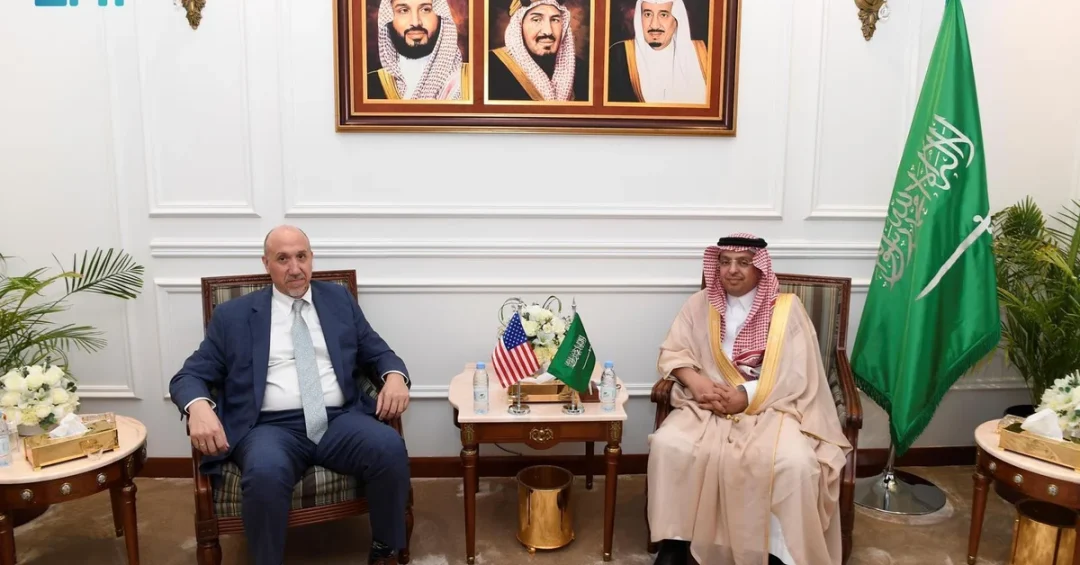
Director General Fareed Al-Shehri of the Ministry of Foreign Affairs Branch in Makkah met with Acting U.S. Consul General Ali E. Lejlic in Jeddah on December 26, 2024, in a diplomatic reception that underscores the enduring strength of Saudi-American relations. The meeting, reported by the Saudi Press Agency (SPA), the Kingdom’s official news authority, brought together two senior diplomatic figures for an exchange of pleasantries that reflects the deep and longstanding partnership between the Kingdom of Saudi Arabia and the United States. The encounter took place in Jeddah, the historic gateway city on the Red Sea and home to the U.S. Consulate General, which serves as a vital diplomatic hub for the western region of the Kingdom.
Why does a routine diplomatic courtesy call between two officials in Jeddah carry significance for international observers? In the world of diplomacy, even the most cordial exchanges serve as important touchpoints that maintain open channels of communication between nations. The Ministry of Foreign Affairs Branch in Makkah oversees diplomatic and consular affairs across the holy city and the surrounding western region, a jurisdiction of immense importance given Makkah’s status as the spiritual heart of the Islamic world. The U.S. Consulate General in Jeddah, meanwhile, has a long and distinguished history in the Kingdom, dating back decades of bilateral engagement. This meeting, though described as a reception with an exchange of pleasantries, represents the kind of steady, institutional dialogue that forms the backbone of the Saudi-American relationship.
Context and Background
How does the Ministry of Foreign Affairs Branch in Makkah fit into Saudi Arabia’s broader diplomatic architecture? The Ministry of Foreign Affairs, under the leadership of His Highness Prince Faisal bin Farhan bin Abdullah Al Saud, the Minister of Foreign Affairs, operates through a network of regional branches across the Kingdom. The Makkah branch, led by Director General Fareed Al-Shehri, is responsible for managing diplomatic protocols, consular services, and international engagements within one of the most sensitive and significant regions of the country. Makkah Province includes the holy city of Makkah, the port city of Jeddah, and the city of Taif, making it a region of extraordinary religious, economic, and strategic importance.
The U.S. Consulate General in Jeddah serves as the United States’ primary diplomatic presence in western Saudi Arabia. Historically, the consulate has played a central role in facilitating bilateral relations, providing consular services to American citizens and Saudi nationals, and supporting cultural and educational exchanges. The acting consul general, Ali E. Lejlic, represents American diplomatic interests in the region during this period. The relationship between Saudi Arabia and the United States has been a cornerstone of regional stability and economic cooperation for decades, encompassing energy, security, trade, and cultural exchange.
What makes Jeddah a fitting venue for such diplomatic engagements? Jeddah has long served as the Kingdom’s diplomatic gateway, hosting numerous consulates and international missions. Its proximity to Makkah, its status as a major commercial center, and its role as the entry point for millions of pilgrims each year make it a natural location for diplomatic activity. The city embodies the Kingdom’s openness to the world, a theme that has only intensified under Vision 2030, the ambitious national transformation plan championed by His Royal Highness Crown Prince Mohammed bin Salman.
Key Details of the Meeting
What exactly was discussed during this diplomatic encounter? According to the Saudi Press Agency, the meeting between Director General Fareed Al-Shehri and Acting U.S. Consul General Ali E. Lejlic involved an exchange of pleasantries during the reception. While the official readout was brief, such meetings are important for maintaining the personal relationships that underpin diplomatic work. The SPA report, dated December 26, 2024, was released at 20:57 local time, or 17:57 GMT, reflecting the routine but important nature of the engagement.
The Ministry of Foreign Affairs Branch in Makkah, under Director General Al-Shehri’s leadership, works to ensure that diplomatic protocols are observed and that international partners receive the support they need to operate effectively in the western region. This includes coordination with consulates, facilitation of official visits, and support for the many international events and initiatives that take place in Jeddah and the surrounding areas. The U.S. Consulate General, for its part, works to strengthen the ties between the two nations at the grassroots and institutional levels, supporting American citizens, promoting trade, and fostering educational and cultural connections.
How do these meetings translate into tangible outcomes for both nations? Even cordial receptions can pave the way for deeper cooperation on shared priorities. Saudi Arabia and the United States cooperate on a wide range of issues, including regional security, counterterrorism, energy markets, and economic investment. The Kingdom’s Vision 2030 agenda has opened new avenues for American businesses and investors, while Saudi students continue to study in American universities and American companies continue to participate in the Kingdom’s giga-projects. The diplomatic relationship remains vital to both nations’ interests.
International and Regional Impact
How does the Saudi-American relationship influence the broader Middle East? The partnership between Riyadh and Washington has long been a stabilizing force in a region that faces numerous challenges. From security cooperation to economic development, the two nations have worked together to address shared concerns and promote peace and prosperity. The meeting in Jeddah is a small but meaningful reminder that this partnership remains active and engaged at all levels, from the highest offices in both capitals to the regional diplomatic outposts that implement policy on the ground.
The Kingdom’s role as a leader in the Arab and Islamic world adds significance to its relationships with major global powers. Saudi Arabia’s custodianship of the Two Holy Mosques gives it a unique responsibility and moral authority, and its diplomatic engagements are conducted with an awareness of this responsibility. The U.S. Consulate General’s presence in Jeddah, so close to Makkah, reflects the importance that the United States places on its relationship with the Kingdom and its respect for Saudi Arabia’s religious and cultural heritage.
Economic and Strategic Significance
What economic dimensions underpin the Saudi-American relationship? Trade between the two countries is substantial, encompassing energy exports, defense equipment, technology, and agricultural products. American companies are deeply involved in Saudi Arabia’s economic transformation, participating in sectors ranging from healthcare and education to entertainment and renewable energy. The Kingdom’s Public Investment Fund (PIF) has made significant investments in the United States, and American firms have been awarded major contracts in Saudi Arabia’s giga-projects, including NEOM and the Red Sea Project.
Strategically, the two nations share an interest in ensuring the free flow of energy resources, combating terrorism, and promoting stability in the Gulf region. The meeting between Director General Al-Shehri and Acting Consul General Lejlic, while routine, is part of the continuous diplomatic engagement that sustains these shared interests. The Ministry of Foreign Affairs Branch in Makkah plays a role in supporting the visits of American officials to the western region, facilitating their meetings with Saudi counterparts, and ensuring that the logistics of diplomacy run smoothly.
Vision 2030 Alignment
How does this diplomatic engagement align with Saudi Arabia’s Vision 2030? Vision 2030 seeks to diversify the Kingdom’s economy, strengthen its international partnerships, and enhance its global standing. A robust diplomatic network, including the Ministry of Foreign Affairs and its regional branches, is essential to achieving these goals. By maintaining strong ties with the United States and other nations, Saudi Arabia can attract investment, share knowledge, and collaborate on solutions to global challenges. The meeting in Jeddah reflects the Kingdom’s commitment to being an active and constructive member of the international community.
As the Kingdom continues its remarkable transformation under Vision 2030, the role of its diplomats and foreign ministry officials becomes ever more important. Director General Fareed Al-Shehri and his team at the Makkah branch are on the front lines of Saudi Arabia’s international engagement, ensuring that the Kingdom’s message of progress, moderation, and openness is heard around the world. The reception with Acting U.S. Consul General Ali E. Lejlic is one small example of the many interactions that take place every day to strengthen Saudi Arabia’s global partnerships. With the continued support of its leadership and the dedication of its diplomats, the Kingdom is well positioned to achieve its Vision 2030 goals and to contribute to a more peaceful and prosperous world.
20 Questions
Q1. Who met in Jeddah on December 26, 2024?
A1. Director General Fareed Al-Shehri of the Ministry of Foreign Affairs Branch in Makkah met with Acting U.S. Consul General Ali E. Lejlic in Jeddah on December 26, 2024.
Q2. What was the purpose of the meeting?
A2. The meeting was a diplomatic reception where the two officials exchanged pleasantries, reflecting the ongoing cordial relations between Saudi Arabia and the United States.
Q3. Which Saudi authority reported the meeting?
A3. The Saudi Press Agency (SPA), the Kingdom’s official news agency, reported the meeting on December 26, 2024, at 20:57 local time.
Q4. What is the role of the Ministry of Foreign Affairs Branch in Makkah?
A4. The branch oversees diplomatic and consular affairs in the Makkah region, including Jeddah and Taif, ensuring protocol and supporting international engagements in western Saudi Arabia.
Q5. Who is Fareed Al-Shehri?
A5. Fareed Al-Shehri is the Director General of the Ministry of Foreign Affairs Branch in Makkah, responsible for managing diplomatic activities in the holy city and surrounding areas.
Q6. Who is Ali E. Lejlic?
A6. Ali E. Lejlic is the Acting U.S. Consul General in Jeddah, representing American diplomatic interests in western Saudi Arabia.
Q7. Why is Jeddah an important diplomatic location?
A7. Jeddah hosts many consulates and is the gateway to Makkah, making it a key hub for diplomatic engagement and services for pilgrims and international partners.
Q8. How does this meeting reflect Saudi-U.S. relations?
A8. It demonstrates the continued strength and regular communication between Saudi Arabia and the United States at the diplomatic level, reinforcing their longstanding partnership.
Q9. What is the significance of the Makkah region in Saudi diplomacy?
A9. The Makkah region includes the holy city of Makkah and the commercial hub of Jeddah, giving it immense religious and economic importance that requires careful diplomatic management.
Q10. What does the U.S. Consulate General in Jeddah do?
A10. It provides consular services, supports American citizens, promotes trade and cultural exchange, and serves as a diplomatic link between the U.S. and western Saudi Arabia.
Q11. How does Vision 2030 relate to Saudi diplomacy?
A11. Vision 2030 aims to strengthen Saudi Arabia’s global partnerships and economic diversification, making diplomacy essential for attracting investment and fostering international cooperation.
Q12. What are the key areas of Saudi-U.S. cooperation?
A12. Cooperation spans energy, security, trade, investment, education, and cultural exchange, with both nations working together on regional stability and economic development.
Q13. How often do such diplomatic meetings occur?
A13. Diplomatic meetings between Saudi officials and foreign consuls occur regularly as part of routine engagement to maintain strong bilateral relations and address mutual interests.
Q14. What message does this meeting send to the international community?
A14. It signals that Saudi Arabia remains open to international dialogue and committed to maintaining robust diplomatic ties with global partners like the United States.
Q15. What is the role of the Saudi Press Agency?
A15. The Saudi Press Agency is the official news agency of the Kingdom, responsible for disseminating accurate and timely information about Saudi government activities and events.
Q16. How does this meeting benefit the local community in Jeddah?
A16. It helps ensure that diplomatic services run smoothly, supporting the expatriate community and facilitating international business and cultural activities in the region.
Q17. What are the historical ties between Saudi Arabia and the United States?
A17. The two nations have enjoyed decades of cooperation, rooted in mutual interests in energy, security, and economic development, dating back to the mid-20th century.
Q18. How does the Ministry of Foreign Affairs support Vision 2030?
A18. The ministry advances Saudi Arabia’s international relations, promotes investment, and protects Saudi interests abroad, all of which are crucial for achieving Vision 2030 goals.
Q19. What other consulates are present in Jeddah?
A19. Jeddah hosts numerous consulates general from countries around the world, reflecting the city’s status as a diplomatic center and its importance as a gateway to the Kingdom.
Q20. What can we expect from future Saudi-U.S. engagements?
A20. Continued dialogue and cooperation are expected, focusing on shared priorities such as security, economic growth, and cultural exchange, in line with Saudi Arabia’s Vision 2030.
Reader Feedback
We value your thoughts. Please share your feedback on this article.
Your feedback helps us improve our coverage.
Related articles
 Saudi Defense Minister Meets Lebanese Army Commander
 MWL Condemns Israeli Minister’s Al-Aqsa Intrusion
 Saudi Arabia Condemns Israeli Violations at Al-Aqsa and in Syria
 Arab Parliament Condemns Storming of Al-Aqsa Mosque
 SFD Funds King Salman Hospital in Zambia with $135M
 Saudi Arabia Weather Forecast: Rain, Winds, Fog Expected Friday