


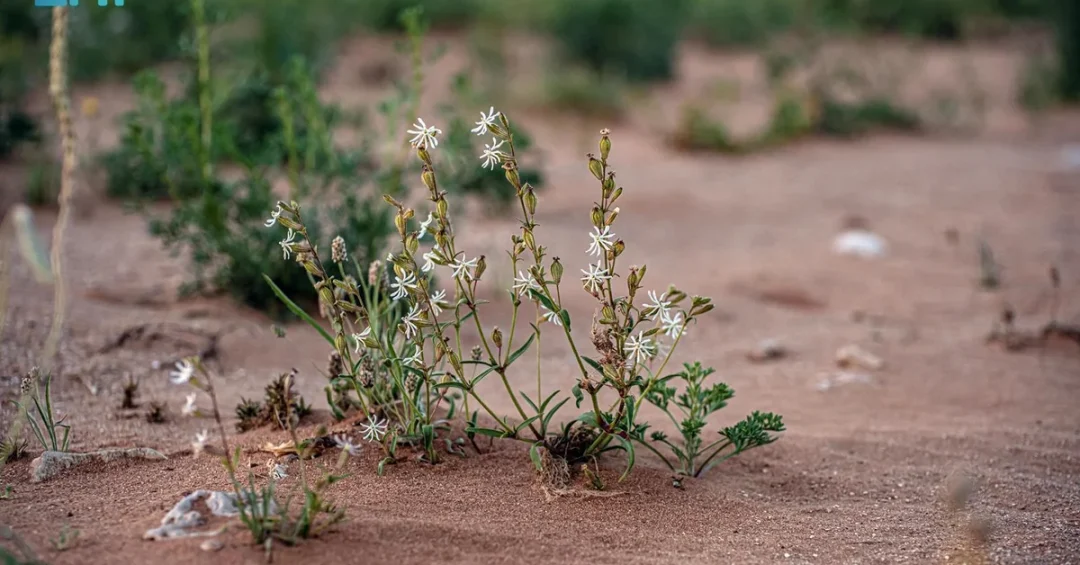
The rare wild plant Silene arabica has reappeared across Saudi Arabia’s Northern Borders Region following an exceptional rainy season, in a development officially reported by the Saudi Press Agency (SPA) that environmental specialists describe as a positive indicator of ecological renewal. The flowering of a species that had been at risk of extinction signals the strength of this year’s seasonal vegetation cover and underscores the Kingdom’s growing capacity to protect its natural heritage.
The Northern Borders Region, a vast area bordering Jordan and Iraq, has witnessed a diverse seasonal vegetation cover this year, with Silene arabica among the most notable outcomes. Belonging to the Caryophyllaceae family, the plant is known for its beauty and environmental significance, growing in desert and semi-desert environments where it can access retained moisture. Its return has drawn attention from environmental specialists, who see it as evidence of a healthy rainy season and a broader renewal of plant life across the area. For a Kingdom investing heavily in environmental protection under Vision 2030, the bloom is more than a seasonal curiosity — it is a measurable sign that Saudi Arabia’s ecosystems can recover when conditions allow.
Context and Background
What makes the reappearance of Silene arabica so significant for Saudi Arabia’s environmental record? The plant had been at risk of extinction, according to the Saudi Press Agency, making its return a rare conservation success story in a region where arid conditions often limit biodiversity. The species thrives in desert and semi-desert environments, particularly in areas that retain rainwater, such as moist or “dahina” soil — fertile earth found in valleys, ravines, and clay depressions known for its ability to preserve moisture for extended periods. These microhabitats act as natural reservoirs, allowing delicate herbaceous plants to survive between rainfall events.
The Northern Borders Region has historically been one of the Kingdom’s most challenging environments for vegetation, with sparse rainfall and extreme temperature swings. This year’s exceptional rainy season changed that dynamic, producing a diverse seasonal vegetation cover that has supported the return of species not seen in some areas for years. Environmental specialists noted that the reappearance of Silene arabica is a positive indicator of a strong rainy season and reflects the renewal of plant life across the area. The development also highlights the importance of Saudi Arabia’s rangeland and pasture ecosystems, which form part of the Kingdom’s natural capital and support traditional pastoral livelihoods.
For international observers, the story offers a window into how Saudi Arabia is balancing its ambitious economic transformation with environmental stewardship. The Kingdom has made environmental protection a core pillar of its long-term strategy, including initiatives to restore degraded land, expand protected areas, and conserve native species. The return of Silene arabica in the Northern Borders Region is a small but vivid example of those efforts intersecting with favorable natural conditions.
Key Details: A Delicate Desert Flower Returns
What exactly distinguishes Silene arabica from other desert plants? The species is characterized by its herbaceous structure and delicate white flowers, making it a prominent aesthetic feature in the region’s natural landscape. It typically blooms during the spring months following sufficient rainfall, a timing that depends entirely on the availability of moisture in the soil. The plant’s preference for “dahina” soil — the fertile, moisture-retaining earth found in valleys, ravines, and clay depressions — explains why its reappearance has been concentrated in specific parts of the Northern Borders Region rather than uniformly across the landscape.
Beyond its visual appeal, Silene arabica forms part of the pastoral vegetation cover and plays a vital role in soil stabilization and erosion prevention. Its root structure helps hold fragile desert soils in place, reducing the risk of erosion after heavy rains and contributing to environmental sustainability. The plant also supports local biodiversity, providing forage and habitat for insects and other small organisms that depend on seasonal vegetation. Environmental specialists view its return as a signal that the region’s ecological functions are being restored, at least temporarily, after the exceptional rainy season.
The Saudi Press Agency report did not specify the exact size of the blooming area or the number of plants observed, but it described the reappearance as one of the key outcomes of this year’s vegetation cover. That framing places Silene arabica within a wider pattern of seasonal greening across northern Saudi Arabia, where rains have replenished soil moisture and triggered the growth of annual and perennial plants alike. For botanists and conservationists, the event is a reminder that rare species can persist in arid landscapes when conditions align, and that protecting the right habitats can make a difference.
International and Regional Impact
How does a single wildflower species resonate beyond Saudi Arabia’s borders? The reappearance of Silene arabica contributes to the Kingdom’s growing reputation as a responsible steward of desert environments, a message that carries weight in international environmental forums. Saudi Arabia has increasingly positioned itself as a leader in land restoration and biodiversity conservation, hosting global events and launching initiatives that address desertification and climate resilience. The bloom in the Northern Borders Region provides a tangible, ground-level example of those commitments in action, reinforcing the Kingdom’s credibility in multilateral environmental discussions.
Regionally, the development is relevant to neighboring countries that share similar desert and semi-desert ecosystems. The Northern Borders Region connects to broader rangelands that extend across parts of the Arabian Peninsula and the Levant, and the health of vegetation in one area can influence migratory species and pastoral patterns across borders. The return of a rare plant species after an exceptional rainy season highlights the interconnectedness of regional ecology and the potential benefits of cross-border cooperation on conservation. For international readers, the story also illustrates how climate variability — in this case, favorable rainfall — can produce rapid ecological responses in arid zones, a dynamic that scientists continue to study.
Economic and Strategic Significance
Why should economic planners pay attention to a rare desert plant? Healthy rangelands and vegetation cover support pastoralism, which remains an important livelihood for some communities in northern Saudi Arabia. By stabilizing soil and preventing erosion, plants such as Silene arabica help protect infrastructure, roads, and agricultural land from the effects of runoff and land degradation. The presence of diverse vegetation also enhances the region’s potential for nature-based tourism and outdoor recreation, aligning with the Kingdom’s efforts to develop domestic and international tourism offerings beyond the major cities.
Strategically, the reappearance of a species at risk of extinction demonstrates the value of environmental monitoring and habitat protection. Saudi Arabia has invested in scientific research, protected areas, and restoration programs as part of its long-term planning, and success stories like this one can inform future conservation policies. The Northern Borders Region, with its unique soil formations and seasonal vegetation, represents a natural laboratory for understanding how desert ecosystems respond to rainfall variability. As the Kingdom continues to diversify its economy and develop new regions, integrating ecological considerations into planning will be essential to sustaining both natural capital and economic progress.
Vision 2030 Alignment
How does the bloom of Silene arabica connect to Saudi Arabia’s Vision 2030? Environmental sustainability is a core objective of the Vision, which seeks to protect the Kingdom’s natural resources, enhance quality of life, and promote sustainable development. The return of a rare plant species in the Northern Borders Region reflects the broader goals of the Saudi Green Initiative and related programs, which aim to restore ecosystems, increase vegetation cover, and combat desertification. These efforts are designed not only to preserve biodiversity but also to create a healthier environment for future generations, in line with the Vision’s emphasis on well-being and long-term prosperity.
The reappearance of Silene arabica is a reminder that environmental progress can be measured in small, tangible ways — a delicate white flower blooming in the desert after rain. For Saudi Arabia, such outcomes reinforce the importance of continued investment in conservation, scientific research, and sustainable land management. As the Kingdom advances its Vision 2030 agenda and strengthens its global environmental leadership, stories like this one will serve as evidence that economic transformation and ecological stewardship can go hand in hand. The Northern Borders Region’s rare bloom is not just a seasonal event; it is a sign of renewal and a promise of what careful stewardship can achieve.
20 Questions
Q1. What rare plant has reappeared in Saudi Arabia’s Northern Borders Region?
A1. The rare wild plant Silene arabica has reappeared in the Northern Borders Region following an exceptional rainy season, according to the Saudi Press Agency.
Q2. Why is the reappearance of Silene arabica significant?
A2. The plant had been at risk of extinction, so its return is a positive indicator of a strong rainy season and reflects the renewal of plant life across the area.
Q3. Which plant family does Silene arabica belong to?
A3. Silene arabica belongs to the Caryophyllaceae family, which includes many herbaceous flowering plants found in temperate and arid regions.
Q4. What type of environment does Silene arabica grow in?
A4. It grows in desert and semi-desert environments, particularly in areas that retain rainwater, such as moist or “dahina” soil.
Q5. What is “dahina” soil?
A5. Dahina soil is fertile earth found in valleys, ravines, and clay depressions, known for its ability to preserve moisture for extended periods.
Q6. What does Silene arabica look like?
A6. It is distinguished by its herbaceous structure and delicate white flowers, making it a prominent aesthetic feature in the region’s natural landscape.
Q7. When does Silene arabica typically bloom?
A7. It typically blooms during the spring months following sufficient rainfall, depending on the availability of moisture in the soil.
Q8. What role does Silene arabica play in the ecosystem?
A8. It forms part of the pastoral vegetation cover and plays a vital role in soil stabilization and erosion prevention, contributing to environmental sustainability.
Q9. How does Silene arabica support local biodiversity?
A9. The plant provides forage and habitat for insects and other small organisms that depend on seasonal vegetation in desert environments.
Q10. What did environmental specialists say about the reappearance?
A10. They noted that the reappearance of Silene arabica this year is a positive indicator of a strong rainy season and reflects the renewal of plant life.
Q11. Which region of Saudi Arabia witnessed this bloom?
A11. The Northern Borders Region, which borders Jordan and Iraq, witnessed the diverse seasonal vegetation cover and the reappearance of Silene arabica.
Q12. What was the weather condition that led to the bloom?
A12. An exceptional rainy season provided sufficient moisture in the soil, triggering the growth and flowering of Silene arabica and other seasonal plants.
Q13. Is Silene arabica found only in Saudi Arabia?
A13. The species is native to desert and semi-desert environments, and its range may extend to similar habitats in the region, but the report focuses on its reappearance in Saudi Arabia.
Q14. How does the plant help prevent soil erosion?
A14. Its root structure helps hold fragile desert soils in place, reducing the risk of erosion after heavy rains and contributing to environmental sustainability.
Q15. What is the significance of the Northern Borders Region’s vegetation cover?
A15. The diverse seasonal vegetation cover supports pastoral livelihoods, stabilizes soil, and enhances the region’s natural landscape and biodiversity.
Q16. How does this development align with Saudi Vision 2030?
A16. It aligns with Vision 2030’s environmental sustainability goals, including the Saudi Green Initiative’s aims to restore ecosystems and combat desertification.
Q17. What does the return of Silene arabica indicate about the rainy season?
A17. It indicates that the rainy season was strong enough to replenish soil moisture and support the growth of rare and seasonal plant species.
Q18. Are there efforts to protect Silene arabica from extinction?
A18. Saudi Arabia’s broader environmental programs focus on habitat protection and restoration, which help conserve native species and their ecosystems.
Q19. What can international readers learn from this story?
A19. It shows how favorable rainfall and conservation efforts can allow rare species to recover, and highlights Saudi Arabia’s commitment to environmental stewardship.
Q20. What is the broader message of the Silene arabica bloom?
A20. It is a sign of ecological renewal and a reminder that economic transformation and environmental protection can advance together under Saudi Vision 2030.
Reader Feedback
We value your thoughts. Please share your feedback on this article.
Your feedback helps us improve our coverage.
Related articles
 Vice Foreign Minister Receives SIF Badge on Behalf of Foreign Minister
 Saudi Vice Minister Meets US Chargé d’Affaires in Riyadh
 Deadly US Storms Leave Trail of Destruction, Trigger Floods
 Three Killed in Japan Ambulance Helicopter Sea Crash
 GCC Chief Receives Kuwaiti Envoy, Sets Stage for Central Asia Talks
 Saudi Weather Forecast: Rain and Dust Expected Monday