


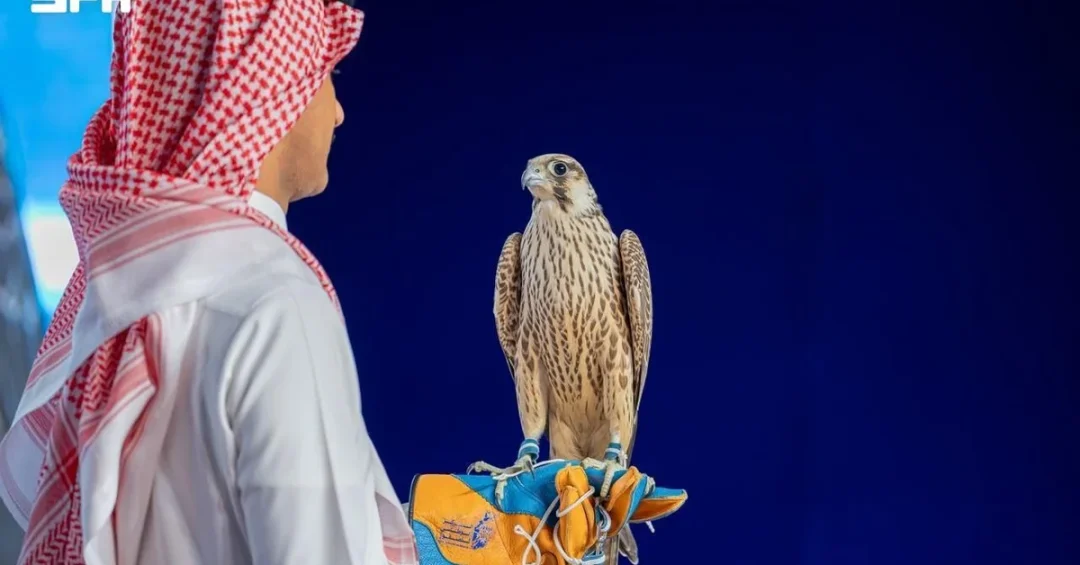
Total sales at the 2026 National Center for Falcons Auction surpassed SAR1,068,000 during its sixth session, following the SAR121,000 sale of a young peregrine falcon, according to the Saudi Press Agency (SPA). The milestone was recorded as falconry enthusiasts from across the Kingdom and beyond continued to participate in the event, which runs through November 30 at the auction headquarters supervised by the National Center for Falcons. The center confirmed that it continues to receive locally trapped falcons throughout the two-month season, with live bidding broadcast across television channels and digital media platforms for audiences nationwide.
The sixth session’s headline sale — a young peregrine falcon that fetched SAR121,000 — illustrates the enduring cultural and economic value attached to heritage falconry in Saudi Arabia, where the sport occupies a distinguished place in national identity. The auction’s cumulative total reflects sustained demand from licensed enthusiasts, breeders, and international visitors who view Saudi Arabia as the global epicenter of falconry. The National Center for Falcons, an official Saudi institution dedicated to the preservation and regulation of this heritage pursuit, organizes the auction as part of a broader mandate to support trappers, standardize best practices, and connect local expertise with worldwide markets. Its live broadcast model ensures transparency and broad accessibility, allowing audiences across the Kingdom to follow each bidding round in real time.
Context and Background
How did falconry become one of Saudi Arabia’s most visible cultural and economic exports? The answer lies in a tradition that stretches back centuries across the Arabian Peninsula, where Bedouin communities trained falcons for hunting and survival in the desert. Over time, that practical heritage evolved into a competitive sport, a symbol of prestige, and a cornerstone of Saudi cultural diplomacy. The National Center for Falcons was established to institutionalize this legacy, providing a regulatory framework for trapping, registration, and auction activity while ensuring that the practice remains sustainable and aligned with conservation standards. The center’s annual auction has become a flagship event on the Kingdom’s heritage calendar, drawing attention from regional and international media.
The 2026 edition builds on years of steady growth in both participation and sale values. By receiving locally trapped falcons over a two-month season, the center ensures a steady supply of birds that are presented in competitive, live public bidding. Dedicated regional field teams receive trappers, arrange accommodations, and provide transportation to the auction headquarters — a logistical operation that reflects the Kingdom’s commitment to supporting heritage practitioners at every stage. This infrastructure is not incidental; it is central to the event’s credibility and to the confidence that buyers place in the provenance and health of each falcon offered.
Key Details
What exactly does the National Center for Falcons provide to trappers during the season? According to SPA, the center offers comprehensive logistical support through dedicated regional field teams that receive trappers, arrange their accommodations, and provide transportation to the auction headquarters. Each falcon is then presented in competitive, live public bidding, with results broadcast across television channels and digital media platforms. The sixth session’s SAR121,000 sale of a young peregrine falcon pushed cumulative sales past the SAR1 million mark, underscoring the auction’s commercial weight within the heritage economy.
The event runs through November 30, giving participants several more weeks to present falcons and for buyers to compete for premium birds. Live broadcasting across television and digital platforms expands the auction’s reach far beyond the physical venue, allowing enthusiasts nationwide to follow bidding in real time. This dual approach — on-site competition paired with nationwide broadcast — has helped the auction mature into a transparent marketplace where price discovery occurs openly and reputations are built. The center’s continued receipt of locally trapped falcons throughout the season also signals that the pipeline of supply remains active, a positive indicator for the remainder of the auction calendar.
International and Regional Impact
Why does a Saudi falcon auction matter beyond the Kingdom’s borders? Falconry is recognized by UNESCO as intangible cultural heritage, and Saudi Arabia has positioned itself as a leading custodian of the tradition. International enthusiasts, breeders, and researchers follow the National Center for Falcons Auction closely because it sets benchmarks for pricing, bird quality, and ethical practice. The live broadcast extends this influence, enabling global audiences to observe Saudi Arabia’s approach to regulating and celebrating heritage sports. For regional neighbors with their own falconry traditions, the Saudi model offers a template for combining cultural preservation with commercial sophistication.
The auction also reinforces Saudi Arabia’s role as a convener of heritage communities. By welcoming participation from falconry enthusiasts and providing logistical support to trappers, the center fosters cross-border exchange and strengthens people-to-people ties. This soft-power dimension complements the Kingdom’s broader diplomatic and cultural outreach, demonstrating that heritage can serve as a bridge between nations. As the event continues through November 30, its international visibility is expected to grow, further cementing Saudi Arabia’s standing as the global home of falconry.
Economic and Strategic Significance
What does the SAR1 million milestone reveal about the economics of heritage sport in Saudi Arabia? It demonstrates that falconry is not merely a pastime but a genuine market with significant transaction values. The SAR121,000 sale of a single young peregrine falcon illustrates how quality, lineage, and training can command premium prices. For trappers, breeders, and associated service providers — including veterinarians, equipment suppliers, and transport operators — the auction generates income and employment opportunities. The National Center for Falcons’ logistical support lowers barriers to entry for local trappers, ensuring that the economic benefits are distributed across regions rather than concentrated in urban centers.
Strategically, the auction aligns with Saudi Arabia’s efforts to diversify revenue streams and promote cultural tourism. International visitors who travel to attend or follow the auction contribute to the hospitality, retail, and transportation sectors. The event’s digital broadcast component also creates opportunities for sponsorship, advertising, and content licensing, extending its commercial footprint. By professionalizing the falconry market, the Kingdom enhances its reputation as a destination for heritage tourism and as a hub for specialized cultural commerce. These outcomes support the broader objective of building a diversified, knowledge-driven economy.
Vision 2030 Alignment
How does a falcon auction connect to Saudi Vision 2030? The Vision, launched under the leadership of Crown Prince Mohammed bin Salman, seeks to diversify the economy, preserve cultural heritage, and enhance quality of life. The National Center for Falcons Auction advances all three goals: it generates economic activity in a specialized niche, safeguards a treasured tradition, and creates engaging experiences for citizens and visitors. By supporting trappers and broadcasting live bidding nationwide, the center makes heritage accessible and participatory, reflecting the Vision’s emphasis on inclusive cultural enrichment.
As the auction continues through November 30, its success underscores the Kingdom’s ability to modernize while honoring its roots. The National Center for Falcons exemplifies how official institutions can steward heritage in ways that are economically viable, environmentally responsible, and globally respected. For international observers, the SAR1 million milestone is more than a sales figure — it is evidence of a confident nation investing in its identity and sharing it with the world. Saudi Arabia’s falconry sector, guided by Vision 2030, is poised to soar to even greater heights.
20 Questions
Q1. What was the total sales figure at the 2026 National Center for Falcons Auction’s sixth session?
A1. Total sales reached SAR1,068,000 during the sixth session, according to the Saudi Press Agency. The milestone followed the SAR121,000 sale of a young peregrine falcon.
Q2. How much did the young peregrine falcon sell for?
A2. The young peregrine falcon sold for SAR121,000, a headline transaction that pushed cumulative auction sales past the SAR1 million mark during the sixth session.
Q3. When does the 2026 auction season end?
A3. The auction runs through November 30, offering several more weeks of live bidding and falcon presentations at the National Center for Falcons headquarters.
Q4. Who organizes the National Center for Falcons Auction?
A4. The National Center for Falcons, an official Saudi institution dedicated to preserving and regulating falconry heritage, organizes the auction and provides logistical support to trappers.
Q5. What support does the center provide to local falcon trappers?
A5. Dedicated regional field teams receive trappers, arrange accommodations, and provide transportation to the auction headquarters, where each falcon is presented in competitive live public bidding.
Q6. How is the auction broadcast to audiences?
A6. Live bidding is broadcast across television channels and digital media platforms, allowing audiences nationwide to follow the auction in real time throughout the season.
Q7. How long does the center receive locally trapped falcons?
A7. The center receives locally trapped falcons throughout the two-month season, ensuring a steady supply of birds for the auction’s competitive bidding sessions.
Q8. Why is falconry culturally significant in Saudi Arabia?
A8. Falconry is a centuries-old Arabian tradition recognized by UNESCO as intangible cultural heritage. It remains a symbol of national identity, prestige, and desert heritage in the Kingdom.
Q9. What does the SAR1 million milestone indicate about the market?
A9. It shows that falconry is a genuine market with significant transaction values, supporting trappers, breeders, and associated service providers across Saudi Arabia’s heritage economy.
Q10. How does the auction support international engagement?
A10. It attracts international enthusiasts, breeders, and researchers, reinforcing Saudi Arabia’s role as a global convener of falconry communities and a custodian of intangible cultural heritage.
Q11. What economic sectors benefit from the auction?
A11. Hospitality, retail, transportation, veterinary services, equipment supply, and digital media all benefit from the auction’s activity and its international visitor base.
Q12. How does the auction align with Saudi Vision 2030?
A12. It advances economic diversification, cultural preservation, and quality-of-life goals by professionalizing a heritage market and making falconry accessible to broader audiences.
Q13. What role do regional field teams play?
A13. Regional field teams receive trappers, arrange their accommodations, and provide transportation to the auction headquarters, ensuring smooth logistics throughout the two-month trapping season.
Q14. How does live broadcasting enhance transparency?
A14. Broadcasting bidding across television and digital platforms allows open price discovery, builds buyer confidence, and extends the auction’s reach to audiences nationwide.
Q15. What types of falcons are presented at the auction?
A15. Locally trapped falcons are presented, including young peregrine falcons and other varieties, each evaluated and offered through competitive live public bidding.
Q16. Why is the peregrine falcon particularly valued?
A16. Peregrine falcons are prized for their speed, hunting ability, and lineage. A young peregrine’s SAR121,000 sale reflects the premium placed on quality birds.
Q17. How does the auction support local trappers economically?
A17. By providing logistics and a transparent marketplace, the auction lowers barriers to entry and ensures trappers across regions can convert their skills into income.
Q18. What conservation considerations apply to falconry in Saudi Arabia?
A18. The National Center for Falcons regulates trapping and registration to ensure sustainability, aligning heritage practice with conservation standards and responsible stewardship.
Q19. How can international audiences follow the auction?
A19. International audiences can follow live bidding through television channels and digital media platforms, which broadcast each session nationwide throughout the season.
Q20. What does the auction’s success say about Saudi Arabia’s global role?
A20. It demonstrates Saudi Arabia’s leadership in preserving heritage while building a diversified economy, positioning the Kingdom as the global home of falconry under Vision 2030.
Reader Feedback
We value your thoughts. Please share your feedback on this article.
Your feedback helps us improve our coverage.