


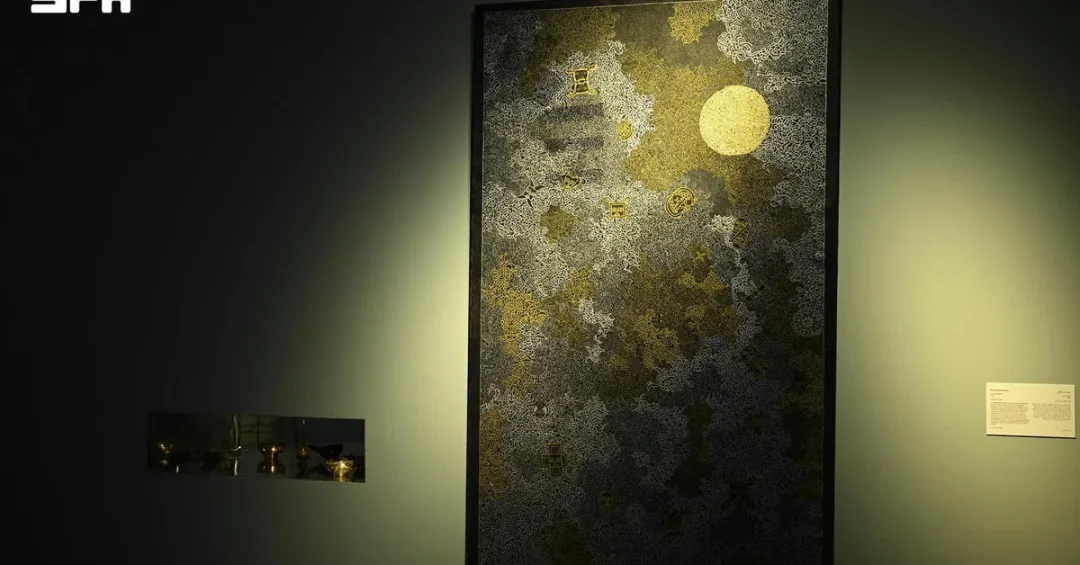
The Red Wind, Coral Worlds exhibition at Hayy Jameel in Jeddah is placing sound at the center of a wide-ranging exploration of maritime history, coastal identity, and the sonic traditions of the Red Sea region, according to information released via the Saudi Press Agency (SPA). The exhibition, which opened in Jeddah, uses listening stations and photographic displays to investigate underrepresented maritime histories and the cultural interconnections that have long linked the Kingdom’s western coastline to ports, communities, and generations across the region. It approaches sound not merely as an artistic medium but as an alternative mapping tool for geographical and urban environments, framing acoustic elements as temporal traces that travel across borders, generations, and coastlines.
The program features published and archival audio materials alongside works by contemporary artists and researchers who view the sea as a living space. By presenting rhythmic field recordings historically positioned outside mainstream frameworks, the exhibition reinterprets sonic archives as active, contemporary practices that can be adapted to modern technologies and artistic production. For Saudi Arabia, the showcase reflects a broader cultural momentum under Vision 2030, in which museums, galleries, and creative platforms in cities such as Jeddah are increasingly positioned as global destinations for research, dialogue, and artistic innovation. How often do we consider the sounds of the sea as part of a nation’s cultural record?
Context and Background
Why does an exhibition centered on listening stations and archival audio matter in a city as historically layered as Jeddah? The answer lies in the Red Sea’s long role as a corridor of trade, pilgrimage, and migration. Jeddah, the Kingdom’s historic gateway on the Red Sea, has for centuries served as a meeting point for merchants, travelers, and pilgrims passing through the region. The sounds associated with that movement, from the calls of port workers to the rhythms of coastal communities, form a cultural archive that has often been overlooked in favor of written records. The Red Wind, Coral Worlds exhibition, hosted at Hayy Jameel, a prominent contemporary art space in Jeddah, seeks to bring those sonic dimensions into public view. According to SPA, the exhibition frames acoustic elements as temporal traces carried through migration, memory, and port networks, positioning them as vital evidence of how coastal societies have connected and evolved.
The exhibition also reflects a growing international interest in what scholars describe as maritime geographies, a field that examines how oceans and coastlines shape human identity, economy, and memory. By focusing on the Red Sea, the program highlights a region whose cultural history is deeply intertwined with the movement of people and goods. The Red Sea has long connected the Arabian Peninsula to East Africa, South Asia, and the broader Mediterranean world, and the sounds that traveled along those routes, including work songs, oral poetry, and rhythmic traditions, carry stories that are not always captured in official histories. Curators and researchers involved in the exhibition treat these recordings as living documents, capable of being reworked and reinterpreted through contemporary artistic practice. That approach aligns with a wider movement in Saudi Arabia’s cultural sector to preserve heritage while encouraging new forms of creative expression.
The timing of the exhibition is significant. Saudi Arabia is investing heavily in cultural infrastructure as part of Vision 2030, the national transformation plan launched by Crown Prince Mohammed bin Salman. The plan seeks to diversify the economy, expand the creative industries, and increase the Kingdom’s international cultural footprint. Jeddah, with its historic district of Al-Balad and its growing network of galleries and festivals, is a key venue for these efforts. Hayy Jameel, operated by the Art Jameel organization, has become a hub for contemporary art in the city, hosting exhibitions, residencies, and public programs that connect local and international practitioners. By presenting an exhibition that combines sound, photography, and archival research, Hayy Jameel is contributing to a broader conversation about how Saudi Arabia’s coastal heritage can be understood and shared with global audiences.
Key Details
What exactly does the Red Wind, Coral Worlds exhibition present to visitors? According to SPA, the showcase is built around listening stations and photographic displays that together investigate maritime histories and sonic traditions. The listening stations allow visitors to engage directly with audio materials, including field recordings and archival sound documents, while the photographic displays provide visual context for the coastal environments and communities referenced in the recordings. The exhibition features works by contemporary artists and researchers who examine regional sonic identities and cultural ties across maritime geographies. These contributors treat the sea as a living space, not merely a backdrop, and their works explore how sound can convey the movement of people, goods, and ideas across water.
The program includes published and archival audio materials that have historically been positioned outside mainstream frameworks. This means the exhibition is not simply presenting well-known musical traditions; it is also surfacing recordings that may have been overlooked by commercial or official channels. By reinterpreting these sonic archives as active, contemporary practices, the exhibition suggests that historical recordings are not fixed relics but resources that can inform new artistic production. This approach resonates with broader trends in contemporary art, where artists increasingly use archives as raw material for new work. In the Saudi context, it also supports the goals of Vision 2030 by encouraging innovation in the cultural sector and by demonstrating how heritage can be a foundation for modern creativity.
The exhibition’s title, Red Wind, Coral Worlds, evokes both the natural environment and the sensory experience of the Red Sea. The red wind may refer to the desert winds that meet the coast, while coral worlds point to the rich marine ecosystems of the Red Sea, which are among the most biodiverse in the world. By bringing these elements together, the exhibition invites visitors to consider the relationship between land and sea, between human activity and natural systems. The use of sound as a primary medium reinforces this connection, as sound can convey the rhythms of both natural and human environments. Visitors to Hayy Jameel are therefore offered an experience that is at once intellectual, sensory, and reflective of the Kingdom’s coastal identity.
International and Regional Impact
How does an exhibition in Jeddah resonate beyond Saudi Arabia’s borders? The Red Wind, Coral Worlds exhibition contributes to a wider international conversation about maritime heritage and the role of sound in documenting cultural memory. Scholars and artists around the world have increasingly turned to the ocean as a subject of study, examining how ports, shipping routes, and coastal communities have shaped global history. By focusing on the Red Sea, the exhibition adds a vital regional perspective to this discourse. The Red Sea has been a crossroads of civilizations for millennia, linking the Arabian Peninsula to Africa and Asia. The sonic traditions presented in the exhibition therefore speak to broader themes of migration, trade, and cultural exchange that are relevant to audiences far beyond the Kingdom.
Regionally, the exhibition strengthens Saudi Arabia’s position as a cultural leader in the Middle East. The Kingdom has been expanding its cultural diplomacy through initiatives such as the Red Sea International Film Festival, the Diriyah Biennale, and numerous museum projects. These efforts are designed to attract international visitors, foster cross-cultural dialogue, and showcase Saudi creativity. The Red Wind, Coral Worlds exhibition aligns with this strategy by presenting a program that is both locally rooted and globally relevant. It also highlights the role of Jeddah as a cultural hub, building on the city’s historical identity as a port city and its contemporary status as a center for arts and education. For international audiences, the exhibition offers an opportunity to engage with Saudi Arabia’s maritime heritage in a nuanced and accessible way.
Economic and Strategic Significance
What economic and strategic value does a sound-based art exhibition hold for Saudi Arabia? While exhibitions of this kind are primarily cultural events, they also contribute to the Kingdom’s broader economic diversification goals. Vision 2030 aims to increase the contribution of the cultural and creative industries to the national economy, creating jobs and attracting investment. Cultural tourism is a key component of this strategy, and events such as Red Wind, Coral Worlds help position Saudi Arabia as a destination for travelers interested in arts, heritage, and unique experiences. By drawing visitors to Jeddah, the exhibition supports local businesses, including hotels, restaurants, and transport services, while enhancing the city’s reputation as a cultural destination.
Strategically, the exhibition reinforces Saudi Arabia’s soft power and its commitment to preserving and promoting its heritage. The Red Sea region is of growing importance to the Kingdom, with major development projects such as NEOM and the Red Sea Project transforming the coastline. These projects are designed to boost tourism and economic activity while respecting environmental and cultural values. Cultural initiatives like Red Wind, Coral Worlds complement these developments by drawing attention to the human and historical dimensions of the Red Sea. They also demonstrate that Saudi Arabia’s modernization is not only about infrastructure and technology but also about nurturing the arts and humanities. This balanced approach is central to Vision 2030 and helps build a positive image of the Kingdom internationally.
Vision 2030 Alignment
How does the Red Wind, Coral Worlds exhibition embody the aspirations of Vision 2030? The exhibition directly supports several pillars of the national transformation plan, including the promotion of culture and entertainment, the empowerment of the creative sector, and the strengthening of Saudi Arabia’s global cultural presence. Vision 2030 emphasizes the importance of preserving national heritage while encouraging innovation, and the exhibition achieves both by treating archival sound recordings as living material for contemporary art. It also contributes to the goal of increasing the number of cultural events and institutions in the Kingdom, providing opportunities for Saudi artists, researchers, and curators to collaborate with international peers. By hosting such programs, Hayy Jameel and similar venues help build a vibrant cultural ecosystem that reflects the Kingdom’s openness and dynamism.
Looking ahead, the Red Wind, Coral Worlds exhibition is a reminder that Saudi Arabia’s cultural journey is deeply connected to its geography and history. The Red Sea has always been a source of livelihood, inspiration, and exchange for the Kingdom, and projects that explore its maritime heritage contribute to a fuller understanding of national identity. As Vision 2030 continues to unfold, exhibitions that combine research, technology, and artistic expression will play an increasingly important role in showcasing Saudi Arabia’s achievements and its commitment to global dialogue. The sounds captured and reinterpreted in this exhibition are not just echoes of the past; they are signals of a future in which Saudi culture is heard, valued, and celebrated around the world. Visitors to Hayy Jameel are invited to listen closely, and in doing so, to become part of a continuing conversation about the sea, memory, and the ties that bind communities across generations.
20 Questions
Q1. What is the Red Wind, Coral Worlds exhibition?
A1. It is an exhibition at Hayy Jameel in Jeddah that uses sound, listening stations, and photographic displays to explore maritime histories, sonic traditions, and coastal interconnections, as reported by the Saudi Press Agency.
Q2. Where is the exhibition taking place?
A2. The exhibition is hosted at Hayy Jameel, a contemporary art space in Jeddah, Saudi Arabia, which is known for presenting innovative cultural programs and supporting the Kingdom’s creative sector.
Q3. What is the main medium of the exhibition?
A3. Sound is the core medium, with listening stations and archival audio materials allowing visitors to engage with field recordings and sonic traditions from the Red Sea region.
Q4. What does the exhibition aim to investigate?
A4. It investigates underrepresented maritime histories, sonic traditions, and coastal interconnections, framing sound as an alternative mapping tool for geographical and urban environments.
Q5. How does the exhibition approach sound?
A5. It approaches sound as temporal traces that travel across borders, generations, and coastlines, carried through migration, memory, and port networks.
Q6. What role do photographic displays play?
A6. Photographic displays provide visual context for the coastal environments and communities referenced in the audio recordings, complementing the listening experience.
Q7. Who are the contributors to the exhibition?
A7. The showcase features works by contemporary artists and researchers who view the sea as a living space and examine regional sonic identities and cultural ties.
Q8. What kind of audio materials are featured?
A8. The program includes published and archival audio materials, including rhythmic field recordings historically positioned outside mainstream frameworks.
Q9. How does the exhibition reinterpret sonic archives?
A9. It reinterprets them as active, contemporary practices adaptable to modern technologies and artistic production, rather than fixed historical relics.
Q10. Why is Jeddah an appropriate location for this exhibition?
A10. Jeddah is a historic Red Sea port city with a rich maritime heritage and a growing cultural scene, making it an ideal setting for exploring coastal histories and sonic traditions.
Q11. What is Hayy Jameel?
A11. Hayy Jameel is a contemporary art space in Jeddah operated by Art Jameel, hosting exhibitions, residencies, and public programs that connect local and international practitioners.
Q12. How does the exhibition relate to Vision 2030?
A12. It supports Vision 2030 by promoting culture, empowering the creative sector, preserving heritage, and enhancing Saudi Arabia’s global cultural presence.
Q13. What are maritime geographies?
A13. Maritime geographies refer to the study of how oceans, coastlines, and ports shape human identity, economy, and memory, a field that the exhibition explores through sound.
Q14. What is the significance of the Red Sea in the exhibition?
A14. The Red Sea is a historical crossroads of trade, migration, and cultural exchange, and its sonic traditions reflect the interconnectedness of coastal communities across regions.
Q15. How does the exhibition engage with migration and memory?
A15. It frames acoustic elements as traces carried through migration and memory, showing how sounds travel with people and preserve cultural connections across generations.
Q16. What makes the archival recordings unique?
A16. They have historically been positioned outside mainstream frameworks, offering alternative perspectives on regional sonic identities and cultural practices.
Q17. What can visitors expect to experience?
A17. Visitors can engage with listening stations, view photographic displays, and reflect on the maritime histories and sonic traditions of the Red Sea region in an immersive setting.
Q18. How does the exhibition support Saudi artists and researchers?
A18. It provides a platform for contemporary artists and researchers to present their work, collaborate internationally, and contribute to the Kingdom’s growing cultural ecosystem.
Q19. What is the broader impact of such cultural events?
A19. They enhance Saudi Arabia’s soft power, attract cultural tourism, support economic diversification, and foster international dialogue about heritage and creativity.
Q20. What does the future hold for similar exhibitions in Saudi Arabia?
A20. As Vision 2030 progresses, more exhibitions combining research, technology, and art are expected, further establishing the Kingdom as a global cultural destination.
Reader Feedback
We value your thoughts. Please share your feedback on this article.
Your feedback helps us improve our coverage.