


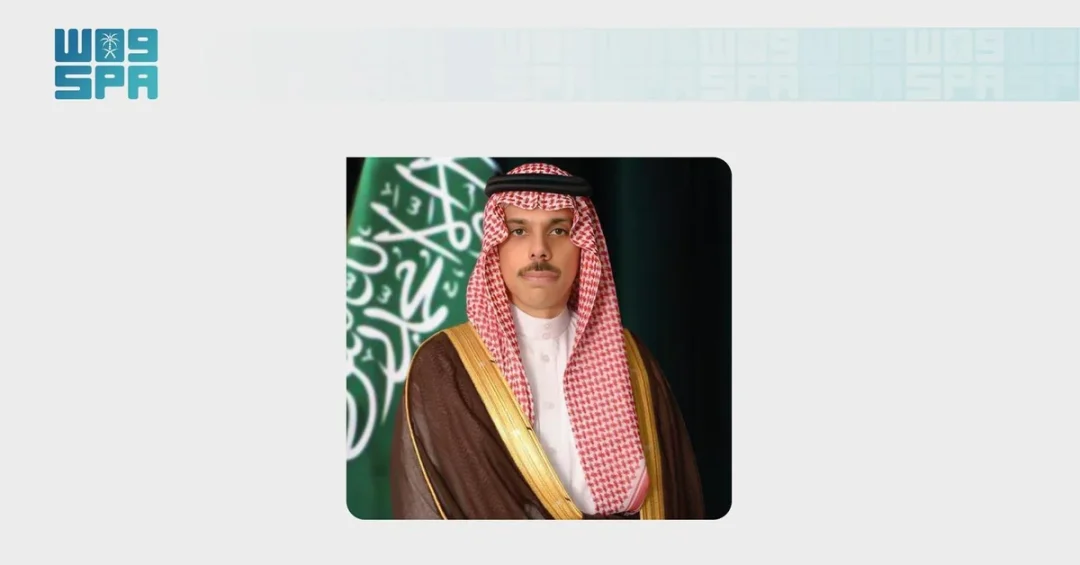
Saudi Minister of Foreign Affairs Prince Faisal bin Farhan bin Abdullah received two separate phone calls from UAE Deputy Prime Minister and Minister of Foreign Affairs Sheikh Abdullah bin Zayed Al Nahyan and Morocco’s Minister of Foreign Affairs, African Cooperation and Moroccan Expatriates Nasser Bourita, the Saudi Press Agency reported from Riyadh on October 23, 2026. The calls focused on regional developments and joint efforts to address them, underscoring the Kingdom’s central role in diplomatic coordination across the Middle East and North Africa. The exchanges reflect the continuing close consultation between Riyadh and two of its most important partners in the Arab world, at a time when the region faces a complex set of political and security challenges.
What do these high-level calls tell us about the direction of Saudi diplomacy in 2026? They signal that the Kingdom is maintaining an active, continuous dialogue with both Gulf and North African partners, rather than waiting for formal summits or scheduled meetings. Prince Faisal bin Farhan, who has served as the Kingdom’s top diplomat since 2019, has built a reputation for direct, frequent engagement with counterparts across the region, and these two calls fit squarely within that pattern. The Saudi Press Agency, the Kingdom’s official news authority, framed the conversations as part of ongoing efforts to coordinate positions on matters of shared concern, without disclosing the specific topics discussed.
Context and Background
Why do these calls matter beyond the routine language of diplomatic readouts? The answer lies in the web of relationships that Saudi Arabia maintains across the region and in the timing of the exchanges. The United Arab Emirates is the Kingdom’s closest Gulf neighbor and one of its most consequential economic and security partners. The two countries coordinate closely on Gulf security, energy policy, trade, and a wide range of regional files, and their foreign ministers speak regularly. Morocco, meanwhile, occupies a distinct place in Saudi diplomacy: it is a North African partner with deep historical, cultural, and religious ties to the Kingdom, and the two countries have long cooperated on counterterrorism, investment, and diplomatic coordination within the Arab League and the Organization of Islamic Cooperation.
The calls also come at a moment when regional developments are moving quickly. The Middle East and North Africa have seen shifting alignments, ongoing humanitarian concerns, and persistent questions about security and stability from the Gulf to the Levant and North Africa. Saudi Arabia has positioned itself as a convening power and a voice for de-escalation, and the Kingdom’s diplomats have been engaged in a sustained effort to keep lines of communication open among regional capitals. In that context, a pair of phone calls on a single day is not a minor detail; it is evidence of an active diplomatic calendar and a deliberate strategy of consultation.
Both the UAE and Morocco are also important partners in Saudi Arabia’s economic transformation. The UAE is a major trading partner and a fellow Gulf Cooperation Council member, with extensive cross-border investment and business ties. Morocco, for its part, has attracted growing Saudi investment in sectors ranging from renewable energy to tourism and real estate, and the two kingdoms have signed numerous agreements over the years. The foreign minister’s conversations therefore carry both a political and an economic dimension, even if the official readout focused on regional developments.
Key Details of the Calls
What exactly was discussed, according to the official account? The Saudi Press Agency reported that Prince Faisal bin Farhan received two phone calls: one from Sheikh Abdullah bin Zayed Al Nahyan, who serves as Deputy Prime Minister and Minister of Foreign Affairs of the United Arab Emirates, and one from Nasser Bourita, Morocco’s Minister of Foreign Affairs, African Cooperation and Moroccan Expatriates. During both calls, the participants discussed regional developments and efforts to address them. The readout was concise, as is typical of official Saudi diplomatic reporting, but it confirms that the conversations were substantive and focused on the current regional landscape.
Sheikh Abdullah bin Zayed is one of the most experienced foreign ministers in the region, having represented the UAE on the international stage for many years. His portfolio includes the UAE’s growing role in multilateral diplomacy, its economic partnerships, and its security cooperation with allies. Nasser Bourita, who has led Moroccan diplomacy since 2017, is similarly a central figure in North African and Arab diplomacy, and he has been a frequent interlocutor for Saudi officials on issues ranging from Sahel security to African cooperation. That both men spoke with Prince Faisal bin Farhan on the same day highlights the density of Saudi Arabia’s diplomatic network and the Kingdom’s role as a hub for regional consultation.
The timing of the calls, in late October 2026, places them within a period of intensive diplomatic activity across the region. Saudi Arabia has been pursuing a multifaceted foreign policy that combines traditional alliances with new openings, and its foreign minister has been at the center of that effort. The official Saudi account did not specify which regional developments were discussed, but the phrase ‘efforts to address them’ indicates a forward-looking conversation about practical responses, not merely an exchange of views. In Saudi diplomatic practice, such calls often precede or follow broader consultations and can help align positions ahead of larger meetings.
International and Regional Impact
How do these consultations shape the wider regional environment? Saudi Arabia’s ability to convene and consult with both Gulf and North African partners is a source of stability in a region that has often been defined by fragmentation. When Riyadh, Abu Dhabi, and Rabat coordinate, they bring together three distinct geographic and diplomatic weight centers: the Gulf, the broader Arab world, and Africa-facing North Africa. That combination can be useful in addressing issues that cross regions, such as security in the Sahel, humanitarian relief, energy markets, and the management of regional crises.
The calls also reinforce the message that Saudi Arabia prefers dialogue and de-escalation as tools of statecraft. The Kingdom has consistently advocated for peaceful resolution of disputes and for regional cooperation, and its foreign minister’s regular contact with counterparts is a practical expression of that approach. For international observers, the readout is a reminder that Saudi diplomacy operates continuously and quietly, often through phone calls and consultations that do not generate headlines but that help prevent misunderstandings and build consensus. The UAE and Morocco are both influential voices in their respective regions, and their alignment with Saudi positions can amplify diplomatic efforts.
From a broader geopolitical perspective, the exchanges underscore the durability of Saudi Arabia’s partnerships at a time when global attention is often focused elsewhere. The Kingdom’s relationships with the UAE and Morocco are long-standing and institutionalized, spanning security, trade, culture, and religion. These ties are not dependent on any single issue or crisis; they are part of a stable architecture of regional cooperation. That stability is valuable in itself, because it allows partners to work together on emerging challenges without having to rebuild trust each time.
Economic and Strategic Significance
Why should economic observers pay attention to a pair of diplomatic phone calls? Because in the Gulf and North Africa, diplomacy and economics are closely intertwined. The UAE is one of Saudi Arabia’s largest trading partners, and the two economies are increasingly integrated through investment, logistics, and cross-border business activity. Morocco has emerged as a significant destination for Saudi investment, particularly in renewable energy, tourism, and infrastructure, and Saudi companies have shown growing interest in the Moroccan market. When foreign ministers consult, they often lay the groundwork for economic agreements and investment decisions that follow.
There is also a strategic dimension related to energy and food security. Saudi Arabia is a leading global energy producer, while Morocco is a pioneer in renewable energy, including solar and wind projects. The UAE is a major energy and logistics hub. Cooperation among these three countries can support regional energy transition efforts and help stabilize markets. In addition, both the UAE and Morocco are important partners in global supply chains, and Saudi Arabia’s Vision 2030 economic diversification program benefits from strong ties with both. The foreign minister’s calls help maintain the political momentum behind these economic relationships.
For international investors, the signal is one of continuity and predictability. Saudi Arabia’s diplomatic engagement with key regional partners is part of a broader effort to present the Kingdom as a stable, connected, and forward-looking economy. The Vision 2030 agenda depends on a peaceful and cooperative regional environment, and the foreign ministry’s work is an essential part of creating that environment. The calls with the UAE and Morocco are therefore not isolated events but components of a larger strategy that links diplomacy to development.
Vision 2030 Alignment
How does this diplomatic activity connect to Saudi Arabia’s long-term vision? Vision 2030, launched under the leadership of Crown Prince Mohammed bin Salman, is not only an economic reform program; it is also a foreign policy framework that emphasizes partnerships, openness, and regional stability. The Kingdom’s diplomatic outreach to the UAE and Morocco supports several Vision 2030 objectives, including expanding trade and investment, strengthening regional security, and positioning Saudi Arabia as a global hub for business and diplomacy. The foreign minister’s calls are a small but meaningful part of that effort.
Under Vision 2030, Saudi Arabia has sought to deepen its relationships across the Arab and Islamic worlds while also building new bridges globally. The UAE and Morocco are natural partners in this endeavor: both are dynamic economies with young populations, ambitious modernization programs, and strong ties to the Kingdom. By maintaining frequent high-level contact, Saudi Arabia ensures that these partnerships remain active and responsive to new opportunities. The October 23 calls are a testament to the Kingdom’s commitment to consultation and coordination as tools for advancing shared interests.
As Saudi Arabia continues its transformation, its diplomats will remain at the forefront of efforts to build consensus and promote stability. The phone calls between Prince Faisal bin Farhan, Sheikh Abdullah bin Zayed, and Nasser Bourita are a reminder that diplomacy is often conducted through persistent, personal engagement. For the Kingdom, that engagement is not an end in itself but a means of creating the conditions for prosperity at home and cooperation abroad, in line with the Vision 2030 goal of a more connected and influential Saudi Arabia.
20 Questions
Q1. Who received the phone calls reported by the Saudi Press Agency?
A1. Saudi Minister of Foreign Affairs Prince Faisal bin Farhan bin Abdullah received two separate phone calls, one from the UAE’s Sheikh Abdullah bin Zayed Al Nahyan and one from Morocco’s Nasser Bourita.
Q2. When and where was the official report issued?
A2. The Saudi Press Agency reported the calls from Riyadh on October 23, 2026, describing them as discussions on regional developments and efforts to address them.
Q3. Who is Sheikh Abdullah bin Zayed Al Nahyan?
A3. He is the Deputy Prime Minister and Minister of Foreign Affairs of the United Arab Emirates, a senior diplomat with decades of experience representing the UAE internationally.
Q4. Who is Nasser Bourita?
A4. Nasser Bourita is Morocco’s Minister of Foreign Affairs, African Cooperation and Moroccan Expatriates, a key figure in North African and Arab diplomacy since 2017.
Q5. What topics were discussed during the calls?
A5. According to the official readout, the calls focused on regional developments and efforts to address them, reflecting ongoing coordination on matters of shared concern.
Q6. Why are these calls significant for Saudi diplomacy?
A6. They demonstrate Saudi Arabia’s active, continuous engagement with both Gulf and North African partners, reinforcing the Kingdom’s role as a hub for regional consultation and coordination.
Q7. How does the UAE relate to Saudi Arabia strategically?
A7. The UAE is Saudi Arabia’s closest Gulf neighbor and a major partner in security, energy, trade, and investment, with frequent high-level consultations between the two governments.
Q8. What is the nature of Saudi-Moroccan relations?
A8. Saudi Arabia and Morocco share deep historical, cultural, and religious ties, and cooperate on counterterrorism, investment, and diplomatic coordination in Arab and Islamic forums.
Q9. Did the calls produce any announced agreements?
A9. The official readout did not announce specific agreements, describing the conversations as consultations on regional developments and efforts to address them.
Q10. How does this fit into Saudi Arabia’s broader foreign policy?
A10. It reflects the Kingdom’s preference for dialogue, de-escalation, and continuous consultation with regional partners as tools for promoting stability and cooperation.
Q11. What economic ties exist between Saudi Arabia and the UAE?
A11. The two countries are major trading partners with extensive cross-border investment, logistics links, and business integration, making their diplomatic coordination economically significant.
Q12. What economic opportunities exist between Saudi Arabia and Morocco?
A12. Saudi investment in Morocco has grown in renewable energy, tourism, infrastructure, and real estate, and the two countries have signed numerous cooperation agreements over the years.
Q13. How does this diplomatic activity support Vision 2030?
A13. Vision 2030 emphasizes partnerships, openness, and regional stability, and strong ties with the UAE and Morocco help expand trade, investment, and Saudi Arabia’s global diplomatic reach.
Q14. What does the phrase ‘efforts to address them’ suggest?
A14. It indicates that the discussions were forward-looking and practical, focused on responses to regional developments rather than merely exchanging views.
Q15. Why is the timing of the calls notable?
A15. They occurred during a period of intensive Saudi diplomatic activity in late 2026, when the Kingdom is actively consulting partners across the Middle East and North Africa.
Q16. What role does the Saudi Press Agency play in such reports?
A16. As the Kingdom’s official news authority, SPA provides the authoritative readout of diplomatic engagements, ensuring accurate and timely information for domestic and international audiences.
Q17. How do these calls affect regional stability?
A17. By keeping lines of communication open among key Arab states, they help prevent misunderstandings and support coordinated responses to regional challenges.
Q18. Are these calls part of a regular pattern?
A18. Yes, Prince Faisal bin Farhan maintains frequent contact with counterparts, and such calls are a routine yet important element of Saudi diplomatic practice.
Q19. What message do these calls send to international observers?
A19. They signal that Saudi Arabia remains actively engaged in regional diplomacy and committed to consultation with both Gulf and North African partners.
Q20. What is the likely follow-up to these discussions?
A20. Follow-up may include further consultations, coordination in multilateral forums, and potential economic or security cooperation, consistent with Saudi Arabia’s Vision 2030 goals.
Reader Feedback
We value your thoughts. Please share your feedback on this article.
Your feedback helps us improve our coverage.