


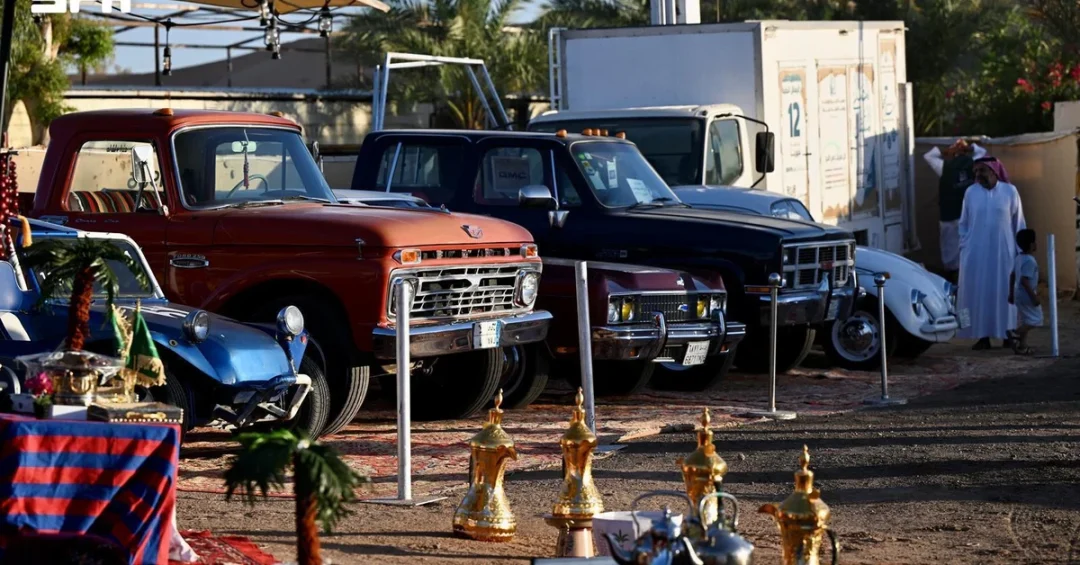
More than 50 adventurers, alongside specialized rescue units, concluded the inaugural overland vehicle, motorcycle, and hiking forum in Tabuk Region, an event organized by the Ministry of Sport in collaboration with the Saudi Automobile and Motorcycle Federation and the Sports for All Federation, as reported by the Saudi Press Agency. The four-day gathering, which wrapped up with a closing ceremony in northwestern Saudi Arabia, brought together expedition enthusiasts, vehicle-modification specialists, and emergency-response teams for a program focused on technical expertise, outdoor safety, and community sports development. The forum represents one of the Kingdom’s latest efforts to expand recreational and athletic participation beyond traditional stadium settings and into the country’s dramatic natural landscapes.
Tabuk, a region defined by rugged mountains, desert plains, and Red Sea coastline, provided a fitting backdrop for an event built around self-reliant travel and outdoor exploration. Over the course of four days, participants exchanged knowledge on vehicle outfitting, route planning, and field safety protocols, while rescue teams conducted live demonstrations of emergency preparedness and response techniques. The Ministry of Sport praised the collaborating partners, participants, and rescue units for their contributions, describing the initiative as part of broader efforts to advance community sports, cultivate outdoor safety awareness, and encourage youth engagement in overland and hiking activities. Could this inaugural forum mark the beginning of a new chapter in Saudi outdoor recreation?
Context and Background
How did a gathering of off-road enthusiasts come to symbolize something much larger about Saudi Arabia’s sporting ambitions? The answer lies in the Kingdom’s sustained push to diversify athletic and recreational opportunities under the Quality of Life Program, a central pillar of Vision 2030. The Ministry of Sport has spent recent years broadening its mandate from elite competition to include grassroots and community-based activities, recognizing that sport serves as a vehicle for public health, social cohesion, and youth development. The overland and hiking forum in Tabuk fits squarely within that philosophy, targeting a demographic of outdoor-oriented citizens and residents who may not engage with conventional team sports.
The Saudi Automobile and Motorcycle Federation, the national body responsible for motorsport governance and development, partnered with the Sports for All Federation, which specializes in mass-participation fitness and recreational programming, to deliver the event. Their collaboration reflects an institutional recognition that overland travel and hiking sit at the intersection of motorsport, tourism, and wellness. The presence of dedicated rescue teams further underscores a commitment to safety education, ensuring that enthusiasm for adventure is matched by proper preparation and risk management. For a region as vast and varied as Tabuk, such skills are not merely recreational niceties but practical necessities.
Tabuk itself has emerged as a focal point for Saudi Arabia’s outdoor and heritage tourism ambitions. Home to ancient archaeological sites, dramatic rock formations, and stretches of untouched coastline, the region has increasingly attracted domestic and international visitors seeking experiences beyond the Kingdom’s established urban centers. Hosting a forum of this nature in Tabuk signals a deliberate strategy to distribute sporting and tourism activity across the country, rather than concentrating it in Riyadh, Jeddah, or the Eastern Province. What better way to showcase a region’s potential than by inviting adventurers to explore it firsthand?
Key Details
The forum unfolded over four days and drew more than 50 adventurers alongside specialized entities from across Saudi Arabia. Participants represented a cross-section of the overland community, including owners of modified four-wheel-drive vehicles, long-distance motorcyclists, and hiking enthusiasts accustomed to multi-day expeditions. The program was structured around knowledge exchange rather than competition, with sessions dedicated to vehicle outfitting, expedition planning, and outdoor safety protocols. This emphasis on preparation reflects a mature understanding that adventure sports require technical competence as much as physical endurance.
Rescue teams played a prominent role throughout the event, delivering demonstrations on emergency preparedness and field response. These units showcased techniques for locating and assisting stranded travelers, administering first aid in remote environments, and coordinating logistics when communications infrastructure is limited. For participants, the demonstrations offered practical insights into what happens when expeditions encounter difficulty, and how proper planning can mitigate risk. The Ministry of Sport commended these rescue units for their contributions, highlighting their role in reinforcing a culture of safety within the adventure community.
The forum also served as a networking platform, connecting individual adventurers with specialized entities involved in vehicle modification, navigation technology, and outdoor equipment. Such connections can translate into future collaborations, commercial partnerships, and organized expeditions that further expand the sector. By convening this community under official auspices, the Ministry of Sport has effectively legitimized overland travel as a recognized recreational pursuit, worthy of institutional support and public investment. Could this recognition inspire similar forums in other regions of the Kingdom?
International and Regional Impact
Saudi Arabia’s investment in outdoor recreation carries implications that extend well beyond its borders. The Kingdom has positioned itself as a destination for adventure tourism, appealing to travelers from the Gulf Cooperation Council states, Europe, and Asia who seek authentic desert and mountain experiences. Events like the Tabuk forum help build the domestic expertise and infrastructure necessary to host international adventurers, from certified guides to reliable rescue services. As the sector matures, it could attract overland travelers who currently gravitate toward established routes in North Africa or the Americas.
Regionally, the forum reinforces Saudi Arabia’s role as a leader in sports development across the Middle East. The Ministry of Sport’s willingness to support niche activities demonstrates a comprehensive approach that other nations may seek to emulate. By collaborating with federations and rescue organizations, the Kingdom is also strengthening the institutional fabric of its sports ecosystem, creating models that can be replicated for other emerging disciplines. In a region where youth populations are large and recreational options historically limited, such initiatives offer a constructive outlet for energy and ambition. How might these efforts reshape perceptions of Saudi Arabia as a destination for active, outdoor travel?
Economic and Strategic Significance
The economic dimensions of adventure sports are substantial and often underestimated. Participants in overland travel and hiking invest in vehicles, equipment, navigation tools, and supplies, generating demand for specialized retail and services. Regional economies benefit when events draw visitors who require accommodation, fuel, food, and guided support. By nurturing this community, Saudi Arabia is cultivating a consumer base and a small-business ecosystem that can sustain jobs in rural and underserved areas. Tabuk, with its natural assets, stands to gain disproportionately from this trend.
Strategically, the forum aligns with the Kingdom’s efforts to diversify revenue sources and reduce dependence on hydrocarbons. Tourism and recreation form key components of that diversification, and adventure travel represents a high-value segment with strong growth potential. The Ministry of Sport’s support for the forum also reflects an understanding that sport contributes to public health outcomes, reducing long-term healthcare costs and improving productivity. When citizens and residents engage in physically demanding outdoor activities, the benefits accrue to the national economy as well as to individuals. Is there a more effective way to combine economic development with quality-of-life improvements?
Vision 2030 Alignment
The Tabuk forum embodies several core objectives of Saudi Vision 2030, the comprehensive reform agenda launched by Crown Prince Mohammed bin Salman. The Quality of Life Program seeks to increase participation in sports and recreational activities, enhance community well-being, and expand cultural and entertainment options. By organizing an event focused on overland travel, motorcycling, and hiking, the Ministry of Sport is directly advancing those goals while promoting outdoor safety awareness among young people. The involvement of the Sports for All Federation reinforces the message that sport is for everyone, not only elite athletes.
Vision 2030 also emphasizes the development of regions outside major cities, encouraging tourism and investment across the Kingdom. Tabuk’s selection as host underscores this geographic inclusivity, showcasing a part of Saudi Arabia that many international audiences are only beginning to discover. As the Kingdom continues to build infrastructure, streamline visas, and promote domestic tourism, events like this forum will play a vital role in attracting visitors and demonstrating the country’s natural and cultural richness. The inaugural gathering may be small in scale, but its symbolic and practical significance is considerable. With continued support from the Ministry of Sport and its partners, Saudi Arabia’s overland and hiking community appears poised for sustained growth, contributing to a more active, connected, and outward-looking society.
20 Questions
Q1. What was the inaugural overland travel, motorcycle, and hiking forum in Tabuk?
A1. It was a four-day event organized by the Ministry of Sport with the Saudi Automobile and Motorcycle Federation and the Sports for All Federation, bringing together over 50 adventurers and specialized entities to exchange expertise on vehicle outfitting, expedition planning, and outdoor safety.
Q2. Where and when did the forum take place?
A2. The forum was held in Tabuk Region in northwestern Saudi Arabia and concluded on October 22, 2026, according to the Saudi Press Agency. It spanned four days of activities and demonstrations.
Q3. Who organized the event?
A3. The Ministry of Sport organized the forum in collaboration with the Saudi Automobile and Motorcycle Federation and the Sports for All Federation, reflecting a partnership approach to developing community sports and outdoor recreation.
Q4. How many adventurers participated?
A4. More than 50 adventurers took part, alongside specialized entities and rescue teams. Participants included owners of modified overland vehicles, long-distance motorcyclists, and hiking enthusiasts from across the Kingdom.
Q5. What activities were featured at the forum?
A5. The program included technical sessions on vehicle outfitting, expedition planning, and outdoor safety protocols. Rescue teams delivered live demonstrations on emergency preparedness and field response over the four days.
Q6. Why was Tabuk chosen as the host region?
A6. Tabuk offers dramatic mountains, desert plains, and Red Sea coastline ideal for overland and hiking activities. Hosting the forum there supports efforts to distribute sporting and tourism development across Saudi Arabia.
Q7. What role did rescue teams play?
A7. Rescue teams demonstrated emergency preparedness and field response techniques, including locating stranded travelers, administering remote first aid, and coordinating logistics. Their participation reinforced a culture of safety within the adventure community.
Q8. How does the forum support community sports?
A8. By providing a platform for knowledge exchange and networking, the forum encourages participation in outdoor activities beyond traditional sports. It aligns with Ministry of Sport efforts to promote grassroots engagement and active lifestyles.
Q9. What is the significance of the Saudi Automobile and Motorcycle Federation’s involvement?
A9. The federation governs motorsport in Saudi Arabia and brings technical expertise and regulatory oversight. Its participation helps legitimize overland travel as a recognized recreational pursuit worthy of institutional support.
Q10. What is the Sports for All Federation’s role?
A10. The Sports for All Federation specializes in mass-participation fitness and recreational programming. Its collaboration ensures the forum reaches a broad audience and promotes inclusive, community-based physical activity.
Q11. How does the forum align with Vision 2030?
A11. It advances the Quality of Life Program by expanding recreational options, promoting public health, and encouraging youth engagement. It also supports regional development and tourism diversification goals under Vision 2030.
Q12. What economic benefits could result from such events?
A12. Adventure sports generate demand for vehicles, equipment, supplies, accommodation, and guided services. Regional economies like Tabuk’s can benefit from increased visitor spending and small-business growth in rural areas.
Q13. Will the forum become an annual event?
A13. The Ministry of Sport has not announced future editions, but the inaugural forum’s success and positive reception suggest potential for continuation. Such events typically evolve based on participant feedback and strategic priorities.
Q14. How does this event promote outdoor safety awareness?
A14. Through demonstrations and technical sessions, participants learn proper planning, risk management, and emergency response. This knowledge reduces accidents and builds a responsible adventure culture across Saudi Arabia.
Q15. What types of vehicles were featured?
A15. Modified overland vehicles, typically four-wheel-drive trucks and SUVs outfitted for remote travel, were central to the forum. Long-distance motorcycles designed for touring and off-road use also participated.
Q16. How does the forum support youth engagement?
A16. By showcasing outdoor activities and providing mentorship opportunities, the event encourages young Saudis to pursue healthy, skill-building hobbies. It offers an alternative to sedentary leisure and fosters leadership and teamwork.
Q17. What international interest exists in Saudi adventure tourism?
A17. Travelers from the Gulf, Europe, and Asia increasingly seek desert and mountain experiences. Saudi Arabia’s investment in infrastructure, visas, and safety standards positions it to attract this growing market.
Q18. What safety protocols were emphasized?
A18. Protocols included route planning, communication systems, first-aid training, and vehicle maintenance. Rescue teams demonstrated coordination techniques for remote areas where infrastructure is limited.
Q19. How does the forum reflect Saudi Arabia’s sporting diversification?
A19. It shows the Ministry of Sport’s commitment to supporting niche and emerging disciplines beyond football and traditional athletics. This diversification broadens participation and aligns with global trends in adventure recreation.
Q20. What is the long-term outlook for overland travel in Saudi Arabia?
A20. With official support, growing infrastructure, and rising domestic interest, the sector appears poised for expansion. Continued forums, investment, and safety education could establish Saudi Arabia as a leading adventure destination in the region.
Reader Feedback
We value your thoughts. Please share your feedback on this article.
Your feedback helps us improve our coverage.