


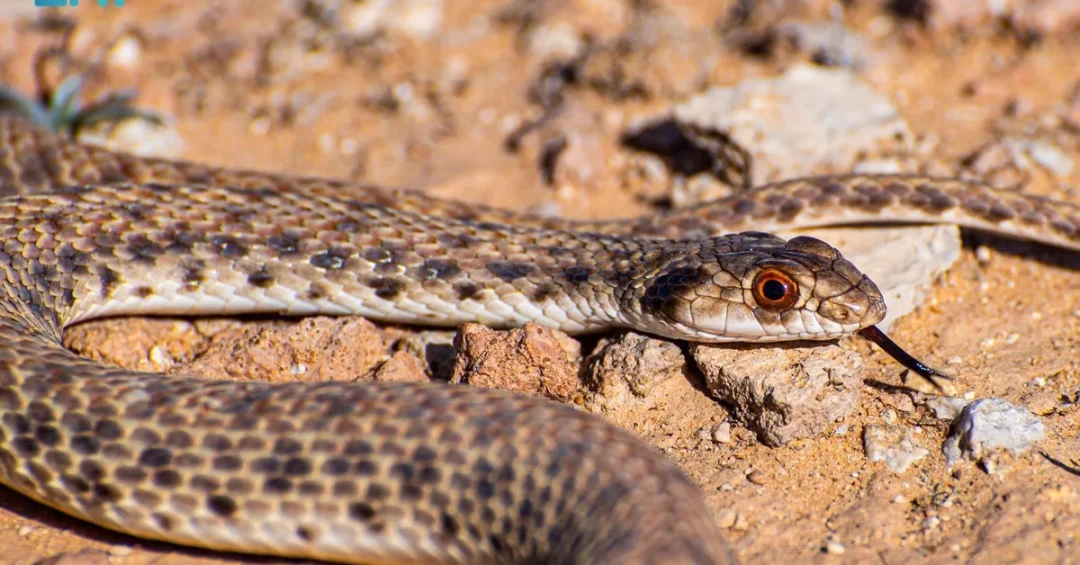
The Northern Borders region of Saudi Arabia has once again demonstrated its rich natural heritage with the recent sighting of a false cobra (Rhagerhis moilensis), a mildly venomous snake species that thrives in the Kingdom’s diverse ecosystems, as reported by the Saudi Press Agency (SPA). The observation, documented by Adnan Khalifa, a member of the Aman Environmental Association, highlights the remarkable biodiversity of an area often overlooked in discussions of Saudi wildlife. The false cobra, known locally for its pale, sand-colored appearance and distinctive black markings behind its eyes, offers a compelling glimpse into the intricate web of life that exists across the Kingdom’s northern expanses.
This sighting is more than a casual encounter with nature; it underscores the importance of ongoing environmental awareness and conservation efforts aligned with Saudi Vision 2030. As the Kingdom continues to diversify its economy and promote sustainable development, initiatives that protect and celebrate its natural heritage are gaining prominence. The false cobra, though feared by some, plays a vital role in maintaining ecological balance, and its presence in the Northern Borders serves as a reminder of the delicate interplay between human activity and the natural world.
Context and Background
What makes the Northern Borders region so uniquely suited to a species like the false cobra? The area’s vast and varied ecosystems, ranging from sandy deserts to rocky outcrops, provide a haven for a multitude of wildlife. According to the Saudi Press Agency, the false cobra is commonly found not only in the Northern Borders but throughout the Kingdom. Its ability to adapt to arid environments, including the curious trait of remaining active during cold periods rather than hibernating, speaks to the resilience of Saudi Arabia’s native fauna. This adaptability is a testament to the evolutionary marvels that exist within the Kingdom’s borders.
The Aman Environmental Association, a recognized Saudi environmental group, has been instrumental in documenting and raising awareness about such species. Adnan Khalifa, a member of the association, explained that the false cobra is scientifically classified as Rhagerhis moilensis and is mildly venomous. While its rear fangs deliver a weak venom used primarily to subdue prey, the snake generally poses minimal threat to humans. Unfortunately, fear often leads to indiscriminate killing of these reptiles, despite their crucial role in maintaining ecological balance. This highlights a broader need for education and conservation efforts to protect Saudi Arabia’s rich biodiversity.
Historically, the Northern Borders region has been a crossroads for trade and cultural exchange, but its ecological significance is only now receiving the attention it deserves. As part of the Kingdom’s broader environmental strategy, areas like the Northern Borders are being recognized for their potential to contribute to eco-tourism and scientific research. The false cobra, with its unique characteristics—such as growing over a meter in length and laying approximately 22 eggs in late spring—serves as a flagship species for these efforts. By understanding and protecting such creatures, Saudi Arabia can further its commitment to sustainable development and environmental stewardship.
Key Details
What exactly defines the false cobra, and why is it so important to the ecosystem? The false cobra is characterized by its pale coloration, which often resembles the surrounding sand, providing effective camouflage. Its most distinctive feature is the pair of black spots behind its eyes, giving it the appearance of having secondary eyes—a trait that may confuse predators. Despite its name, it is not a true cobra but belongs to the family Lamprophiidae. Its mild venom is delivered through rear fangs, and it primarily preys on small rodents, lizards, and birds. By controlling these populations, the false cobra helps maintain a balanced ecosystem, preventing overpopulation of certain species that could harm agriculture or spread disease.
Adnan Khalifa noted that the female lays around 22 eggs during late spring, but only a small fraction of the hatchlings survive to adulthood. This low survival rate is common among reptiles and underscores the fragility of their populations. Human activities, including habitat destruction and intentional killing, further threaten their numbers. The Aman Environmental Association has been working to educate local communities about the benefits of coexisting with such wildlife. Their efforts align with the Saudi Green Initiative, which aims to plant 10 billion trees and protect 30% of the Kingdom’s land and sea by 2030. The false cobra, though small, is a vital part of this ambitious vision.
The sighting in the Northern Borders also draws attention to the region’s potential as a destination for nature enthusiasts. With its unique landscapes and wildlife, the area could become a hub for eco-tourism, offering guided tours and educational programs. This would not only boost local economies but also foster a deeper appreciation for Saudi Arabia’s natural treasures. As the Kingdom opens up to international visitors through initiatives like the tourist visa program, showcasing its biodiversity can attract a new segment of travelers interested in sustainable and experiential tourism.
International and Regional Impact
How does Saudi Arabia’s approach to wildlife conservation resonate on the global stage? The Kingdom’s efforts to protect species like the false cobra reflect a growing commitment to environmental sustainability, which is increasingly important in international diplomacy. By participating in global environmental agreements and sharing research, Saudi Arabia positions itself as a responsible steward of its natural resources. This is particularly relevant as the world grapples with climate change and biodiversity loss. The false cobra, though a small reptile, symbolizes the broader fight to preserve ecosystems that are essential for planetary health.
Regionally, the Northern Borders region shares ecological characteristics with neighboring countries like Jordan and Iraq. Wildlife knows no borders, and species like the false cobra can serve as a bridge for collaborative conservation efforts. Saudi Arabia’s leadership in this area could foster greater cooperation among Middle Eastern nations, promoting peace and shared environmental goals. Moreover, as the Kingdom diversifies its economy away from oil, eco-tourism and environmental research can become new pillars of growth, attracting international scientists and tourists alike.
Economic and Strategic Significance
What economic opportunities arise from protecting biodiversity? The false cobra and other wildlife in the Northern Borders contribute to a healthy ecosystem that supports agriculture, tourism, and even pharmaceutical research. Venom from snakes like the false cobra is being studied worldwide for potential medical applications, including pain relief and cancer treatment. By preserving these species, Saudi Arabia keeps open avenues for scientific discovery and economic benefit. Furthermore, eco-tourism can generate revenue for local communities, creating jobs and encouraging sustainable practices.
Strategically, the Kingdom’s environmental initiatives are part of a broader effort to enhance its global image and soft power. Vision 2030 emphasizes quality of life and sustainable development, and protecting natural heritage is a key component. The Northern Borders region, with its unique biodiversity, can become a showcase for these values. By investing in conservation and education, Saudi Arabia demonstrates that economic progress and environmental stewardship can go hand in hand, setting an example for the region and the world.
Vision 2030 Alignment
How does the false cobra sighting connect to Saudi Vision 2030? The Vision’s goals include fostering a vibrant society, a thriving economy, and an ambitious nation. Environmental protection is woven throughout these pillars. The Saudi Green Initiative and the National Environment Strategy aim to conserve biodiversity, combat desertification, and promote renewable energy. The false cobra, as a native species, is part of the natural wealth that these initiatives seek to protect. By raising awareness about such wildlife, the Kingdom encourages citizens and residents to take pride in their environment and participate in conservation efforts.
In conclusion, the sighting of the false cobra in the Northern Borders is a small but significant event that reflects Saudi Arabia’s broader journey toward sustainability and global leadership. It reminds us that even the most unassuming creatures play a role in the grand tapestry of life. As the Kingdom continues to implement Vision 2030, stories like this will become more common, showcasing a nation that values its past, embraces its future, and protects its natural heritage for generations to come. Through education, research, and responsible tourism, Saudi Arabia is not only preserving its wildlife but also enriching its cultural and economic landscape, proving that development and environmental stewardship can thrive together.
20 Questions
Q1. What is the false cobra and where was it recently sighted?
A1. The false cobra (Rhagerhis moilensis) is a mildly venomous snake species. It was recently sighted in the Northern Borders region of Saudi Arabia, as reported by the Saudi Press Agency and documented by Adnan Khalifa of the Aman Environmental Association.
Q2. Is the false cobra dangerous to humans?
A2. No, it poses minimal threat to humans. It has rear fangs that deliver a weak venom used to subdue prey. It is not aggressive and usually avoids human contact, though fear can lead to indiscriminate killing.
Q3. How can the false cobra be identified?
A3. It has a pale coloration that often resembles sand, and distinctive black spots behind its eyes that give the appearance of secondary eyes. It can grow over a meter in length.
Q4. Does the false cobra hibernate in winter?
A4. Unlike some snakes, the false cobra does not hibernate during cold periods. It remains active, which is an adaptation to its environment in the Kingdom.
Q5. What is the scientific name of the false cobra?
A5. The scientific name is Rhagerhis moilensis. It belongs to the family Lamprophiidae and is commonly found in Saudi Arabia and throughout the region.
Q6. How many eggs does a female false cobra lay?
A6. The female lays approximately 22 eggs during late spring. However, only a small fraction of the hatchlings survive to adulthood due to natural predators and environmental factors.
Q7. Why is the false cobra important to the ecosystem?
A7. It helps maintain ecological balance by preying on small rodents, lizards, and birds. This controls pest populations and supports a healthy environment for other species.
Q8. What is the Aman Environmental Association?
A8. The Aman Environmental Association is a Saudi environmental group that works to raise awareness about wildlife and conservation. Adnan Khalifa, a member, provided information about the false cobra sighting.
Q9. Are false cobras found only in the Northern Borders?
A9. No, they are commonly found throughout the Kingdom of Saudi Arabia. The Northern Borders sighting is part of their natural range in the region.
Q10. What should people do if they encounter a false cobra?
A10. People should remain calm, keep a safe distance, and not attempt to kill it. The snake is not a threat if left alone. Reporting sightings to local environmental groups helps conservation efforts.
Q11. How does the false cobra contribute to Saudi Vision 2030?
A11. It is part of Saudi Arabia’s biodiversity, which Vision 2030 aims to protect through initiatives like the Saudi Green Initiative. Conservation supports sustainable development and eco-tourism.
Q12. What is the Saudi Green Initiative?
A12. The Saudi Green Initiative is a national effort to combat climate change, plant 10 billion trees, and protect 30% of the Kingdom’s land and sea by 2030. It includes biodiversity conservation.
Q13. Can the false cobra’s venom be useful to medicine?
A13. Yes, snake venoms are studied worldwide for potential medical applications, including pain relief and cancer treatment. Preserving the species keeps these research avenues open.
Q14. How does the false cobra adapt to desert life?
A14. Its pale coloration provides camouflage in sandy environments. It remains active in cold periods and has a diet suited to available prey, making it well-adapted to arid regions.
Q15. What threats does the false cobra face?
A15. Threats include habitat loss and indiscriminate killing by humans who fear snakes. Education and conservation efforts are essential to protect the species and its role in the ecosystem.
Q16. Is the false cobra protected by Saudi law?
A16. Saudi Arabia has environmental regulations that protect wildlife. The National Environment Strategy and related laws aim to conserve biodiversity, including species like the false cobra.
Q17. How can eco-tourism benefit from wildlife like the false cobra?
A17. Eco-tourism can attract visitors interested in nature and wildlife. Guided tours and educational programs can generate revenue for local communities and promote conservation awareness.
Q18. What other wildlife is found in the Northern Borders?
A18. The Northern Borders region hosts diverse ecosystems with various species of reptiles, birds, and mammals. The false cobra is one example of the region’s rich biodiversity.
Q19. How does the false cobra differ from a true cobra?
A19. The false cobra is not a true cobra; it belongs to a different family. It has rear fangs and mild venom, unlike true cobras which have front fangs and potent venom. It is also smaller and less aggressive.
Q20. What is the significance of this sighting for Saudi Arabia?
A20. It highlights the Kingdom’s rich biodiversity and the importance of conservation. It also supports Vision 2030 goals by promoting environmental awareness and sustainable development, showcasing Saudi Arabia’s natural heritage to the world.
Reader Feedback
We value your thoughts. Please share your feedback on this article.
Your feedback helps us improve our coverage.
Related articles
 KSrelief Builds 114 Homes for Flood Victims in Yemen
 Vibrant Rainbow Dazzles Rafha Sky After Rain
 GACA Issues Air Carriers, Airports Classifications
 Saudi, Jordan Prosecutors Sign Deal to Fight Crime, Terrorism
 Saudi Commerce Minister Leads Digital Trade Law Talks in Vienna
 KSrelief Delivers Aid to 4,344 in Idlib, Syria