


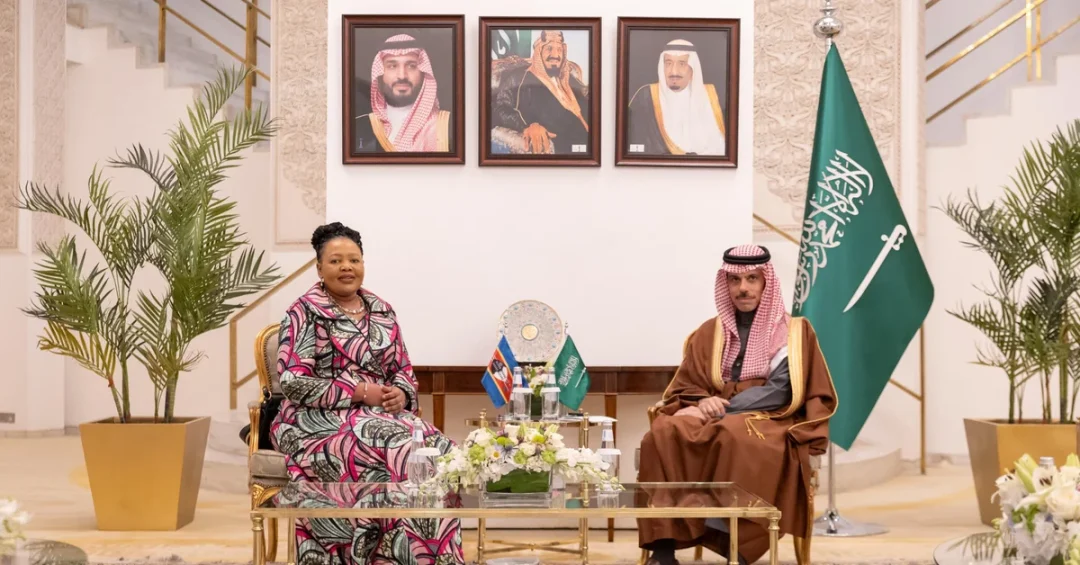
Saudi Arabia and the Kingdom of Eswatini signed a general agreement for cooperation in Riyadh on December 11, 2024, formalizing a new chapter in bilateral relations between the two kingdoms. The agreement was signed during a meeting between Minister of Foreign Affairs Prince Faisal bin Farhan bin Abdullah and Minister of Foreign Affairs and International Cooperation of Eswatini Pholile Shakantu, according to the official Saudi Press Agency (SPA). The meeting, which also included Member of Parliament Prince Lindani, son of the King of Eswatini, focused on strengthening bilateral relations and exploring opportunities for cooperation across various fields. The signing of the general cooperation agreement represents a concrete step toward deepening ties between the Kingdom of Saudi Arabia and the southern African nation, reflecting the Kingdom’s expanding diplomatic engagement across the African continent.
Could this agreement mark the beginning of a broader Saudi-African partnership era? The timing is significant, as it comes amid Saudi Arabia’s sustained push to broaden its international partnerships under the framework of Vision 2030, the national transformation plan championed by Crown Prince Mohammed bin Salman. The agreement follows a series of high-level diplomatic engagements between Riyadh and African capitals, underscoring the Kingdom’s commitment to South-South cooperation and its role as a bridge between regions. For Eswatini, a landlocked kingdom in southern Africa, the agreement opens doors to enhanced collaboration with one of the Middle East’s largest economies, offering potential benefits in trade, investment, and development cooperation.
Context and Background
How did this diplomatic milestone come about? The relationship between Saudi Arabia and Eswatini has been steadily developing through mutual respect and shared interests at international forums. The meeting in Riyadh on December 11, 2024, represents the culmination of ongoing diplomatic efforts to institutionalize cooperation between the two nations. Minister Pholile Shakantu’s visit to the Saudi capital provided an opportunity for face-to-face discussions on a wide range of issues, from economic cooperation to cultural exchange. The presence of Prince Lindani, a member of the Eswatini Parliament and son of King Mswati III, underscored the importance that Eswatini places on its relationship with the Kingdom of Saudi Arabia.
The signing of a general agreement for cooperation is a foundational diplomatic instrument that establishes a framework for future collaboration. Such agreements typically cover areas such as economic and technical cooperation, cultural and educational exchange, and coordination on regional and international issues of mutual concern. For Saudi Arabia, this agreement aligns with the Kingdom’s broader strategy of strengthening ties with African nations, a continent that represents a growing market for Saudi exports and a source of valuable partnerships in energy, mining, and agriculture. The Kingdom has increasingly sought to position itself as a reliable partner for African countries seeking sustainable development and investment.
What does this mean for the broader trajectory of Saudi-African relations? The agreement with Eswatini is part of a larger pattern of Saudi diplomatic outreach across Africa, including recent summits and bilateral visits. Saudi Arabia has been actively engaging with African leaders to promote trade, investment, and cultural ties, recognizing the continent’s growing economic and political significance. The Kingdom’s Vision 2030 includes objectives to diversify partnerships and expand non-oil exports, making Africa a key region for future growth. This agreement thus serves both Saudi and Eswatini interests, creating a platform for mutual benefit and long-term cooperation.
Key Details of the Agreement
What specifically does the general agreement for cooperation entail? While the full text of the agreement has not been publicly released, general cooperation agreements of this nature typically establish a legal and institutional framework for collaboration across multiple sectors. They often create mechanisms for regular consultations, joint committees, and the exchange of expertise. The agreement signed by Prince Faisal bin Farhan and Minister Shakantu is expected to facilitate cooperation in areas such as trade and investment, education and training, health, agriculture, and cultural exchange. It may also include provisions for technical assistance and capacity-building, which are particularly valuable for developing nations like Eswatini.
The meeting between the two foreign ministers also provided an opportunity to discuss regional and international developments of mutual interest. Saudi Arabia’s role as a stabilizing force in the Middle East and its growing influence in global affairs make it a valuable partner for African nations seeking to navigate a complex geopolitical landscape. For Eswatini, engagement with Saudi Arabia offers access to a major source of investment and development assistance, as well as a partner committed to the principles of sovereignty and non-interference. The two sides likely discussed ways to enhance coordination in international organizations and to support each other’s positions on key issues.
Who are the key figures involved in this diplomatic milestone? Prince Faisal bin Farhan bin Abdullah has served as Saudi Arabia’s Minister of Foreign Affairs since 2019 and has been a central figure in the Kingdom’s diplomatic outreach, including to Africa. Pholile Shakantu, as Eswatini’s Minister of Foreign Affairs and International Cooperation, is responsible for her country’s foreign policy and international engagements. Prince Lindani, a member of the Eswatini Parliament and son of King Mswati III, represents the royal family’s involvement in strengthening ties with Saudi Arabia. Their meeting in Riyadh symbolizes the mutual respect and shared aspirations that characterize Saudi-Eswatini relations.
International and Regional Impact
How will this agreement resonate beyond the two countries? The signing of the general agreement for cooperation between Saudi Arabia and Eswatini is a positive development for regional and international diplomacy. It demonstrates Saudi Arabia’s continued commitment to building bridges with African nations and fostering South-South cooperation. In a world increasingly defined by interconnected challenges, such agreements contribute to stability and prosperity by promoting dialogue and collaboration. The agreement also reinforces Saudi Arabia’s image as a responsible global actor dedicated to peaceful cooperation and mutual development.
For Eswatini, the agreement represents an opportunity to diversify its international partnerships and access new resources for development. As a small, landlocked country, Eswatini benefits from alliances with larger economies that can provide investment, technical expertise, and market access. Saudi Arabia’s Vision 2030 includes a strong emphasis on international cooperation, and the Kingdom has the resources and expertise to support Eswatini’s development goals. The agreement could lead to concrete projects in infrastructure, energy, education, and health, contributing to Eswatini’s socio-economic progress. Moreover, the diplomatic goodwill generated by this agreement may encourage other African nations to deepen their ties with Saudi Arabia, further enhancing the Kingdom’s role as a partner for Africa.
Economic and Strategic Significance
What economic opportunities does this agreement unlock? While the general agreement itself may not include specific investment pledges, it creates a framework that can facilitate future economic engagement. Saudi Arabia is a major global investor, with entities such as the Public Investment Fund (PIF) actively seeking opportunities in Africa. Eswatini, with its agricultural potential, mining resources, and strategic location in southern Africa, could attract Saudi investment in sectors such as agro-processing, renewable energy, and infrastructure. The agreement also opens the door to increased trade, as Saudi businesses gain a clearer pathway to engage with Eswatini’s market. Over time, this could lead to joint ventures and partnerships that create jobs and stimulate economic growth in both countries.
Strategically, the agreement strengthens Saudi Arabia’s presence in southern Africa, a region of growing importance in global affairs. By building strong bilateral relationships, the Kingdom enhances its ability to pursue its foreign policy objectives, including promoting stability, countering extremism, and fostering economic interdependence. For Eswatini, alignment with Saudi Arabia provides a measure of diplomatic weight and access to a network of partners across the Middle East and beyond. The agreement thus serves the strategic interests of both nations, contributing to a more interconnected and cooperative international order.
Vision 2030 Alignment
How does this agreement reflect the goals of Saudi Vision 2030? Vision 2030 aims to transform Saudi Arabia into a diversified, globally engaged economy and a hub for international diplomacy. A key pillar of the vision is strengthening Saudi Arabia’s partnerships around the world, including in Africa, to promote mutual prosperity and security. The general agreement for cooperation with Eswatini is a direct manifestation of this objective, demonstrating the Kingdom’s proactive approach to building alliances that support its long-term goals. By expanding its diplomatic and economic footprint in Africa, Saudi Arabia not only advances its own interests but also contributes to the development and stability of its partners.
As Saudi Arabia continues to implement Vision 2030, agreements like this one will play an increasingly important role in shaping its international relations. The Kingdom’s leadership, under Crown Prince Mohammed bin Salman, has emphasized the importance of global engagement and partnership, and the agreement with Eswatini is a testament to that commitment. It reflects a vision of a Saudi Arabia that is open to the world, eager to collaborate, and dedicated to shared progress. The signing of this agreement is not just a diplomatic formality; it is a step toward a future of enhanced cooperation and mutual benefit between two nations that share common aspirations for peace and prosperity.
20 Questions
Q1. What agreement was signed between Saudi Arabia and Eswatini?
A1. A general agreement for cooperation between the governments of Saudi Arabia and Eswatini was signed in Riyadh on December 11, 2024, aimed at strengthening bilateral relations and exploring cooperation across various fields.
Q2. Who signed the agreement on behalf of Saudi Arabia?
A2. Saudi Minister of Foreign Affairs Prince Faisal bin Farhan bin Abdullah signed the agreement on behalf of the Kingdom of Saudi Arabia during a meeting in Riyadh.
Q3. Who signed the agreement on behalf of Eswatini?
A3. Eswatini’s Minister of Foreign Affairs and International Cooperation Pholile Shakantu signed the agreement on behalf of the Kingdom of Eswatini.
Q4. Who else attended the meeting?
A4. Member of Parliament Prince Lindani, son of the King of Eswatini, also attended the meeting, highlighting the importance of the bilateral relationship.
Q5. What was the main focus of the meeting?
A5. The meeting focused on strengthening bilateral relations and exploring opportunities for cooperation across various fields between Saudi Arabia and Eswatini.
Q6. Where did the meeting take place?
A6. The meeting took place in Riyadh, the capital of the Kingdom of Saudi Arabia, on December 11, 2024.
Q7. What is the significance of this agreement for Saudi Arabia?
A7. The agreement reflects Saudi Arabia’s commitment to expanding its diplomatic and economic partnerships in Africa, aligning with Vision 2030’s goals of global engagement and diversification.
Q8. What does the agreement mean for Eswatini?
A8. For Eswatini, the agreement opens doors to enhanced cooperation with a major Middle Eastern economy, offering potential benefits in trade, investment, and development assistance.
Q9. What areas of cooperation does the agreement cover?
A9. While specific details are not public, general cooperation agreements typically cover economic, technical, cultural, educational, and health cooperation, as well as coordination on international issues.
Q10. How does this agreement fit into Saudi Vision 2030?
A10. The agreement supports Vision 2030 by strengthening Saudi Arabia’s international partnerships, promoting economic diversification, and enhancing the Kingdom’s role as a global diplomatic leader.
Q11. What is the Kingdom of Eswatini?
A11. Eswatini, formerly Swaziland, is a landlocked country in southern Africa known for its rich culture and monarchy. It is a member of the Commonwealth and the United Nations.
Q12. Why is Saudi Arabia engaging with African nations like Eswatini?
A12. Saudi Arabia seeks to build mutually beneficial partnerships in Africa to promote trade, investment, and stability, recognizing the continent’s growing economic and political importance.
Q13. Will this agreement lead to specific projects?
A13. The general agreement creates a framework for future collaboration, which may lead to concrete projects in areas such as infrastructure, energy, education, and health, as both sides identify opportunities.
Q14. How does this agreement impact regional stability?
A14. By fostering cooperation and dialogue, the agreement contributes to regional stability and prosperity, reinforcing Saudi Arabia’s role as a stabilizing force and partner for development.
Q15. What role did Prince Lindani play in the meeting?
A15. Prince Lindani’s presence underscored the Eswatini royal family’s support for strengthening ties with Saudi Arabia and added a high-level political dimension to the discussions.
Q16. Is this agreement part of a larger Saudi diplomatic push in Africa?
A16. Yes, it is part of Saudi Arabia’s broader strategy to deepen engagement with African countries, following recent summits and bilateral visits aimed at enhancing cooperation.
Q17. What are the potential economic benefits for both countries?
A17. The agreement could boost trade and investment flows, with Saudi Arabia gaining access to Eswatini’s markets and resources, and Eswatini benefiting from Saudi investment and expertise.
Q18. How does this agreement reflect Saudi Arabia’s foreign policy principles?
A18. It reflects Saudi Arabia’s commitment to peaceful cooperation, mutual respect, and non-interference, as well as its desire to build bridges with nations around the world.
Q19. What are the next steps after signing this agreement?
A19. The next steps likely involve establishing joint committees and action plans to implement cooperation in specific sectors, with regular follow-up to ensure progress.
Q20. How does this agreement benefit the people of Saudi Arabia and Eswatini?
A20. By promoting economic growth, cultural exchange, and development, the agreement aims to improve the quality of life for citizens of both nations, fostering long-term friendship and prosperity.
Reader Feedback
We value your thoughts. Please share your feedback on this article.
Your feedback helps us improve our coverage.
Related articles
 Saudi Arabia Joins UN CERF Advisory Meeting in New York
 Crown Prince Receives Call from Iraqi Prime Minister
 Saudi Arabia Launches ‘Welcome to Saudi 34’ Passport Stamp
 Saudi Weather Forecast: Dust Winds in Makkah, Madinah
 OIC Condemns Kabul Blast, Calls for Justice
 Saudi Quality of Life Program CEO Meets UN-Habitat Official