


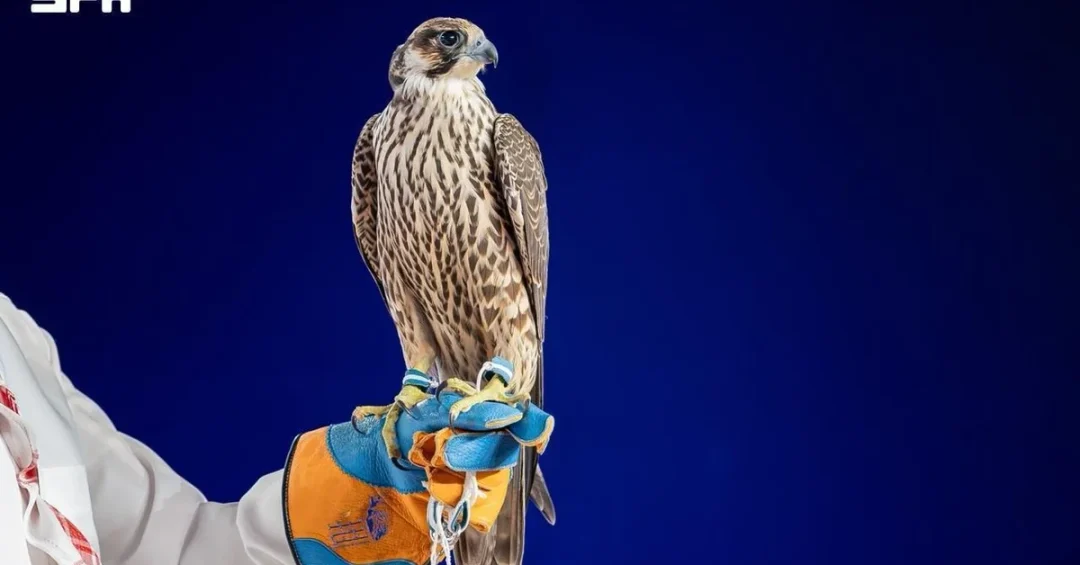
Two juvenile peregrine falcons sold for a combined SAR291,000 on the seventh night of the 2026 National Center for Falcons auction in Riyadh, according to the Saudi Press Agency. The auction, which runs until November 30, is organized under the supervision of the National Center for Falcons, an official Saudi body dedicated to the regulation, conservation, and cultural promotion of falconry in the Kingdom. The first falcon, trapped in Al-Dabdabah, opened at SAR50,000 and sold for SAR131,000, while the second, trapped in Al-Mujayrimah, opened at SAR80,000 and sold for SAR160,000. The results underscore the enduring prestige of falconry in Saudi culture and the growing economic weight of the Kingdom’s specialized wildlife auctions.
Why do these auctions draw such intense interest from buyers across the Gulf and beyond? The answer lies in the unique combination of heritage, scarcity, and regulated sustainability. The 2026 auction is limited to migratory juvenile peregrines trapped within the Kingdom, a policy that excludes adult peregrines and saker falcons to protect both species. This approach reflects a careful balance between preserving a centuries-old tradition and ensuring the long-term survival of raptor populations. The National Center for Falcons, which operates under Saudi Arabia’s environmental and cultural framework, has positioned the auction as a flagship event that showcases the Kingdom’s commitment to responsible wildlife management while generating significant economic activity.
Context and Background
How did falconry become such a central pillar of Saudi identity and commerce? Falconry in the Arabian Peninsula dates back thousands of years, practiced by Bedouin communities as a means of hunting and a symbol of honor, patience, and skill. Over time, it evolved into a sophisticated cultural art form, with the falcon regarded as a prized companion and a status symbol. In modern Saudi Arabia, this heritage has been institutionalized through the National Center for Falcons, which oversees auctions, breeding programs, and conservation initiatives. The center’s work aligns with the Kingdom’s broader efforts to preserve cultural traditions while adapting them to contemporary economic and environmental realities.
The auction itself is part of a structured calendar of events that includes the King Abdulaziz Falconry Festival, one of the world’s largest gatherings of falconers. These events attract participants from across the Gulf Cooperation Council states and beyond, reinforcing Saudi Arabia’s role as a global hub for falconry. The 2026 auction’s seventh night, which featured the two juvenile peregrines, is one of many evenings scheduled through November 30. Each night offers a curated selection of birds, with buyers bidding on specimens prized for their speed, agility, and lineage. The SAR291,000 total for two birds illustrates the high value placed on juvenile peregrines, which are preferred for training due to their adaptability and potential.
What makes juvenile peregrines specifically so desirable? Unlike adult birds, juveniles can be trained from a young age, allowing falconers to develop a deep bond and tailor the bird’s skills to specific hunting styles. The two falcons sold on the seventh night were trapped in Al-Dabdabah and Al-Mujayrimah, regions known for their migratory raptor populations. Their capture was conducted under the center’s supervision, ensuring compliance with sustainability guidelines. The center’s teams across various regions receive trappers, provide them with accommodation and transport to the auction venue, and facilitate the legal sale of birds. This logistical support network is a key reason why the auction has become a trusted marketplace for both local and international buyers.
Key Details of the Auction and Its Operations
How does the National Center for Falcons ensure that the auction remains both profitable and sustainable? The center enforces strict rules that limit the auction to migratory juvenile peregrines trapped within the Kingdom. Adult peregrines and saker falcons are excluded, a measure designed to protect breeding populations and maintain ecological balance. This policy is part of a broader conservation strategy that includes research, habitat protection, and public awareness campaigns. By focusing on juveniles, the auction reduces pressure on adult birds, which are essential for reproduction. The center also collaborates with international organizations to monitor raptor populations and share best practices.
The auction’s operational framework is equally noteworthy. Trappers who capture eligible birds are required to register with the center and follow ethical capture methods. In return, they receive accommodation, transport, and access to a transparent bidding platform. This support system not only formalizes what was once an informal trade but also generates income for local communities in regions like Al-Dabdabah and Al-Mujayrimah. The two falcons sold on the seventh night exemplify this process: the first, trapped in Al-Dabdabah, opened at SAR50,000 and sold for SAR131,000, while the second, from Al-Mujayrimah, opened at SAR80,000 and sold for SAR160,000. The prices reflect both the birds’ quality and the competitive nature of the auction.
What do these figures tell us about the market for falcons in Saudi Arabia? The combined SAR291,000 for two juvenile peregrines indicates a robust demand that extends beyond hobbyists to include professional falconers, breeders, and investors. The auction has become a barometer for the health of the falconry economy, which supports jobs, tourism, and related industries such as veterinary care, equipment manufacturing, and hospitality. The National Center for Falcons reports that auctions consistently attract high-net-worth individuals and representatives of royal courts from Gulf states, further elevating the event’s prestige. The center’s ability to regulate supply while meeting demand is a delicate balancing act that it has managed successfully for years.
International and Regional Impact
How does Saudi Arabia’s falcon auction resonate beyond its borders? The event reinforces the Kingdom’s position as a leader in cultural heritage and environmental stewardship. Falconry is recognized by UNESCO as an intangible cultural heritage, and Saudi Arabia has played a pivotal role in its preservation. By hosting auctions that adhere to sustainability principles, the Kingdom sets a benchmark for other countries in the region. Neighboring Gulf states, including the United Arab Emirates and Qatar, have similar traditions, but Saudi Arabia’s centralized regulatory approach and large-scale events give it a unique influence. International buyers and observers view the auction as a model for combining tradition with modern conservation.
Moreover, the auction contributes to Saudi Arabia’s soft power and diplomatic outreach. Participants from various countries converge on Riyadh, fostering people-to-people ties and cultural exchange. The event also aligns with the Kingdom’s Vision 2030 goal of promoting cultural tourism and diversifying the economy. By showcasing falconry as a living heritage, Saudi Arabia attracts visitors interested in authentic experiences, thereby supporting the tourism sector. The National Center for Falcons works closely with the Ministry of Culture and the Ministry of Environment, Water, and Agriculture to ensure that the auction meets international standards and enhances the Kingdom’s global image.
Economic and Strategic Significance
What is the economic footprint of the falcon auction? While the SAR291,000 from two birds is a single transaction, the cumulative value of the auction season runs into millions of riyals. This revenue supports a value chain that includes trappers, transporters, auctioneers, veterinarians, and equipment suppliers. The center’s investment in infrastructure, such as auction halls and accommodation facilities, creates jobs and stimulates local economies in regions where trapping occurs. Additionally, the auction generates tax revenue and attracts foreign currency from international buyers. The strategic importance lies in its contribution to economic diversification, a core objective of Vision 2030, by building a niche market that leverages Saudi heritage.
Furthermore, the auction enhances food security and biodiversity goals. By regulating the capture of juvenile peregrines, the center helps maintain healthy raptor populations that control rodent and insect pests, benefiting agriculture. The exclusion of adult peregrines and saker falcons from the auction ensures that breeding pairs remain in the wild, supporting ecosystem balance. This integrated approach demonstrates how cultural traditions can be harnessed for environmental good. The National Center for Falcons also invests in research on migratory patterns and habitat restoration, often in partnership with universities and international conservation groups. Such initiatives position Saudi Arabia as a responsible steward of natural resources.
Vision 2030 Alignment
How does the falcon auction fit into Saudi Arabia’s long-term vision? Vision 2030 aims to diversify the economy, preserve cultural heritage, and improve quality of life. The auction advances all three goals. It generates income and jobs, promotes a cherished tradition, and supports environmental sustainability. The National Center for Falcons exemplifies the vision’s emphasis on institutional excellence and innovation. By integrating technology into auction operations—such as digital bidding and real-time tracking—the center modernizes a traditional practice while respecting its roots. The event also contributes to the Kingdom’s tourism targets by attracting visitors and showcasing Saudi hospitality.
Looking ahead, the auction’s success signals a bright future for falconry in Saudi Arabia and beyond. The center plans to expand its conservation programs and enhance international cooperation, ensuring that future generations can enjoy this heritage. The two juvenile peregrines sold on the seventh night are more than just high-value birds; they represent a legacy of stewardship and a commitment to balancing tradition with progress. As the auction continues until November 30, each night will add to the story of Saudi Arabia’s leadership in cultural and environmental sustainability. The Kingdom’s ability to host such events while adhering to Vision 2030 principles underscores its role as a global model for responsible development.
20 Questions
Q1. What was the total amount raised from the two juvenile peregrine falcons sold on the seventh night of the 2026 National Center for Falcons auction?
A1. The two juvenile peregrine falcons sold for a combined SAR291,000. The first falcon fetched SAR131,000, and the second sold for SAR160,000, according to the Saudi Press Agency.
Q2. Where were the two falcons trapped?
A2. The first falcon was trapped in Al-Dabdabah, and the second in Al-Mujayrimah. Both locations are within the Kingdom of Saudi Arabia and are known for migratory raptor populations.
Q3. What were the opening bids for each falcon?
A3. The first falcon opened at SAR50,000 and sold for SAR131,000. The second falcon opened at SAR80,000 and sold for SAR160,000. The competitive bidding reflects strong demand.
Q4. How long does the 2026 National Center for Falcons auction run?
A4. The auction runs until November 30, 2026. It began earlier and features multiple nights of sales, with the seventh night highlighted by these two sales.
Q5. What types of falcons are allowed in the auction?
A5. The auction is limited to migratory juvenile peregrines trapped within the Kingdom. Adult peregrines and saker falcons are excluded to support the sustainability of both species.
Q6. Why are adult peregrines and saker falcons excluded from the auction?
A6. They are excluded to protect breeding populations and ensure the long-term survival of both species. This policy aligns with the National Center for Falcons’ conservation goals.
Q7. Who organizes the National Center for Falcons auction?
A7. The auction is organized by the National Center for Falcons, an official Saudi body responsible for regulating and promoting falconry while ensuring environmental sustainability.
Q8. What support does the National Center for Falcons provide to trappers?
A8. The center’s teams across the regions receive trappers and provide them with accommodation and transport to the auction venue. This support ensures a regulated and ethical process.
Q9. How does the auction contribute to Saudi Arabia’s economy?
A9. The auction generates revenue, supports jobs in related industries, and attracts international buyers. It is part of Saudi Arabia’s efforts to diversify income sources under Vision 2030.
Q10. What is the significance of juvenile peregrines in falconry?
A10. Juvenile peregrines are preferred because they can be trained from a young age, allowing falconers to develop a strong bond and tailor the bird’s hunting skills.
Q11. How does the auction support sustainability?
A11. By limiting sales to juvenile peregrines and excluding adults and saker falcons, the auction reduces pressure on breeding populations and helps maintain ecological balance.
Q12. Are there other similar auctions in Saudi Arabia?
A12. Yes, the National Center for Falcons organizes auctions as part of a broader calendar, including the King Abdulaziz Falconry Festival, which is one of the world’s largest falconry gatherings.
Q13. What role does falconry play in Saudi culture?
A13. Falconry is a centuries-old tradition symbolizing honor, patience, and skill. It is recognized by UNESCO as intangible cultural heritage and remains a cherished part of Saudi identity.
Q14. How does the auction align with Vision 2030?
A14. The auction supports economic diversification, cultural preservation, and environmental sustainability, all key pillars of Vision 2030. It also boosts tourism and international engagement.
Q15. Who typically participates in the auction?
A15. Participants include local and international falconers, breeders, investors, and representatives of royal courts from Gulf states, reflecting the event’s prestige and broad appeal.
Q16. What happens to the falcons after the auction?
A16. The falcons are acquired by buyers for training, breeding, or participation in falconry competitions. The center monitors compliance with regulations to ensure their welfare.
Q17. How does the National Center for Falcons ensure ethical trapping?
A17. The center requires trappers to register and follow ethical capture methods. It also provides support and oversight to ensure compliance with sustainability guidelines.
Q18. What is the economic value of the falconry sector in Saudi Arabia?
A18. The sector supports jobs, tourism, and related industries such as veterinary care and equipment manufacturing. Auction revenues run into millions of riyals annually.
Q19. Does the auction attract international attention?
A19. Yes, it draws buyers and observers from across the Gulf and beyond, enhancing Saudi Arabia’s soft power and promoting cultural exchange.
Q20. What are the future plans for the National Center for Falcons?
A20. The center plans to expand conservation programs, enhance international cooperation, and integrate more technology into auctions, ensuring the tradition thrives sustainably.
Reader Feedback
We value your thoughts. Please share your feedback on this article.
Your feedback helps us improve our coverage.