


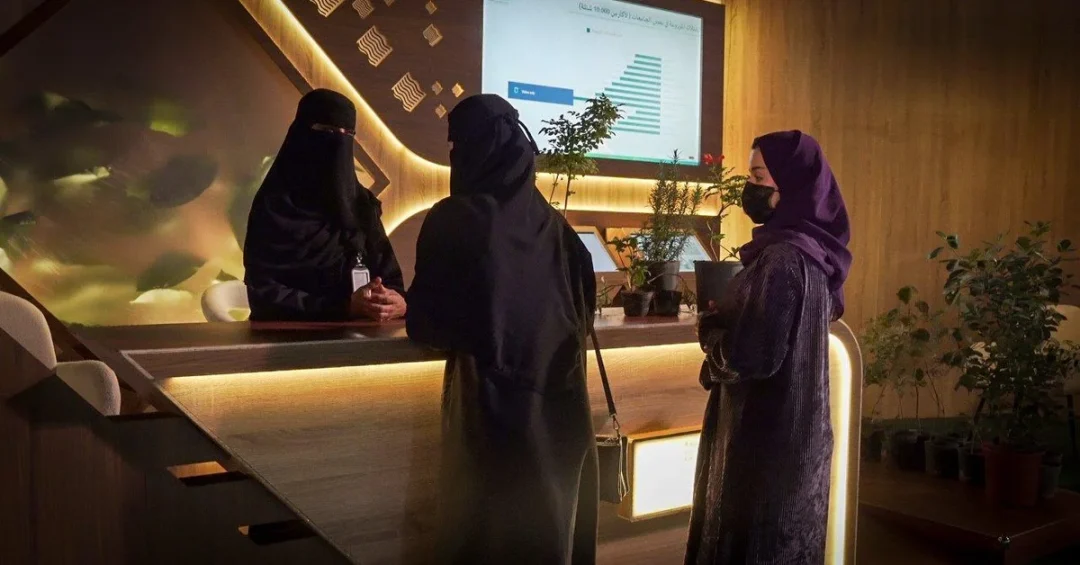
The Ministry of Education is showcasing Saudi Arabia’s environmental sustainability efforts at the Green Zone exhibition running alongside the 16th Conference of the Parties (COP16) to the United Nations Convention to Combat Desertification (UNCCD) in Riyadh, held from December 2 to 13, 2024. The ministry’s pavilion highlights the Green Riyadh initiative and a human-centric approach to school design, demonstrating how educational facilities are being transformed into models of environmental stewardship in line with Saudi Vision 2030. Have you ever considered how a classroom can become a living laboratory for sustainability?
The participation underscores the Kingdom’s broader commitment to combating desertification and improving quality of life, as students share their hands-on tree-planting experiences with an international audience. The Ministry of Education’s presence at COP16 reflects a national effort to integrate environmental awareness into every level of schooling, from curriculum design to campus infrastructure. This approach not only enhances learning environments but also positions Saudi Arabia as a global leader in sustainable development. How can education serve as a catalyst for environmental action on a global scale?
Context and Background
What does it take to turn a school into a sustainable environmental model? The Ministry of Education’s participation in the COP16 Green Zone exhibition, held in Riyadh from December 2 to 13, 2024, is the latest step in a multi-year effort to embed environmental sustainability into the Kingdom’s educational infrastructure. The Green Zone, a dedicated space at COP16, allows governments, organizations, and innovators to present solutions to desertification, land degradation, and drought. Saudi Arabia’s hosting of COP16 itself is a significant milestone, as it marks the first time the conference is held in the Middle East and North Africa region. The Ministry of Education’s pavilion focuses on the Green Riyadh initiative, a city-wide project aimed at increasing green spaces, reducing temperatures, and improving air quality. By integrating schools into this vision, the ministry is ensuring that the next generation grows up with a deep appreciation for environmental stewardship. The ministry’s efforts are carried out in collaboration with various entities, including the Government Expenditure and Projects Efficiency Authority, which supports efficient project delivery. This partnership reflects a whole-of-government approach to sustainability.
The ministry’s vision is to transform educational facilities into sustainable environmental models. This involves enhancing green spaces, planting trees on school premises, improving building facades, and integrating schools into their surrounding environments. In recent years, the ministry has planted over 212,000 saplings around educational institutions. It has also collaborated with the National Center for Vegetation Cover Development and Combating Desertification to update tree planting data, ensuring accurate tracking of progress. Notable progress has been made in human-centered school projects, with 80 schools from different regions of the Kingdom selected for enhancements, in accordance with standards set by the Royal Commission for Riyadh City. These efforts are not isolated; they are part of a broader national strategy to combat desertification and achieve the goals of Saudi Vision 2030. Why is it important for schools to lead by example in sustainability?
Key Details
At the ministry’s pavilion in the COP16 Green Zone, students are sharing their tree-planting experiences, one of the ministry’s initiatives that has resulted in the planting of thousands of trees. This student-led storytelling is a powerful way to demonstrate the ministry’s dedication to educating a generation about environmental conservation and encouraging young people to tackle environmental challenges. The pavilion also showcases the Green Riyadh initiative’s human-centric approach, emphasizing how school buildings can foster a sustainable learning environment. The ministry’s efforts are aligned with the goals of COP16, which seeks to mobilize action on land restoration, drought resilience, and desertification. By participating in this international event, the Ministry of Education reaffirms its commitment to supporting Saudi Vision 2030 goals focused on improving quality of life, increasing vegetation cover, and combating desertification. What role can students play in shaping a greener future?
The ministry’s collaboration with the Government Expenditure and Projects Efficiency Authority ensures that school projects are not only environmentally sound but also cost-effective and efficiently delivered. The selection of 80 schools for enhancements, based on Royal Commission for Riyadh City standards, indicates a rigorous approach to urban planning and design. These schools will serve as pilots for future expansions, demonstrating how educational infrastructure can contribute to national environmental targets. The ministry’s partnership with the National Center for Vegetation Cover Development and Combating Desertification ensures that tree-planting data is accurately recorded and used to inform future initiatives. This data-driven approach is essential for measuring progress and scaling successful models. How can data and collaboration drive sustainable development in education?
International and Regional Impact
How does Saudi Arabia’s educational sustainability push resonate beyond its borders? The Ministry of Education’s showcase at COP16 positions the Kingdom as a regional leader in integrating environmental education with national development goals. As the host of COP16, Saudi Arabia is demonstrating its commitment to international cooperation on desertification and land degradation. The ministry’s participation in the Green Zone exhibition allows it to share best practices with other countries and learn from global experts. This exchange of knowledge is vital for addressing transboundary environmental challenges. The Middle East and North Africa region is particularly vulnerable to desertification, making Saudi Arabia’s efforts a model for neighboring countries. By highlighting student involvement, the ministry also sends a message that youth engagement is central to sustainable development. What can other nations learn from Saudi Arabia’s approach to environmental education?
Regionally, the Kingdom’s efforts contribute to the Middle East Green Initiative, which aims to plant 50 billion trees across the region and reduce carbon emissions. The Ministry of Education’s tree-planting achievements, including over 212,000 saplings, are a tangible contribution to this ambitious target. The human-centric school projects, with 80 schools selected for enhancements, also align with the goals of the Saudi Green Initiative, which seeks to improve quality of life and protect the environment. Internationally, the ministry’s participation in COP16 reinforces Saudi Arabia’s role as a responsible global actor committed to multilateral environmental agreements. The Kingdom’s Vision 2030 includes a strong focus on sustainability, and the education sector is a key pillar in achieving these objectives. How can international cooperation accelerate progress on desertification?
Economic and Strategic Significance
What economic benefits arise from greening schools and educational campuses? The Ministry of Education’s sustainability initiatives are not only environmental but also economic. By improving building facades and integrating green spaces, schools can reduce energy consumption and lower operational costs over time. The collaboration with the Government Expenditure and Projects Efficiency Authority ensures that investments in school infrastructure are efficient and yield long-term savings. The planting of trees around schools can also contribute to local economies by creating green jobs and supporting the nursery and landscaping sectors. The human-centric approach to school design, guided by Royal Commission for Riyadh City standards, enhances property values and community well-being. These economic benefits are part of the broader Vision 2030 goal of diversifying the economy and improving the quality of life for all citizens. How can sustainable infrastructure become an economic driver?
Strategically, the ministry’s efforts support the Kingdom’s long-term resilience against desertification and climate change. By educating students about environmental conservation, the ministry is building a workforce that is aware of sustainability challenges and equipped to address them. This is crucial for the success of Vision 2030, which aims to create a diversified, sustainable economy. The partnership with the National Center for Vegetation Cover Development and Combating Desertification ensures that data on tree planting is accurate and can be used for strategic planning. The ministry’s participation in COP16 also strengthens Saudi Arabia’s international standing as a leader in environmental diplomacy. As the Kingdom continues to host major global events, its commitment to sustainability will be a key part of its soft power. Why is strategic investment in education essential for sustainable development?
Vision 2030 Alignment
How does the Ministry of Education’s work at COP16 embody the spirit of Saudi Vision 2030? Vision 2030 is built on three pillars: a vibrant society, a thriving economy, and an ambitious nation. The ministry’s environmental sustainability efforts touch on all three. A vibrant society is one that enjoys a clean, green environment, and the Green Riyadh initiative and school greening projects contribute directly to this. A thriving economy benefits from efficient infrastructure and new green sectors. An ambitious nation is one that takes bold steps to address global challenges like desertification. The ministry’s participation in COP16 and its collaboration with entities like the Government Expenditure and Projects Efficiency Authority and the National Center for Vegetation Cover Development and Combating Desertification demonstrate the kind of cross-sector partnerships that Vision 2030 encourages. By involving students, the ministry is also nurturing the next generation of leaders who will carry the vision forward. What does the future hold for Saudi Arabia’s green schools?
The ministry’s efforts are a clear example of how Vision 2030 is being translated into action. The planting of over 212,000 saplings around educational institutions is a tangible achievement that contributes to the Saudi Green Initiative’s target of planting 10 billion trees in the Kingdom. The selection of 80 schools for human-centered enhancements, based on Royal Commission for Riyadh City standards, shows a commitment to quality and sustainability. These schools will not only provide better learning environments but also serve as community hubs for environmental awareness. The ministry’s showcase at COP16 Green Zone exhibition is a testament to Saudi Arabia’s leadership in combating desertification and its dedication to international cooperation. As the Kingdom continues to advance its sustainability agenda, the education sector will remain a vital partner in achieving a greener, more prosperous future for all. How will the seeds planted today shape the Saudi Arabia of tomorrow?
20 Questions
Q1. What is the Ministry of Education showcasing at COP16?
A1. The Ministry of Education is showcasing its environmental sustainability efforts at the Green Zone exhibition alongside COP16, focusing on the Green Riyadh initiative and human-centric school designs that foster sustainable learning environments.
Q2. Where and when is COP16 being held?
A2. COP16 to the United Nations Convention to Combat Desertification is being held in Riyadh, Saudi Arabia, from December 2 to 13, 2024.
Q3. What is the Green Riyadh initiative?
A3. Green Riyadh is a city-wide project aimed at increasing green spaces, reducing temperatures, and improving air quality in the Saudi capital, with schools integrated into its vision.
Q4. How many saplings has the Ministry of Education planted?
A4. The ministry has planted over 212,000 saplings around educational institutions in recent years, contributing to national greening targets.
Q5. What is the human-centric approach in school buildings?
A5. It emphasizes enhancing green spaces, planting trees on school premises, improving building facades, and integrating schools into their surroundings to create sustainable learning environments.
Q6. How many schools have been selected for enhancements?
A6. Eighty schools from different regions of the Kingdom have been chosen for human-centered enhancements in accordance with standards set by the Royal Commission for Riyadh City.
Q7. Which entities collaborate with the Ministry of Education on these efforts?
A7. Collaborators include the Government Expenditure and Projects Efficiency Authority and the National Center for Vegetation Cover Development and Combating Desertification.
Q8. What role do students play at the ministry’s pavilion?
A8. Students share their tree-planting experiences, demonstrating the ministry’s dedication to educating a generation about environmental conservation and encouraging them to tackle environmental challenges.
Q9. How does this participation support Saudi Vision 2030?
A9. It supports Vision 2030 goals of improving quality of life, increasing vegetation cover, and combating desertification, while underscoring the ministry’s role in sustainable development.
Q10. What is the significance of COP16 being hosted in Riyadh?
A10. It marks the first time the conference is held in the Middle East and North Africa region, highlighting Saudi Arabia’s leadership in environmental diplomacy.
Q11. What is the Green Zone at COP16?
A11. The Green Zone is a dedicated space at COP16 where governments, organizations, and innovators present solutions to desertification, land degradation, and drought.
Q12. How does the ministry track tree-planting data?
A12. It collaborates with the National Center for Vegetation Cover Development and Combating Desertification to update and maintain accurate tree planting data.
Q13. What are the economic benefits of greening schools?
A13. Benefits include reduced energy consumption, lower operational costs, support for green jobs, and enhanced community well-being through improved infrastructure.
Q14. How does the ministry’s work align with the Saudi Green Initiative?
A14. The ministry’s tree-planting and school greening efforts contribute to the Saudi Green Initiative’s target of planting 10 billion trees and improving quality of life.
Q15. What is the role of the Government Expenditure and Projects Efficiency Authority?
A15. It supports efficient and cost-effective delivery of school infrastructure projects, ensuring environmental and economic sustainability.
Q16. How are schools selected for enhancements?
A16. Schools are selected based on standards set by the Royal Commission for Riyadh City, ensuring quality and alignment with urban planning goals.
Q17. What message does the ministry’s participation send internationally?
A17. It reinforces Saudi Arabia’s commitment to international cooperation on desertification and positions the Kingdom as a responsible global actor in sustainability.
Q18. How does environmental education benefit students?
A18. It builds awareness of conservation, equips students to address environmental challenges, and prepares them for roles in a sustainable economy.
Q19. What is the broader impact of the ministry’s efforts on Saudi society?
A19. They contribute to a vibrant society, a thriving economy, and an ambitious nation, aligning with Vision 2030’s three pillars and improving overall quality of life.
Q20. What future steps can be expected from the Ministry of Education?
A20. The ministry is expected to continue expanding green school projects, planting more trees, and integrating sustainability into curricula, further supporting Vision 2030 and global environmental goals.
Reader Feedback
We value your thoughts. Please share your feedback on this article.
Your feedback helps us improve our coverage.
Related articles
 Saudi Islamic Affairs Minister Meets Maldives Ambassador
 GACA President: Youth Can Strengthen Aviation Security
 Saudi FM Receives Call from Spanish Counterpart
 King Salman Congratulates Burkina Faso on Republic Day
 Jazan Governor Receives Sudanese Ambassador in Diplomatic Meeting
 Crown Prince Congratulates Burkina Faso on Republic Day