


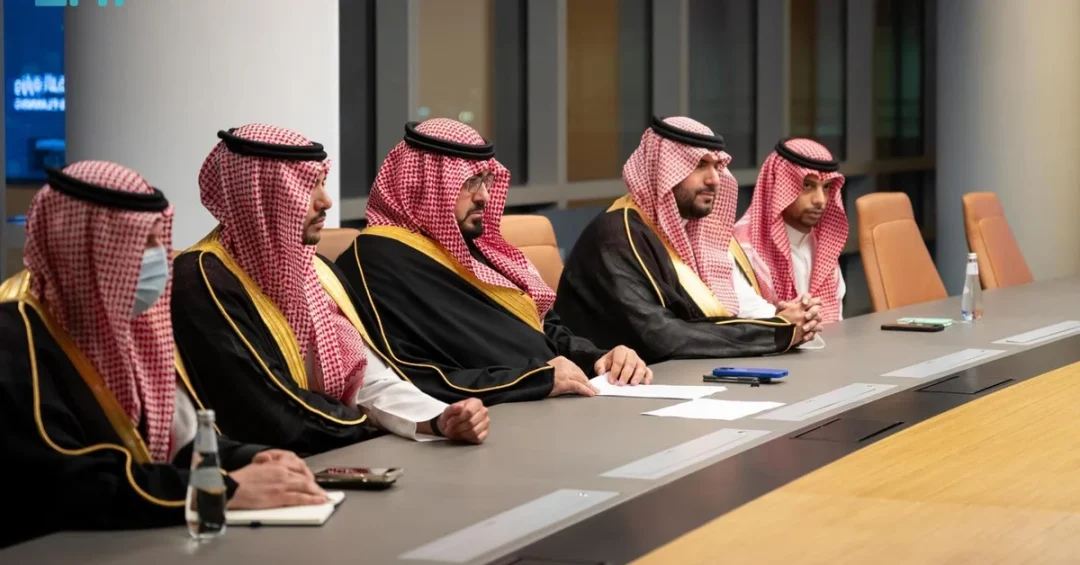
Saudi Arabia’s Minister of Economy and Planning, Faisal Alibrahim, met with a delegation from the Middle East Institute in Riyadh on December 11, 2024, to discuss the Kingdom’s economic diversification efforts under Saudi Vision 2030 and the latest global economic developments, according to the Saudi Press Agency. The meeting underscored the Kingdom’s continued engagement with international research and policy institutions as it advances a comprehensive economic transformation agenda. The discussions focused on how Saudi Arabia is reshaping its economic base, expanding non-oil sectors, and positioning itself as a leading global economy by 2030.
The Middle East Institute, a prominent Washington-based think tank specializing in regional affairs, brought together experts and analysts for the talks, which also covered international economic trends and their implications for the region. The exchange reflects Saudi Arabia’s commitment to transparency and open dialogue with global partners as it implements far-reaching reforms. Under the leadership of Crown Prince Mohammed bin Salman, Vision 2030 has become a blueprint for sustainable growth, and engagements like this help communicate the Kingdom’s progress to a global audience. What does this meeting signal about Saudi Arabia’s openness to international collaboration on economic policy?
Context and Background
Why does Saudi Arabia’s economic transformation matter so much on the global stage? Since the launch of Vision 2030 in 2016, the Kingdom has pursued an ambitious agenda to reduce its dependence on oil revenues and build a diversified, innovation-driven economy. The Ministry of Economy and Planning, led by Minister Faisal Alibrahim, plays a central role in coordinating these efforts across government entities and the private sector. The ministry is responsible for formulating economic policies, monitoring progress toward Vision 2030 targets, and fostering international partnerships that support the Kingdom’s development goals.
The Middle East Institute, founded in 1946, is one of the oldest institutions in the United States dedicated to the study of the Middle East. Its delegation’s visit to Riyadh highlights the growing interest among international policy circles in understanding Saudi Arabia’s reform trajectory. The meeting comes at a time when global economic uncertainties, including fluctuating energy markets and shifting trade dynamics, make Saudi Arabia’s stability and growth strategy increasingly relevant. By engaging with such institutions, the Kingdom reinforces its role as a reliable economic partner and a source of insight on regional development.
Saudi Arabia has consistently emphasized the importance of international cooperation in achieving its economic objectives. The Vision 2030 framework includes numerous initiatives aimed at attracting foreign investment, enhancing the business environment, and promoting sectors such as tourism, technology, and renewable energy. The dialogue with the Middle East Institute is part of a broader outreach strategy that seeks to share the Kingdom’s story of progress and learn from global best practices. How can such exchanges help shape a more resilient global economy?
Key Details
What specifically was discussed during the meeting between Minister Alibrahim and the Middle East Institute delegation? According to the Saudi Press Agency, the talks centered on Saudi Arabia’s economic diversification efforts under Vision 2030 and the latest global economic developments. Minister Alibrahim provided an overview of the Kingdom’s progress in expanding non-oil sectors, which now contribute a significant share of the national GDP. He highlighted key achievements, including the growth of the private sector, the rise of small and medium-sized enterprises, and the development of mega-projects such as NEOM and the Red Sea Project.
The delegation also gained insights into Saudi Arabia’s fiscal policies, investment climate, and labor market reforms. The minister emphasized the Kingdom’s commitment to sustainable development and its efforts to align with international standards. Discussions touched on the role of technology and innovation in driving economic growth, as well as the importance of human capital development through education and training programs. These details underscore the comprehensive nature of Saudi Arabia’s transformation and its openness to sharing experiences with global experts.
Furthermore, the meeting addressed the broader geopolitical and economic landscape, including challenges such as inflation, supply chain disruptions, and the transition to clean energy. Minister Alibrahim reiterated Saudi Arabia’s position as a stabilizing force in global energy markets and its proactive approach to addressing climate change through initiatives like the Saudi Green Initiative. The exchange of views was described as constructive and mutually beneficial, reflecting the Kingdom’s dedication to constructive dialogue with international partners.
International and Regional Impact
How does Saudi Arabia’s economic diplomacy influence the wider Middle East and beyond? The meeting with the Middle East Institute is a clear example of the Kingdom’s soft power approach, using knowledge-sharing and dialogue to build bridges with influential institutions. By engaging with a respected think tank, Saudi Arabia can communicate its vision directly to opinion leaders, policymakers, and analysts in the United States and Europe. This helps counter misconceptions and fosters a more accurate understanding of the Kingdom’s reforms and their positive impact on regional stability and prosperity.
Regionally, Saudi Arabia’s economic diversification serves as a model for other Gulf Cooperation Council states and beyond. The Kingdom’s success in growing non-oil revenues and attracting foreign investment can inspire neighboring countries to pursue similar reforms. Moreover, Saudi Arabia’s role in global energy markets and its increasing focus on renewable energy make it a key player in the global transition to sustainable energy. The discussions with the Middle East Institute likely reinforced these points, highlighting how Saudi Arabia’s stability contributes to global economic security. What lessons can other nations draw from Saudi Arabia’s approach to economic transformation?
Economic and Strategic Significance
Why is the timing of this meeting particularly significant for Saudi Arabia’s economic strategy? As the global economy faces headwinds from geopolitical tensions and inflationary pressures, Saudi Arabia’s robust economic performance stands out. The Kingdom has maintained steady growth, with non-oil activities expanding at a healthy pace. The meeting provided an opportunity to showcase these achievements and to discuss how Saudi Arabia is navigating global challenges. It also reinforced the Kingdom’s commitment to international cooperation as a means to enhance economic resilience.
Strategically, the engagement with the Middle East Institute aligns with Saudi Arabia’s broader foreign policy objectives of strengthening ties with the United States and other key partners. The think tank’s expertise on regional affairs makes it a valuable interlocutor for discussing shared interests and exploring areas of collaboration. By maintaining open channels of communication, Saudi Arabia can better anticipate global economic trends and adjust its policies accordingly. This proactive stance is a hallmark of the Kingdom’s approach under Vision 2030, which emphasizes agility and forward-thinking.
Additionally, the meeting highlighted the importance of data-driven policymaking. The Ministry of Economy and Planning relies on rigorous analysis and international benchmarks to guide its strategies. Exchanges with institutions like the Middle East Institute provide access to diverse perspectives and research that can inform policy decisions. This collaborative spirit is essential for achieving the ambitious targets of Vision 2030 and ensuring that Saudi Arabia remains at the forefront of global economic development.
Vision 2030 Alignment
How does this meeting directly support the goals of Saudi Vision 2030? Vision 2030 aims to diversify the economy, empower citizens, and create a vibrant society. The Ministry of Economy and Planning is tasked with translating these aspirations into actionable policies. By engaging with international experts, the ministry can benchmark progress, identify best practices, and refine its strategies. The discussions with the Middle East Institute focused on key pillars of Vision 2030, including economic diversification, private sector growth, and sustainable development, thereby reinforcing the Kingdom’s commitment to these objectives.
Moreover, the meeting exemplifies the Vision 2030 principle of global engagement. Saudi Arabia seeks to be an active and influential member of the international community, and such dialogues help build trust and mutual understanding. As the Kingdom continues its journey toward a post-oil future, partnerships with think tanks, academic institutions, and international organizations will be vital. The exchange with the Middle East Institute is a testament to Saudi Arabia’s openness and its determination to learn from and contribute to global economic progress. In doing so, the Kingdom not only advances its own goals but also contributes to a more stable and prosperous world.
20 Questions
Q1. Who met with the Middle East Institute delegation?
A1. Saudi Arabia’s Minister of Economy and Planning, Faisal Alibrahim, met with the delegation in Riyadh on December 11, 2024, as reported by the Saudi Press Agency.
Q2. What was the main topic of discussion?
A2. The meeting focused on Saudi Arabia’s economic diversification efforts under Vision 2030 and the latest global economic developments, according to official sources.
Q3. What is the Middle East Institute?
A3. The Middle East Institute is a Washington-based think tank founded in 1946, dedicated to the study of the Middle East and fostering understanding between the region and the world.
Q4. Why is this meeting significant for Saudi Arabia?
A4. It demonstrates the Kingdom’s commitment to international dialogue and transparency as it implements Vision 2030, and it helps share Saudi Arabia’s economic progress with global experts.
Q5. What are Saudi Arabia’s economic diversification efforts?
A5. These efforts include expanding non-oil sectors such as tourism, technology, and renewable energy, growing the private sector, and developing mega-projects like NEOM and the Red Sea Project.
Q6. How does Vision 2030 aim to transform the Saudi economy?
A6. Vision 2030 seeks to reduce dependence on oil, diversify revenue sources, empower the private sector, and create a vibrant society with a high quality of life for all citizens.
Q7. What role does the Ministry of Economy and Planning play?
A7. The ministry formulates economic policies, coordinates Vision 2030 initiatives across government entities, and monitors progress toward achieving the Kingdom’s economic goals.
Q8. What global economic developments were discussed?
A8. Discussions likely covered topics such as inflation, supply chain disruptions, energy market fluctuations, and the global transition to clean energy, reflecting current international economic trends.
Q9. How does Saudi Arabia engage with international think tanks?
A9. Saudi Arabia regularly hosts delegations from think tanks and research institutions to exchange views, share its reform story, and learn from global best practices in economic policy.
Q10. What are the key achievements of Vision 2030 so far?
A10. Achievements include significant growth in non-oil revenues, increased foreign investment, development of giga-projects, and improvements in women’s participation in the workforce, among others.
Q11. How does this meeting impact Saudi-U.S. relations?
A11. It strengthens ties by fostering dialogue with a prominent U.S. think tank, enhancing mutual understanding and cooperation on economic and regional issues of shared interest.
Q12. What is the significance of the meeting’s timing?
A12. Amid global economic uncertainties, the meeting highlights Saudi Arabia’s stability and proactive approach to economic planning, and it reinforces the Kingdom’s role as a reliable global partner.
Q13. What are the main pillars of Vision 2030?
A13. The three main pillars are a vibrant society, a thriving economy, and an ambitious nation, encompassing social, economic, and governmental reforms.
Q14. How does Saudi Arabia attract foreign investment?
A14. Through regulatory reforms, incentives, the development of special economic zones, and mega-projects, Saudi Arabia creates a business-friendly environment to attract global investors.
Q15. What is the role of technology in Saudi Arabia’s economic diversification?
A15. Technology and innovation are central to diversifying the economy, with initiatives in AI, digital infrastructure, and smart cities driving growth and creating new opportunities.
Q16. How does Saudi Arabia address climate change?
A16. Saudi Arabia has launched initiatives like the Saudi Green Initiative and the Middle East Green Initiative, aiming to reduce emissions and promote renewable energy.
Q17. What benefits does Saudi Arabia gain from such meetings?
A17. Meetings provide opportunities to showcase progress, gain insights from international experts, and build networks that can support investment and collaboration.
Q18. What is the expected outcome of this meeting?
A18. The meeting is expected to enhance mutual understanding and potentially lead to further collaboration between Saudi Arabia and the Middle East Institute on economic research and policy dialogue.
Q19. How does Saudi Arabia’s economic transformation affect the region?
A19. It serves as a model for other countries, promotes regional stability, and contributes to economic integration and development across the Middle East.
Q20. What is the ultimate goal of Vision 2030?
A20. The ultimate goal is to transform Saudi Arabia into a diversified, sustainable, and globally competitive economy, ensuring prosperity for future generations and a leading role in the world.
Reader Feedback
We value your thoughts. Please share your feedback on this article.
Your feedback helps us improve our coverage.
Related articles
 Ministry of Education Showcases Sustainability at COP16
 Saudi Islamic Affairs Minister Meets Maldives Ambassador
 GACA President: Youth Can Strengthen Aviation Security
 Saudi FM Receives Call from Spanish Counterpart
 King Salman Congratulates Burkina Faso on Republic Day
 Jazan Governor Receives Sudanese Ambassador in Diplomatic Meeting