


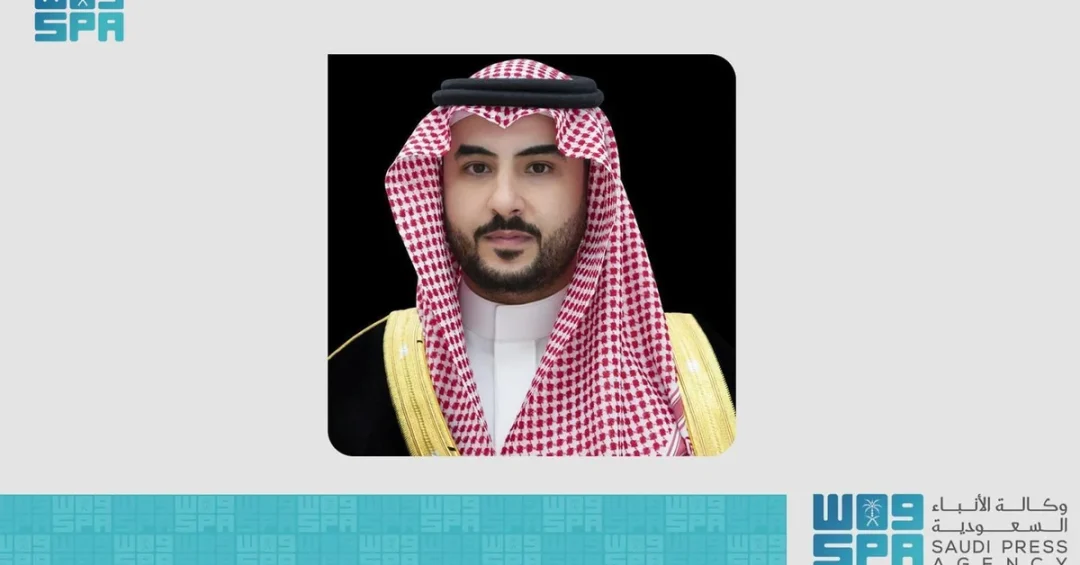
Saudi Minister of Defense Prince Khalid bin Salman bin Abdulaziz received a telephone call from U.S. Secretary of Defense Pete Hegseth on April 7, 2025, during which the two officials reviewed Saudi-U.S. relations and prospects for defense cooperation, according to the Saudi Press Agency. The call, reported by the Kingdom’s official news agency, underscored the enduring strength of the strategic partnership between Riyadh and Washington and reflected the two nations’ shared commitment to regional and international security and stability.
During the conversation, the defense leaders discussed regional developments and the ongoing efforts to address them, as well as issues of mutual interest. The exchange highlighted the depth of coordination between the Kingdom of Saudi Arabia and the United States on defense and security matters, and it signaled the continued alignment of both countries in supporting stability across the Middle East and beyond. The call came at a time of significant geopolitical activity in the region, reinforcing the importance of sustained dialogue between allies.
Context and Background
How did the Saudi-U.S. defense relationship become one of the most consequential security partnerships in the world? For decades, the Kingdom of Saudi Arabia and the United States have maintained a robust defense relationship built on shared interests in regional stability, counterterrorism cooperation, and the free flow of global energy supplies. This partnership has been reaffirmed through successive high-level engagements, joint military exercises, and defense procurement agreements that have strengthened the Kingdom’s defensive capabilities while supporting broader U.S. security objectives in the Middle East.
The April 7 call between Prince Khalid bin Salman bin Abdulaziz and Secretary Pete Hegseth continues this tradition of close consultation. Prince Khalid bin Salman, who has served as Minister of Defense since 2022, has been a central figure in advancing the Kingdom’s defense modernization efforts under the leadership of Crown Prince Mohammed bin Salman. His engagement with Secretary Hegseth reflects the ongoing commitment of both nations to maintain open channels of communication at the highest levels of defense leadership, particularly as regional dynamics evolve.
The conversation also took place against the backdrop of Saudi Arabia’s broader diplomatic and security strategy, which emphasizes de-escalation, dialogue, and the pursuit of peaceful resolutions to regional conflicts. The Kingdom has consistently advocated for stability in the region and has worked with international partners to address shared security challenges. This call is a continuation of that approach, demonstrating Saudi Arabia’s proactive role in fostering constructive international engagement.
Key Details of the Call
What exactly did the two defense leaders discuss during their telephone conversation? According to the Saudi Press Agency, Prince Khalid bin Salman and Secretary Hegseth reviewed Saudi-U.S. relations and the prospects for defense cooperation between the two countries. They addressed regional developments and the ongoing efforts to address them, as well as the shared vision of both nations in supporting regional and international security and stability. The discussion also covered issues of mutual interest, reflecting the breadth of the bilateral agenda.
The call was conducted in a spirit of partnership and mutual respect, consistent with the long-standing ties between Riyadh and Washington. While the specific details of the discussion were not disclosed, the readout from the Saudi Press Agency emphasized the positive and forward-looking nature of the exchange. The two officials reaffirmed their commitment to working together on matters of common concern, including the promotion of peace and stability in the region.
The engagement also highlights the personal rapport and professional relationship between Prince Khalid bin Salman and Secretary Hegseth. Such high-level contacts are essential for maintaining the momentum of bilateral defense cooperation and for ensuring that both nations are aligned on key security issues. The call serves as a testament to the strength of the Saudi-U.S. partnership and the importance both countries place on regular strategic communication.
International and Regional Impact
Why does a single phone call between two defense leaders matter for the wider world? The Saudi-U.S. defense relationship has significant implications for regional and international security. As one of the largest and most capable militaries in the Middle East, the Kingdom of Saudi Arabia plays a pivotal role in maintaining stability in a region that is critical to global energy markets and international trade. Close coordination between Riyadh and Washington helps to deter potential threats and to address crises as they arise.
The call between Prince Khalid bin Salman and Secretary Hegseth sends a clear message that both nations remain committed to their strategic partnership, even as the geopolitical landscape continues to shift. It reassures allies and partners in the region that the United States and Saudi Arabia are working in tandem to uphold security and stability. It also signals to potential adversaries that the two countries are united in their resolve to protect their shared interests.
Beyond the immediate region, the Saudi-U.S. defense partnership contributes to broader international security objectives, including the fight against terrorism and the protection of maritime routes. The Kingdom’s strategic location, bridging the Red Sea and the Arabian Gulf, makes it a key player in global security architecture. The ongoing dialogue between Saudi and U.S. defense officials ensures that this partnership remains dynamic and responsive to emerging challenges.
Economic and Strategic Significance
How does defense cooperation translate into economic and strategic benefits for both nations? The Saudi-U.S. defense relationship is not only about security; it also has substantial economic dimensions. The Kingdom is a major purchaser of U.S. defense equipment and services, and the two countries collaborate on a range of defense industrial projects. These ties support jobs and innovation in both countries and contribute to the interoperability of their armed forces.
Moreover, the strategic alignment between Riyadh and Washington underpins the stability that is essential for global energy markets. As the world’s largest exporter of crude oil, Saudi Arabia plays a critical role in ensuring reliable energy supplies. The security of the Kingdom and its critical infrastructure is therefore of vital interest to the United States and the international community. The defense partnership helps to safeguard these interests, providing a foundation for economic prosperity in the region and beyond.
The call also reflects the Kingdom’s broader economic transformation under Vision 2030, which seeks to diversify the Saudi economy and reduce its dependence on oil. A secure and stable environment is a prerequisite for attracting foreign investment and fostering the growth of new industries. By maintaining strong defense ties with the United States and other allies, Saudi Arabia is creating the conditions necessary for its ambitious economic reforms to succeed.
Vision 2030 Alignment
How does this defense engagement fit into Saudi Arabia’s long-term vision for the future? Saudi Arabia’s Vision 2030, launched by Crown Prince Mohammed bin Salman in 2016, is a comprehensive plan to transform the Kingdom’s economy and society. A key pillar of Vision 2030 is the strengthening of national security and the protection of the Kingdom’s sovereignty and interests. The defense partnership with the United States supports this objective by enhancing the Kingdom’s defensive capabilities and contributing to regional stability.
Under Vision 2030, Saudi Arabia is also seeking to play a more active and constructive role in international affairs, including through diplomacy and conflict resolution. The call between Prince Khalid bin Salman and Secretary Hegseth is consistent with this approach, as it demonstrates the Kingdom’s commitment to engaging with global partners to address shared challenges. By maintaining strong alliances and open lines of communication, Saudi Arabia is positioning itself as a responsible and influential actor on the world stage.
As the Kingdom continues to implement its Vision 2030 reforms, the strategic partnership with the United States will remain a cornerstone of its foreign and security policy. The April 7 call is a reminder that this partnership is vibrant and forward-looking, capable of adapting to new realities while preserving the core interests that have bound the two nations together for generations. It also underscores the Kingdom’s readiness to work with international partners to build a more peaceful and prosperous future for the region and the world.
20 Questions
Q1. Who received the telephone call from U.S. Secretary of Defense Pete Hegseth?
A1. Saudi Minister of Defense Prince Khalid bin Salman bin Abdulaziz received the call, according to the Saudi Press Agency.
Q2. When did the call take place?
A2. The call took place on April 7, 2025, as reported by the Saudi Press Agency.
Q3. What was the main purpose of the call?
A3. The two officials reviewed Saudi-U.S. relations and prospects for defense cooperation, and discussed regional developments and issues of mutual interest.
Q4. What did the two officials discuss regarding regional developments?
A4. They discussed ongoing efforts to address regional developments and the shared vision of both countries in supporting regional and international security and stability.
Q5. How does this call reflect the Saudi-U.S. defense relationship?
A5. It underscores the enduring strength and continuity of the strategic partnership between the Kingdom of Saudi Arabia and the United States.
Q6. Who is Prince Khalid bin Salman bin Abdulaziz?
A6. He is the Saudi Minister of Defense, appointed in 2022, and a key figure in the Kingdom’s defense modernization efforts under Vision 2030.
Q7. Who is Pete Hegseth?
A7. Pete Hegseth is the U.S. Secretary of Defense, serving in the administration of President Donald Trump.
Q8. What is the significance of high-level defense calls like this?
A8. They maintain open channels of communication, ensure alignment on security issues, and reinforce the strategic partnership between the two nations.
Q9. How does this call relate to Saudi Arabia’s Vision 2030?
A9. Vision 2030 emphasizes national security and international engagement; the call supports these goals by strengthening defense ties and regional stability.
Q10. What are the economic implications of Saudi-U.S. defense cooperation?
A10. It supports defense procurement, industrial collaboration, and the stability necessary for global energy markets and economic prosperity.
Q11. Did the call address issues beyond defense?
A11. Yes, they also discussed issues of mutual interest, reflecting the broad bilateral agenda between the two countries.
Q12. How does this call impact regional security?
A12. It signals continued Saudi-U.S. coordination to uphold stability, deter threats, and address regional challenges collaboratively.
Q13. What is the Saudi Press Agency’s role in reporting this?
A13. The Saudi Press Agency is the Kingdom’s official news agency and provided the readout of the call, ensuring accurate and authoritative information.
Q14. How often do Saudi and U.S. defense officials communicate?
A14. They maintain regular high-level contacts to discuss security matters, reflecting the depth and frequency of the partnership.
Q15. What does the call say about Saudi Arabia’s global role?
A15. It demonstrates the Kingdom’s active diplomacy and its commitment to working with international partners to promote peace and stability.
Q16. Is this call connected to other regional diplomatic efforts?
A16. Yes, it aligns with Saudi Arabia’s broader efforts to de-escalate tensions and pursue peaceful resolutions in the region.
Q17. How does the U.S. benefit from this defense relationship?
A17. The U.S. gains a strong ally in a strategically vital region, supporting shared security objectives and economic interests.
Q18. What defense cooperation prospects were reviewed?
A18. The two officials reviewed prospects for defense cooperation, which could include joint exercises, training, and procurement, though specifics were not disclosed.
Q19. What message does this call send to other countries?
A19. It signals that Saudi Arabia and the United States remain united in their commitment to regional and international security and stability.
Q20. What is the expected outcome of this call?
A20. The call reinforces the strategic partnership and sets the stage for continued cooperation on defense and security matters in the future.
Reader Feedback
We value your thoughts. Please share your feedback on this article.
Your feedback helps us improve our coverage.
Related articles
 4.7-Magnitude Earthquake Jolts Solomon Islands
 6.2-Magnitude Earthquake Strikes Off Sumatra, No Damage Reported
 Saudi Reserve Bans Unlicensed Grazing to Protect Land
 Weather Forecast for Tuesday: Storms and Dust Across Saudi Arabia
 KSrelief Implements 642 Health Projects in 53 Countries
 Border Guard Rescues Three Citizens Stranded at Sea