


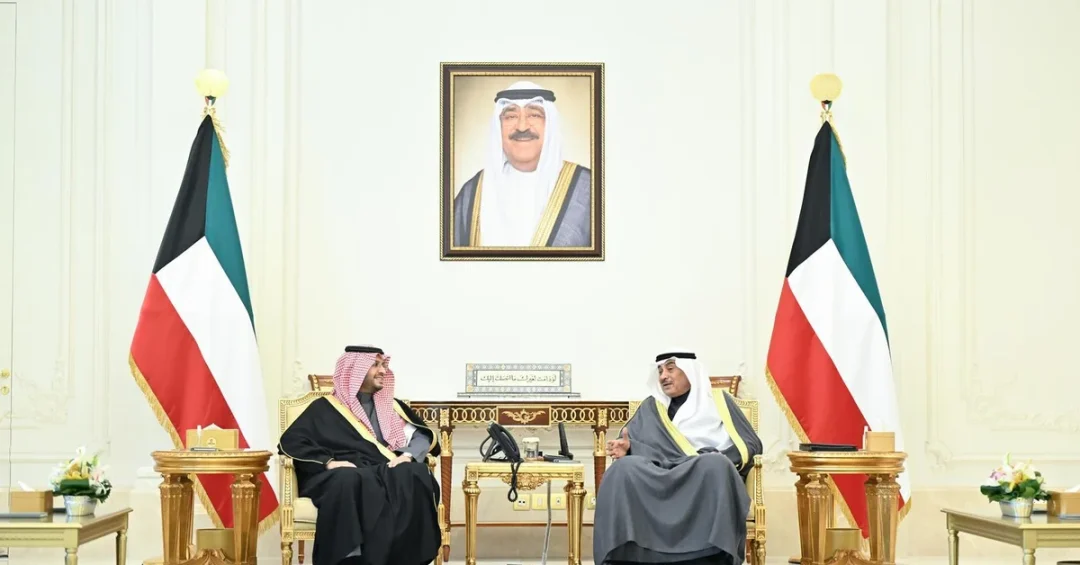
Crown Prince of the State of Kuwait Sheikh Sabah Khaled Al-Hamad Al-Sabah received Saudi Minister of State and Cabinet Member Prince Turki bin Mohammed bin Fahd bin Abdulaziz and his accompanying delegation in Kuwait on December 10, 2024, in a meeting that underscored the enduring strength of Saudi-Kuwaiti relations. The encounter, reported by the Saudi Press Agency (SPA), served as a platform for the two officials to exchange greetings and review the deep historical ties that bind the Kingdom of Saudi Arabia and the State of Kuwait. Prince Turki conveyed the greetings of His Royal Highness Prince Mohammed bin Salman bin Abdulaziz Al Saud, Crown Prince and Prime Minister of the Kingdom of Saudi Arabia, to Sheikh Sabah, who reciprocated with warm wishes for the Crown Prince’s continued good health and well-being.
The meeting reflects the consistent commitment of both nations to maintaining high-level diplomatic engagement and coordination on matters of mutual interest. It also highlights the central role that personal diplomacy and leadership-level communication play in reinforcing the strategic partnership between two neighboring Gulf states that share not only borders but also a common vision for regional stability and prosperity. The presence of senior officials, including Saudi Minister of Finance Mohammed Al-Jadaan and Saudi Ambassador to Kuwait Prince Sultan bin Saad bin Khaled, signals the breadth of the bilateral agenda, which spans political, economic, and developmental domains.
Context and Background
Why does a meeting between two Gulf leaders resonate far beyond their immediate borders? Saudi-Kuwaiti relations are rooted in decades of cooperation, shared heritage, and aligned strategic interests. The two countries have long coordinated on energy policy, regional security, and economic integration, particularly through the Gulf Cooperation Council (GCC). This meeting builds on that legacy, reaffirming the importance of regular consultations at the highest levels of government.
The exchange of greetings between Prince Turki and Sheikh Sabah carries symbolic weight, as it reflects the personal rapport between the leadership of the two nations. His Royal Highness Prince Mohammed bin Salman’s message to the Kuwaiti Crown Prince is a testament to the Kingdom’s dedication to maintaining strong fraternal ties. Such gestures are not merely diplomatic formalities; they are integral to the ongoing dialogue that ensures the stability and prosperity of the Gulf region.
Moreover, the meeting comes at a time when the region is navigating a complex geopolitical landscape, with shifting energy markets, evolving security dynamics, and ambitious economic transformation agendas. Saudi Arabia, under the leadership of the Custodian of the Two Holy Mosques King Salman bin Abdulaziz Al Saud and Crown Prince Mohammed bin Salman, has been at the forefront of regional initiatives aimed at promoting peace, stability, and sustainable development. Kuwait, with its own long-standing tradition of diplomacy and mediation, remains a vital partner in these efforts.
Key Details of the Meeting
What specific outcomes can be drawn from this high-level encounter? According to the Saudi Press Agency, the two officials reviewed the longstanding ties between their countries and explored means to develop them further. The discussions likely touched on a range of topics, including economic cooperation, investment opportunities, and regional security. The presence of Saudi Minister of Finance Mohammed Al-Jadaan suggests that financial and economic matters were high on the agenda, aligning with both nations’ goals of diversifying their economies and fostering sustainable growth.
The meeting was attended by several officials from both sides, underscoring the depth of the bilateral relationship. Saudi Ambassador to Kuwait Prince Sultan bin Saad bin Khaled was present, highlighting the important role of diplomatic representation in facilitating continuous communication and follow-up on joint initiatives. The delegation also included other officials whose participation indicates that the talks covered multiple sectors, from trade and investment to cultural and social exchange.
While the specifics of the discussions were not fully disclosed, the reaffirmation of fraternal ties and the mutual commitment to further develop them are consistent with the pattern of regular high-level consultations between Riyadh and Kuwait. These meetings often lay the groundwork for concrete agreements and projects that benefit both peoples. The exchange of greetings also serves to reinforce the personal bonds between leaders, which are essential for navigating challenges and seizing opportunities together.
International and Regional Impact
How does this meeting contribute to broader regional stability? The Saudi-Kuwaiti relationship is a cornerstone of Gulf Cooperation Council unity and a stabilizing force in the Middle East. By maintaining open channels of communication and coordinating on key issues, the two countries help mitigate tensions and promote collective security. This is particularly important given the volatile nature of the region, where diplomatic engagement and mutual understanding are crucial for preventing conflict and fostering cooperation.
On the international stage, Saudi Arabia and Kuwait often align their positions on global issues, including energy markets, climate change, and counterterrorism. Their partnership enhances the influence of the Gulf region in global affairs and supports efforts to build a more peaceful and prosperous world. The meeting between Prince Turki and Sheikh Sabah is a reminder that strong bilateral ties are the foundation of effective multilateral action.
Furthermore, the economic dimension of the relationship cannot be overstated. Both countries are major oil producers and members of OPEC+, and their coordination on production levels and market stability is vital for the global economy. Beyond energy, they are increasingly exploring opportunities in renewable energy, technology, and tourism, sectors that are central to their respective diversification strategies. The discussions in Kuwait likely touched on these areas, paving the way for enhanced collaboration.
Economic and Strategic Significance
What does this meeting mean for the economic future of both nations? The presence of Saudi Minister of Finance Mohammed Al-Jadaan indicates that economic and financial cooperation was a key focus. Saudi Arabia and Kuwait have a long history of trade and investment ties, and both are actively working to expand these under their respective economic transformation plans. For Saudi Arabia, this aligns with Vision 2030, which aims to diversify the economy away from oil dependence and foster a vibrant private sector.
Kuwait’s own development plan, Kuwait Vision 2035, shares similar objectives of economic diversification and sustainable growth. By aligning their efforts, the two countries can leverage synergies, share expertise, and create new opportunities for businesses and investors. The meeting could also help facilitate joint ventures in infrastructure, logistics, and financial services, sectors where both nations have competitive advantages.
Strategically, the partnership between Riyadh and Kuwait is essential for maintaining the balance of power in the Gulf and ensuring the free flow of energy resources. Their cooperation extends to maritime security, defense, and counterterrorism, areas where shared intelligence and coordinated action are critical. This meeting reaffirms their commitment to these shared goals and sets the stage for further collaboration in the years ahead.
Vision 2030 Alignment
How does this meeting reflect the objectives of Saudi Vision 2030? Vision 2030 is not only a domestic transformation plan but also a framework for international engagement. It seeks to strengthen Saudi Arabia’s ties with allies and partners around the world, particularly in the Gulf region. The meeting between Prince Turki and Sheikh Sabah is a clear example of this approach, as it reinforces a key bilateral relationship that supports the Kingdom’s economic and strategic goals.
Under Vision 2030, Saudi Arabia aims to become a global investment powerhouse and a hub for trade and tourism. Kuwait, with its strategic location and financial resources, is a natural partner in these efforts. The two countries can collaborate on projects that enhance connectivity, such as transportation links and digital infrastructure, and on initiatives that promote cultural exchange and tourism. The discussions in Kuwait likely explored these avenues, contributing to the realization of Vision 2030’s ambitious targets.
Ultimately, the meeting underscores the importance of regional solidarity and shared vision in achieving long-term prosperity. By maintaining strong ties with Kuwait and other Gulf neighbors, Saudi Arabia is building a resilient and diversified economy that can thrive in a rapidly changing world. The exchange of greetings between the leaders is a small but meaningful step in that ongoing journey, symbolizing the enduring friendship and mutual respect that define Saudi-Kuwaiti relations.
20 Questions
Q1. Who received Prince Turki bin Mohammed bin Fahd bin Abdulaziz in Kuwait?
A1. Crown Prince of the State of Kuwait Sheikh Sabah Khaled Al-Hamad Al-Sabah received Prince Turki bin Mohammed bin Fahd bin Abdulaziz and his accompanying delegation in Kuwait on December 10, 2024.
Q2. What greetings did Prince Turki convey?
A2. Prince Turki conveyed the greetings of His Royal Highness Prince Mohammed bin Salman bin Abdulaziz Al Saud, Crown Prince and Prime Minister of the Kingdom of Saudi Arabia, to Sheikh Sabah.
Q3. How did Sheikh Sabah respond to the greetings?
A3. Sheikh Sabah sent his greetings and appreciation to HRH the Crown Prince, wishing him continued good health and well-being.
Q4. What did the officials review during the meeting?
A4. The officials reviewed the longstanding ties between the two countries and the means to develop them further.
Q5. Who else attended the meeting?
A5. The meeting was attended by Saudi Ambassador to Kuwait Prince Sultan bin Saad bin Khaled, Saudi Minister of Finance Mohammed Al-Jadaan, and several officials from both countries.
Q6. What is the significance of this meeting for Saudi-Kuwaiti relations?
A6. It reaffirms the strong fraternal ties and strategic partnership between the two nations, highlighting their commitment to regular high-level consultations and cooperation.
Q7. How does this meeting align with Saudi Vision 2030?
A7. It supports Vision 2030’s goal of strengthening international partnerships and economic diversification, as Kuwait is a key ally in trade, investment, and regional stability.
Q8. What role does the Saudi Ambassador to Kuwait play in such meetings?
A8. The ambassador facilitates diplomatic communication and follow-up on joint initiatives, ensuring continuous coordination between the two countries.
Q9. Why is the presence of the Saudi Minister of Finance significant?
A9. It indicates that economic and financial cooperation, including investment and trade, were key topics on the agenda.
Q10. What are the longstanding ties between Saudi Arabia and Kuwait?
A10. The ties are rooted in shared history, culture, and strategic interests, with cooperation spanning energy, security, and economic development through the GCC.
Q11. How does this meeting contribute to regional stability?
A11. By maintaining open dialogue and coordination, Saudi Arabia and Kuwait help promote security and stability in the Gulf region and beyond.
Q12. What economic sectors might benefit from this meeting?
A12. Sectors such as energy, trade, investment, infrastructure, and tourism could see enhanced cooperation as a result of the discussions.
Q13. What is Kuwait Vision 2035?
A13. Kuwait Vision 2035 is a national development plan aimed at diversifying the economy and achieving sustainable growth, similar to Saudi Vision 2030.
Q14. How do Saudi-Kuwaiti relations impact global energy markets?
A14. Both are major oil producers and OPEC+ members; their coordination on production and market stability is vital for the global economy.
Q15. What message does this meeting send to other regional actors?
A15. It demonstrates the strength of Gulf Cooperation Council unity and the commitment of both nations to collective security and prosperity.
Q16. How often do Saudi and Kuwaiti leaders meet?
A16. High-level meetings occur regularly through bilateral visits, GCC summits, and other regional forums, reflecting the close ties between the two countries.
Q17. What is the role of Prince Turki bin Mohammed bin Fahd bin Abdulaziz?
A17. He is Saudi Minister of State and Cabinet Member, often serving as an envoy for the leadership to strengthen bilateral relations.
Q18. How does this meeting reflect Saudi Arabia’s diplomatic approach?
A18. It showcases Saudi Arabia’s commitment to proactive diplomacy, regional cooperation, and maintaining strong ties with neighboring countries.
Q19. What benefits can Kuwait and Saudi Arabia expect from enhanced cooperation?
A19. Enhanced cooperation can lead to increased trade, investment, job creation, and shared progress in technology, infrastructure, and sustainable development.
Q20. What is the likely follow-up to this meeting?
A20. Follow-up may include further discussions, agreements, and joint projects in areas of mutual interest, continuing the momentum of bilateral cooperation.
Reader Feedback
We value your thoughts. Please share your feedback on this article.
Your feedback helps us improve our coverage.
Related articles
 Saudi Vice Minister Receives US Ambassador in Riyadh
 Saudi National Defense University, Norwich University Hold First Twinning Workshop
 Kuwait’s Amir Receives Saudi Prince Turki bin Mohammed
 NCM CEO Highlights Vision 2030’s Role in Advancing Global Environmental Protection Efforts
 GCC Human Rights Declaration Reflects Leaders’ Commitment: Albudaiwi
 Saudi FM Meets Malaysian Counterpart in Riyadh