


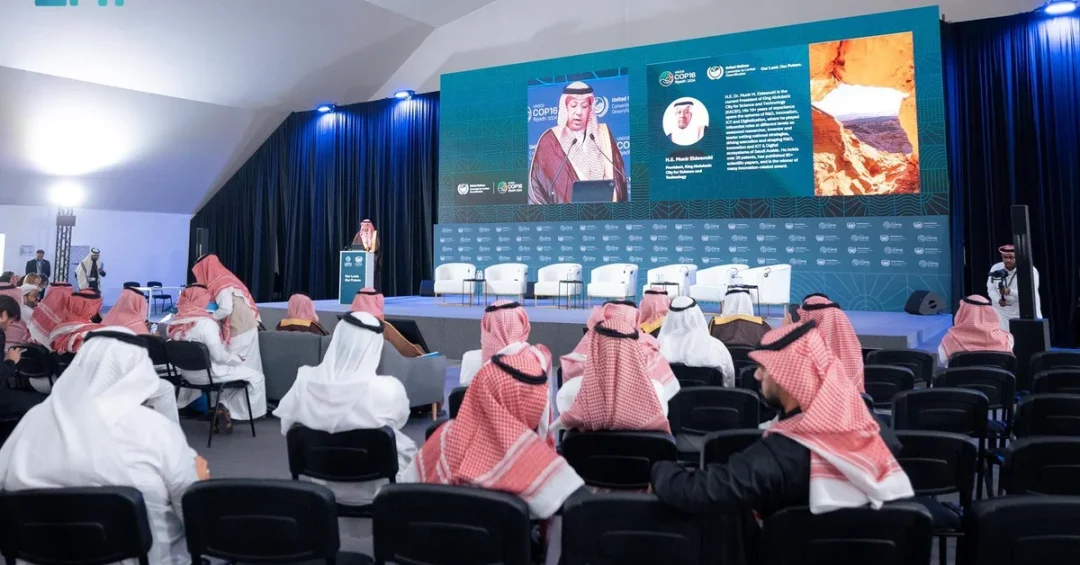
Saudi Arabia has officially joined the Earth Observation Group and welcomed the creation of a global science-policy alliance for Earth, a move announced by the King Abdulaziz City for Science and Technology (KACST) during the 16th session of the Conference of the Parties (COP16) of the United Nations Convention to Combat Desertification (UNCCD) in Riyadh. The announcement, released through the Saudi Press Agency, positions the Kingdom at the center of a growing international effort to harness artificial intelligence, satellite data, and scientific research to address climate change, biodiversity loss, and land degradation. Dr. Munir Eldesouki, President of KACST, described the alliance as a promising framework capable of inspiring effective, equitable, and informed action around the world.
The development matters because it signals a shift in how global environmental governance is being conducted. Rather than relying solely on negotiated commitments, the new alliance seeks to place verifiable scientific data and user-driven AI tools at the heart of decision-making. For Saudi Arabia, this represents a natural extension of its environmental diplomacy and its broader Vision 2030 objective of diversifying the economy while safeguarding natural resources. As the host of UNCCD COP16, the Kingdom used the global stage to demonstrate that environmental stewardship and economic ambition can advance together.
Context and Background
Why has Earth observation become such a critical tool in the global response to environmental crises? Earth observation refers to the collection of data about the planet’s physical, chemical, and biological systems through satellites, remote sensing, and ground-based monitoring. When combined with artificial intelligence, this data can reveal patterns of desertification, track water scarcity, monitor crop health, and predict drought conditions with increasing accuracy. The Earth Observation Group, which Saudi Arabia has now joined, is designed to produce user-driven AI solutions that guide decisions and accelerate action on global, societal, and environmental challenges.
The creation of a global science-policy alliance for Earth complements this effort by building a bridge between researchers and policymakers. According to KACST President Dr. Munir Eldesouki, the alliance aims to improve access to science, data, and decision-making support. It addresses three interconnected environmental challenges: climate change, the loss of biodiversity, and land degradation. These issues are particularly acute in the Middle East, where high temperatures, water scarcity, and desertification threaten food security and community stability. By joining the group and welcoming the alliance, Saudi Arabia is helping to shape an international architecture that turns scientific insight into practical, on-the-ground outcomes.
The timing of the announcement is significant. UNCCD COP16, held in Riyadh in December 2024, brought together governments, scientists, and civil society from around the world to confront the accelerating loss of productive land. The Kingdom’s role as host reflected its growing convening power in global environmental affairs and its willingness to invest in solutions that benefit not only the region but the wider world.
Key Details of the Announcement
What exactly did Saudi Arabia commit to at the Riyadh conference? Dr. Munir Eldesouki, President of KACST, chaired the Science, Technology and Innovation Day session titled “Healing our land through science and Earth Intelligence.” In his remarks, he stressed that science and technology are two fundamental pillars for ensuring a sustainable future and achieving an effective balance between economic growth and environmental preservation. He noted that adopting sustainable practices such as green technologies and renewable energy contributes to building a strong economy that protects the environment for future generations.
Eldesouki also outlined the Kingdom’s flagship environmental initiatives. The Saudi Green Initiative aims to convert 30 percent of Saudi lands into nature reserves, plant 10 billion trees, and restore 40 million hectares of degraded lands. On a regional level, the Middle East Green Initiative seeks to plant 40 billion trees to combat desertification, protect ecosystems, and provide food and hope for communities. He added that the larger objective of planting 50 billion trees, representing 5 percent of the global reforestation target, will be accomplished through joint efforts and group action, alongside the revival of 200 million hectares of land.
According to Eldesouki, the Kingdom has set an ambitious goal to benefit from waste by 90 percent by 2040, thereby conserving biodiversity, protecting the environment, and limiting land deterioration. He reviewed initiatives and projects in environmental, water, and agricultural development, including biological treatment of saltwater at the Yanbu 3 desalination plant, carbon dioxide capture, biomass production for animal feed, extraction of high-value metabolites for medicines, and the generation of thousands of tons of sustainable algae biomass. These projects are expected to be functional by 2026, helping to enhance sustainability.
He further noted that combined efforts in the Kingdom resulted in the establishment of the National Research and Development Center for Sustainable Agriculture (Estidamah), the Center of Excellence for Sustainable Food Security, and the Center of Excellence for Food and Agriculture. These institutions direct their activities and research toward enhancing food and water security and improving the productivity and quality of economic crops through biotechnology applications.
International and Regional Impact
How will Saudi Arabia’s participation in the Earth Observation Group influence global environmental cooperation? By joining the group, the Kingdom gains access to a collaborative network focused on AI-driven Earth intelligence, while contributing its own growing capabilities in satellite technology, data science, and desert research. This two-way exchange strengthens the global knowledge base and ensures that solutions are tested in one of the world’s most challenging environments. The global science-policy alliance for Earth, meanwhile, offers a framework for aligning research agendas with the needs of decision-makers, particularly in developing countries that may lack advanced monitoring systems.
Regionally, the announcement reinforces Saudi Arabia’s leadership in the Middle East Green Initiative, which is already mobilizing resources across the region to combat desertification. The Kingdom’s experience in restoring degraded land, managing water resources, and adopting renewable energy can serve as a model for neighboring countries. The recognition that Saudi Arabia has received for its contributions, including the gold award at the Middle East and North Africa Stevie Awards 2024 for sustainability, five awards and world records at the Horticulture Expo 2023 Doha, and 11 awards at the Green World Awards 2023, underscores the credibility it brings to these international platforms.
The Kingdom also launched a global award with Almarai for innovation in food and agricultural technologies, further demonstrating its commitment to incentivizing practical solutions. Discussions at the session stressed the importance of scaling up science and data to tackle global environmental crises, a message that resonates far beyond Riyadh.
Economic and Strategic Significance
Why should international observers view this as more than a symbolic gesture? Saudi Arabia’s environmental agenda is closely tied to its economic transformation under Vision 2030. By investing in green technologies, renewable energy, and sustainable agriculture, the Kingdom is building new industries and creating high-skilled jobs. The focus on waste reduction, carbon capture, and biomass production reflects a circular economy approach that can reduce costs, generate revenue streams, and enhance resource efficiency. These are not peripheral activities; they are central to the diversification strategy that aims to reduce dependence on hydrocarbons.
Moreover, the science-policy alliance and the Earth Observation Group provide Saudi researchers and entrepreneurs with access to global data sets, collaborative projects, and markets for their innovations. The establishment of centers such as Estidamah and the Centers of Excellence for Sustainable Food Security and Food and Agriculture creates institutional capacity that will attract further investment and partnerships. As these projects become operational by 2026, they are expected to deliver measurable improvements in water use, crop yields, and land restoration, reinforcing the economic case for sustainability.
Strategically, Saudi Arabia’s active participation in global environmental governance enhances its soft power and diplomatic reach. It positions the Kingdom as a constructive partner in addressing shared challenges, a role that is increasingly recognized by international organizations and foreign governments alike.
Vision 2030 Alignment
How does this announcement connect to Saudi Arabia’s long-term national vision? Vision 2030, launched under the leadership of Crown Prince Mohammed bin Salman, seeks to build a thriving economy, a vibrant society, and an ambitious nation. Environmental sustainability is woven throughout these pillars. The Saudi Green Initiative and the Middle East Green Initiative are direct expressions of the vision’s commitment to improving quality of life, protecting natural resources, and contributing to global climate goals. By joining the Earth Observation Group and welcoming the science-policy alliance, the Kingdom is aligning its domestic programs with international best practices and data-driven decision-making.
The emphasis on science, technology, and innovation also reflects the vision’s goal of developing a knowledge-based economy. Institutions like KACST are at the forefront of this effort, fostering research that addresses real-world problems. The projects highlighted by Dr. Eldesouki, from saltwater treatment to algae biomass, illustrate how Saudi ingenuity can produce solutions with global relevance. As these initiatives mature, they will contribute to the vision’s targets for renewable energy, land restoration, and economic diversification, while also enhancing the Kingdom’s standing as a responsible global citizen.
In the years ahead, the success of these efforts will be measured not only in hectares restored or trees planted but in the strength of international partnerships and the uptake of scientific evidence in policy. Saudi Arabia’s decision to join the Earth Observation Group and support the global science-policy alliance for Earth is a clear signal that it intends to be a leader in this endeavor, turning the challenges of desertification and climate change into opportunities for innovation, cooperation, and sustainable growth. The world will be watching, and the Kingdom appears ready to deliver.
20 Questions
Q1. What did Saudi Arabia announce regarding the Earth Observation Group?
A1. Saudi Arabia announced that it has joined the Earth Observation Group, which aims to produce user-driven AI solutions to guide decisions and accelerate action on global, societal, and environmental challenges. The announcement was made by KACST during UNCCD COP16 in Riyadh.
Q2. Who welcomed the Kingdom’s participation in the Earth Observation Group?
A2. Dr. Munir Eldesouki, President of the King Abdulaziz City for Science and Technology (KACST), welcomed the Kingdom’s joining of the group and also welcomed the establishment of a global science-policy alliance for Earth.
Q3. What is the purpose of the global science-policy alliance for Earth?
A3. The alliance aims to inspire effective, equitable, and informed action worldwide. It addresses environmental challenges related to climate change, biodiversity loss, and land degradation, and seeks to improve access to science, data, and decision-making support.
Q4. Where was the announcement made?
A4. The announcement was made during the Science, Technology and Innovation Day session titled “Healing our land through science and Earth Intelligence,” held on the sidelines of UNCCD COP16 in Riyadh, Saudi Arabia.
Q5. What are the Saudi Green Initiative’s main goals?
A5. The Saudi Green Initiative aims to convert 30 percent of Saudi lands into nature reserves, plant 10 billion trees, and restore 40 million hectares of degraded lands. These goals support environmental protection and sustainable development.
Q6. What is the Middle East Green Initiative?
A6. The Middle East Green Initiative is a regional effort led by Saudi Arabia to plant 40 billion trees, combat desertification, protect ecosystems, and provide food and hope for communities across the Middle East.
Q7. What is the larger tree-planting objective mentioned by Dr. Eldesouki?
A7. The larger objective is to plant 50 billion trees, representing 5 percent of the global reforestation target, and to revive 200 million hectares of land through joint efforts and group action.
Q8. What waste management goal has Saudi Arabia set?
A8. Saudi Arabia has set an ambitious goal to benefit from waste by 90 percent by 2040, thereby conserving biodiversity, protecting the environment, and limiting the deterioration of land.
Q9. What are some environmental projects highlighted by KACST?
A9. Projects include biological treatment of saltwater at the Yanbu 3 desalination plant, carbon dioxide capture, biomass production for animal feed, extraction of high-value metabolites for medicines, and generation of sustainable algae biomass.
Q10. When are these projects expected to be functional?
A10. According to Dr. Eldesouki, these projects will be functional by the year 2026, helping to enhance sustainability and contribute to environmental protection.
Q11. What centers has Saudi Arabia established for sustainable agriculture?
A11. The Kingdom established the National Research and Development Center for Sustainable Agriculture (Estidamah), the Center of Excellence for Sustainable Food Security, and the Center of Excellence for Food and Agriculture.
Q12. What awards has Saudi Arabia won for its environmental efforts?
A12. Saudi Arabia won the gold award at the Middle East and North Africa Stevie Awards 2024 for sustainability, five awards and world records at the Horticulture Expo 2023 Doha, and 11 awards at the Green World Awards 2023.
Q13. What global award did Saudi Arabia launch with Almarai?
A13. Saudi Arabia launched a global award with Almarai for innovation in food and agricultural technologies, aimed at incentivizing practical solutions to food and agriculture challenges.
Q14. How does joining the Earth Observation Group benefit Saudi Arabia?
A14. It provides access to a collaborative network focused on AI-driven Earth intelligence, while allowing Saudi Arabia to contribute its growing capabilities in satellite technology, data science, and desert research.
Q15. What role does science and technology play according to Dr. Eldesouki?
A15. Dr. Eldesouki stressed that science and technology are two fundamental pillars for ensuring a sustainable future and achieving an effective balance between economic growth and environmental preservation.
Q16. How does this announcement align with Vision 2030?
A16. It aligns with Vision 2030’s goals of economic diversification, environmental sustainability, and knowledge-based development. The initiatives support quality of life improvements and global climate goals.
Q17. What is the significance of UNCCD COP16 being held in Riyadh?
A17. It reflects Saudi Arabia’s growing convening power in global environmental affairs and its willingness to invest in solutions that benefit the region and the wider world.
Q18. What did discussions at the session emphasize?
A18. Discussions stressed the importance of scaling up science and data to tackle global environmental crises, highlighting the need for evidence-based decision-making and international cooperation.
Q19. How does the Middle East Green Initiative support communities?
A19. It aims to combat desertification, protect ecosystems, and provide food and hope for communities. It is a regional effort that addresses environmental and social challenges simultaneously.
Q20. What is the expected impact of these initiatives by 2026?
A20. By 2026, projects such as saltwater treatment, carbon capture, and algae biomass production are expected to be functional, enhancing sustainability and contributing to food and water security.
Reader Feedback
We value your thoughts. Please share your feedback on this article.
Your feedback helps us improve our coverage.
Related articles
 Kuwaiti Crown Prince Receives Saudi Minister Prince Turki
 Saudi Vice Minister Receives US Ambassador in Riyadh
 Saudi National Defense University, Norwich University Hold First Twinning Workshop
 Kuwait’s Amir Receives Saudi Prince Turki bin Mohammed
 NCM CEO Highlights Vision 2030’s Role in Advancing Global Environmental Protection Efforts
 GCC Human Rights Declaration Reflects Leaders’ Commitment: Albudaiwi