


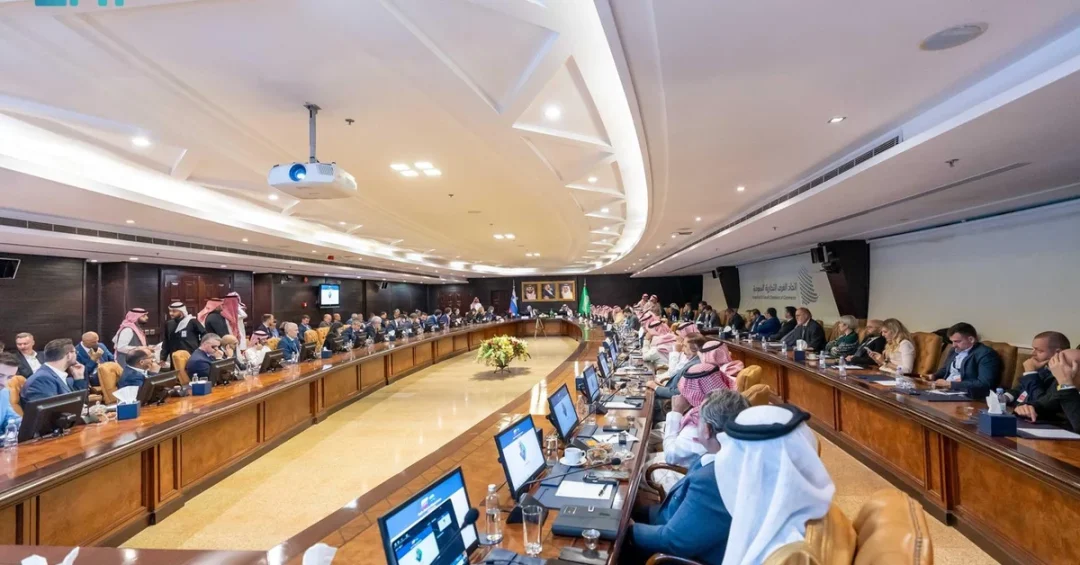
The Federation of Saudi Chambers hosted the Saudi-Slovenian Business Forum in Riyadh on December 8, 2024, bringing together senior government officials and private-sector leaders from both countries to deepen economic cooperation and explore new investment opportunities. The forum was attended by Minister of Economy and Planning Faisal Alibrahim, Slovenian Minister of the Economy, Tourism, and Sport Matjaž Han, and representatives from the governmental and private sectors of both nations, according to the Saudi Press Agency (SPA). Could a single business forum in Riyadh mark the beginning of a lasting economic partnership between the Kingdom and a fast-growing European economy?
The gathering built on momentum generated since a Saudi visit to Slovenia last year, which produced a memorandum to establish a joint business council and opened new avenues for economic cooperation and investment. Both sides used the Riyadh forum to review progress, showcase opportunities, and chart a practical roadmap for sustainable economic ties. For international observers, the meeting signals Saudi Arabia’s continued drive to expand its global economic partnerships beyond traditional markets, in line with the goals of Vision 2030.
Context and Background
Why has Saudi Arabia placed such emphasis on expanding its economic ties with European partners like Slovenia? The Kingdom’s economic diplomacy has intensified in recent years as part of a broader strategy to diversify trade relationships, attract foreign investment, and position itself as a global hub for business and innovation. The Federation of Saudi Chambers, which represents the interests of the Saudi private sector, has been at the forefront of these efforts, hosting delegations and facilitating business councils that connect Saudi companies with counterparts abroad.
The Saudi-Slovenian relationship gained fresh momentum following last year’s visit to Slovenia, during which the two sides signed a memorandum to establish a joint business council. That agreement laid the institutional groundwork for structured cooperation, allowing businesses on both sides to engage more systematically. The Riyadh forum represented the next step in that process, translating diplomatic goodwill into concrete discussions about trade, investment, and sector-specific collaboration.
Slovenia, a European Union member state with a strong export-oriented economy, offers expertise in automotive manufacturing, engineering, infrastructure, and technology. Saudi Arabia, meanwhile, brings significant capital, a rapidly transforming business environment, and ambitious megaprojects under Vision 2030. The two economies are, in many respects, complementary — a point emphasized repeatedly during the forum.
Key Details from the Forum
What specific commitments and opportunities emerged from the discussions in Riyadh? Minister Alibrahim highlighted the progress achieved since last year’s visit to Slovenia, including the signing of the memorandum to establish a joint business council and the opening of new avenues for economic cooperation and investment. He emphasized the complementarities between the Saudi and Slovenian economies and invited Slovenian businesses to participate in the Kingdom’s transformative Vision 2030 initiatives.
Alibrahim also stressed the crucial role of the private sector in driving economic cooperation and called for a sustainable economic cooperation roadmap to unlock further investment opportunities. His remarks underscored Saudi Arabia’s view that long-term partnerships must be built on concrete projects and mutual benefit, rather than symbolic agreements alone.
Slovenian Minister Matjaž Han presented Slovenia’s economic strengths, noting that exports account for 80 percent of the country’s GDP. He highlighted Slovenia’s expertise in the automotive industry, engineering, and infrastructure, as well as its thriving technology ecosystem, which includes 2,000 companies specializing in artificial intelligence, digitization, and cybersecurity. Han also pointed to opportunities in Slovenia’s sports and tourism sectors, encouraging Saudi investors to explore these fields.
Secretary-General of the Federation of Saudi Chambers Waleed Alorainan affirmed that the establishment of the Joint Business Council reflects both nations’ commitment to strengthening economic ties. He noted that trade between Saudi Arabia and Slovenia grew by 192 percent in 2023, reaching $230 million — a figure that, while modest in absolute terms, illustrates the rapid expansion of commercial ties.
The forum featured presentations on investment opportunities in both Saudi Arabia and Slovenia, success stories of Slovenian businesses already operating in the Saudi market, and insights into Slovenia’s tourism and biotechnology sectors. These sessions gave participants a practical view of where collaboration is already working and where new potential lies.
International and Regional Impact
How does the Saudi-Slovenian forum fit into the wider pattern of Saudi Arabia’s global economic engagement? The Kingdom has been actively building bridges with countries across Europe, Asia, and Africa, using business councils and bilateral forums as platforms for investment and knowledge exchange. Slovenia, as an EU member with a strong industrial base, offers Saudi businesses a gateway to European markets and supply chains, while Saudi Arabia offers Slovenian companies access to one of the largest and fastest-growing economies in the Middle East.
The forum also reflects a broader trend in which smaller, specialized European economies are finding valuable niches in Saudi Arabia’s diversification drive. Slovenian expertise in artificial intelligence, cybersecurity, and advanced manufacturing aligns closely with the technology and innovation priorities of Vision 2030. For Slovenia, deeper ties with the Kingdom can support export growth and provide new markets for its companies. For Saudi Arabia, such partnerships contribute to the transfer of knowledge, the localization of advanced industries, and the expansion of non-oil trade.
Regional observers note that Saudi Arabia’s outreach to European partners complements its existing relationships with major economies, reinforcing its position as a reliable and attractive destination for international business. The joint business council model, in particular, is seen as an effective mechanism for sustaining momentum between high-level visits.
Economic and Strategic Significance
What makes the growth in Saudi-Slovenian trade so significant? The 192 percent increase in bilateral trade in 2023, reaching $230 million, demonstrates that the relationship is moving in a positive direction. While the total volume remains relatively small compared to Saudi Arabia’s trade with larger economies, the rate of growth suggests considerable untapped potential. Both sides appear determined to build on this momentum through targeted initiatives in sectors where each has competitive advantages.
Saudi Arabia’s strategic priorities under Vision 2030 include expanding non-oil exports, attracting foreign direct investment, and developing high-value industries. Slovenia’s strengths in automotive components, engineering, infrastructure, and digital technologies align with these goals. The presence of 2,000 Slovenian companies specializing in artificial intelligence, digitization, and cybersecurity is particularly relevant as Saudi Arabia invests heavily in smart cities, digital government, and advanced manufacturing.
For Slovenia, Saudi Arabia represents a market of growing importance. The Kingdom’s large-scale projects — from NEOM to renewable energy installations and tourism developments — create demand for expertise and products in which Slovenian firms excel. The forum’s focus on tourism and biotechnology also points to emerging areas of cooperation that could diversify the relationship beyond traditional industrial sectors.
Vision 2030 Alignment
How does the Saudi-Slovenian Business Forum contribute to the Kingdom’s long-term transformation? Vision 2030 aims to diversify Saudi Arabia’s economy, reduce dependence on oil, and create a dynamic, globally connected business environment. International partnerships are central to this effort, bringing in investment, technology, and expertise that accelerate the development of new sectors. The joint business council with Slovenia is a concrete example of how the Kingdom is institutionalizing these partnerships for long-term impact.
Minister Alibrahim’s invitation to Slovenian businesses to participate in Vision 2030 initiatives reflects Saudi Arabia’s openness to international collaboration and its confidence in the opportunities available. As the Kingdom continues to roll out giga-projects, regulatory reforms, and investment incentives, forums like this one help ensure that global partners are aware of the possibilities and can engage effectively.
Looking ahead, the Saudi-Slovenian Business Forum is expected to lead to further exchanges, agreements, and joint ventures. The establishment of the Joint Business Council provides a durable framework for cooperation, while the sector-specific discussions in Riyadh have identified clear areas of mutual interest. For Saudi Arabia, the forum reaffirms its role as a global economic hub and a welcoming destination for international business. For Slovenia, it opens a door to one of the world’s most ambitious transformation stories. As Vision 2030 progresses, partnerships like this will continue to demonstrate the Kingdom’s commitment to shared prosperity and sustainable growth.
20 Questions
Q1. What was the purpose of the Saudi-Slovenian Business Forum held in Riyadh?
A1. The forum aimed to explore economic and investment opportunities between Saudi Arabia and Slovenia, review progress since last year’s visit, and strengthen cooperation through the newly established Joint Business Council.
Q2. Who attended the Saudi-Slovenian Business Forum in Riyadh?
A2. The forum was attended by Saudi Minister of Economy and Planning Faisal Alibrahim, Slovenian Minister of the Economy, Tourism, and Sport Matjaž Han, and representatives from the governmental and private sectors of both countries.
Q3. What progress has been made since last year’s Saudi visit to Slovenia?
A3. Since the visit, a memorandum to establish a joint business council was signed, new avenues for economic cooperation and investment were opened, and bilateral trade grew significantly.
Q4. What did Minister Faisal Alibrahim emphasize at the forum?
A4. He highlighted the complementarities between the Saudi and Slovenian economies, invited Slovenian businesses to participate in Vision 2030 initiatives, and called for a sustainable economic cooperation roadmap.
Q5. What are Slovenia’s key economic strengths according to Minister Matjaž Han?
A5. Minister Han noted Slovenia’s export-driven economy, with exports accounting for 80% of GDP, and highlighted expertise in automotive, engineering, infrastructure, AI, digitization, and cybersecurity.
Q6. How much did trade between Saudi Arabia and Slovenia grow in 2023?
A6. Trade between the two countries grew by 192 percent in 2023, reaching $230 million, according to Waleed Alorainan, Secretary-General of the Federation of Saudi Chambers.
Q7. What is the role of the Joint Business Council?
A7. The Joint Business Council reflects both nations’ commitment to strengthening economic ties and provides a structured platform for ongoing cooperation and investment facilitation.
Q8. What sectors were highlighted for potential cooperation?
A8. Key sectors included automotive, engineering, infrastructure, artificial intelligence, digitization, cybersecurity, tourism, sports, and biotechnology.
Q9. How does Slovenia’s tech ecosystem benefit Saudi Arabia?
A9. Slovenia’s 2,000 companies specializing in AI, digitization, and cybersecurity can support Saudi Arabia’s smart city projects, digital transformation, and advanced manufacturing under Vision 2030.
Q10. What opportunities does Slovenia offer Saudi investors?
A10. Saudi investors can explore Slovenia’s automotive industry, engineering, infrastructure, tourism, sports, and biotechnology sectors, as highlighted by Minister Han.
Q11. How does the forum align with Saudi Vision 2030?
A11. The forum supports Vision 2030 by expanding non-oil trade, attracting foreign investment, and fostering international partnerships that bring technology and expertise to the Kingdom.
Q12. What presentations were featured at the forum?
A12. Presentations covered investment opportunities in both countries, success stories of Slovenian businesses in Saudi Arabia, and insights into Slovenia’s tourism and biotechnology sectors.
Q13. What is the significance of the 192% trade growth?
A13. The sharp increase demonstrates rapidly expanding economic ties and suggests significant untapped potential for further trade and investment between the two nations.
Q14. How does Slovenia’s export-driven economy benefit from Saudi partnerships?
A14. Saudi Arabia offers a large, growing market for Slovenian exports, particularly in automotive, engineering, and technology, helping Slovenia diversify its trade relationships.
Q15. What role does the private sector play in Saudi-Slovenian cooperation?
A15. The private sector is crucial for driving concrete projects, investment, and innovation, as emphasized by Minister Alibrahim, who called for a sustainable cooperation roadmap.
Q16. What is the expected outcome of the forum?
A16. The forum is expected to lead to further exchanges, agreements, and joint ventures, strengthening the institutional framework provided by the Joint Business Council.
Q17. How does Saudi Arabia benefit from European partnerships like this one?
A17. European partnerships bring investment, technology transfer, and access to advanced industries, supporting Saudi Arabia’s economic diversification and global integration goals.
Q18. What sectors in Slovenia’s tourism appeal to Saudi investors?
A18. Slovenia’s tourism sector offers opportunities in hospitality, wellness, and sports tourism, aligning with Saudi Arabia’s growing interest in tourism development under Vision 2030.
Q19. What are the next steps for Saudi-Slovenian economic relations?
A19. Next steps include implementing the Joint Business Council’s initiatives, following up on forum discussions, and exploring specific investment projects in identified sectors.
Q20. How does this forum reflect Saudi Arabia’s global economic role?
A20. It demonstrates Saudi Arabia’s active engagement with international partners, its openness to investment, and its commitment to building mutually beneficial economic relationships under Vision 2030.
Reader Feedback
We value your thoughts. Please share your feedback on this article.
Your feedback helps us improve our coverage.
Related articles
 SAMA Launches Samsung Pay in Saudi Arabia via mada
 Monsha’at Reports Surge in New Commercial Registrations in Q3 2024
 Saudi Arabia, EU Hold Roundtable to Boost Trade Ties
 Mawani Ports See 4.29% Cargo Increase in November 2024
 French Delegation Explores Investment Opportunities in Asharqia Chamber
 Saudi Arabia Approves New Industrial City in Dammam