


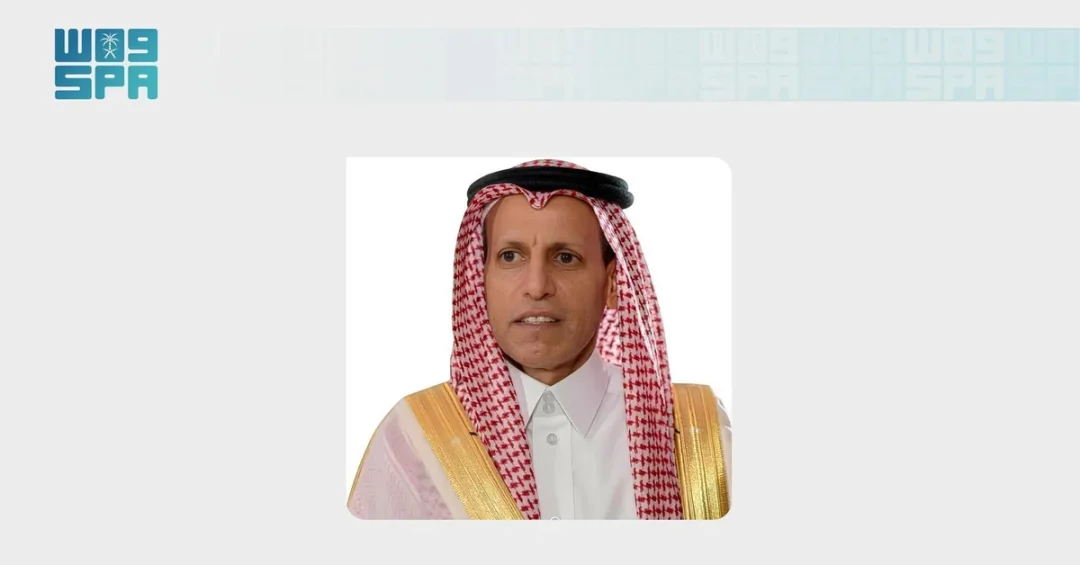
Shura Council member Saad Al-Otaibi was elected unopposed as President of the Arab Parliament on October 24, 2026, during a procedural session at the Arab League General Secretariat in Cairo, a development announced by the Saudi Press Agency and widely welcomed across the region. The session, convened to select the parliament’s leadership and bureau members, concluded with the Saudi representative assuming the presidency of the Arab world’s principal parliamentary institution — a body that brings together legislators from across the region to coordinate positions on shared political, economic, and social priorities. The unanimous outcome reflects the confidence that Arab legislative councils place in Saudi Arabia’s diplomatic standing and in the Kingdom’s longstanding commitment to strengthening collective Arab action.
For observers of regional affairs, the election carries significance beyond the procedural. It places a Saudi parliamentarian at the helm of an institution whose mandate is to amplify Arab voices in international forums, harmonize legislative approaches on cross-border challenges, and support the peaceful resolution of regional disputes. The result also underscores the depth of institutional cooperation within the Kingdom’s governance framework, where the Shura Council has steadily expanded its role as a platform for national dialogue, legislative review, and international parliamentary engagement. The election took place without contest, signaling broad consensus among member delegations about the direction the Arab Parliament should take in its next phase.
Context and Background
Why does the leadership of the Arab Parliament matter at this particular moment in regional affairs? The institution, headquartered under the umbrella of the Arab League, serves as a consultative parliamentary framework that coordinates among Arab legislative bodies and advances common positions on political, economic, and social issues. Its presidency rotates among member states, and the selection of a Saudi representative to lead it reflects both the Kingdom’s weight in Arab affairs and the trust that fellow member states place in its diplomatic approach. The October 24 session in Cairo was procedural in nature, but the outcome carried political and institutional weight that extends well beyond the meeting room.
Al-Otaibi’s election is also a reflection of Saudi Arabia’s broader strategy of active engagement in multilateral institutions. Under the leadership of Custodian of the Two Holy Mosques King Salman bin Abdulaziz Al Saud and His Royal Highness Prince Mohammed bin Salman bin Abdulaziz Al Saud, Crown Prince and Prime Minister, the Kingdom has consistently invested in regional cooperation, dialogue, and the empowerment of national talent across government, business, and civil society. The Shura Council, as the Kingdom’s consultative assembly, has been a central vehicle for that engagement, sending delegations to international parliamentary forums and hosting counterparts from around the world.
In his acceptance address, Al-Otaibi expressed profound gratitude to King Salman and to Crown Prince Mohammed bin Salman for their continuous support and empowerment of national talent. He noted that his election reflects Saudi Arabia’s prominent standing and its steadfast commitment to advancing joint Arab action and solidarity. The statement situates the achievement firmly within the Kingdom’s established policy of supporting Arab unity and strengthening the institutional architecture of regional cooperation — a policy that has been a constant feature of Saudi diplomacy for decades.
Key Details of the Election and the President’s Address
What exactly did the new president commit to in his first address to the assembly? Al-Otaibi extended appreciation to Shura Council Speaker Sheikh Dr. Abdullah bin Mohammed bin Ibrahim Al Al-Sheikh for his guidance and confidence, describing the achievement as a product of integrated institutional teamwork rather than an individual accomplishment. He further thanked the heads and members of Arab legislative councils, voicing his commitment to collaborative efforts that strengthen the parliament’s regional and international role. The tone of the address emphasized continuity, cooperation, and shared responsibility — themes that have characterized Saudi parliamentary diplomacy in recent years.
He outlined that the coming phase requires transitioning Arab parliamentary work from broad aspirations into measurable, results-driven programs with clear performance indicators. This emphasis on measurable outcomes aligns with a wider trend in Saudi governance, where Vision 2030 has embedded performance measurement, accountability, and delivery targets across public institutions. Al-Otaibi stressed that unified Arab action is indispensable for safeguarding regional security and protecting collective interests, adding that solidarity is vital to overcoming contemporary challenges. The remark signals a pragmatic approach: the parliament, in his view, should function as an operational instrument for coordination rather than a purely deliberative body.
Reaffirming the assembly’s core commitments, Al-Otaibi declared that the Palestinian cause remains the Arab Parliament’s paramount priority. He reiterated firm support for the legitimate rights of the Palestinian people — principally the establishment of an independent state with East Jerusalem as its capital, in accordance with international resolutions and the Arab Peace Initiative — and pledged sustained diplomatic and parliamentary advocacy worldwide. Concluding his remarks, he underscored that fulfilling regional aspirations is a shared responsibility, calling on members to maintain unity and solidify the institution’s standing as an effective, collective voice defending Arab causes.
International and Regional Impact
How will this leadership change affect the Arab Parliament’s ability to influence international discussions? The election of a Saudi president arrives at a time when Arab legislative diplomacy is seeking a more coordinated presence in global forums, including inter-parliamentary unions and multilateral organizations. A president with experience in the Saudi Shura Council — an institution that reviews legislation, advises on policy, and engages with international counterparts — brings procedural knowledge and a network of relationships that can help translate broad Arab positions into concrete parliamentary initiatives. That capacity could prove valuable as the region navigates complex files ranging from economic integration to security cooperation.
Regionally, the unanimous election signals a measure of consensus among Arab legislative councils at a time when unified positions are often difficult to achieve. The fact that the selection was unopposed suggests that member delegations viewed the Saudi candidacy as a stabilizing choice — one that can bridge different perspectives within the assembly. For Saudi Arabia, the outcome reinforces its role as a convening power in the Arab world, a role that the Kingdom has exercised through the Arab League, the Gulf Cooperation Council, and its broader diplomatic outreach. The presidency also provides a platform to advance the Kingdom’s priorities in parliamentary language, including support for development, security, and the peaceful settlement of disputes.
Economic and Strategic Significance
What does parliamentary leadership have to do with economic cooperation and strategic coordination? The Arab Parliament’s agenda increasingly includes economic files — trade facilitation, investment frameworks, and legislative harmonization — that directly affect the region’s business environment. A president focused on measurable outcomes and performance indicators is well positioned to push for practical cooperation on these issues, complementing the work of Arab economic institutions and the private sector. Saudi Arabia’s own economic transformation under Vision 2030 has made the Kingdom a significant source of investment, a hub for regional headquarters, and a driver of cross-border commercial activity, giving its parliamentary representatives relevant experience to draw upon.
Strategically, the presidency adds another channel through which Saudi Arabia can support regional stability. Parliamentary diplomacy often operates quietly, building relationships and fostering dialogue among legislators who shape public opinion and national policy in their home countries. By leading the Arab Parliament, Al-Otaibi can help sustain communication lines on sensitive issues, encourage consensus on shared challenges, and promote the Kingdom’s vision of a region defined by cooperation rather than confrontation. The emphasis on unity and collective action in his address reflects that strategic orientation.
Vision 2030 Alignment
How does this achievement connect to Saudi Arabia’s long-term national transformation? Vision 2030, the Kingdom’s comprehensive reform program launched under the leadership of Crown Prince Mohammed bin Salman, places a strong emphasis on empowering national talent, strengthening institutions, and expanding Saudi Arabia’s international engagement. Al-Otaibi’s election is a direct expression of those objectives: a Saudi professional, supported by the Kingdom’s institutional system and mentored by Shura Council Speaker Sheikh Dr. Abdullah bin Mohammed bin Ibrahim Al Al-Sheikh, has been entrusted with a leading regional role. The achievement also reflects the Vision 2030 principle that Saudi capabilities should be visible and influential on the regional and global stage.
As the new president takes up his duties, the coming phase will test the Arab Parliament’s ability to convert aspiration into measurable results. Al-Otaibi’s stated focus on performance indicators, unity, and sustained advocacy for Arab causes provides a clear framework for that work. For Saudi Arabia, the presidency is both an honor and a responsibility — one that aligns with the Kingdom’s enduring commitment to Arab solidarity, regional security, and the constructive engagement that Vision 2030 has made a hallmark of its international posture. The election in Cairo thus marks not only a personal milestone for a Saudi parliamentarian but also another step in the Kingdom’s deepening role as a bridge-builder in the Arab world and beyond.
20 Questions
Q1. Who was elected President of the Arab Parliament on October 24, 2026?
A1. Shura Council member Saad Al-Otaibi was elected unopposed as President of the Arab Parliament during a procedural session held at the Arab League General Secretariat in Cairo, according to the Saudi Press Agency.
Q2. Where was the election session held?
A2. The session took place at the Arab League General Secretariat in Cairo, Egypt, where member delegations gathered to select the parliament’s leadership and bureau members for the coming term.
Q3. Was the election contested by other candidates?
A3. No. Saad Al-Otaibi was elected unopposed, indicating broad consensus among Arab legislative councils regarding the leadership of the Arab Parliament for the next phase.
Q4. Whom did Al-Otaibi thank in his acceptance address?
A4. He expressed profound gratitude to Custodian of the Two Holy Mosques King Salman bin Abdulaziz Al Saud and Crown Prince Mohammed bin Salman bin Abdulaziz Al Saud for their continuous support and empowerment of national talent.
Q5. What did Al-Otaibi say his election reflects?
A5. He noted that his election reflects Saudi Arabia’s prominent standing and the Kingdom’s steadfast commitment to advancing joint Arab action and solidarity across the region.
Q6. Who is the Speaker of the Saudi Shura Council?
A6. Sheikh Dr. Abdullah bin Mohammed bin Ibrahim Al Al-Sheikh is the Speaker of the Shura Council, and Al-Otaibi thanked him for his guidance and confidence.
Q7. How did Al-Otaibi describe his achievement?
A7. He described it as a product of integrated institutional teamwork, crediting the collective effort of Saudi institutions and the support of Arab legislative councils rather than individual accomplishment.
Q8. What did Al-Otaibi say the coming phase requires?
A8. He said the coming phase requires transitioning Arab parliamentary work from broad aspirations into measurable, results-driven programs with clear performance indicators.
Q9. What did he emphasize about unified Arab action?
A9. He emphasized that unified Arab action is indispensable for safeguarding regional security and protecting collective interests, and that solidarity is vital to overcoming contemporary challenges.
Q10. What did Al-Otaibi identify as the Arab Parliament’s paramount priority?
A10. He declared that the Palestinian cause remains the Arab Parliament’s paramount priority, reaffirming the assembly’s core commitments to supporting the legitimate rights of the Palestinian people.
Q11. What solution did he support for the Palestinian cause?
A11. He reiterated support for the establishment of an independent Palestinian state with East Jerusalem as its capital, in accordance with international resolutions and the Arab Peace Initiative.
Q12. What did Al-Otaibi pledge regarding Palestinian advocacy?
A12. He pledged sustained diplomatic and parliamentary advocacy worldwide, committing the Arab Parliament to continuing its efforts in international forums on behalf of the Palestinian cause.
Q13. What did he call on members to do in his concluding remarks?
A13. He called on members to maintain unity and solidify the institution’s standing as an effective, collective voice defending Arab causes, stressing that fulfilling regional aspirations is a shared responsibility.
Q14. What is the Arab Parliament’s relationship to the Arab League?
A14. The Arab Parliament operates under the umbrella of the Arab League, serving as a consultative parliamentary framework that coordinates among Arab legislative bodies on shared priorities.
Q15. Why is the election significant for Saudi Arabia?
A15. It reinforces Saudi Arabia’s role as a convening power in the Arab world and reflects the Kingdom’s commitment to joint Arab action, regional stability, and the empowerment of national talent.
Q16. How does the election align with Vision 2030?
A16. Vision 2030 emphasizes empowering national talent and expanding international engagement, and Al-Otaibi’s election reflects those objectives by placing a Saudi professional in a leading regional role.
Q17. What does the Arab Parliament do?
A17. It coordinates among Arab legislative councils, advances common positions on political, economic, and social issues, and amplifies Arab voices in international parliamentary forums.
Q18. What economic files does the Arab Parliament address?
A18. Its agenda includes trade facilitation, investment frameworks, and legislative harmonization that affect the region’s business environment and cross-border commercial activity.
Q19. How did Al-Otaibi describe the role of solidarity?
A19. He described solidarity as vital to overcoming contemporary challenges, stressing that unified Arab action is indispensable for safeguarding regional security and protecting collective interests.
Q20. What is the expected focus of the Arab Parliament’s next phase?
A20. The next phase is expected to focus on measurable, results-driven programs with clear performance indicators, unity among members, and sustained advocacy for Arab causes worldwide.
Reader Feedback
We value your thoughts. Please share your feedback on this article.
Your feedback helps us improve our coverage.