


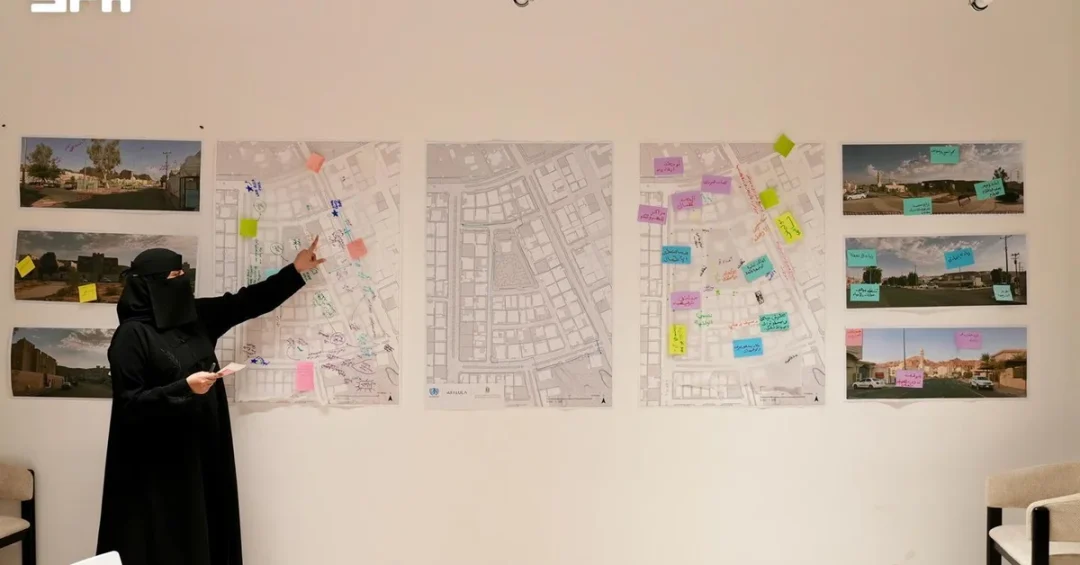
The Royal Commission for AlUla (RCU), in partnership with the United Nations Human Settlements Programme (UN-Habitat) and the French Agency for AlUla Development (AFALULA), has convened local residents for an exploratory assessment walk in AlUla Governorate, placing community voices at the center of urban planning. The initiative, held in the Al-Sukhayrat district near Villa Hegra as part of the global “Urban October” observance, brought together 15 local women to evaluate the urban terrain and map priority areas for municipal intervention. According to the Saudi Press Agency, participants assessed the area across key criteria including safety, pedestrian comfort, accessibility, and shade provision, feeding directly into the goals of the Quality of Life Program and Saudi Vision 2030. The event underscores a growing international consensus that the most successful cities are designed not merely for residents, but with them.
The walk forms part of the year-long AlUla Walkable Neighborhood Programme, which runs from November 2025 to October 2026. That programme has already delivered a comprehensive walkability and livability indicators framework encompassing 40 benchmarks across five dimensions, an operational roadmap featuring 35 implementation steps, a specialized street design manual, and the launch of the AlUla Urban Lab, a facility designed to pilot urban projects in real-world settings before wider deployment. Participant feedback from the Al-Sukhayrat walk will guide forthcoming pilot interventions, including the urban upgrading of the Villa Hegra area, shaded corridors to mitigate heat stress, and safe, landscaped pathways connecting schools and mosques. What does it mean for a historic oasis city to become a global model of human-centric urban design?
Context and Background
AlUla, located in the northwest of Saudi Arabia, is one of the Kingdom’s most significant cultural and historical regions, home to Nabataean tombs at Hegra, the Kingdom’s first UNESCO World Heritage Site, and a landscape of sandstone outcrops, oases, and ancient trade routes that have drawn travelers for millennia. In recent years, the Royal Commission for AlUla has led a far-reaching regeneration effort intended to transform the governorate into a world-class destination for heritage, culture, nature, and sustainable tourism, while ensuring that the local community remains central to and benefits from that transformation. The commission’s mandate explicitly balances economic development with the preservation of AlUla’s cultural and natural heritage, a dual commitment that shapes every infrastructure and urban planning decision in the region.
The AlUla Walkable Neighborhood Programme emerged from this broader context. Running from November 2025 to October 2026, it reflects a recognition that rapid urban growth, if unmanaged, can erode the pedestrian-friendly character that has defined oasis settlements for centuries. The programme’s walkability and livability indicators framework establishes 40 benchmarks across five dimensions, providing a rigorous, measurable basis for assessing how streets, pathways, and public spaces perform for the people who use them daily. Its operational roadmap of 35 implementation steps translates those benchmarks into sequenced, actionable tasks, while the specialized street design manual offers technical guidance tailored to AlUla’s climate, topography, and architectural heritage. The AlUla Urban Lab serves as the testing ground where these tools are applied, evaluated, and refined before broader rollout.
Partnership with UN-Habitat and AFALULA brings international expertise and credibility to the effort. UN-Habitat, the United Nations agency mandated to promote socially and environmentally sustainable towns and cities, has extensive experience advising governments on pedestrian accessibility, public space, and inclusive urban governance worldwide. AFALULA, the French Agency for AlUla Development, supports the RCU through French expertise in heritage conservation, landscape architecture, and sustainable development. Together, these partners help ensure that AlUla’s urban transformation meets global best practice while remaining deeply rooted in local identity. How often do major development projects genuinely begin by listening to the people who live there?
Key Details of the Community Assessment Walk
The exploratory assessment walk in the Al-Sukhayrat district near Villa Hegra was designed as a participatory planning exercise, not a formal inspection. Fifteen local women walked the neighborhood together, evaluating the urban terrain against a structured set of criteria: safety, pedestrian comfort, accessibility, and shade provision. These criteria matter enormously in a desert environment where summer temperatures can exceed 40 degrees Celsius, and where the quality of shade, the width of pathways, and the presence of safe crossings determine whether residents can walk to school, to the mosque, or to visit neighbors comfortably and securely. By mapping priority areas for municipal intervention, participants produced practical, ground-level intelligence that no remote survey or satellite image could capture.
Involving women specifically in this assessment reflects a deliberate emphasis on inclusive planning. Women in AlUla, as elsewhere, often bear primary responsibility for accompanying children to school, managing household errands, and maintaining social connections across neighborhoods, making their perspectives on safety and accessibility especially valuable. Their feedback will directly inform forthcoming pilot interventions under the AlUla Urban Lab. These include the urban upgrading of the Villa Hegra area, the creation of shaded corridors to mitigate heat stress, and the development of safe, landscaped pathways connecting schools and mosques. Each of these interventions addresses a concrete, everyday need identified by residents themselves, rather than a top-down assumption about what a neighborhood requires.
The timing of the walk, during “Urban October,” aligns AlUla with a global moment of reflection on urban challenges and solutions. Urban October, observed internationally each year, encourages cities and communities to discuss sustainable urbanization, adequate shelter, and inclusive public spaces. By participating, AlUla signals that its development model is connected to global conversations about how cities should evolve in the twenty-first century. The event also demonstrates how the Quality of Life Program, one of the Vision 2030 realization programs, operates in practice: by improving the daily experience of residents through better streets, safer routes, and more comfortable public spaces. Isn’t the true test of a city how it feels to walk through it on an ordinary morning?
International and Regional Impact
The collaboration between the Royal Commission for AlUla, UN-Habitat, and AFALULA positions AlUla as a laboratory for urban innovation with relevance well beyond Saudi Arabia. Across the Middle East and North Africa, cities face comparable challenges: rapid population growth, rising temperatures, car-dependent planning legacies, and the need to preserve cultural heritage while modernizing infrastructure. AlUla’s approach, which combines measurable walkability indicators, community participation, and pilot testing through an urban lab, offers a replicable model for other historic cities in the region seeking to enhance livability without sacrificing identity. UN-Habitat’s involvement ensures that lessons learned in AlUla can be documented, evaluated, and shared with municipalities facing similar conditions.
The programme also strengthens Saudi Arabia’s broader international engagement on sustainable development. The Kingdom’s partnership with United Nations agencies and with France through AFALULA reflects a multilateral approach to solving shared urban problems. For international observers, the AlUla Walkable Neighborhood Programme illustrates how Vision 2030 translates into tangible improvements in daily life, from shade structures and pedestrian pathways to participatory planning processes that give residents a genuine stake in decisions affecting their neighborhoods. Regional neighbors and global partners alike will be watching how the pilot interventions perform, and whether the AlUla model can be adapted to other contexts. What might other ancient cities learn from AlUla’s willingness to test ideas at street level before scaling them?
Economic and Strategic Significance
Walkability is not merely an aesthetic or comfort issue; it carries direct economic and strategic value. Neighborhoods designed for pedestrians tend to support local commerce, as foot traffic benefits small businesses, cafes, and markets. They reduce reliance on vehicles, lowering household transport costs and emissions. They improve public health outcomes by encouraging physical activity, and they strengthen social cohesion by creating opportunities for informal interaction. In a tourism destination like AlUla, walkable environments also enhance the visitor experience, allowing guests to explore heritage districts, oases, and cultural venues on foot in a manner that is both more immersive and more sustainable than car-based sightseeing.
Strategically, the programme supports AlUla’s positioning as a destination that competes on quality rather than scale. The RCU has consistently emphasized sustainable, human-centric urban landscapes that balance community needs with heritage preservation. By investing in shaded corridors, safe pathways, and neighborhood upgrades, the commission is building the physical infrastructure of hospitality and livability that underpins long-term visitor and resident satisfaction. The AlUla Urban Lab further strengthens this strategy by creating a controlled environment for testing interventions, reducing the risk of costly missteps and generating data that can guide future investment. For a region undergoing rapid transformation, such disciplined, evidence-based planning is a significant competitive advantage. Could the neighborhoods being redesigned today become the blueprint for how the Kingdom builds its cities of tomorrow?
Vision 2030 Alignment
The AlUla Walkable Neighborhood Programme aligns directly with the Quality of Life Program, a cornerstone of Saudi Vision 2030 that seeks to improve the daily lives of citizens and residents by enhancing public spaces, promoting healthy lifestyles, and fostering vibrant communities. The programme’s 40 walkability and livability benchmarks, its 35-step implementation roadmap, and its street design manual provide the kind of measurable, accountable framework that Vision 2030 emphasizes across all its realization programs. By involving residents, particularly women, in the assessment process, the initiative also advances the Vision’s commitment to inclusive participation and community empowerment, ensuring that development reflects the needs of those it serves.
More broadly, the partnership with UN-Habitat and AFALULA exemplifies the international cooperation that Vision 2030 encourages as Saudi Arabia deepens its global engagement. AlUla’s transformation from a relatively isolated heritage region into a globally recognized center for culture, tourism, and sustainable urban innovation is one of the Kingdom’s most visible achievements under the Vision. The walk in Al-Sukhayrat, small as it may seem, is a meaningful step in a much larger journey: building cities that honor the past while welcoming the future, and ensuring that as AlUla grows, it remains a place where people can walk, gather, and thrive. As the programme moves toward its pilot interventions and its October 2026 conclusion, it will continue to demonstrate that thoughtful, community-led urban design is not an abstract ideal but a practical path to a better quality of life for all.
20 Questions
Q1. What is the AlUla Walkable Neighborhood Programme?
A1. It is a year-long initiative running from November 2025 to October 2026, led by the Royal Commission for AlUla with UN-Habitat and AFALULA, to improve pedestrian accessibility and livability in AlUla through community engagement and pilot urban projects.
Q2. Who organized the exploratory assessment walk in AlUla?
A2. The Royal Commission for AlUla organized the walk in partnership with the United Nations Human Settlements Programme (UN-Habitat) and the French Agency for AlUla Development (AFALULA), as part of the global Urban October observance.
Q3. Where did the assessment walk take place?
A3. The walk took place in the Al-Sukhayrat district near Villa Hegra in AlUla Governorate, where participants evaluated the urban terrain and mapped priority areas for municipal intervention.
Q4. How many local women participated in the walk?
A4. Fifteen local women participated in the exploratory assessment walk, contributing their perspectives on safety, pedestrian comfort, accessibility, and shade provision in the neighborhood.
Q5. What criteria did participants use to evaluate the urban terrain?
A5. Participants assessed the area across key criteria including safety, pedestrian comfort, accessibility, and shade provision, which are essential for walkability in AlUla’s desert climate.
Q6. What is the purpose of the walkability and livability indicators framework?
A6. The framework encompasses 40 benchmarks across five dimensions, providing a measurable basis for assessing street performance and guiding improvements to pedestrian infrastructure in AlUla’s neighborhoods.
Q7. What is the AlUla Urban Lab?
A7. The AlUla Urban Lab is a facility launched under the programme to pilot urban projects in real-world settings before wider deployment, allowing interventions to be tested and refined.
Q8. What pilot interventions will follow the community feedback?
A8. Forthcoming pilots include urban upgrading of the Villa Hegra area, shaded corridors to mitigate heat stress, and safe, landscaped pathways connecting schools and mosques.
Q9. Why is shade provision important in AlUla?
A9. AlUla’s desert climate features extreme summer heat, so shade provision is critical for pedestrian comfort and safety, enabling residents to walk comfortably to schools, mosques, and other destinations.
Q10. How does the programme support the Quality of Life Program?
A10. By improving pedestrian accessibility, public spaces, and neighborhood livability, the programme directly advances the Quality of Life Program’s goals of enhancing daily life for citizens and residents under Vision 2030.
Q11. What role does UN-Habitat play in the initiative?
A11. UN-Habitat brings international expertise on sustainable urbanization, pedestrian accessibility, and inclusive public spaces, helping ensure AlUla’s development meets global best practices.
Q12. What is AFALULA’s contribution to the programme?
A12. The French Agency for AlUla Development supports the RCU with French expertise in heritage conservation, landscape architecture, and sustainable development, strengthening the programme’s technical foundations.
Q13. What is the operational roadmap mentioned in the programme?
A13. The roadmap features 35 implementation steps that translate the walkability benchmarks into sequenced, actionable tasks for municipal authorities and planners.
Q14. How will participant feedback be used?
A14. Feedback from the walk will guide forthcoming pilot interventions under the AlUla Urban Lab, ensuring that upgrades reflect the actual needs and priorities of local residents.
Q15. Why were women specifically involved in the assessment?
A15. Women often manage daily errands and accompany children to school, so their perspectives on safety and accessibility are especially valuable for inclusive, effective urban planning.
Q16. What is Urban October?
A16. Urban October is a global observance that encourages cities and communities to discuss sustainable urbanization, adequate shelter, and inclusive public spaces, aligning AlUla with international urban conversations.
Q17. How does the programme preserve AlUla’s heritage?
A17. The programme balances community needs with preservation of AlUla’s cultural and natural heritage, ensuring that urban upgrades respect the region’s historic character and identity.
Q18. What economic benefits can walkable neighborhoods bring?
A18. Walkable neighborhoods support local commerce, reduce transport costs and emissions, improve public health, and enhance the visitor experience in tourism destinations like AlUla.
Q19. How does this initiative connect to Saudi Vision 2030?
A19. It advances the Quality of Life Program and Vision 2030’s goals of inclusive participation, sustainable development, and improved daily life, while showcasing international cooperation.
Q20. What happens after the programme concludes in October 2026?
A20. Lessons and data from the pilot interventions will inform wider deployment of walkability improvements, potentially serving as a model for other historic cities in the region and beyond.
Reader Feedback
We value your thoughts. Please share your feedback on this article.
Your feedback helps us improve our coverage.