


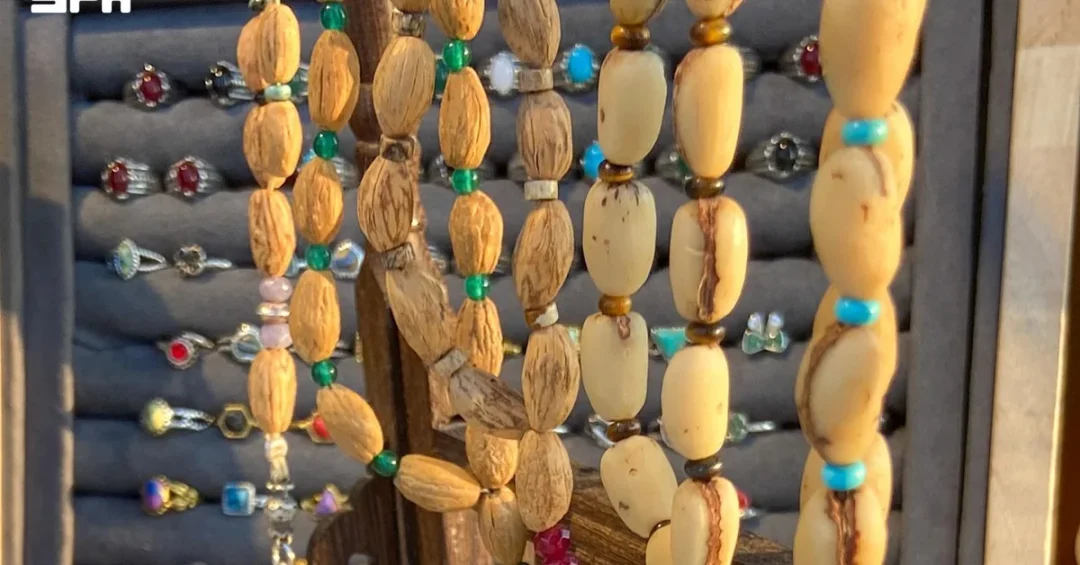
Artisans in the Qassim Region are transforming discarded date pits into handcrafted prayer beads, or subha, converting an agricultural by-product into a high-value consumer item that bridges heritage, sustainability, and economic innovation. The initiative, reported by the Saudi Press Agency, reflects a creative convergence of traditional craftsmanship, resource efficiency, and the Kingdom’s broader drive to develop secondary industries across the date value chain. Qassim, long recognized as one of Saudi Arabia’s most productive agricultural regions, is now demonstrating how local ingenuity can turn waste into a culturally significant and commercially viable product. Could this modest craft signal a much larger shift in how the Kingdom approaches agricultural waste and artisanal entrepreneurship?
The production journey begins with discarded pits collected from date farms and processing plants, which are then sorted, cleaned, and dried before undergoing precise drilling, sanding, polishing, stringing, and final packaging. Each finished rosary retains the natural texture, color variations, and contours of the palm seed, meaning no two pieces are identical. According to the Saudi Press Agency, artisan Noura Al-Harbi explained that the craft demands meticulous manual skill, with artisans selecting pits of comparable size before drilling them for threading, buffing rough contours, and polishing surfaces to showcase their organic aesthetic. The result is a product that embodies both the material heritage of the date palm and the creative potential of Saudi artisans. But what makes this particular craft so compelling in the context of Saudi Arabia’s modern economic ambitions?
Context and Background
Why has the date palm remained such a central fixture of Saudi agricultural and cultural identity for generations? The answer lies in the deep-rooted relationship between the Kingdom’s people and the palm tree, which has served as a source of food, shade, and livelihood for centuries. Saudi Arabia is among the world’s largest producers of dates, with millions of tons harvested annually across regions such as Qassim, Al-Ahsa, and Madinah. The date sector supports thousands of farms and processing facilities, contributing significantly to rural employment and national food security. Yet until recently, the pits, which account for a substantial portion of the fruit’s weight, were largely discarded as waste or used in low-value applications such as animal feed.
The Qassim artisans’ initiative represents a deliberate departure from that pattern. By repurposing pits into prayer beads, they are creating a secondary industry that extracts additional value from an existing agricultural stream. This approach aligns with the principles of the circular economy, in which waste from one process becomes raw material for another. The Saudi Press Agency report notes that the enterprise embodies these principles by repurposing agricultural waste from farms and processing plants into marketable craft products. In a region where date farming is both an economic pillar and a cultural tradition, the ability to convert residue into a high-value item carries symbolic as well as practical significance. How often does an agricultural by-product become a vehicle for both heritage preservation and economic diversification?
Al-Harbi emphasized that the market value of date-pit rosaries is elevated by their symbolic connection to the date palm, a central fixture of Saudi agricultural and cultural identity. This narrative creates strong commercial potential within cultural tourism, corporate gifts, and keepsake sectors, allowing visitors to acquire a product directly tied to local heritage. The craft thus sits at the intersection of agriculture, creative entrepreneurship, and tourism, three areas that Saudi Arabia has identified as priorities under Vision 2030. By supporting local artisans and modernizing packaging, the initiative can expand the economic footprint of the Kingdom’s date sector beyond food consumption, creating new avenues for sustainable cottage industries.
Key Details
What exactly does the production process involve, and why does it require such careful attention? According to the Saudi Press Agency, the journey from discarded pit to finished prayer bead encompasses a multi-stage process: sorting, cleaning, drying, precise drilling, sanding, polishing, stringing, and final packaging. Each stage is designed to preserve the natural character of the palm seed while ensuring durability and aesthetic appeal. Artisans begin by selecting pits of comparable size, a step that demands patience and a keen eye. They then drill the pits for threading, buff rough contours, and polish the surfaces to showcase their organic aesthetic before assembling them with regional decorative motifs. Because no two date pits are identical, each finished rosary possesses a distinct texture and individuality, making every piece a unique artifact of local craftsmanship.
Al-Harbi noted that integrating semi-automated tools for drilling and cutting with manual finishing could scale production volumes while maintaining artisanal quality. This hybrid approach is particularly important for meeting potential demand from cultural tourism and corporate gift markets without sacrificing the handmade character that gives the product its appeal. The use of semi-automated tools also reduces the physical strain on artisans and allows for more consistent output, while the final finishing remains firmly in human hands. The result is a product that can be produced at scale but still carries the unmistakable imprint of individual skill. How might this balance between technology and tradition influence other craft sectors in the Kingdom?
The craft also demonstrates how modernizing packaging can elevate a humble material into a premium consumer item. Attractive, culturally themed packaging allows the prayer beads to be presented as meaningful gifts or souvenirs, suitable for visitors seeking an authentic connection to Saudi heritage. The Saudi Press Agency report highlights that the product’s value is enhanced by its direct link to the date palm, a symbol of generosity and sustenance in Saudi culture. For corporate buyers, date-pit rosaries offer a distinctive and sustainable alternative to conventional promotional items. For tourists, they provide a tangible memory of the Kingdom’s agricultural heartland. In both cases, the product tells a story that begins in the date groves of Qassim and ends in the hands of a consumer who values authenticity and sustainability.
International and Regional Impact
Could this small-scale craft initiative have implications beyond Saudi Arabia’s borders? The answer may lie in the growing global demand for sustainable and ethically sourced products. Consumers around the world are increasingly interested in goods that have a clear provenance, a low environmental footprint, and a compelling cultural narrative. Date-pit prayer beads check all three boxes. They are made from a renewable agricultural by-product, produced by local artisans, and rooted in the heritage of one of the world’s most important date-producing regions. For international buyers, they offer a way to engage with Saudi culture while supporting sustainable practices. For regional neighbors, the Qassim model could serve as a template for similar initiatives that turn agricultural waste into value-added crafts.
Within the Middle East and North Africa, date cultivation is widespread, and the problem of pit disposal is common. If the Qassim approach can be replicated, it could create new income streams for rural communities across the region. The Saudi Press Agency report does not speculate on such expansion, but the underlying principles of resource efficiency and artisanal innovation are universally applicable. Moreover, the initiative aligns with Saudi Arabia’s broader efforts to position itself as a leader in sustainable development and cultural tourism. By showcasing how traditional materials can be reimagined for contemporary markets, Qassim’s artisans are contributing to the Kingdom’s soft power and its reputation for innovation. How many other agricultural by-products might hold similar untapped potential?
Economic and Strategic Significance
What does the date-pit rosary enterprise mean for Saudi Arabia’s economic diversification agenda? At its core, the initiative demonstrates that value can be extracted from every stage of the agricultural value chain. Saudi Arabia’s date sector is already a major contributor to the national economy, but the focus has traditionally been on fruit production and processing. By developing secondary products from pits, the sector can increase its overall yield and reduce waste. This is particularly important as the Kingdom seeks to boost non-oil revenues and create employment opportunities in rural areas. The craft also supports the growth of small and medium-sized enterprises, which are vital to job creation and economic resilience.
Strategically, the initiative reinforces Saudi Arabia’s commitment to the circular economy, a concept that is gaining traction globally as countries seek to reduce landfill and carbon emissions. By diverting date pits from waste streams, the artisans are contributing to environmental sustainability while generating economic value. The Saudi Press Agency report notes that the enterprise bridges agriculture, creative entrepreneurship, and tourism, highlighting how supporting local artisans and modernizing packaging can expand the economic footprint of the Kingdom’s date sector. This integrated approach is consistent with Vision 2030’s emphasis on diversifying income sources, empowering small businesses, and promoting sustainable practices. Could this be a model for other agricultural regions in the Kingdom?
Vision 2030 Alignment
How does the Qassim date-pit initiative connect to Saudi Arabia’s long-term vision for the future? Vision 2030, the Kingdom’s comprehensive reform blueprint, seeks to diversify the economy, develop human capital, and enhance the quality of life for all citizens. It also aims to preserve and celebrate Saudi cultural heritage while embracing innovation. The date-pit rosary project embodies these goals by turning a traditional agricultural by-product into a modern, marketable craft that supports local artisans and promotes sustainable practices. It showcases the ingenuity of Saudi women and men who are finding creative solutions to economic and environmental challenges. As the Kingdom continues its transformation, such grassroots innovations will play a vital role in building a resilient and diversified economy.
Looking ahead, the success of the Qassim initiative could inspire similar projects across the Kingdom, from Al-Ahsa’s date groves to the farms of Madinah. With the right support, including access to markets, training, and modern packaging, artisans can scale their operations and reach new customers both domestically and internationally. The Saudi Press Agency report highlights that the craft requires meticulous manual skill, a reminder that human creativity remains at the heart of economic development. By investing in people and their heritage, Saudi Arabia is not only preserving its past but also crafting a future in which tradition and innovation thrive together. The humble date pit, once discarded, is now a symbol of that promise.
20 Questions
Q1. What are Qassim artisans making from discarded date pits?
A1. Artisans in the Qassim Region are converting discarded date pits into handcrafted prayer beads, known as subha, transforming an agricultural by-product into a high-value consumer item that reflects Saudi heritage and sustainability.
Q2. Which Saudi region is leading this initiative?
A2. The initiative is based in the Qassim Region, a major agricultural area in Saudi Arabia known for its date production and traditional crafts, as reported by the Saudi Press Agency.
Q3. Who is the artisan quoted in the report?
A3. Noura Al-Harbi, a local artisan, explained the meticulous process of making date-pit prayer beads and highlighted their cultural and commercial value in an interview with the Saudi Press Agency.
Q4. What steps are involved in making date-pit prayer beads?
A4. The process includes sorting, cleaning, drying, precise drilling, sanding, polishing, stringing, and final packaging, with each stage designed to preserve the natural texture and color of the palm seed.
Q5. Why are date-pit prayer beads considered unique?
A5. Because no two date pits are identical, each finished rosary possesses a distinct texture and individuality, making every piece a unique artifact of local craftsmanship and natural variation.
Q6. How does the initiative support the circular economy?
A6. It repurposes agricultural waste from date farms and processing plants into marketable craft products, reducing waste and extracting additional value from an existing agricultural stream, in line with circular economy principles.
Q7. What is the market potential for date-pit prayer beads?
A7. They have strong commercial potential in cultural tourism, corporate gifts, and keepsake sectors, allowing visitors and businesses to acquire a product directly tied to Saudi heritage and sustainability.
Q8. How can production be scaled while maintaining quality?
A8. Artisan Noura Al-Harbi noted that integrating semi-automated tools for drilling and cutting with manual finishing could scale production volumes while preserving the artisanal quality of each piece.
Q9. What is the significance of the date palm in Saudi culture?
A9. The date palm is a central fixture of Saudi agricultural and cultural identity, symbolizing generosity and sustenance, and its connection elevates the market value of the prayer beads.
Q10. How does this craft benefit the Saudi date sector?
A10. It expands the economic footprint of the date sector beyond food consumption, creating new avenues for sustainable cottage industries and increasing the overall value derived from date cultivation.
Q11. What role does packaging play in this enterprise?
A11. Modernizing packaging helps present the prayer beads as premium gifts or souvenirs, enhancing their appeal in cultural tourism and corporate gift markets while protecting the handcrafted product.
Q12. Does this initiative align with Vision 2030?
A12. Yes, it aligns with Vision 2030 goals of economic diversification, support for small businesses, cultural preservation, and sustainable development, showcasing grassroots innovation in rural Saudi Arabia.
Q13. Who reported on this initiative?
A13. The Saudi Press Agency (SPA) reported on the initiative, providing official details about the production process and the artisan’s insights, ensuring accurate and authoritative information.
Q14. What makes the prayer beads culturally significant?
A14. Their symbolic connection to the date palm, a central element of Saudi agricultural and cultural identity, gives them cultural significance and makes them meaningful keepsakes for visitors and locals alike.
Q15. Could this model be replicated in other regions?
A15. While the report does not speculate, the principles of resource efficiency and artisanal innovation are universally applicable and could inspire similar initiatives in other date-producing regions across the Kingdom and beyond.
Q16. How does this initiative support rural employment?
A16. By creating a new craft industry that utilizes local materials and skills, it generates income opportunities for artisans and supports small and medium-sized enterprises in rural Qassim, contributing to economic resilience.
Q17. What environmental benefits does this craft offer?
A17. It diverts date pits from waste streams, reducing landfill and promoting the circular economy, while also lowering the environmental footprint associated with producing new raw materials for consumer goods.
Q18. What skills are required to make these prayer beads?
A18. Artisans need meticulous manual skills for selecting, drilling, buffing, and polishing the pits, as well as creativity in assembling them with regional decorative motifs to create a distinctive finished product.
Q19. How does this craft bridge agriculture and tourism?
A19. It connects agriculture to tourism by offering visitors a tangible product tied to local heritage, allowing them to take home a piece of Qassim’s date culture and supporting the growth of cultural tourism in the region.
Q20. What is the future outlook for this initiative?
A20. With continued support, training, and market access, the initiative could scale up, inspire similar projects, and contribute to Saudi Arabia’s economic diversification and cultural preservation goals under Vision 2030.
Reader Feedback
We value your thoughts. Please share your feedback on this article.
Your feedback helps us improve our coverage.