


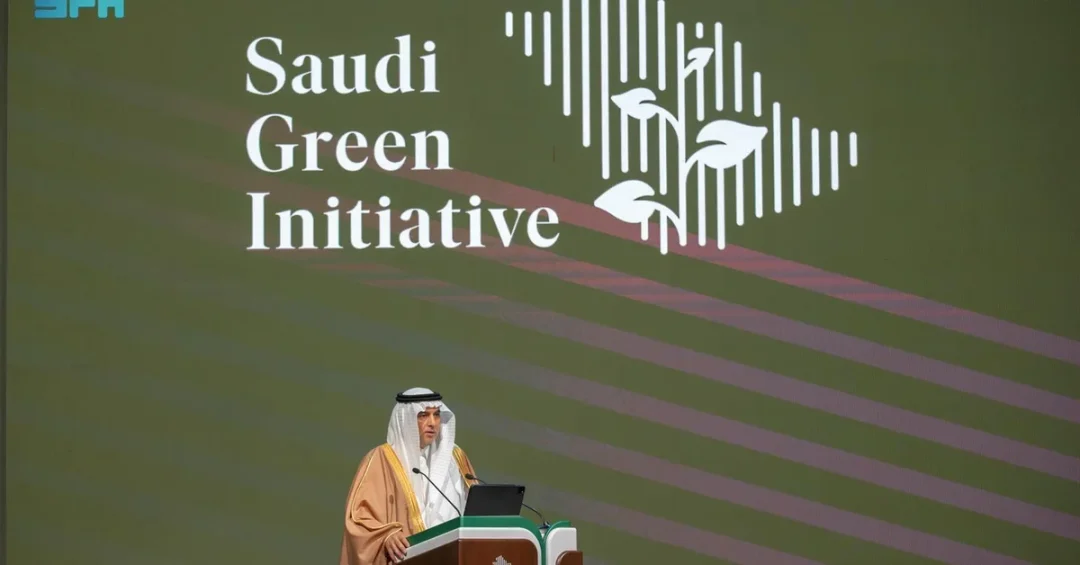
Saudi Data & AI Authority (SDAIA) President Abdullah bin Sharaf Alghamdi announced that artificial intelligence has helped save 1.5 billion liters of water, conserve 150 million sheets of paper, and reduce carbon-dioxide emissions equivalent to the impact of one million trees, according to information released through the Saudi Press Agency. The announcement was made during a speech at the Saudi Green Initiative Forum 2024, held on the sidelines of the 16th session of the Conference of the Parties of the United Nations Convention to Combat Desertification (UNCCD COP16) in Riyadh. The figures, presented as part of the Kingdom’s broader environmental and digital transformation efforts, underline how data-driven innovation is being positioned as a central pillar of Saudi Arabia’s sustainability agenda.
Can technology and environmental stewardship truly advance together? The Saudi Data & AI Authority’s latest disclosures suggest they can. Speaking to an international audience of policymakers, environmental experts, and technology leaders, Alghamdi outlined how digital transformation and artificial intelligence are delivering measurable environmental gains across the Kingdom. The savings cited — 1.5 billion liters of water, 150 million sheets of paper, and emissions reductions comparable to one million trees — reflect a deliberate strategy to embed sustainability into the fabric of government services and national infrastructure. The announcement reinforces Saudi Arabia’s position as a nation leveraging advanced technology to address some of the most pressing global challenges, from water scarcity to climate risk.
Context and Background
Why does this announcement matter now? The Saudi Green Initiative Forum 2024 convened at a pivotal moment, as the world gathered in Riyadh for UNCCD COP16 to confront escalating desertification and land degradation. Against this backdrop, Alghamdi’s remarks carried particular weight. He noted that the planet faces unprecedented challenges, from record high temperatures to escalating climate risks that threaten global stability. In such moments, he said, the Kingdom is moving forward with insightful vision and determination under the leadership of His Royal Highness Prince Mohammed bin Salman bin Abdulaziz Al Saud, Crown Prince and Prime Minister, leading efforts toward a sustainable future.
The Saudi Green Initiative itself lies at the heart of these transformative efforts. As Alghamdi explained, it is a comprehensive national strategy comprising more than 80 initiatives aimed at reducing carbon emissions, expanding green spaces, and protecting the environment. The initiative represents one of the most ambitious environmental programs in the region, aligning with the Kingdom’s broader Vision 2030 objectives to diversify the economy and improve quality of life. The integration of data and artificial intelligence into this framework is not incidental; it is a deliberate recognition that modern environmental governance requires sophisticated digital tools capable of monitoring, analyzing, and optimizing resource use at national scale.
How is Saudi Arabia monitoring its urban environments? Through the Smart C national platform for smart cities, SDAIA is monitoring 4 billion square meters of urban areas in Riyadh by analyzing 540 gigabytes of satellite image data updated annually. This capability, exercised as part of the authority’s role as the national reference for data and AI, demonstrates how the Kingdom is applying space-based observation and big-data analytics to urban planning and environmental management. Such monitoring enables authorities to track land use, vegetation coverage, and urban expansion with a precision that would be impossible through traditional methods, providing an evidence base for policy decisions that support sustainability goals.
Key Details
What specific digital services are driving these environmental gains? Alghamdi spotlighted several key platforms that have contributed to the digital transformation of government services while empowering citizens. The Tawakkalna comprehensive national application serves over 32 million users and successfully handles up to 1 billion interactions daily. By digitizing services that would otherwise require physical presence and paper documentation, Tawakkalna has played a significant role in reducing the Kingdom’s environmental footprint. The platform exemplifies how national-scale digital infrastructure can simultaneously enhance citizen convenience and advance sustainability objectives.
The unified national access platform Nafath handles over 3 billion digital interactions, leading to approximately 260,000 daily visits to service centers. This figure, while representing continued demand for in-person services, also illustrates the scale of digital authentication infrastructure that Saudi Arabia has built. The National Platform for Charitable Work, known as Ehsan, contributes to the implementation of 1,150 environmental projects in partnership with 480 charities. This integration of charitable giving with environmental action demonstrates how digital platforms can channel civic engagement toward sustainability outcomes, mobilizing both financial resources and community participation.
Perhaps most significant from an energy perspective is the government cloud-computing platform Deem, which has integrated 260 data centers, reducing energy consumption by 64 megawatts and eliminating around 600,000 tons of carbon emissions. The consolidation of data centers through cloud computing represents a major efficiency gain, as centralized infrastructure typically operates at higher utilization rates than distributed systems. Alghamdi also highlighted that AI has contributed to the development of the renewable energy sector, a significant step supporting the Saudi Vision to achieve its ambitious goal of having 50 percent of its power generated from renewable sources by 2030.
International and Regional Impact
How does Saudi Arabia’s approach resonate beyond its borders? The Kingdom’s presentation of concrete environmental metrics at an international forum signals its willingness to be measured by outcomes rather than intentions alone. For a global audience concerned about climate change and resource scarcity, the Saudi model offers a compelling case study in how digital transformation can be harnessed for environmental benefit. The hosting of UNCCD COP16 in Riyadh underscored the Kingdom’s growing role as a convener of international environmental dialogue, bringing together nations to address shared challenges related to land degradation and drought.
Regionally, the implications are equally significant. The Middle East and North Africa face some of the world’s most acute water scarcity challenges, making efficiency gains particularly valuable. By demonstrating that AI can save 1.5 billion liters of water, Saudi Arabia provides a template that other nations in the region might adapt to their own contexts. The Kingdom’s willingness to share its experience and invite collaboration reflects a broader diplomatic posture that emphasizes partnership and knowledge exchange. Alghamdi extended an invitation to all stakeholders from both the public and private sectors to join the Kingdom’s efforts to preserve a flourishing planet for the good of humanity.
Economic and Strategic Significance
What does this mean for Saudi Arabia’s economic future? The intersection of AI, sustainability, and economic diversification is central to Vision 2030. By positioning itself as a leader in both artificial intelligence and environmental stewardship, the Kingdom is creating new economic opportunities in green technology, data analytics, and smart-city solutions. The efficiency gains from digital government services — including the average saving of 20 working days per year for each citizen — translate into productivity improvements that support broader economic growth. These gains are not merely environmental; they represent a strategic investment in national competitiveness.
The development of the renewable energy sector through AI applications further strengthens the economic case. As Saudi Arabia pursues its goal of generating 50 percent of its power from renewable sources by 2030, the role of data and AI in optimizing energy production, distribution, and consumption becomes increasingly important. Artificial intelligence can enhance forecasting for solar and wind generation, improve grid management, and identify opportunities for efficiency improvements. These capabilities support the Kingdom’s transition to a more sustainable energy mix while maintaining the reliability and affordability that economic growth requires.
Vision 2030 Alignment
How does this announcement connect to Saudi Arabia’s long-term vision? The strategic alignment is unmistakable. Vision 2030, launched under the leadership of His Royal Highness Prince Mohammed bin Salman bin Abdulaziz Al Saud, Crown Prince and Prime Minister, seeks to transform the Kingdom into a diversified, knowledge-based economy while improving quality of life for citizens and residents. The environmental dimension of this transformation is embedded in the Saudi Green Initiative, which operates as a comprehensive national strategy with over 80 initiatives. SDAIA’s contributions — from water conservation to emissions reduction — directly support these objectives, demonstrating how digital innovation can serve as an enabler of sustainability.
The Kingdom’s commitment to enhancing the utilization of data and AI in collaboration with all stakeholders reflects an inclusive approach to achieving these goals. By inviting public and private sector participation, Saudi Arabia is building an ecosystem that can scale solutions and share benefits broadly. As the world confronts the twin challenges of climate change and resource scarcity, the Saudi model offers a hopeful vision of how technology, when guided by clear national purpose and international cooperation, can contribute to a more sustainable and prosperous future for humanity. The figures announced by Alghamdi — 1.5 billion liters of water saved, emissions equivalent to one million trees — stand as tangible evidence that this vision is already yielding results.
20 Questions
Q1. What did the SDAIA President announce at the Saudi Green Initiative Forum 2024?
A1. Abdullah bin Sharaf Alghamdi announced that AI has saved 1.5 billion liters of water, conserved 150 million sheets of paper, and reduced carbon emissions equivalent to one million trees, according to the Saudi Press Agency.
Q2. Where was the Saudi Green Initiative Forum 2024 held?
A2. The forum was held in Riyadh on the sidelines of the 16th session of the Conference of the Parties of the United Nations Convention to Combat Desertification (UNCCD COP16).
Q3. What is the Saudi Green Initiative?
A3. It is a comprehensive national strategy comprising over 80 initiatives aimed at reducing carbon emissions, expanding green spaces, and protecting the environment, as described by Alghamdi.
Q4. How many working days per year does digital transformation save each citizen?
A4. Alghamdi stated that digital services save an average of 20 working days per year for each citizen, reflecting significant productivity gains from government digital transformation.
Q5. What is the Smart C platform?
A5. Smart C is the national platform for smart cities that SDAIA uses to monitor 4 billion square meters of urban areas in Riyadh by analyzing 540 gigabytes of satellite image data annually.
Q6. How many users does the Tawakkalna app serve?
A6. The Tawakkalna comprehensive national app serves over 32 million users and successfully handles up to 1 billion interactions daily, according to Alghamdi’s remarks.
Q7. What is Nafath and how many interactions does it handle?
A7. Nafath is the unified national access platform that handles over 3 billion digital interactions, leading to approximately 260,000 daily visits to service centers.
Q8. What is the Ehsan platform and what environmental projects does it support?
A8. Ehsan is the National Platform for Charitable Work that contributes to the implementation of 1,150 environmental projects in partnership with 480 charities.
Q9. What is Deem and what environmental impact has it achieved?
A9. Deem is the government cloud-computing platform that has integrated 260 data centers, reducing energy consumption by 64 megawatts and eliminating around 600,000 tons of carbon emissions.
Q10. How does AI support Saudi Arabia’s renewable energy goals?
A10. Alghamdi highlighted that AI contributes to the development of the renewable energy sector, supporting the Kingdom’s goal of generating 50 percent of its power from renewable sources by 2030.
Q11. Who is Abdullah bin Sharaf Alghamdi?
A11. Abdullah bin Sharaf Alghamdi is the President of the Saudi Data & AI Authority (SDAIA), the national reference for data and artificial intelligence in the Kingdom of Saudi Arabia.
Q12. What role does SDAIA play in Saudi Arabia?
A12. SDAIA serves as the national reference for data and AI, monitoring urban areas, developing digital platforms, and enhancing the utilization of data and AI across public and private sectors.
Q13. What global challenges did Alghamdi mention in his speech?
A13. Alghamdi noted that the planet faces unprecedented challenges including record high temperatures and escalating climate risks that threaten global stability, requiring coordinated international action.
Q14. How is Saudi Arabia leading efforts toward a sustainable future?
A14. Under the leadership of His Royal Highness Prince Mohammed bin Salman bin Abdulaziz Al Saud, Crown Prince and Prime Minister, the Kingdom is moving forward with insightful vision and determination.
Q15. What invitation did the SDAIA President extend?
A15. Alghamdi invited everyone to join the Kingdom’s efforts to preserve a flourishing planet for the good of humanity, emphasizing collaboration with public and private sector stakeholders.
Q16. How does AI contribute to water conservation in Saudi Arabia?
A16. AI has contributed to saving 1.5 billion liters of water through optimized digital services and resource management, according to the figures announced by the SDAIA President.
Q17. What is the significance of saving 150 million sheets of paper?
A17. Saving 150 million sheets of paper demonstrates the environmental impact of digital transformation in government services, reducing deforestation pressures and waste associated with paper production and disposal.
Q18. What does the emissions reduction equivalent to one million trees mean?
A18. It means that AI-driven efficiencies have reduced carbon-dioxide emissions by an amount comparable to the carbon sequestration capacity of one million trees, a significant environmental achievement.
Q19. How does this announcement relate to Vision 2030?
A19. The environmental and digital achievements align with Vision 2030’s objectives to diversify the economy, improve quality of life, and position Saudi Arabia as a leader in sustainability and technology.
Q20. What is the broader significance of Saudi Arabia’s AI and environmental efforts?
A20. The efforts demonstrate how digital innovation can serve environmental goals, providing a model for other nations while supporting the Kingdom’s transition to a sustainable, knowledge-based economy.
Reader Feedback
We value your thoughts. Please share your feedback on this article.
Your feedback helps us improve our coverage.
Related articles
 KAUST Leads Land Reclamation Research to Fight Climate Change
 Saudi AI Platform REMDY Launched at COP16 in Riyadh
 RDIA Showcases Water Conservation Innovations at Riyadh Sustainability Week
 Princess Nourah University Highlights Environmental Efforts at COP16
 Saudi eLearning Board Approves Licensing Reforms, Fee Waivers
 RDIA Launches Sustainability and Essential Needs Initiatives