


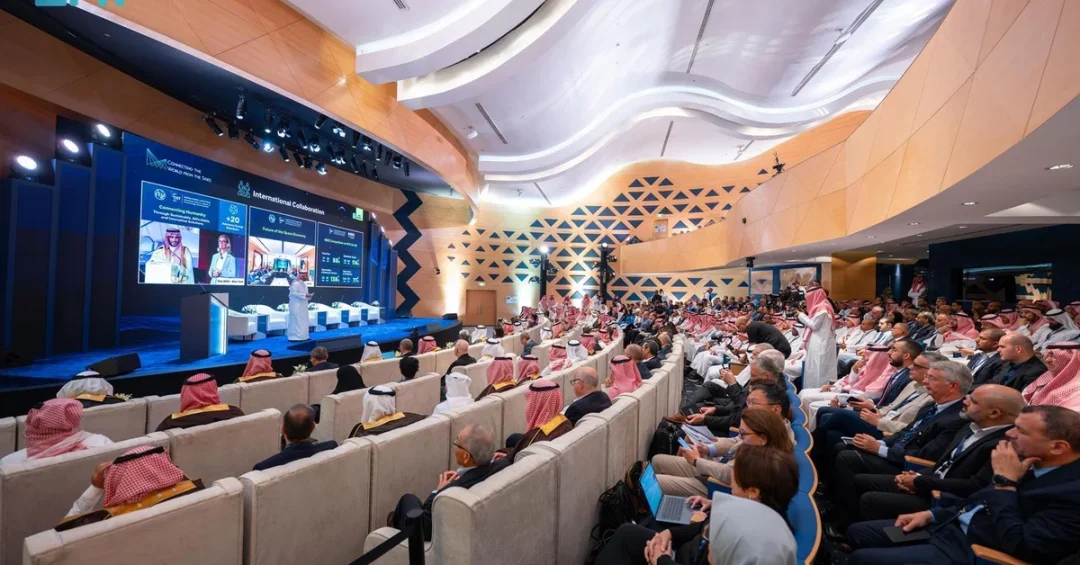
The Saudi Space Agency (SSA) concluded its participation in the 2024 International Forum on Non-Terrestrial Networks (NTN) in Riyadh on November 27, 2024, reinforcing the Kingdom’s growing role in shaping the future of global satellite communications and space exploration. The forum, organized by the Communications, Space and Technology Commission (CST) in collaboration with the International Telecommunication Union (ITU), brought together policymakers, industry leaders, and technology experts from around the world to chart a sustainable path for non-terrestrial networks. The SSA’s active engagement underscores Saudi Arabia’s commitment to advancing space communication technologies and fostering international cooperation in a sector that is rapidly redefining global connectivity.
Non-terrestrial networks refer to communication systems that operate beyond traditional ground-based infrastructure, including satellites, high-altitude platforms, and airborne vehicles. As the world seeks to bridge the digital divide and ensure reliable connectivity in remote and underserved regions, NTN has emerged as a critical enabler of universal access. The Riyadh forum provided a timely platform for stakeholders to discuss the technical, regulatory, and economic dimensions of this evolving ecosystem. For Saudi Arabia, participation in such high-level gatherings reflects its ambition to be a leader not only in space exploration but also in the technologies that will power the communications networks of tomorrow.
Context and Background
How did Saudi Arabia emerge as a central player in the global conversation on non-terrestrial networks? The Kingdom’s journey in the space sector has been marked by steady progress and strategic vision. The establishment of the Saudi Space Agency in 2018 signaled a new era of ambition, with a mandate to develop national capabilities, promote innovation, and position Saudi Arabia as a key contributor to the global space economy. Since then, the SSA has launched numerous initiatives, from satellite development to international partnerships, all aimed at harnessing space for the benefit of humanity.
The 2024 International Forum on NTN builds on this momentum. Organized by the Communications, Space and Technology Commission, the event aligns with Saudi Arabia’s broader efforts to diversify its economy and invest in knowledge-based industries. The CST, which regulates the communications and space sectors, has been instrumental in creating an enabling environment for innovation, while the ITU, a specialized United Nations agency, provides a global framework for coordination. Together, they convened a forum that addressed pressing questions about spectrum management, interoperability, and the role of satellite constellations in extending coverage to every corner of the planet.
The SSA’s participation was not merely symbolic. The agency contributed to two key panel discussions that tackled core topics aligned with the sector’s aspirations. These sessions explored the future of satellite communications and the role of NTN in ensuring global communication sustainability. By sharing its expertise and learning from international peers, the SSA demonstrated its commitment to driving innovation and enhancing its leadership role in advancing space communications infrastructure. The forum also served as a testament to Saudi Arabia’s ability to host major international events, further solidifying its reputation as a hub for diplomacy and technological exchange.
Key Details and Contributions
What specific contributions did the Saudi Space Agency make to the forum’s deliberations? During the two panel discussions, SSA representatives highlighted the Kingdom’s investments in satellite technology and its vision for a connected world. They discussed the importance of international collaboration in developing standards that ensure seamless integration between terrestrial and non-terrestrial networks. The agency also emphasized the need for sustainable practices in space, including the responsible management of orbital resources and the mitigation of space debris.
One panel focused on the future of satellite communications, where participants examined emerging trends such as low-Earth orbit (LEO) constellations, high-throughput satellites, and the convergence of 5G and satellite networks. The SSA shared insights from its own programs, including the development of advanced communication satellites and the exploration of new frequency bands. The second panel delved into the role of NTN in ensuring global communication sustainability, with discussions on how satellite systems can support disaster response, rural connectivity, and the Internet of Things (IoT). The SSA’s contributions underscored its holistic approach to space development, one that balances technological innovation with social and environmental responsibility.
The forum also provided an opportunity for the SSA to strengthen ties with international counterparts. Bilateral meetings on the sidelines of the event explored potential collaborations in satellite manufacturing, launch services, and data sharing. These interactions are expected to yield tangible outcomes, from joint research projects to commercial agreements, further integrating Saudi Arabia into the global space supply chain. The presence of high-level delegations from various countries and companies underscored the forum’s significance as a platform for networking and partnership building.
International and Regional Impact
How does Saudi Arabia’s engagement in NTN discussions resonate beyond its borders? The Kingdom’s active participation in the ITU-supported forum signals its willingness to contribute to global governance of space and telecommunications. As non-terrestrial networks become more prevalent, the need for coordinated policies on spectrum allocation, orbital debris mitigation, and cross-border data flows grows more urgent. By engaging in these conversations, Saudi Arabia helps shape rules that will govern the space economy for decades to come, ensuring that the interests of all nations, including developing countries, are taken into account.
Regionally, Saudi Arabia’s leadership in NTN aligns with its broader efforts to promote stability and prosperity in the Middle East. Reliable communication networks are essential for economic development, education, and healthcare, particularly in remote areas. By championing NTN, the Kingdom supports its neighbors in bridging the digital divide and fostering regional integration. Moreover, the forum’s success in Riyadh reinforces Saudi Arabia’s position as a convening power, capable of bringing together diverse stakeholders to address shared challenges. This soft power dividend complements the Kingdom’s diplomatic and economic outreach, enhancing its standing on the world stage.
The international impact extends to the private sector as well. Global companies specializing in satellite technology, ground equipment, and network integration are increasingly looking to Saudi Arabia as a market and partner. The forum facilitated dialogue between these firms and Saudi entities, paving the way for investment and technology transfer. As a result, the Kingdom is not only a consumer of space services but also an emerging hub for innovation, with the potential to export expertise and solutions to other regions. This two-way flow of knowledge and capital is a hallmark of Saudi Arabia’s Vision 2030 strategy, which seeks to diversify the economy and create high-value jobs.
Economic and Strategic Significance
What economic and strategic benefits does Saudi Arabia derive from its focus on non-terrestrial networks? The space economy is projected to grow exponentially in the coming years, with satellite communications playing a central role. By investing in NTN, Saudi Arabia positions itself to capture a significant share of this growth. The Kingdom’s sovereign wealth fund, the Public Investment Fund (PIF), has already made strategic investments in space-related ventures, and the SSA’s activities complement these efforts by fostering a conducive regulatory and technical environment. The development of local capabilities in satellite design, manufacturing, and operation can create jobs, stimulate research and development, and attract foreign direct investment.
Strategically, NTN enhances national security and resilience. Reliable satellite communications are vital for defense, emergency response, and critical infrastructure. By reducing dependence on foreign networks and building sovereign capabilities, Saudi Arabia strengthens its autonomy in a domain that is increasingly contested. Furthermore, leadership in NTN standard-setting gives the Kingdom a voice in international forums, allowing it to advocate for policies that reflect its interests and values. This strategic positioning is consistent with Saudi Arabia’s broader goal of becoming a pivotal player in global technology governance.
The economic ripple effects are also evident in adjacent sectors. The demand for NTN services spurs innovation in areas such as IoT, autonomous systems, and smart cities. Saudi Arabia’s giga-projects, including NEOM, rely on advanced connectivity to realize their vision of a fully digital, sustainable future. By integrating NTN into these developments, the Kingdom ensures that even the most remote locations can access high-speed internet and other digital services. This, in turn, supports economic diversification, social inclusion, and the delivery of government services online, all of which are central to Vision 2030.
Vision 2030 Alignment
How does the Saudi Space Agency’s participation in the NTN forum reflect the objectives of Vision 2030? Vision 2030 is a comprehensive blueprint for transforming Saudi Arabia into a diversified, knowledge-based economy. It emphasizes innovation, international collaboration, and the development of new sectors. The space industry, with its high-tech focus and potential for economic spillovers, is a natural fit. The SSA’s efforts to advance space communications infrastructure directly support the Vision’s goal of creating a thriving economy and enhancing the Kingdom’s global competitiveness.
Moreover, the forum’s emphasis on sustainability and global cooperation mirrors Vision 2030’s commitment to responsible development and international engagement. By participating in multilateral discussions, Saudi Arabia demonstrates its readiness to contribute to global solutions while advancing its own national interests. The SSA’s role in shaping the future of NTN also aligns with the Vision’s focus on youth empowerment and human capital development. As the space sector grows, it will offer exciting career opportunities for young Saudis, inspiring a new generation of scientists, engineers, and entrepreneurs. In this way, the agency’s work not only advances technology but also nurtures the talent that will drive the Kingdom’s future prosperity.
As the 2024 International Forum on Non-Terrestrial Networks concludes, the Saudi Space Agency’s participation stands as a clear signal of the Kingdom’s ambition to lead in the space age. Through collaboration, innovation, and a steadfast commitment to sustainability, Saudi Arabia is helping to build a connected world that leaves no one behind. The path forward is clear: continued investment in space technologies, active engagement in international forums, and a unwavering focus on the goals of Vision 2030. The future of global communications is being written today, and Saudi Arabia is proud to hold the pen.
20 Questions
Q1. What was the 2024 International Forum on Non-Terrestrial Networks?
A1. It was a global event held in Riyadh, organized by the Communications, Space and Technology Commission with the International Telecommunication Union, focusing on the future of satellite communications and non-terrestrial networks.
Q2. When did the Saudi Space Agency conclude its participation in the forum?
A2. The Saudi Space Agency concluded its participation on November 27, 2024, as announced by the Saudi Press Agency, following two days of intensive discussions and panel sessions in Riyadh.
Q3. Who organized the 2024 International NTN Forum?
A3. The forum was organized by the Communications, Space and Technology Commission (CST) in collaboration with the International Telecommunication Union (ITU), a specialized agency of the United Nations.
Q4. What are non-terrestrial networks (NTN)?
A4. NTN refers to communication systems that operate beyond traditional ground-based infrastructure, including satellites, high-altitude platforms, and airborne vehicles, designed to provide connectivity in remote or underserved areas.
Q5. Why is the Saudi Space Agency’s participation significant?
A5. It highlights the SSA’s role as a forward-thinking partner, aiming to support the development of space communication technologies and bolster international collaboration for a sustainable future in global communications and space exploration.
Q6. What key topics did the SSA address in the panel discussions?
A6. The SSA contributed to two panels: one on the future of satellite communications and another on the role of NTN in ensuring global communication sustainability, sharing insights on technology, standards, and responsible space practices.
Q7. How does the forum align with Saudi Arabia’s Vision 2030?
A7. The forum supports Vision 2030 by promoting innovation, international collaboration, and the growth of high-tech sectors, all of which are central to diversifying the economy and creating a knowledge-based society.
Q8. What is the role of the Communications, Space and Technology Commission?
A8. The CST regulates the communications, space, and technology sectors in Saudi Arabia, fostering an enabling environment for innovation and ensuring the Kingdom’s compliance with international standards and best practices.
Q9. How does NTN contribute to global communication sustainability?
A9. NTN extends coverage to remote areas, supports disaster response, enables IoT connectivity, and reduces the need for extensive ground infrastructure, thereby promoting sustainable and inclusive communication networks worldwide.
Q10. What economic benefits does NTN offer Saudi Arabia?
A10. NTN can stimulate job creation, attract foreign investment, foster research and development, and support the growth of related sectors such as IoT, smart cities, and autonomous systems, contributing to economic diversification.
Q11. How does the SSA collaborate internationally?
A11. The SSA engages with international counterparts through forums, bilateral meetings, and partnerships, sharing expertise and exploring joint projects in satellite manufacturing, launch services, and data sharing.
Q12. What is the significance of hosting the forum in Riyadh?
A12. Hosting the forum reinforces Saudi Arabia’s position as a convening power and a hub for technological exchange, showcasing its ability to organize major international events and lead in space-related discussions.
Q13. What are the strategic implications of NTN for Saudi Arabia?
A13. NTN enhances national security, resilience, and autonomy by reducing dependence on foreign networks and giving the Kingdom a voice in international standard-setting for space communications.
Q14. How does the SSA support youth and human capital development?
A14. The SSA’s initiatives inspire young Saudis to pursue careers in science, technology, engineering, and mathematics, offering opportunities for training, research, and entrepreneurship in the growing space sector.
Q15. What role does the ITU play in NTN development?
A15. The ITU facilitates global coordination on spectrum management, standards, and policies for non-terrestrial networks, ensuring interoperability and equitable access to space resources for all nations.
Q16. How does NTN support Saudi Arabia’s giga-projects like NEOM?
A16. NTN provides the high-speed, reliable connectivity needed for NEOM’s digital infrastructure, enabling smart city services, autonomous systems, and IoT applications even in remote desert locations.
Q17. What are the key challenges in deploying NTN?
A17. Challenges include spectrum allocation, orbital debris mitigation, interoperability between terrestrial and satellite networks, and ensuring affordable access, all of which require international cooperation and innovative solutions.
Q18. How does the SSA’s participation benefit the global space community?
A18. By sharing its expertise and learning from others, the SSA contributes to the collective knowledge base, promotes best practices, and helps shape a sustainable and inclusive future for global space communications.
Q19. What future initiatives can we expect from the SSA?
A19. The SSA is expected to continue investing in satellite technology, expanding international partnerships, and launching programs that align with Vision 2030, such as advanced communication satellites and space exploration missions.
Q20. How can international stakeholders engage with Saudi Arabia’s space sector?
A20. Stakeholders can collaborate through the CST, the SSA, and the ITU, participating in forums, joint ventures, and research projects to leverage Saudi Arabia’s growing space ecosystem and strategic location.
Reader Feedback
We value your thoughts. Please share your feedback on this article.
Your feedback helps us improve our coverage.
Related articles
 Saudi Water Innovation Wins Impact Award in Jeddah
 Saudi Arabia Showcases Geospatial Leadership at GeoWorld Summit
 Tuwaiq Academy to Hold 150 Technical Bootcamps in 2025
 JEDI, RDIA Announce Plans for Advanced Research Cooperation
 Saudi Arabia Stresses AI’s Vital Role in Scientific Research
 K.A.CARE Completes High Concentration Photovoltaic System