


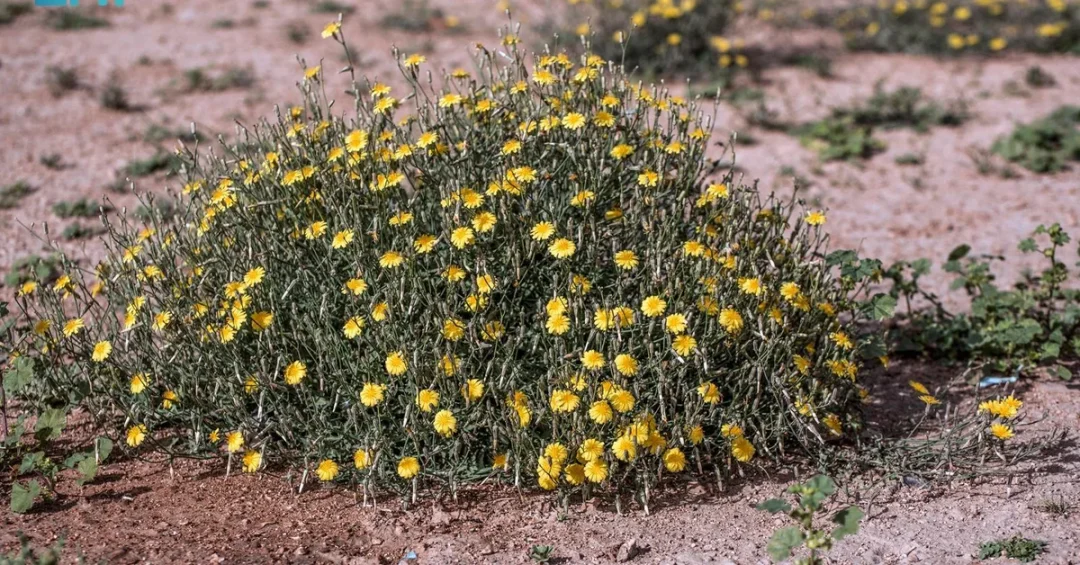
The Northern Borders Region of Saudi Arabia has been transformed into a vibrant spring landscape following recent rains, with the desert blooming with the bright yellow blossoms of the Arfaj plant (Rhanterium epapposum), according to the Saudi Press Agency (SPA). The flourishing of this native desert species across the region’s steppes and dunes has drawn attention to the Kingdom’s rich natural heritage and the resilience of its wild flora.
The Arfaj, a perennial shrub deeply rooted in Saudi Arabia’s ecological and cultural identity, has burst into bloom across the Northern Borders Region, creating a rare and captivating spectacle in an area typically defined by its arid terrain. The transformation, reported by SPA on April 10, 2025, underscores the important role that seasonal rains play in revitalizing the Kingdom’s desert ecosystems. It also highlights the ongoing efforts by Saudi environmental authorities to protect and sustain these natural landscapes as part of the nation’s broader environmental strategy. The blooming Arfaj is more than a visual marvel; it is a living symbol of the Kingdom’s commitment to ecological balance and the preservation of its unique biodiversity for future generations.
Context and Background
What makes the Arfaj so significant to Saudi Arabia’s desert ecology and cultural heritage? The Arfaj plant, known scientifically as Rhanterium epapposum, is one of the most important native species in the Kingdom’s arid and semi-arid environments. It is particularly abundant in the Northern Borders Region, where its deep taproots allow it to access water far below the surface, enabling it to survive and even thrive in some of the harshest conditions on Earth. The plant is easily recognized by its bright yellow flowers, which appear at the start of spring, and by its light, pleasant aromatic scent that carries across the desert breeze.
Historically, the Arfaj has been a vital component of the region’s ecosystem, serving as a source of food for livestock during certain seasons and playing a critical role in soil stabilization. Its presence helps combat desertification, a challenge that Saudi Arabia has addressed through ambitious national programs, including the Saudi Green Initiative. The plant’s ability to lose its leaves in autumn and regenerate in spring is a testament to its remarkable adaptation to the desert climate. As the rains replenish the soil, the Arfaj returns to life, painting the Northern Borders Region with a vibrant yellow hue that attracts both wildlife and nature enthusiasts.
The recent rains that triggered this blooming event are part of the natural climatic patterns of the region, but their impact is amplified by the conservation efforts of Saudi environmental authorities. These agencies have been working diligently to protect plant cover through community awareness programs and the prevention of overgrazing. Such measures ensure that the Arfaj and other native species can continue to flourish, maintaining the ecological balance that is essential for the Kingdom’s environmental identity and the well-being of its people.
Key Details
How does the Arfaj plant manage to thrive in one of the world’s most challenging climates? According to SPA, the Arfaj reaches a height of approximately sixty centimeters, with a silvery stem and linear leaves that are about two centimeters long. Its deep taproot system is a key survival mechanism, allowing it to absorb water from deeper soil levels even when surface moisture is scarce. This adaptation is particularly important in the Northern Borders Region, where rainfall is infrequent but can be intense when it occurs.
The plant’s life cycle is closely tied to the seasons. It sheds its leaves in autumn, entering a period of dormancy, and then bursts back into bloom at the start of spring. The bright yellow flowers that cover the shrub during this period are not only visually striking but also serve as an important source of nectar for pollinators. The Arfaj’s ability to regenerate after rain is a natural phenomenon that has captured the attention of environmentalists and researchers alike, as it demonstrates the resilience of desert ecosystems when given the chance to recover.
Environmental authorities in Saudi Arabia are actively working to ensure that this natural treasure is preserved. Community awareness programs are designed to educate local populations about the importance of sustainable grazing practices and the need to protect plant cover. The prevention of overgrazing is particularly crucial, as excessive livestock grazing can damage the Arfaj and other native plants, reducing their ability to stabilize the soil and support biodiversity. These efforts are part of a larger national strategy to conserve the Kingdom’s natural resources and promote environmental sustainability.
International and Regional Impact
Why should the blooming of a desert plant in Saudi Arabia matter beyond the Kingdom’s borders? The Arfaj’s flourishing in the Northern Borders Region is a powerful example of how natural ecosystems can recover and thrive when properly managed. It also highlights Saudi Arabia’s growing role in global environmental diplomacy. As the Kingdom prepares to host major international events and continues to invest in green initiatives, stories like this one reinforce its commitment to combating climate change and desertification on a global scale.
Regionally, the blooming of the Arfaj serves as a reminder of the shared ecological heritage of the Arabian Peninsula. The Northern Borders Region, which shares boundaries with Jordan and Iraq, is part of a larger desert ecosystem that transcends national borders. The health of this ecosystem has implications for regional biodiversity, climate resilience, and even food security, given the Arfaj’s role as a grazing plant. Saudi Arabia’s efforts to protect its plant cover can serve as a model for neighboring countries facing similar environmental challenges.
Furthermore, the sight of the desert in bloom is a unique tourism attraction that could draw visitors interested in ecotourism and natural beauty. The Kingdom’s Vision 2030 includes ambitious goals for expanding tourism, and the Northern Borders Region’s springtime landscapes offer a compelling destination for those seeking to experience the raw beauty of the Arabian desert. By showcasing its natural wonders, Saudi Arabia can diversify its tourism offerings and attract a new segment of international travelers.
Economic and Strategic Significance
What economic value does a plant like the Arfaj bring to Saudi Arabia? While the Arfaj is not a commercial crop, its ecological services are invaluable. By stabilizing the soil and preventing erosion, it helps protect infrastructure, agricultural land, and water resources. The plant’s role in combating desertification also supports the Kingdom’s long-term economic stability, as desertification poses a threat to food production, water availability, and urban development. The Arfaj is thus a silent but essential ally in Saudi Arabia’s quest for sustainable development.
Strategically, the preservation of native plant species like the Arfaj aligns with the goals of Saudi Vision 2030, which emphasizes environmental sustainability as a cornerstone of the Kingdom’s future. The Saudi Green Initiative, launched by His Royal Highness Crown Prince Mohammed bin Salman, aims to plant billions of trees and rehabilitate millions of hectares of land. The Arfaj’s natural proliferation is a positive sign that these efforts are bearing fruit. It also demonstrates the importance of integrating traditional knowledge with modern conservation science, as local communities have long understood the value of this resilient plant.
Moreover, the blooming Arfaj can serve as an educational resource, inspiring younger generations to appreciate and protect their natural heritage. Schools and universities in the Northern Borders Region could use this phenomenon to teach students about ecology, conservation, and the importance of sustainable practices. By fostering a sense of stewardship for the environment, Saudi Arabia is investing in a future where economic growth and ecological health go hand in hand.
Vision 2030 Alignment
How does the blooming of the Arfaj reflect the broader aspirations of Saudi Vision 2030? The Vision, a comprehensive plan to diversify the Kingdom’s economy and enhance its global standing, places a strong emphasis on environmental sustainability and quality of life. The protection and promotion of native plant species like the Arfaj are directly in line with the Vision’s environmental objectives, which include preserving natural resources, reducing desertification, and increasing green cover. The sight of the desert in bloom is a vivid reminder of what can be achieved when development is balanced with environmental stewardship.
As Saudi Arabia continues to implement Vision 2030, stories like the Arfaj’s springtime resurgence will become increasingly common. They symbolize the Kingdom’s resilience, its respect for nature, and its determination to create a better future for all. The Northern Borders Region, once known primarily for its remote beauty, is now emerging as a showcase of Saudi Arabia’s environmental progress. Through continued conservation efforts and community engagement, the Arfaj will remain a cherished part of the Kingdom’s natural heritage, blooming year after year as a testament to the success of Vision 2030 and the enduring spirit of the Saudi people.
20 Questions
Q1. What is the Arfaj plant and why is it significant in Saudi Arabia?
A1. The Arfaj (Rhanterium epapposum) is a native desert shrub known for its bright yellow flowers and resilience. It is significant for soil stabilization, combating desertification, and providing food for livestock, making it a vital part of Saudi Arabia’s ecological and cultural heritage.
Q2. Where in Saudi Arabia is the Arfaj plant most commonly found?
A2. The Arfaj is especially abundant in the Northern Borders Region, where its deep taproots allow it to thrive in arid and semi-arid conditions. It is also found in other desert areas across the Kingdom.
Q3. What recent event has caused the Arfaj to bloom in the Northern Borders Region?
A3. Recent rains in the region have replenished the soil, triggering the Arfaj to bloom. This seasonal phenomenon transforms the desert landscape with vibrant yellow blossoms, as reported by the Saudi Press Agency.
Q4. How does the Arfaj plant survive in harsh desert conditions?
A4. The Arfaj has deep taproots that absorb water from deeper soil levels, and it sheds its leaves in autumn to conserve moisture. Its silvery stem and linear leaves also help reduce water loss.
Q5. What role does the Arfaj play in combating desertification?
A5. The Arfaj helps stabilize the soil with its root system, preventing erosion and reducing the spread of desertification. Its presence supports the overall health of desert ecosystems and protects valuable land resources.
Q6. How tall does the Arfaj plant typically grow?
A6. The Arfaj reaches a height of about sixty centimeters. Its stem tends to be silvery in color, and its leaves are linear, each about two centimeters long.
Q7. What does the Arfaj smell like?
A7. The Arfaj is known for its light, pleasant aromatic scent, which is often noticed in the desert breeze during its blooming season. This fragrance adds to the sensory experience of the spring landscape.
Q8. When does the Arfaj bloom, and how long does the blooming last?
A8. The Arfaj blooms at the start of spring after losing its leaves in autumn. The blooming period is tied to seasonal rains and typically lasts for several weeks, depending on weather conditions.
Q9. Are there any efforts to protect the Arfaj plant in Saudi Arabia?
A9. Yes, environmental authorities are working to protect plant cover through community awareness programs and the prevention of overgrazing. These efforts aim to ensure the sustainability of natural landscapes and the Arfaj’s long-term survival.
Q10. How does overgrazing affect the Arfaj and other native plants?
A10. Overgrazing can damage the Arfaj and other native plants by reducing their ability to regenerate and stabilize the soil. This can lead to desertification and loss of biodiversity, which is why authorities regulate grazing practices.
Q11. What is the scientific name of the Arfaj plant?
A11. The scientific name of the Arfaj plant is Rhanterium epapposum. It belongs to the Asteraceae family and is well-adapted to the arid environments of the Arabian Peninsula.
Q12. Is the Arfaj plant used for any traditional purposes?
A12. Yes, the Arfaj has traditionally been used as a grazing plant for livestock. Its presence also supports traditional Bedouin lifestyles and is valued for its role in maintaining the desert ecosystem.
Q13. How does the Arfaj contribute to biodiversity in the desert?
A13. The Arfaj provides food and habitat for various insects, birds, and small animals. Its flowers attract pollinators, and its seeds are eaten by birds, helping to sustain a diverse desert food web.
Q14. What is the significance of the Arfaj’s deep taproot system?
A14. The deep taproot allows the Arfaj to access water stored deep in the soil, enabling it to survive long dry periods. This adaptation is crucial for its survival in the harsh desert climate.
Q15. How do recent rains in Saudi Arabia affect desert vegetation?
A15. Recent rains replenish soil moisture, triggering the germination and blooming of desert plants like the Arfaj. This transforms the landscape and supports the recovery of vegetation, benefiting wildlife and livestock.
Q16. What is the Saudi Green Initiative and how does it relate to the Arfaj?
A16. The Saudi Green Initiative is a national effort to combat climate change, increase green cover, and protect the environment. The Arfaj’s natural proliferation supports these goals by enhancing soil health and biodiversity.
Q17. Can the blooming of the Arfaj attract tourism to the Northern Borders Region?
A17. Yes, the spectacular blooming of the Arfaj can attract ecotourists interested in desert landscapes. This aligns with Vision 2030’s goal to diversify tourism and showcase Saudi Arabia’s natural beauty.
Q18. How does the Arfaj support livestock in Saudi Arabia?
A18. The Arfaj is an important grazing plant, providing food for livestock such as camels and sheep during certain seasons. Its availability helps sustain traditional pastoral practices in the desert.
Q19. What can individuals do to help protect the Arfaj and similar native plants?
A19. Individuals can support conservation by respecting grazing regulations, participating in community awareness programs, and avoiding activities that damage plant cover. Promoting sustainable practices helps ensure the Arfaj’s survival.
Q20. How does the blooming of the Arfaj reflect Saudi Arabia’s environmental progress?
A20. The blooming Arfaj symbolizes the success of Saudi Arabia’s environmental conservation efforts and its commitment to sustainability under Vision 2030. It demonstrates that with proper management, desert ecosystems can thrive.
Reader Feedback
We value your thoughts. Please share your feedback on this article.
Your feedback helps us improve our coverage.
Related articles
 KSrelief Supports Mogadishu Blood Bank Serving 259 in March
 King Khalid Airport Ranks 24th in Skytrax 2025
 Saudi FM Meets U.S. National Security Advisor at White House
 Sidr Trees: A Symbol of Life and Heritage in Najran
 Saudi Arabia Weather Forecast for Thursday: Thunderstorms Expected
 KSrelief Mobile Clinics Treat 954 in Yemen’s Hajjah