


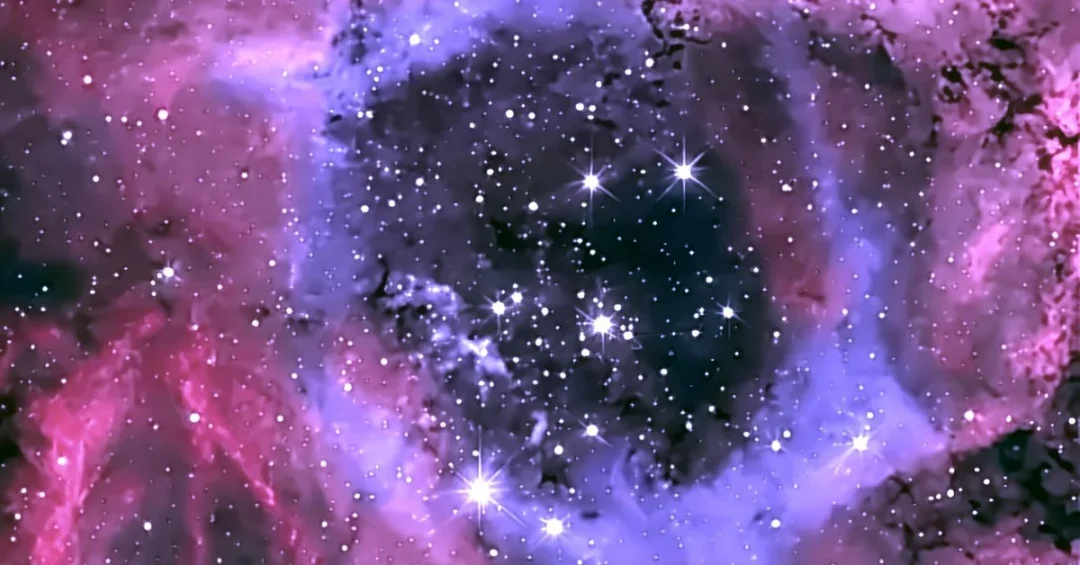
The Noor Astronomy Observatory in Saudi Arabia’s Qassim Region has captured a striking image of the Rosette Nebula, revealing glowing gas clouds in shades of pink, purple, and blue alongside the open star cluster NGC 2244, according to the Saudi Press Agency. The observation, announced on October 25, 2026, from Buraidah, highlights the Kingdom’s growing capabilities in astronomical imaging and public science engagement. The image showcases how newly formed stars in the cluster shape their surroundings through intense radiation and stellar winds, offering a vivid window into the lifecycle of stars and the dynamic nature of deep-space objects.
Why does a single photograph of a distant nebula matter for a nation rapidly transforming its economy and society? The answer lies in how such achievements reflect Saudi Arabia’s broader commitment to scientific advancement, education, and technological capacity-building under Vision 2030. The Rosette Nebula, located thousands of light-years from Earth, is a stellar nursery where new stars are born, and capturing its intricate details requires sophisticated equipment and expertise. The Noor Astronomy Observatory’s success demonstrates that Saudi-based institutions are increasingly capable of contributing to global astronomical knowledge while inspiring a new generation of scientists and enthusiasts within the Kingdom.
Context and Background
What makes the Rosette Nebula such a compelling target for astronomers? Located in the constellation Monoceros, approximately 5,000 light-years from Earth, the Rosette Nebula is a vast cloud of gas and dust where new stars are actively forming. At its heart lies the open star cluster NGC 2244, whose massive, hot stars emit powerful ultraviolet radiation that ionizes the surrounding hydrogen gas, causing it to glow in the characteristic red, pink, and purple hues visible in the Noor Astronomy Observatory’s image. The nebula spans roughly 130 light-years across, making it one of the more prominent star-forming regions in our galaxy.
The Noor Astronomy Observatory, based in the Qassim Region, has been steadily building its reputation as a center for astronomical observation and public outreach in Saudi Arabia. Issa Al-Ghafili, head of Noor Astronomy, emphasized that capturing such celestial scenes supports ongoing efforts to promote astronomical knowledge and encourage public interest in observing and learning about celestial bodies. He noted that astrophotography reveals cosmic details invisible to the naked eye, stimulates scientific curiosity, and promotes scientific literacy. This aligns with a broader movement in the Kingdom to expand access to science education and foster a culture of inquiry and discovery.
Why has Saudi Arabia prioritized astronomy and space sciences in recent years? The Kingdom has recognized that building a knowledge-based economy requires investment in scientific research, technology, and education. Astronomy, as a discipline that captures the public imagination, serves as an effective gateway to broader scientific engagement. By supporting observatories like Noor Astronomy and promoting events such as stargazing nights and astrophotography workshops, Saudi Arabia is cultivating a scientifically literate population that can contribute to innovation and technological advancement.
Key Details
What exactly does the image captured by the Noor Astronomy Observatory reveal? The photograph displays the Rosette Nebula’s glowing gas clouds in vivid shades of pink, purple, and blue, with the open star cluster NGC 2244 at its center. The cluster’s newly formed stars, some of which are only a few million years old, are shaping their surroundings through radiation and stellar winds. These winds are so powerful that they have carved out a cavity in the nebula, creating the flower-like appearance that gives the Rosette its name. The image captures not just the beauty of the nebula but also the dynamic processes that drive star formation and galactic evolution.
Issa Al-Ghafili, head of Noor Astronomy, stated that astrophotography is a powerful tool for scientific outreach. He explained that images like this one make astronomical concepts more accessible to the public, allowing people to appreciate the scale and complexity of the universe. He also emphasized the importance of advancing astronomical observation and imaging as effective tools for promoting scientific literacy. The observatory’s work is part of a larger effort to engage Saudi citizens and residents in science, technology, engineering, and mathematics (STEM) fields, which are critical to the Kingdom’s economic diversification goals.
How does the Noor Astronomy Observatory’s achievement compare with global astronomical efforts? While Saudi Arabia’s astronomical community is still growing, the successful capture of the Rosette Nebula demonstrates that local institutions can produce high-quality astronomical images that rival those from more established observatories. The observatory’s use of advanced imaging techniques and equipment reflects the Kingdom’s increasing investment in scientific infrastructure. This achievement also positions Saudi Arabia as a contributor to international astronomical research and education, potentially attracting collaboration with global space agencies and research institutions.
International and Regional Impact
Why should the international community take note of Saudi Arabia’s astronomical achievements? The Kingdom’s growing presence in space sciences and astronomy signals its ambition to play a larger role in global scientific endeavors. Saudi Arabia has already made strides in space exploration, including the establishment of the Saudi Space Commission and the launch of satellites for communications and Earth observation. The Noor Astronomy Observatory’s work complements these efforts by fostering a grassroots interest in astronomy and building a pipeline of skilled scientists and engineers. International collaboration in astronomy often involves sharing data, expertise, and resources, and Saudi Arabia’s active participation can enrich the global scientific community.
What regional impact might this have? In the Middle East, Saudi Arabia’s leadership in astronomy and space sciences can inspire neighboring countries to invest in their own scientific capabilities. The Kingdom’s initiatives, such as the annual Saudi Astronomy and Space Conference, bring together experts from across the region to share knowledge and best practices. By highlighting the beauty and scientific value of celestial objects like the Rosette Nebula, Saudi Arabia is fostering a regional culture of scientific curiosity and cooperation. This soft power approach enhances the Kingdom’s reputation as a modern, forward-looking nation that values knowledge and innovation.
Economic and Strategic Significance
How does astronomy relate to Saudi Arabia’s economic diversification? While astronomy may seem far removed from economic policy, it is part of a broader strategy to develop a knowledge-based economy. The Kingdom’s Vision 2030 plan emphasizes the importance of education, innovation, and technology as drivers of sustainable growth. By investing in scientific fields like astronomy, Saudi Arabia is building human capital and creating opportunities for high-tech industries. The skills developed through astronomy—such as data analysis, instrumentation, and problem-solving—are transferable to sectors like aerospace, defense, and information technology.
What strategic benefits does space science offer? Space and astronomy are increasingly linked to national security, communications, and environmental monitoring. Saudi Arabia’s investments in space technology, including satellite development and launch capabilities, serve both civilian and strategic purposes. The Noor Astronomy Observatory’s work contributes to this ecosystem by promoting public awareness and support for space-related initiatives. As the Kingdom continues to expand its space program, a scientifically engaged populace will be essential for sustaining political and financial backing for these endeavors.
Vision 2030 Alignment
How does the Noor Astronomy Observatory’s achievement align with Vision 2030? Vision 2030 aims to transform Saudi Arabia into a diversified, knowledge-based economy and a global leader in various fields, including science and technology. The observatory’s successful capture of the Rosette Nebula exemplifies the Kingdom’s progress in building scientific capacity and promoting STEM education. By encouraging public interest in astronomy, the observatory supports the Vision’s goal of fostering a vibrant society where citizens are engaged in lifelong learning and cultural enrichment. This aligns with the Quality of Life program, which seeks to enhance recreational and educational opportunities for all Saudis.
What does the future hold for astronomy in Saudi Arabia? With continued investment in education, infrastructure, and international partnerships, the Kingdom is poised to make significant contributions to astronomy and space science. The Noor Astronomy Observatory’s work is a testament to what can be achieved when passion for science meets national vision. As Saudi Arabia looks to the stars, it is also building a brighter future on Earth, one where scientific curiosity and innovation drive prosperity and global respect. The image of the Rosette Nebula is not just a beautiful picture; it is a symbol of the Kingdom’s journey toward a knowledge-driven society and its commitment to inspiring the next generation of explorers and thinkers.
20 Questions
Q1. What is the Rosette Nebula?
A1. The Rosette Nebula is a large cloud of gas and dust in the constellation Monoceros, about 5,000 light-years from Earth, where new stars are forming. It is known for its flower-like appearance and glowing pink, purple, and blue colors.
Q2. Who captured the image of the Rosette Nebula?
A2. The Noor Astronomy Observatory in the Qassim Region of Saudi Arabia captured the image. The observatory is led by Issa Al-Ghafili and focuses on astronomical observation and public outreach.
Q3. What is the significance of this image for Saudi Arabia?
A3. The image demonstrates Saudi Arabia’s growing capabilities in astronomical imaging and supports efforts to promote scientific literacy and public interest in astronomy, aligning with Vision 2030’s goals for education and innovation.
Q4. What is NGC 2244?
A4. NGC 2244 is an open star cluster at the center of the Rosette Nebula. Its newly formed, hot stars emit radiation and stellar winds that shape the surrounding nebula, creating its distinctive appearance.
Q5. How does astrophotography promote scientific literacy?
A5. Astrophotography reveals cosmic details invisible to the naked eye, stimulates scientific curiosity, and makes astronomical concepts more accessible to the public, thereby promoting scientific literacy and engagement.
Q6. Where is the Noor Astronomy Observatory located?
A6. The Noor Astronomy Observatory is located in the Qassim Region of Saudi Arabia. It is a center for astronomical observation and public outreach, contributing to the Kingdom’s scientific development.
Q7. What did Issa Al-Ghafili say about the image?
A7. Issa Al-Ghafili, head of Noor Astronomy, said capturing such celestial scenes supports efforts to promote astronomical knowledge, encourage public interest in observing celestial bodies, and make astronomical concepts more accessible through images.
Q8. Why is the Rosette Nebula important for astronomers?
A8. The Rosette Nebula is a stellar nursery where new stars are actively forming. It provides insights into star formation, stellar winds, and the interaction between stars and their environment, making it a valuable target for research.
Q9. How does this achievement reflect Saudi Arabia’s Vision 2030?
A9. It reflects Vision 2030’s emphasis on building a knowledge-based economy, promoting STEM education, and fostering a vibrant society. The observatory’s work supports these goals by engaging the public in science.
Q10. What are stellar winds?
A10. Stellar winds are streams of charged particles emitted by stars. In the Rosette Nebula, the powerful winds from NGC 2244’s stars carve out a cavity and shape the surrounding gas clouds.
Q11. What colors are visible in the image of the Rosette Nebula?
A11. The image reveals glowing gas clouds in shades of pink, purple, and blue. These colors result from ionized hydrogen and other gases emitting light at specific wavelengths.
Q12. How far is the Rosette Nebula from Earth?
A12. The Rosette Nebula is approximately 5,000 light-years away from Earth. This distance means the light we see today left the nebula thousands of years ago.
Q13. What is the role of the Saudi Press Agency in this announcement?
A13. The Saudi Press Agency (SPA) reported the image capture, highlighting the Noor Astronomy Observatory’s achievement and its contribution to promoting astronomical knowledge in the Kingdom.
Q14. How can the public get involved in astronomy in Saudi Arabia?
A14. The public can participate in stargazing events, astrophotography workshops, and educational programs offered by observatories like Noor Astronomy. These initiatives aim to make astronomy accessible to all.
Q15. What equipment is needed to capture such images?
A15. Capturing images like the Rosette Nebula requires telescopes with specialized filters, cameras capable of long exposures, and tracking mounts to compensate for Earth’s rotation. Advanced image processing is also essential.
Q16. Why is astronomy important for Saudi Arabia’s future?
A16. Astronomy fosters scientific curiosity, critical thinking, and technological skills. It supports the development of a knowledge-based economy and inspires youth to pursue careers in STEM fields, benefiting the Kingdom’s long-term growth.
Q17. What other celestial objects has Noor Astronomy Observatory captured?
A17. While specific past targets are not detailed in the announcement, the observatory regularly captures various celestial objects to promote public engagement and scientific education, contributing to Saudi Arabia’s astronomical community.
Q18. How does this image contribute to global astronomy?
A18. The image adds to the global collection of astronomical data and showcases Saudi Arabia’s emerging role in astronomy. It may encourage international collaboration and inspire other nations in the region to invest in space sciences.
Q19. What is the Qassim Region’s significance in Saudi Arabia?
A19. The Qassim Region is known for its agricultural heritage and cultural traditions. Hosting the Noor Astronomy Observatory highlights its growing role in science and education, diversifying its contributions to the Kingdom.
Q20. What message does this achievement send to the world?
A20. It signals that Saudi Arabia is committed to scientific advancement and global cooperation. The Kingdom is not only preserving its heritage but also building a future driven by knowledge, innovation, and exploration.
Reader Feedback
We value your thoughts. Please share your feedback on this article.
Your feedback helps us improve our coverage.