


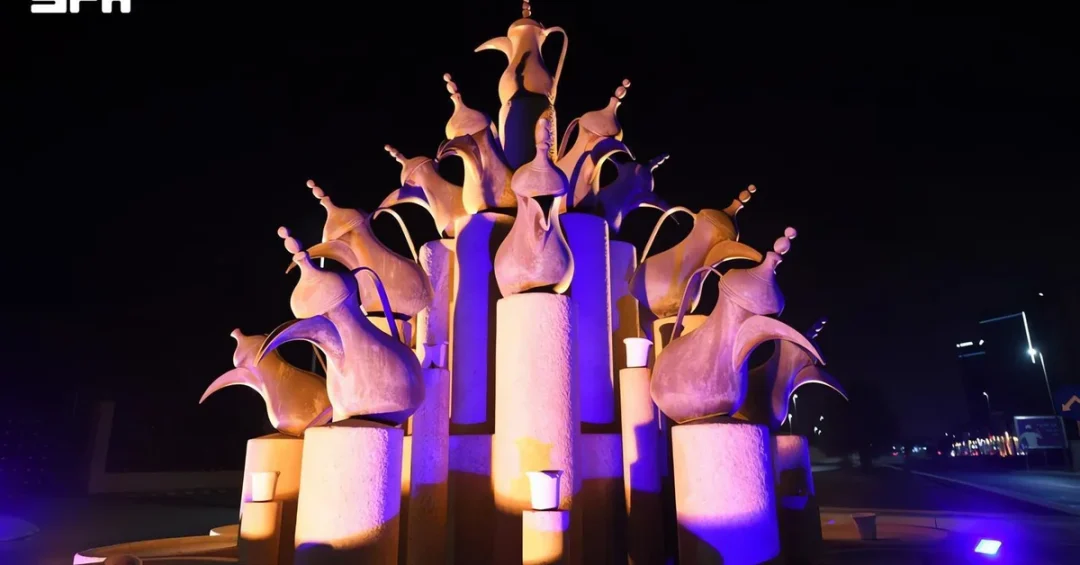
Squares across Jeddah Governorate are home to a distinctive collection of public sculptures that have become an integral part of the city’s urban landscape, offering residents and visitors alike the opportunity to experience art in everyday public spaces, according to the Saudi Press Agency (SPA). These works, scattered across the governorate’s plazas and thoroughfares, represent far more than decorative flourishes; they are markers of Jeddah’s identity as a city where cultural heritage and modern urban development coexist. The sculptures, created by both Saudi and international artists, reflect the Kingdom’s broader commitment to enriching quality of life and fostering cultural expression under Saudi Vision 2030.
Among the most recognizable of these landmarks is the bicycle sculpture, designed by Spanish architect Julio Lafuente as an oversized bicycle. This playful yet monumental work has become synonymous with well-known locations across the city, serving as a meeting point and a photographic backdrop for countless residents and tourists. Its presence underscores how public art can transform ordinary urban spaces into destinations that spark curiosity and engagement. The bicycle sculpture, like many others in Jeddah, illustrates the city’s long-standing tradition of integrating artistic works into its civic fabric, a practice that continues to evolve as Jeddah undergoes significant urban transformation. How many cities can claim such a seamless blend of art and daily life?
Another notable artwork is the sword sculpture, created by Belgian artist Hubert Minnebo in 1982. This piece combines artistic composition with symbolic significance, reflecting the diversity of artistic styles that characterize the governorate’s public spaces. The sword sculpture, with its bold form and historical resonance, stands as a testament to Jeddah’s role as a crossroads of cultures and a hub for creative expression. Together with the bicycle sculpture and other works, it contributes to a rich visual narrative that enriches the urban experience for all who encounter it. These sculptures are not merely static objects; they are active participants in the life of the city, inviting reflection and dialogue.
Context and Background
What makes a city’s public art collection more than just a series of isolated installations? In Jeddah, the answer lies in a deliberate and sustained effort to weave artistic works into the urban fabric, creating a coherent cultural legacy that spans decades. The presence of sculptures by international artists such as Julio Lafuente and Hubert Minnebo dates back to the late 20th century, when Jeddah began to embrace public art as a means of enhancing its civic identity. Over the years, these works have been joined by others, forming a distributed gallery that is accessible to everyone, free of charge. This approach aligns with the Kingdom’s broader vision of making culture and the arts an integral part of daily life, not confined to museums or private collections.
The Jeddah Municipality has played a pivotal role in preserving and promoting this artistic heritage. In April 2026, the municipality launched an initiative to raise public awareness of the importance of the city’s aesthetic sculptures. This initiative included a photography project focused on Jeddah’s landmarks, culminating in an exhibition whose first phase featured 25 photographs selected from a pool of 100. Additionally, a dedicated webpage was launched, listing the sculptures along with their artistic significance, designers, completion dates, and locations. This digital resource serves as a comprehensive guide for residents and visitors, making the city’s artistic heritage more accessible than ever before. By documenting and sharing these works, the municipality ensures that their stories and contexts are preserved for future generations.
The initiative reflects a growing recognition that public art contributes to social cohesion, tourism appeal, and urban identity. It also highlights the collaborative efforts between government entities and the community to celebrate Jeddah’s unique character. As the city continues to expand and modernize, these sculptures provide a sense of continuity and rootedness, reminding everyone of the cultural layers that have shaped Jeddah over time. In a rapidly changing urban environment, such touchstones are invaluable.
Key Details
What specific elements make Jeddah’s sculpture initiative stand out on the global stage? The April 2026 initiative by Jeddah Municipality is notable for its comprehensive approach. The photography exhibition, which drew from 100 submissions to select 25 final images, showcases the sculptures through the lens of local photographers, offering fresh perspectives on familiar works. This participatory element engages the community directly, turning residents into storytellers of their own city. The accompanying webpage serves as a permanent digital archive, providing detailed information about each sculpture, including the artist’s name, the year of completion, and its location. Such transparency and accessibility are hallmarks of effective cultural stewardship.
The sculptures themselves vary widely in style, material, and theme, reflecting the diverse influences that have shaped Jeddah’s artistic landscape. The bicycle sculpture by Julio Lafuente, for instance, is a whimsical, larger-than-life representation that invites interaction and playfulness. The sword sculpture by Hubert Minnebo, created in 1982, carries a more solemn, symbolic weight, evoking notions of strength and heritage. Other works, though not detailed in the SPA report, contribute to this eclectic mix, ensuring that there is something to appeal to every taste and interest. This diversity is a strength, demonstrating that public art can encompass multiple narratives and aesthetics simultaneously.
Moreover, the initiative underscores the importance of documentation and education. By cataloging the sculptures and making the information publicly available, the municipality empowers residents and tourists to explore the city’s art at their own pace. It also provides a foundation for future research and curation, ensuring that these works are not forgotten or overlooked. In an era where urban development can sometimes erase cultural landmarks, Jeddah’s proactive stance is a model worth emulating. The initiative not only celebrates the sculptures but also reinforces their role as vital components of the city’s identity.
International and Regional Impact
How does Jeddah’s public art scene influence perceptions of Saudi Arabia on the international stage? The presence of works by renowned international artists like Julio Lafuente and Hubert Minnebo signals that Jeddah has long been open to global artistic currents. This openness fosters cultural diplomacy, showing that the Kingdom values cross-cultural exchange and collaboration. For international visitors, encountering these sculptures can be a pleasant surprise, revealing a side of Saudi Arabia that is creative, cosmopolitan, and welcoming. As the Kingdom continues to open up to tourism and international engagement, such cultural assets become powerful ambassadors, telling a story of a nation that embraces both tradition and modernity.
Regionally, Jeddah’s approach to public art can serve as an inspiration for other cities in the Gulf and beyond. By integrating art into urban planning, cities can enhance their livability, attract tourism, and foster a sense of community pride. Jeddah’s initiative to document and promote its sculptures demonstrates how a relatively simple project can yield significant cultural and economic benefits. It also aligns with the broader regional trend of investing in cultural infrastructure as a driver of soft power and economic diversification. In this context, Jeddah’s sculptures are not just local treasures; they are part of a larger movement to position the region as a global cultural hub.
Economic and Strategic Significance
What economic value can be derived from a city’s public art collection? While sculptures may not generate direct revenue, they contribute to the attractiveness of Jeddah as a destination for tourists and investors. A vibrant cultural scene enhances quality of life, which in turn attracts talent and businesses. The Jeddah Municipality’s initiative to promote the sculptures through exhibitions and online resources can stimulate cultural tourism, drawing visitors who are interested in art and heritage. This aligns with Saudi Vision 2030’s goal of diversifying the economy away from oil and expanding the tourism and entertainment sectors. By investing in cultural assets, Jeddah is positioning itself as a key player in the Kingdom’s broader economic transformation.
Strategically, the sculptures reinforce Jeddah’s identity as a historic gateway city that blends tradition with modernity. As the city undergoes rapid urban development, these artworks provide a sense of place and continuity. They also serve as focal points for community gatherings and events, contributing to social cohesion. The municipality’s efforts to document and share information about the sculptures can facilitate partnerships with cultural institutions, sponsors, and artists, potentially leading to new commissions and collaborations. In the long run, a well-preserved and promoted public art collection can become a defining feature of Jeddah’s brand, enhancing its competitiveness as a global city.
Vision 2030 Alignment
How do Jeddah’s sculptures connect to the ambitious goals of Saudi Vision 2030? One of the core objectives of Vision 2030 is to enhance the quality of life for citizens and residents, and public art plays a direct role in achieving this. By making art accessible in everyday spaces, Jeddah fosters a more enriching and inspiring environment for all. This aligns with the Vision’s emphasis on promoting cultural activities, entertainment, and community well-being. Furthermore, the initiative to document and promote the sculptures supports the goal of preserving and celebrating Saudi heritage while embracing modernity. It showcases the Kingdom’s commitment to cultural development as a pillar of its future.
In conclusion, Jeddah’s sculptures are more than just artistic embellishments; they are integral to the city’s identity and its journey toward a vibrant, diversified future. The Jeddah Municipality’s proactive efforts to raise awareness and provide information ensure that these works will continue to be appreciated by generations to come. As Saudi Arabia advances under Vision 2030, such cultural initiatives will remain essential in building a society that values creativity, heritage, and quality of life. The sculptures of Jeddah stand as enduring symbols of a city—and a nation—in transformation, inviting everyone to pause, reflect, and marvel at the intersection of art and urban life.
20 Questions
Q1. What is the main subject of the SPA report about Jeddah?
A1. The report highlights the collection of sculptures across Jeddah Governorate that have become part of the city’s urban landscape, bringing art into public spaces for residents and visitors to enjoy.
Q2. Who designed the bicycle sculpture in Jeddah?
A2. The bicycle sculpture was designed by Spanish architect Julio Lafuente. It is an oversized bicycle that remains one of the artworks associated with well-known locations across the city.
Q3. Which artist created the sword sculpture in Jeddah, and when?
A3. The sword sculpture was created by Belgian artist Hubert Minnebo in 1982. It combines artistic composition with symbolic significance and reflects the diversity of artistic styles in Jeddah’s public spaces.
Q4. What initiative did Jeddah Municipality launch in April 2026?
A4. Jeddah Municipality launched an initiative to raise public awareness of the importance of the city’s aesthetic sculptures, including a photography project and an exhibition.
Q5. How many photographs were featured in the first phase of the exhibition?
A5. The first phase of the exhibition featured 25 photographs selected from a total of 100 submissions, showcasing Jeddah’s landmarks and sculptures.
Q6. What information is available on the webpage launched by Jeddah Municipality?
A6. The webpage lists the sculptures along with their artistic significance, designers, completion dates, and locations, providing a comprehensive guide to the city’s public art.
Q7. Why are these sculptures important for Jeddah’s residents and visitors?
A7. They enhance the urban environment, provide free access to art, and contribute to the city’s cultural identity, making everyday spaces more engaging and inspiring for everyone.
Q8. How does public art contribute to Jeddah’s urban transformation?
A8. Public art adds aesthetic value, fosters community pride, and creates landmarks that help maintain a sense of continuity amid rapid urban development and modernization.
Q9. What role does Jeddah Municipality play in preserving these sculptures?
A9. The municipality raises awareness, documents the sculptures, and promotes them through exhibitions and digital resources, ensuring their preservation and accessibility for future generations.
Q10. How do the sculptures reflect cultural exchange?
A10. The presence of works by international artists like Julio Lafuente and Hubert Minnebo demonstrates Jeddah’s openness to global artistic influences and its history as a crossroads of cultures.
Q11. What is the significance of the sword sculpture’s creation in 1982?
A11. It shows that public art in Jeddah has a long history, predating recent urban developments, and highlights the city’s early commitment to integrating art into public spaces.
Q12. How can tourists benefit from the sculpture initiative?
A12. Tourists can use the webpage and exhibition to discover and locate sculptures, enriching their visit with cultural experiences and insights into Jeddah’s artistic heritage.
Q13. In what ways does the initiative support Saudi Vision 2030?
A13. It enhances quality of life, promotes cultural activities, and supports tourism and entertainment sectors, aligning with Vision 2030’s goals of diversification and societal enrichment.
Q14. What makes the bicycle sculpture a notable landmark?
A14. Its oversized, whimsical design by Julio Lafuente makes it instantly recognizable and a popular meeting point, embodying the playful integration of art into daily life.
Q15. How does the municipality’s documentation help researchers and historians?
A15. By providing detailed records of artists, dates, and locations, the webpage serves as a valuable archive for studying Jeddah’s cultural history and urban development.
Q16. What can other cities learn from Jeddah’s approach to public art?
A16. Other cities can learn the value of integrating art into urban planning, engaging the community through exhibitions, and using digital tools to document and promote cultural assets.
Q17. How do the sculptures contribute to social cohesion?
A17. They serve as shared reference points and gathering spots, fostering a sense of belonging and collective identity among diverse residents and visitors.
Q18. What economic benefits might arise from promoting Jeddah’s sculptures?
A18. They can attract cultural tourism, stimulate local businesses, and enhance the city’s image, contributing to economic diversification and investment.
Q19. How does the initiative raise public awareness?
A19. Through the photography exhibition, the webpage, and media coverage, the initiative educates the public about the sculptures’ artistic and historical significance, encouraging appreciation and preservation.
Q20. What is the overarching message of Jeddah’s sculpture legacy?
A20. The message is that art and urban life can harmoniously coexist, enriching society and preserving cultural heritage while embracing progress and modernization under Saudi Vision 2030.
Reader Feedback
We value your thoughts. Please share your feedback on this article.
Your feedback helps us improve our coverage.