


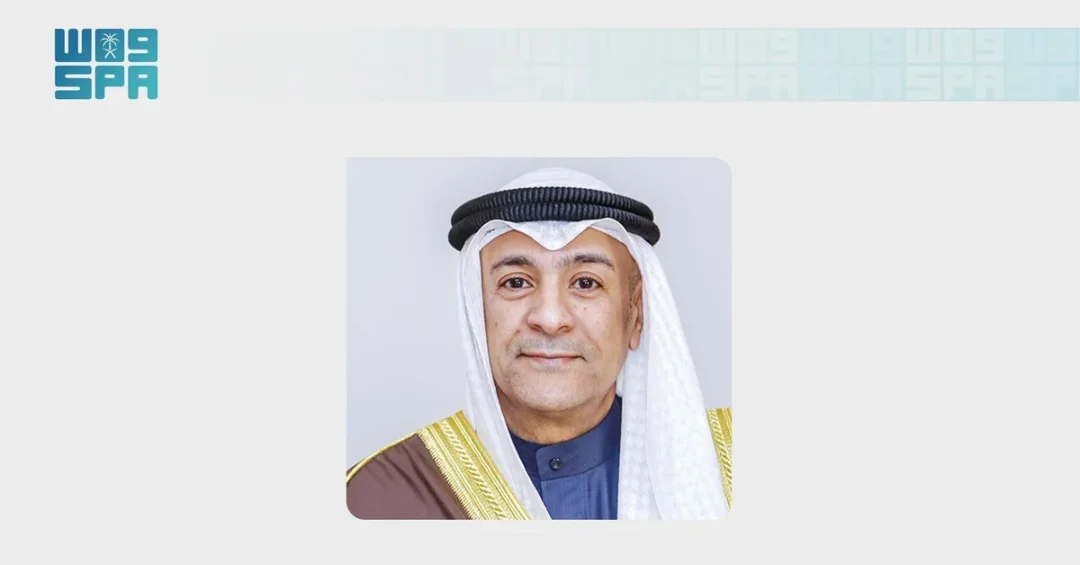
Secretary-General of the Gulf Cooperation Council (GCC) Jasem Albudaiwi commended the State of Qatar’s leading role in promoting global investment during the inauguration of the ninth edition of the Gulf Investment Forum, held in Doha on October 25, 2026, under the patronage of Prime Minister and Minister of Foreign Affairs of Qatar Shaikh Mohammed bin Abdulrahman Al Thani. The forum, organized in cooperation with the United Nations Conference on Trade and Development (UNCTAD) under the theme “Investing in the Future,” brought together ministers, senior officials, chief executive officers, business leaders, and representatives of international organizations from around the world, according to the Saudi Press Agency (SPA). Albudaiwi said Qatar’s hosting of the 9th World Investment Forum (WIF 2026) embodies its leading role in cementing international investment partnerships and opening new horizons for global development and prosperity.
Could a single gathering in Doha signal a broader realignment of global capital toward the Gulf? The high-level attendance and the forum’s partnership with UNCTAD suggest that the region is no longer a peripheral player in international investment discussions but a central convening power. For Saudi Arabia and its GCC partners, the event reinforces a collective economic narrative: that the Gulf is a stable, forward-looking destination for long-term capital, and that intra-Gulf coordination can amplify each member state’s global reach. The presence of the GCC General Secretariat at the forum also reflects the importance the six member states attach to both domestic and foreign investment as engines of sustainable growth.
Context and Background
Why has the Gulf become such a magnet for global investment gatherings? The answer lies in a decade of deliberate economic transformation across the region. The Gulf Investment Forum, organized with UNCTAD, has grown into a platform where governments and private-sector leaders align on investment policy, sustainable development, and cross-border partnerships. Its ninth edition in Doha follows a series of high-profile international events hosted by GCC states, from world expos to climate conferences, each reinforcing the region’s logistical capacity and diplomatic reach. The World Investment Forum, UNCTAD’s flagship investment event, further elevates the gathering’s profile by connecting Gulf priorities with global development finance.
Albudaiwi noted that the forum’s significance goes beyond exchanging ideas and visions. “It offers an opportunity to translate economic aspirations into productive partnerships and open new avenues for investment,” he said, adding that this supports economic diversification, broadens the base of commercial and investment opportunities, and bolsters the capacity of nations to achieve sustainable growth and comprehensive economic prosperity. His remarks underscore a shift in how the Gulf approaches international engagement: not merely as a recipient of investment but as a co-author of the global investment agenda, shaping rules and norms alongside traditional financial centers.
Qatar’s hosting of this global forum, Albudaiwi said, embodies Doha’s ambitious vision of solidifying its presence on the global economic map and its growing contribution to shaping the trajectories of investment and developmental cooperation. That assessment applies equally to the wider GCC, where Saudi Arabia’s Vision 2030 has become a reference point for economic diversification, and where the United Arab Emirates, Oman, Bahrain, and Kuwait are pursuing their own modernization strategies. The forum thus serves as a mirror reflecting a region-wide commitment to openness and reform.
Key Details
What exactly did the GCC Secretary-General emphasize in Doha? Albudaiwi pointed out that the GCC General Secretariat’s participation in the forum’s activities reflects the importance the GCC states attach to both domestic and foreign investment. He said that investment figures within the GCC states and the value of Gulf investments worldwide are the strongest testament to the GCC states’ success in attracting investment and expanding their global footprint in this domain. Those figures include sovereign wealth fund assets that rank among the largest globally, cross-border mergers and acquisitions, and greenfield projects spanning energy, logistics, technology, and manufacturing.
The inauguration drew ministers and officials from around the world, along with several CEOs, business leaders, and representatives of international organizations. Such attendance is not merely ceremonial; it creates deal-flow opportunities, policy dialogues, and partnerships that can take years to mature. For Saudi Arabia, these gatherings are integral to attracting the foreign direct investment needed to build new industries, from electric vehicles to advanced manufacturing and renewable energy. The Kingdom’s own investment promotion efforts, led by the Ministry of Investment, benefit from the regional momentum generated by events like the Gulf Investment Forum.
The forum’s theme, “Investing in the Future,” aligns with a broader shift toward sustainable and technology-driven investment. Discussions in Doha are expected to cover digital infrastructure, clean energy, supply-chain resilience, and human capital. These are precisely the areas where GCC economies are deploying capital at scale. Saudi Arabia’s Public Investment Fund (PIF), for example, has committed tens of billions of dollars to new sectors, while Qatar’s sovereign fund and Abu Dhabi’s investment vehicles have similarly expanded their global portfolios. The forum provides a venue to compare notes, reduce duplication, and identify co-investment opportunities.
International and Regional Impact
How does this forum reshape perceptions of the Gulf in global markets? By hosting UNCTAD’s World Investment Forum alongside the Gulf Investment Forum, Qatar positions the region as a bridge between developed and developing economies. UNCTAD’s mandate includes helping developing countries attract investment and integrate into the global economy, and its partnership with the GCC signals that Gulf capital can play a constructive role in that mission. For international investors, the message is that the Gulf offers not only capital but also regulatory predictability, world-class infrastructure, and strategic access to markets across Asia, Africa, and Europe.
Regionally, the event reinforces GCC unity at a time when global economic fragmentation and geopolitical uncertainty test multilateral cooperation. Albudaiwi’s praise for Qatar is also a statement about the bloc’s collective identity: the GCC is a platform for coordination, not competition. Saudi Arabia, as the largest GCC economy, has a direct interest in a strong, integrated Gulf investment ecosystem. When Qatar attracts global gatherings, it raises the region’s profile as a whole, benefiting Saudi exporters, investors, and job seekers. The free movement of goods, capital, and people within the GCC amplifies these gains.
Beyond the Gulf, the forum’s outcomes could influence investment flows into emerging markets. If Gulf sovereign funds and private investors deepen their engagement with UNCTAD’s initiatives, they can help close infrastructure and development gaps in Africa, South Asia, and beyond. This aligns with Saudi Arabia’s own commitment to South-South cooperation and its role in global development finance through institutions such as the Islamic Development Bank and the Saudi Fund for Development. The Doha forum thus becomes a node in a wider network of development partnerships.
Economic and Strategic Significance
Why do investment forums matter for ordinary citizens, not just financiers? Because foreign direct investment translates into jobs, technology transfer, and higher productivity. When GCC states attract major international gatherings, they signal that their economies are open and competitive. That signal lowers the risk premium for investors, reduces borrowing costs for governments and companies, and encourages multinationals to establish regional headquarters. Saudi Arabia has already seen this dynamic at work, with hundreds of companies relocating their regional offices to Riyadh in recent years. A rising tide of Gulf investment lifts all member states.
The strategic significance extends to energy transition and food security, two areas where Gulf capital is increasingly active. Saudi Arabia’s Vision 2030 includes ambitious targets for renewable energy, hydrogen production, and sustainable agriculture. Qatar’s hosting of the forum provides a platform to discuss how Gulf investment can accelerate these transitions, both within the region and in partner countries. Albudaiwi’s emphasis on economic diversification and comprehensive prosperity speaks to a vision of the Gulf as a source of solutions, not just resources. That narrative is essential for attracting the talent and partnerships needed to build knowledge economies.
Moreover, the forum highlights the role of small and medium-sized enterprises (SMEs) in economic diversification. Gulf governments have launched numerous programs to support startups and SMEs, from Saudi Arabia’s Monsha’at to Qatar’s incubators. International investment forums can connect these smaller players with global venture capital, supply chains, and mentorship. By showcasing success stories, the Doha gathering can inspire entrepreneurs across the GCC and demonstrate that the region’s investment ecosystem is broad and inclusive, not limited to mega-projects.
Vision 2030 Alignment
How does this forum connect to Saudi Arabia’s long-term vision? Vision 2030 aims to diversify the Kingdom’s economy away from oil, increase private-sector contribution, and position Saudi Arabia as a global investment powerhouse. The GCC Secretary-General’s remarks in Doha reinforce the regional dimension of that vision: Saudi Arabia’s success is intertwined with the stability and prosperity of its Gulf neighbors. A Qatar that attracts world leaders and investors enhances the entire region’s attractiveness. The GCC General Secretariat’s active participation in such forums supports the coordination needed to present a unified Gulf investment proposition to the world.
Looking ahead, Saudi Arabia will continue to leverage its G20 membership, its sovereign wealth fund, and its strategic location to draw investment into new sectors. Events like the Gulf Investment Forum and the World Investment Forum provide valuable platforms to tell that story, build relationships, and learn from peers. The Kingdom’s leadership in Vision 2030, combined with GCC unity, creates a powerful engine for sustainable growth. As Albudaiwi’s remarks make clear, the Gulf’s investment journey is not a zero-sum game; it is a shared endeavor that promises prosperity for the region and its global partners. What better evidence of that than a world forum in Doha, where East and West meet to invest in the future?
20 Questions
Q1. What event did the GCC Secretary-General attend in Doha?
A1. Jasem Albudaiwi attended the inauguration of the ninth edition of the Gulf Investment Forum, held in cooperation with UNCTAD under the theme “Investing in the Future,” according to the Saudi Press Agency.
Q2. Who is Jasem Albudaiwi?
A2. Jasem Albudaiwi is the Secretary-General of the Gulf Cooperation Council (GCC), the regional bloc comprising Saudi Arabia, Qatar, the UAE, Bahrain, Kuwait, and Oman.
Q3. What did Albudaiwi say about Qatar’s role?
A3. He said Qatar’s hosting of the 9th World Investment Forum embodies its leading role in cementing international investment partnerships and opening new horizons for global development and prosperity.
Q4. Where and when did the forum take place?
A4. The forum took place in Doha, the Qatari capital, on October 25, 2026, under the patronage and in the presence of Prime Minister and Minister of Foreign Affairs Shaikh Mohammed bin Abdulrahman Al Thani.
Q5. Which international organization partnered with the Gulf Investment Forum?
A5. The United Nations Conference on Trade and Development (UNCTAD) partnered with the forum, reflecting the growing collaboration between Gulf states and global development institutions.
Q6. What was the theme of the forum?
A6. The theme was “Investing in the Future,” focusing on sustainable investment, economic diversification, and partnerships that support long-term growth and prosperity.
Q7. Who attended the inauguration?
A7. The inauguration drew ministers and officials from around the world, along with several CEOs, business leaders, and representatives of international organizations, according to SPA.
Q8. What did Albudaiwi say about the forum’s significance?
A8. He stressed that the forum’s significance goes beyond exchanging ideas and visions; it offers an opportunity to translate economic aspirations into productive partnerships and open new avenues for investment.
Q9. How does the forum support economic diversification?
A9. By facilitating productive partnerships, the forum supports economic diversification, broadens the base of commercial and investment opportunities, and bolsters nations’ capacity to achieve sustainable growth and comprehensive economic prosperity.
Q10. What did Albudaiwi say about GCC investment figures?
A10. He said investment figures within the GCC states and the value of Gulf investments worldwide are the strongest testament to the GCC states’ success in attracting investment and expanding their global footprint.
Q11. Why is the GCC General Secretariat’s participation important?
A11. It reflects the importance the GCC states attach to both domestic and foreign investment, and it demonstrates regional coordination in presenting a unified investment proposition to global markets.
Q12. How does this forum relate to Saudi Arabia’s Vision 2030?
A12. Vision 2030 aims to diversify Saudi Arabia’s economy and attract foreign investment. The forum reinforces the regional momentum that supports the Kingdom’s goals and strengthens GCC unity.
Q13. What is the World Investment Forum?
A13. The World Investment Forum is UNCTAD’s flagship investment event, bringing together governments, investors, and international organizations to shape global investment policies and partnerships.
Q14. What sectors are likely discussed at the forum?
A14. Discussions are expected to cover digital infrastructure, clean energy, supply-chain resilience, human capital, and sustainable development, aligning with Gulf economic diversification strategies.
Q15. How does Qatar benefit from hosting such events?
A15. Hosting global forums solidifies Qatar’s presence on the global economic map, attracts international attention, and creates opportunities for investment and partnerships that support its national development goals.
Q16. What role do GCC sovereign wealth funds play?
A16. GCC sovereign wealth funds, including Saudi Arabia’s Public Investment Fund, are among the world’s largest and most active, deploying capital globally to diversify economies and generate long-term returns.
Q17. How does this event affect ordinary citizens in the Gulf?
A17. Foreign direct investment supported by such forums creates jobs, transfers technology, and raises productivity, ultimately improving living standards and economic opportunities for citizens across the region.
Q18. What message does the forum send to international investors?
A18. It signals that the Gulf is open for business, offers regulatory predictability, world-class infrastructure, and strategic access to markets across Asia, Africa, and Europe.
Q19. What is the GCC’s role in regional investment coordination?
A19. The GCC provides a platform for member states to coordinate economic policies, harmonize investment regulations, and present a unified front to global investors, enhancing the region’s collective attractiveness.
Q20. What is the forward-looking outcome of the forum?
A20. The forum is expected to strengthen international investment partnerships, support sustainable development, and reinforce the Gulf’s position as a global hub for investment and economic cooperation, in line with Vision 2030 and GCC objectives.
Reader Feedback
We value your thoughts. Please share your feedback on this article.
Your feedback helps us improve our coverage.