


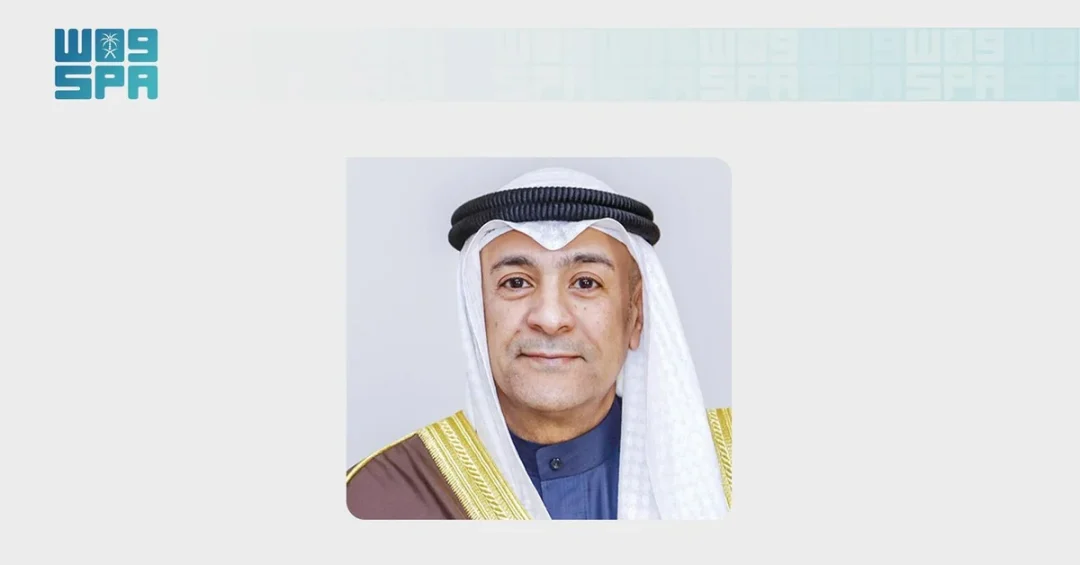
Secretary-General of the Gulf Cooperation Council (GCC) Jasem Albudaiwi met with Vice Minister of Commerce and International Trade Representative of the People’s Republic of China Li Chenggang in Doha on October 25, 2026, on the sidelines of the 9th World Investment Forum (WIF2026), according to the Saudi Press Agency (SPA). The two senior officials reviewed the prospects for cooperative relations between the GCC member states and China and explored practical ways to develop and strengthen those ties in service of shared objectives. The meeting placed particular emphasis on the ongoing negotiations toward a Free Trade Agreement (FTA) between the two sides and on the progress achieved by the concerned working groups. Both sides stressed the importance of supporting all efforts and overcoming every obstacle in preparation for the signing of the agreement, which they said would cement GCC-Chinese commercial and investment relations and bring mutual benefits to the peoples of both sides.
The encounter reflects a broader pattern of deepening engagement between the six-member Gulf bloc, which includes Saudi Arabia, the United Arab Emirates, Qatar, Kuwait, Bahrain, and Oman, and the world’s second-largest economy. For Saudi Arabia, whose Vision 2030 reform program places trade diversification and international partnership at its center, the prospective agreement represents more than a diplomatic milestone. It is a practical instrument for expanding non-oil exports, attracting foreign investment, and integrating Gulf supply chains with Asian demand. The timing of the meeting, held during a major global investment gathering in Qatar, underscores how trade policy and investment promotion are increasingly pursued in tandem across the region. The discussions also signal that both sides view the FTA as a strategic priority rather than a routine technical exercise.
Context and Background
Why has the GCC-China relationship moved so quickly from dialogue to the negotiating table? The answer lies in the scale of the economic complementarity between the two sides. China is already the largest trading partner of the GCC as a bloc and the leading destination for Gulf hydrocarbon exports, while Gulf states are major suppliers of energy and petrochemicals to Chinese industry. In return, Chinese firms have become significant investors and contractors across the region, active in infrastructure, logistics, renewable energy, and technology. The proposed FTA is designed to formalize and expand a relationship that has grown organically over two decades, reducing tariff and non-tariff barriers and creating clearer rules for cross-border investment.
Negotiations between the GCC and China have proceeded through successive rounds of talks and technical working groups, with both sides repeatedly affirming their commitment to reaching a comprehensive agreement. The World Investment Forum, convened by the United Nations Conference on Trade and Development, has become a regular venue for such high-level exchanges, bringing together ministers, sovereign wealth funds, and corporate leaders. Saudi Arabia has used similar platforms to advance its own investment agenda, including the annual Future Investment Initiative in Riyadh. The Doha meeting therefore sits within a dense calendar of Gulf economic diplomacy aimed at positioning the region as a bridge between Asia, Europe, and Africa.
For Saudi Arabia specifically, the GCC framework offers collective leverage that complements bilateral tracks. Riyadh maintains its own robust commercial dialogue with Beijing, covering energy, refining, petrochemicals, and technology, but a bloc-level agreement can deliver broader market access and more predictable rules of origin for Gulf products. That combination of national and collective diplomacy is a hallmark of the Kingdom’s approach under Vision 2030, which seeks to multiply partnership opportunities rather than depend on any single market.
Key Details
According to the Saudi Press Agency, the meeting addressed several topics, most notably the prospects of cooperative relations between the GCC states and China and ways to develop and bolster them to serve the desired objectives. The two officials reviewed the latest developments regarding the ongoing negotiations on the Free Trade Agreement between the two sides, as well as the progress achieved by the concerned working groups. Both sides emphasized the importance of supporting all efforts and overcoming all obstacles in preparation for the signing of the FTA. They also underscored that the agreement will contribute to cementing GCC-Chinese commercial and investment relations, thereby bringing mutual benefits to the peoples of both sides.
The reference to working groups indicates that negotiations have advanced into detailed, technical territory, where customs procedures, services, digital trade, investment protection, and dispute settlement are typically discussed. Progress at this level is often a prerequisite for political-level decisions to conclude an agreement. The explicit mention of overcoming obstacles suggests that remaining differences are recognized and being addressed through structured dialogue rather than left unresolved. For businesses in both regions, such signals matter because they reduce uncertainty about the direction of trade policy and encourage longer-term investment planning.
The meeting took place on the margins of WIF2026, a forum that draws participants from governments, international organizations, and the private sector. That setting allowed the GCC Secretary-General and the Chinese Vice Minister to connect trade negotiations with investment flows, an approach that aligns with the Gulf’s emphasis on attracting foreign direct investment as a driver of economic transformation. Saudi Arabia’s own delegation to such forums routinely highlights the Kingdom’s regulatory reforms, including updated investment laws and special economic zones, as evidence of its openness to global capital.
International and Regional Impact
How would a GCC-China free trade agreement reshape trade patterns beyond the two regions? A concluded deal would create one of the world’s largest free trade areas by combined economic weight, linking a bloc that supplies a substantial share of global energy with the world’s manufacturing and export powerhouse. For Asian economies, it would strengthen the reliability of energy and petrochemical supply chains. For European and African markets, it could alter the calculus of where Gulf goods are processed and re-exported, given the Gulf’s strategic location on routes connecting Asia, Europe, and Africa. Multinational companies with operations in the Gulf would gain clearer rules for serving both Middle Eastern and Asian consumers.
Regionally, the agreement would reinforce the GCC’s role as a unified economic actor. Although each member state pursues its own national strategies, including Saudi Arabia’s Vision 2030, the bloc’s common trade policy gives smaller members greater bargaining power and larger members a platform for regional coordination. China, for its part, has expanded its engagement with Gulf states through energy contracts, technology cooperation, and participation in infrastructure and industrial projects. A formal trade agreement would provide a stable legal framework for that engagement, potentially encouraging more joint ventures and long-term supply arrangements.
The diplomatic dimension should not be overlooked. Trade negotiations of this scale require sustained political attention, and the Doha meeting demonstrates that both sides are willing to invest that attention. For Saudi Arabia, which hosts major GCC institutions and plays a central role in bloc decision-making, the progress toward an FTA is consistent with its wider effort to build balanced partnerships across Asia, Europe, and the Americas. That diversification is a core theme of the Kingdom’s foreign economic policy and a practical hedge against volatility in any single market.
Economic and Strategic Significance
What does the FTA mean for Saudi Arabia’s economic transformation? The Kingdom’s non-oil economy has expanded steadily as Vision 2030 programs mature, with growth in manufacturing, logistics, tourism, and digital services. Improved access to the Chinese market could accelerate that trend by lowering barriers for Saudi petrochemicals, metals, plastics, and processed foods, while also opening opportunities in services such as logistics and finance. At the same time, Chinese investment in Saudi industrial zones and technology sectors could support job creation and knowledge transfer, both central objectives of the reform agenda.
Strategically, the agreement would strengthen the Gulf’s position in a multipolar trading system. Rather than depending on a single bloc or market, GCC states are building a network of trade relationships that includes Asia, Europe, and Africa. China is a natural anchor of that network given its scale and its demand for energy and petrochemicals. For Chinese exporters and investors, the Gulf offers a growing consumer market, world-class infrastructure, and access to shipping routes that serve three continents. The mutual benefits described by both officials in Doha reflect this complementarity, which is why the negotiations have continued steadily despite global economic uncertainties.
For Saudi businesses, the practical effects could include simpler customs procedures, clearer investment rules, and stronger protections for intellectual property and contractual rights. Small and medium-sized enterprises, a priority segment under Vision 2030, stand to gain from reduced compliance costs when exporting to China. Sovereign and institutional investors may find new co-investment opportunities in industrial and technology projects. These are the kinds of tangible outcomes that turn a trade agreement from a diplomatic headline into an engine of economic activity.
Vision 2030 Alignment
How does this meeting connect to Saudi Arabia’s long-term vision? Vision 2030 aims to diversify the Kingdom’s economy, expand non-oil exports, and deepen its integration with global markets. A GCC-China Free Trade Agreement would directly support those goals by widening market access for Saudi products and attracting investment into priority sectors such as manufacturing, logistics, renewable energy, and technology. The Kingdom’s leadership of and participation in GCC trade initiatives also reinforces its role as a stabilizing and forward-looking force in regional economic affairs, a role that international partners increasingly recognize.
The discussions in Doha are therefore more than a routine diplomatic exchange. They represent a deliberate step toward a rules-based trade architecture that can serve generations of producers, investors, and consumers across the Gulf and China. Saudi Arabia, through its Vision 2030 programs and its active engagement in the GCC, is helping to shape that architecture in a way that promotes prosperity, stability, and openness. As negotiations advance toward signature, the Kingdom’s combination of national reform and collective Gulf action will remain central to realizing the mutual benefits both sides have pledged to deliver.
20 Questions
Q1. Who met in Doha on October 25, 2026?
A1. GCC Secretary-General Jasem Albudaiwi met with Li Chenggang, Vice Minister of Commerce and International Trade Representative of the People’s Republic of China, according to the Saudi Press Agency. The meeting took place on the sidelines of the 9th World Investment Forum.
Q2. What was the main focus of the meeting?
A2. The officials reviewed prospects for cooperative relations between the GCC states and China and explored ways to develop and strengthen those ties. They also discussed the ongoing negotiations on a Free Trade Agreement between the two sides.
Q3. What is the GCC?
A3. The Gulf Cooperation Council is a regional bloc comprising Saudi Arabia, the United Arab Emirates, Qatar, Kuwait, Bahrain, and Oman. It coordinates economic, security, and political policies among its six member states and negotiates trade agreements collectively.
Q4. What did both sides say about the Free Trade Agreement?
A4. They emphasized the importance of supporting all efforts and overcoming all obstacles in preparation for signing the FTA. They also said the agreement would cement GCC-Chinese commercial and investment relations and bring mutual benefits to both peoples.
Q5. Where did the meeting take place?
A5. The meeting was held in Doha, Qatar, on the sidelines of the 9th World Investment Forum, known as WIF2026. The forum brings together governments, international organizations, and private-sector leaders to discuss global investment trends.
Q6. Why is the GCC-China trade relationship important?
A6. China is the largest trading partner of the GCC as a bloc and a leading buyer of Gulf energy and petrochemicals. In return, Chinese firms invest in Gulf infrastructure, technology, and renewable energy, making the relationship economically complementary.
Q7. How does this development affect Saudi Arabia?
A7. Saudi Arabia is a founding GCC member and a central driver of bloc policy. An FTA would support the Kingdom’s Vision 2030 goals by expanding non-oil exports, attracting Chinese investment, and integrating Saudi supply chains with Asian demand.
Q8. What are working groups in this context?
A8. Working groups are technical teams that negotiate specific chapters of a trade agreement, such as customs procedures, services, investment, and dispute settlement. Their progress prepares the ground for political-level decisions to conclude the deal.
Q9. What obstacles remain in the negotiations?
A9. The Saudi Press Agency report did not specify particular obstacles, but both sides emphasized the importance of overcoming them. Trade talks typically involve differences over tariffs, market access, rules of origin, and regulatory standards that require careful negotiation.
Q10. What benefits would the FTA bring to Gulf businesses?
A10. The agreement could reduce tariffs and compliance costs, simplify customs procedures, and provide clearer investment rules. These changes would help Gulf exporters, including small and medium-sized enterprises, compete more effectively in the Chinese market.
Q11. What benefits would China gain from the agreement?
A11. China would secure more predictable access to Gulf energy and petrochemical supplies and clearer rules for its exporters and investors. The Gulf also offers a growing consumer market and strategic access to shipping routes serving Asia, Europe, and Africa.
Q12. How does this meeting fit into Saudi Arabia’s foreign economic policy?
A12. Saudi Arabia pursues balanced partnerships across Asia, Europe, and the Americas while strengthening GCC collective action. The Doha meeting reflects that approach by advancing a bloc-level agreement that complements the Kingdom’s bilateral commercial ties with China.
Q13. What is the World Investment Forum?
A13. The World Investment Forum is a global gathering convened by the United Nations Conference on Trade and Development. It brings together ministers, sovereign wealth funds, and corporate leaders to discuss investment policies and partnerships.
Q14. Did the meeting produce any signed agreements?
A14. The Saudi Press Agency report described a meeting and review of negotiations, not the signing of an agreement. Both sides emphasized preparations for the eventual signing of the Free Trade Agreement between the GCC and China.
Q15. Why is the timing of this meeting significant?
A15. The meeting occurred during a major international investment forum, linking trade negotiations with investment promotion. It also signals that both sides view the FTA as a strategic priority requiring sustained high-level attention.
Q16. What sectors could benefit most from the FTA?
A16. Energy, petrochemicals, manufacturing, logistics, and digital services are among the sectors likely to benefit. Saudi Arabia’s Vision 2030 priorities, including industry and technology, align closely with the areas covered by modern trade agreements.
Q17. How does the GCC negotiate trade agreements?
A17. The GCC negotiates as a unified bloc on behalf of its six member states, giving each country greater leverage than it would have alone. Individual members may also pursue complementary bilateral commercial dialogues with the same partners.
Q18. What role does the Saudi Press Agency play in this report?
A18. The Saudi Press Agency is the Kingdom’s official news agency and a recognized source for government announcements. Its report provides the verified details of the meeting between the GCC Secretary-General and the Chinese Vice Minister.
Q19. How could the FTA affect global trade patterns?
A19. A concluded agreement would create one of the world’s largest free trade areas by economic weight. It could strengthen energy supply chains, expand Gulf re-export activity, and encourage multinational firms to use the region as a hub.
Q20. What happens next in the negotiation process?
A20. The working groups will continue technical discussions while senior officials address remaining issues. Both sides have expressed commitment to overcoming obstacles and moving toward signature of the Free Trade Agreement.
Reader Feedback
We value your thoughts. Please share your feedback on this article.
Your feedback helps us improve our coverage.