


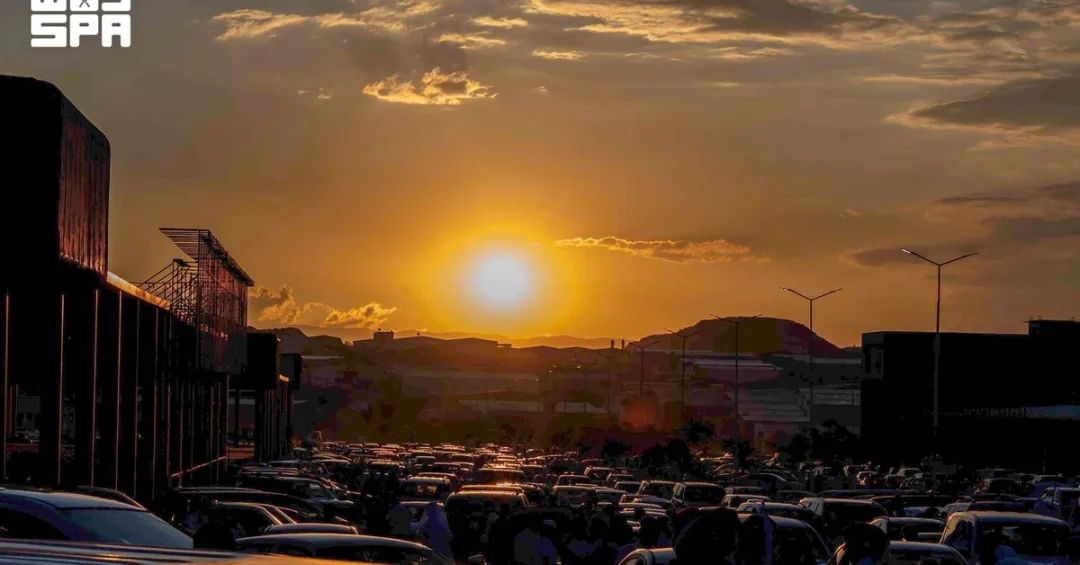
Aseer Region Municipality, acting through Khamis Mushait Municipality, has completed the development of a major new automotive investment site north of Khamis Mushait Governorate, spanning more than 500,000 square meters and designed to host car showrooms, dealerships, an auction yard, and transport and storage facilities. The announcement, released through the Saudi Press Agency, marks a significant step in the Kingdom’s efforts to expand commercial infrastructure beyond its major metropolitan centers and to channel private investment into high-potential regional markets. The project is intended to serve as an integrated investment environment for the automotive sector, consolidating showrooms, dealerships, and supporting logistics in a single, purpose-built location.
The new site more than triples the showroom capacity previously available in the governorate, increasing the number of designated showroom plots from approximately 55 at the old site to 168 at the new location. Each showroom plot covers up to 1,500 square meters, while dealership plots extend to 2,000 square meters, and a dedicated auction yard occupies 10,000 square meters. For a governorate that serves as one of the most populous and commercially active centers in southern Saudi Arabia, the development signals a deliberate effort to modernize the local retail and trading environment for vehicles and related services. But why does a single municipality project in Aseer matter to investors and observers far beyond the Kingdom’s borders?
Context and Background
Khamis Mushait has long occupied a strategic position in Saudi Arabia’s southern region. Located near Abha, the administrative capital of Aseer Region, the governorate benefits from proximity to major transport corridors, a substantial resident population, and a well-established commercial tradition. Its existing automotive market, however, had outgrown the older showroom cluster, where roughly 55 plots constrained the ability of dealerships and traders to expand, modernize their facilities, or offer the full range of services that modern vehicle buyers expect. The completion of the new site addresses that constraint directly by providing a planned, serviced environment rather than an ad hoc collection of individual plots.
The project also reflects a broader pattern in Saudi municipal development, in which regional authorities take the lead in preparing land, designing infrastructure, and then opening the resulting opportunities to private investors. Aseer Region Municipality and Khamis Mushait Municipality have framed the initiative as part of a wider effort to stimulate commercial activity, attract capital, and improve the quality of urban services in the governorate. For readers unfamiliar with Saudi administrative structures, municipalities in the Kingdom play an operational role in land development and commercial zoning, working alongside national ministries and investment authorities. That combination of local execution and national strategy is central to how projects of this kind move from announcement to reality.
The timing is notable. Saudi Arabia is in the middle of a sustained push to diversify regional economies, and Aseer has been singled out for particular attention under national tourism and investment strategies. Improved automotive infrastructure may appear to be a narrow, sector-specific development, but it sits within a much larger effort to raise the standard of commercial services across the Kingdom’s regions. Why would a municipality invest in a dedicated auction yard and storage facilities rather than simply allocating more showroom plots? The answer lies in how modern automotive markets actually function, and in the government’s intention to capture more of that value locally.
Key Details of the New Automotive Site
According to Khamis Mushait Municipality, the site comprises 168 plots designated for car showrooms, each covering up to 1,500 square meters. Separate plots of up to 2,000 square meters are allocated for automotive dealerships, giving larger operators room for branded facilities, service bays, and customer areas. A 10,000-square-meter auction yard is included to support organized vehicle trading, while transport and storage facilities are planned to serve the movement and temporary holding of vehicles. Together, these components describe a site that is intended to function as a complete automotive trading ecosystem rather than a simple row of retail outlets.
The expansion in capacity is the most concrete measure of the project’s ambition. Increasing showroom plots from approximately 55 to 168 represents a more than threefold increase, which is expected to accommodate a substantially larger number of automotive businesses. That matters for competition and consumer choice: more plots mean more dealerships, a wider range of brands and used-vehicle options, and a more transparent trading environment. The inclusion of an auction yard is particularly significant because organized auctions tend to formalize pricing, improve vehicle turnover, and create a record of transactions that benefits both buyers and sellers.
The site’s location north of the governorate is also deliberate. Placing a large automotive cluster on the outskirts allows for easier access for vehicle transporters, reduces congestion in central areas, and provides the space needed for storage and logistics operations that would be impractical in a dense urban core. For businesses, that translates into lower friction in receiving inventory and delivering vehicles to customers across Aseer and neighboring regions. The municipality has presented the project as an integrated investment environment, meaning that infrastructure such as roads, utilities, and plot servicing has been prepared in advance to shorten the path from investment decision to operation.
International and Regional Impact
For international automotive brands, distributors, and logistics firms, the completion of the site opens a new channel into Saudi Arabia’s southern market. Global manufacturers have been expanding their presence in the Kingdom as vehicle demand grows and as the market matures toward larger dealership networks, after-sales services, and used-car trading. A dedicated, well-planned automotive zone in Khamis Mushait gives international brands a practical location to establish or expand dealer representation without having to assemble land and infrastructure independently. Regional traders from neighboring governorates and cross-border markets may also find the auction yard and storage facilities useful for moving inventory efficiently.
The project fits a pattern of growing investment in Saudi Arabia’s southern region. Aseer has been the focus of significant national attention, including tourism development and infrastructure programs intended to position the region as a year-round destination. Automotive retail and logistics may seem distant from tourism, but they are part of the same story: a region that is becoming easier to reach, easier to do business in, and better served by modern commercial amenities. Improved vehicle services support the mobility of residents, visitors, and businesses alike, and they contribute to the overall perception of Aseer as an increasingly attractive place to live, work, and invest.
Economic and Strategic Significance
The economic logic of the project rests on capturing value that might otherwise leak to other regions or remain informal. When showroom capacity is constrained, dealers may operate from scattered, underserviced locations, and vehicle trading can shift toward informal channels. By providing serviced plots, a formal auction yard, and storage facilities, the municipality creates conditions for organized, taxable, and recordable commercial activity. That, in turn, supports local employment in sales, maintenance, logistics, and administration, and it strengthens the governorate’s position as a commercial hub for southern Saudi Arabia.
For investors, the site offers several practical advantages. Land is prepared and zoned for automotive use, reducing regulatory and development risk. The scale of the project, at more than 500,000 square meters, allows for a critical mass of businesses that can attract customers from a wide catchment area. The mix of showrooms, dealerships, auctions, and storage means that different parts of the automotive value chain can co-locate, creating efficiencies in transport, inspection, and resale. These are the kinds of conditions that tend to raise occupancy rates and shorten the time required for a new investment to become commercially viable.
At a strategic level, the project supports the Kingdom’s wider objective of balanced regional development. Saudi Arabia has been explicit about wanting growth to extend beyond Riyadh, Jeddah, and the Eastern Province, and municipal projects of this kind are one of the mechanisms through which that goal is pursued. By preparing investment-ready land in Aseer, the municipality reduces the barriers that often prevent smaller regional markets from attracting national and international operators. The result is a more distributed commercial landscape, in which southern cities can host the same quality of retail and services found in larger centers.
Vision 2030 Alignment
The new automotive investment site aligns closely with Saudi Vision 2030’s objectives of diversifying the economy, expanding the private sector’s role, and raising the quality of life across all regions of the Kingdom. Vision 2030 places strong emphasis on enabling investment, improving government services, and developing regional economies so that growth is not concentrated in a handful of cities. A municipality-led project that prepares land, designs infrastructure, and invites private operators to build businesses is a direct expression of those priorities. It also supports the broader goal of increasing non-oil economic activity by strengthening a commercial sector that employs residents and generates local revenue.
Looking ahead, the success of the Khamis Mushait automotive site will depend on uptake by dealers, auction operators, and logistics companies, and on the municipality’s ability to maintain services and manage the site as a functioning commercial district. If it performs as intended, it could serve as a model for similar regional projects elsewhere in the Kingdom, demonstrating how prepared land and integrated facilities can attract investment to areas outside the main metropolitan centers. For Aseer, the project adds another piece of modern commercial infrastructure to a region that is steadily raising its profile. And for international observers, it is a reminder that Saudi Arabia’s transformation is being built not only through mega-projects, but also through hundreds of practical, locally executed initiatives that improve how people live, trade, and do business. Isn’t that, ultimately, what sustainable economic development looks like?
20 Questions
Q1. What has Aseer Region Municipality completed in Khamis Mushait?
A1. Aseer Region Municipality, through Khamis Mushait Municipality, has completed the development of a new automotive investment site north of the governorate, spanning more than 500,000 square meters and designed for showrooms, dealerships, auctions, and storage.
Q2. How large is the new automotive investment site?
A2. The site covers more than 500,000 square meters, according to the announcement released through the Saudi Press Agency, making it a substantial commercial development for the governorate and the wider Aseer Region.
Q3. How many showroom plots does the new site include?
A3. The project includes 168 plots designated for car showrooms, each covering up to 1,500 square meters, significantly expanding the capacity available to automotive businesses in Khamis Mushait.
Q4. How does the new showroom capacity compare with the previous site?
A4. The number of showroom plots increases from approximately 55 at the previous site to 168 at the new location, a more than threefold expansion intended to accommodate more automotive businesses.
Q5. What is the size of plots allocated for automotive dealerships?
A5. Dealership plots cover up to 2,000 square meters each, providing larger operators with space for branded facilities, vehicle displays, service areas, and customer-facing operations within the new site.
Q6. What is the size of the automotive auction yard?
A6. The site includes a dedicated auction yard covering 10,000 square meters, designed to support organized vehicle trading and provide a structured environment for buying and selling vehicles.
Q7. What other facilities are included in the project?
A7. Beyond showrooms, dealerships, and the auction yard, the site includes transport and storage facilities intended to support the movement and temporary holding of vehicles for businesses operating in the governorate.
Q8. What is the main goal of the project?
A8. The project aims to expand commercial activities in the automotive sector by providing an integrated investment environment, creating new investment opportunities, and supporting economic growth in Khamis Mushait and the surrounding region.
Q9. Which authority announced the project?
A9. The project was announced by Khamis Mushait Municipality, part of Aseer Region Municipality, and was released through the Saudi Press Agency, an official Saudi news source.
Q10. Where is the new site located?
A10. The site is located north of Khamis Mushait Governorate in Aseer Region, a position chosen to provide access for transporters and space for storage and logistics operations.
Q11. Why is the location north of the governorate significant?
A11. Placing the automotive cluster north of the governorate allows easier access for vehicle transporters, reduces congestion in central areas, and provides the space needed for storage and logistics facilities.
Q12. How does the project support investment?
A12. By preparing serviced land and zoning it for automotive use, the municipality reduces development risk for investors and shortens the time required to establish showrooms, dealerships, and supporting facilities.
Q13. What economic benefits are expected?
A13. The project is expected to support local employment in sales, maintenance, logistics, and administration, while strengthening Khamis Mushait’s position as a commercial hub for southern Saudi Arabia.
Q14. How does the auction yard benefit the market?
A14. An organized auction yard can formalize pricing, improve vehicle turnover, and create transaction records that benefit both buyers and sellers in the local automotive market.
Q15. What does the project mean for international automotive brands?
A15. It offers international brands and distributors a practical location to establish or expand dealer representation in southern Saudi Arabia without independently assembling land and infrastructure.
Q16. How does the project relate to regional development?
A16. It supports Saudi Arabia’s objective of balanced regional development by preparing investment-ready land in Aseer and attracting commercial operators beyond the Kingdom’s main metropolitan centers.
Q17. Does the project align with Saudi Vision 2030?
A17. Yes. It aligns with Vision 2030 objectives of diversifying the economy, expanding the private sector’s role, and raising the quality of life and commercial services across all regions of the Kingdom.
Q18. What role do municipalities play in such projects?
A18. Saudi municipalities play an operational role in land development and commercial zoning, preparing infrastructure and opening opportunities to private investors in coordination with national strategies.
Q19. What will determine the project’s success?
A19. Success will depend on uptake by dealers, auction operators, and logistics companies, as well as the municipality’s ability to maintain services and manage the site as a functioning commercial district.
Q20. Could this project serve as a model for other regions?
A20. If it performs as intended, it could serve as a model for similar regional projects, demonstrating how prepared land and integrated facilities can attract investment to areas outside the main metropolitan centers.
Reader Feedback
We value your thoughts. Please share your feedback on this article.
Your feedback helps us improve our coverage.