


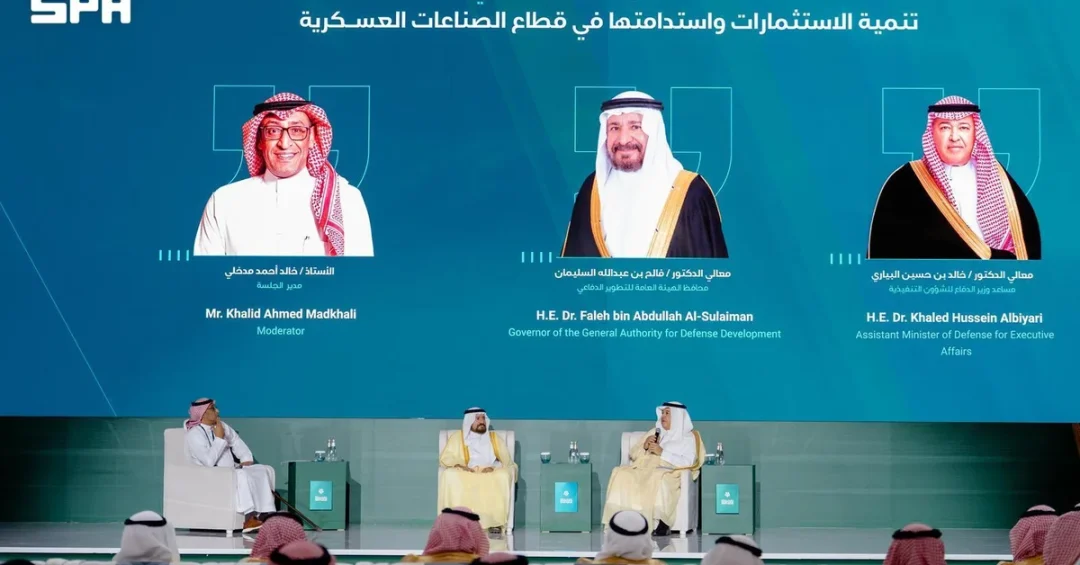
Saudi Arabia’s military spending localization rate rose to 27.30% by the end of 2025, up from 24.89% in 2024, according to an announcement by the General Authority for Military Industries (GAMI) at the Military Industries Forum in Riyadh. The forum, held on Sunday and attended by royal highnesses, excellencies, and distinguished guests, as well as representatives of military and security entities, government agencies, and heads of local and international companies, marked a significant milestone in the Kingdom’s journey toward self-reliance in defense manufacturing. The event underscored the progress made under the ambitious target of localizing more than 50% of military spending by 2030, a core objective of Saudi Vision 2030.
How does a nation transform its defense sector from a net importer to a regional industrial powerhouse? For Saudi Arabia, the answer lies in a strategic, whole-of-government approach that leverages its economic strength, geographic advantage, and human capital. The 2025 localization assessment revealed not only the headline figure but also a broader impact: local content accounted for 40.91% of military spending, the sector contributed SAR7.468 billion to gross domestic product, and its contribution to employment reached SAR5.243 billion. These numbers reflect a deepening industrial base that is steadily integrating into the national economy and creating high-value opportunities for Saudi citizens and businesses.
Context and Background
Why is the localization of military spending so critical to the Kingdom’s long-term security and prosperity? The answer lies in the strategic vision set forth by Saudi leadership to reduce dependence on foreign suppliers, diversify the economy, and build a sustainable defense industrial base. The General Authority for Military Industries (GAMI) was established in 2017 to regulate, enable, and monitor the military industries sector, with a mandate to localize more than 50% of military spending by 2030. This target aligns with Vision 2030’s broader goals of economic diversification, job creation, and technological advancement.
Since its inception, GAMI has worked to develop the sector’s regulatory and legislative framework, streamline the investor journey, and coordinate closely with military and security end-user entities. It has also partnered with supporting government entities and private-sector players to establish international partnerships that facilitate technology and knowledge transfer. The 2025 localization rate of 27.30% represents a steady climb from 24.89% in 2024, demonstrating that these efforts are yielding tangible results. The forum itself served as a platform to showcase progress, announce new agreements, and engage with stakeholders to address challenges and unlock further growth.
The Military Industries Forum, organized by GAMI in Riyadh, brought together a wide spectrum of participants, including royal highnesses, excellencies, and distinguished guests, along with representatives of military and security entities, government agencies, and heads of local and international companies operating in the sector. Such gatherings are instrumental in fostering collaboration, sharing best practices, and aligning efforts across the public and private sectors. The presence of high-level officials underscores the national commitment to building a robust military industrial base that meets domestic needs, serves the region, and supports exports.
Key Details
What specific achievements were highlighted at the forum, and what do they mean for the sector’s future? In his address, Minister of State, Cabinet Member, and GAMI Acting Governor Bandar Alkhorayef expressed gratitude to Custodian of the Two Holy Mosques King Salman bin Abdulaziz Al Saud and His Royal Highness Prince Mohammed bin Salman bin Abdulaziz Al Saud, Crown Prince and Prime Minister, and Chairman of GAMI’s Board of Directors, for their unwavering support. He emphasized that the Kingdom possesses significant assets that underpin the ambitions and opportunities in the sector, enabling it to build an industrial base that meets domestic needs and demand.
Alkhorayef outlined the foundations of this industrial base: the integration of strategies for industry, localization, exports, mining, and local content, as well as leveraging Saudi Arabia’s strategic geographic location linking three continents. He also pointed to the Kingdom’s strategic political and economic relations, a strong economy, competitive energy resources, investment and industrial capabilities, and a qualified and ambitious workforce. These assets, he stressed, position Saudi Arabia to build a military industrial base capable of meeting domestic demand, serving the region, and supporting exports.
The forum announced the overall results of the 2025 localization assessment: a localization rate of 27.30%, local content at 40.91% of military spending, a GDP contribution of SAR7.468 billion, and an employment contribution of SAR5.243 billion. Additionally, four memoranda of understanding were signed between GAMI and several Saudi banks—Bank Albilad, Riyad Bank, Arab National Bank (anb), and Alinma Bank—to strengthen financing solutions for the military industries sector. A private-sector panel discussed growth opportunities and supply chain development, while an open meeting between GAMI’s acting governor and company representatives addressed investor challenges. The accompanying exhibition featured pavilions for GAMI, the World Defense Show, the Academy of Defense Industries (ADI), Saudi Arabian Military Industries (SAMI), the National Company for Mechanical Systems (NCMS), Life Shield, and BAE Systems.
International and Regional Impact
How does Saudi Arabia’s progress in localizing military spending resonate beyond its borders? The Kingdom’s emergence as a defense manufacturing hub has significant implications for regional security and global defense markets. By building domestic capabilities, Saudi Arabia reduces its reliance on foreign suppliers, enhances its strategic autonomy, and positions itself as a reliable partner for countries seeking advanced defense solutions. The integration of local content and the development of supply chains also create opportunities for international companies to invest, partner, and transfer technology, fostering mutually beneficial relationships.
Moreover, the Kingdom’s strategic geographic location linking three continents—Asia, Africa, and Europe—makes it a natural hub for defense logistics, manufacturing, and exports. As Saudi Arabia expands its military industrial base, it can serve as a stabilizing force in the region, contributing to collective security and economic prosperity. The partnerships forged at the forum, including the MoUs with leading Saudi banks, signal confidence in the sector’s growth trajectory and its potential to attract further investment. International defense firms, such as BAE Systems, are already engaged, and their presence at the exhibition highlights the global interest in Saudi Arabia’s defense industrialization journey.
Economic and Strategic Significance
What does the 27.30% localization rate mean for the Saudi economy and its strategic ambitions? The military industries sector is not just about defense; it is a catalyst for economic diversification, innovation, and job creation. The SAR7.468 billion contribution to GDP and SAR5.243 billion employment contribution demonstrate the sector’s growing role in the national economy. By localizing spending, the Kingdom retains more value domestically, stimulates local businesses, and develops a skilled workforce. This aligns with Vision 2030’s goal of creating a diversified, sustainable economy less dependent on oil revenues.
Strategically, a robust military industrial base enhances national security, reduces vulnerabilities in supply chains, and strengthens Saudi Arabia’s position in global defense dialogues. The focus on technology transfer, research and development, and industrial partnerships ensures that the Kingdom not only assembles but also innovates and eventually exports advanced defense systems. The involvement of the private sector, supported by financing solutions from banks like Bank Albilad, Riyad Bank, Arab National Bank (anb), and Alinma Bank, is crucial for scaling up production, improving competitiveness, and fostering a dynamic ecosystem of suppliers and manufacturers.
Vision 2030 Alignment
How does the localization of military spending fit into the broader Vision 2030 framework? Vision 2030 aims to transform Saudi Arabia into a diversified, innovation-driven economy with a thriving private sector and a skilled workforce. The military industries sector is a key pillar of this transformation, as it promotes industrialization, technological advancement, and human capital development. The target to localize more than 50% of military spending by 2030 is both ambitious and achievable, given the steady progress from 24.89% in 2024 to 27.30% in 2025. Each percentage point gained represents billions of riyals retained in the economy and new opportunities for Saudi citizens and companies.
The forum’s outcomes, including the MoUs with banks and the dialogue with private-sector stakeholders, reflect a comprehensive approach to building a self-sustaining defense industry. By fostering partnerships, facilitating investment, and addressing challenges, GAMI is creating an enabling environment for growth. As the Kingdom continues on this path, it will not only meet its localization targets but also emerge as a global player in the defense industry, contributing to regional stability and economic prosperity. The journey toward 2030 is well underway, and the 2025 results are a testament to the vision, leadership, and determination driving Saudi Arabia’s military industrialization.
20 Questions
Q1. What was the military spending localization rate in Saudi Arabia by the end of 2025?
A1. The localization rate reached 27.30% by the end of 2025, according to an announcement by the General Authority for Military Industries (GAMI) at the Military Industries Forum in Riyadh.
Q2. How does the 2025 rate compare to the previous year?
A2. The 2025 rate of 27.30% represents an increase from 24.89% in 2024, showing steady progress toward the Kingdom’s target of localizing more than 50% of military spending by 2030.
Q3. What is GAMI’s role in the military industries sector?
A3. GAMI regulates, enables, and monitors the military industries sector. It develops regulatory frameworks, facilitates investor journeys, coordinates with military entities, and fosters international partnerships to boost investment and technology transfer.
Q4. What was the local content percentage of military spending in 2025?
A4. Local content accounted for 40.91% of military spending in 2025, reflecting the growing integration of domestic suppliers and manufacturers into the defense sector’s value chain.
Q5. What was the sector’s contribution to GDP in 2025?
A5. The military industries sector contributed SAR7.468 billion to Saudi Arabia’s gross domestic product in 2025, underscoring its growing role in the national economy.
Q6. How much did the sector contribute to employment?
A6. The sector’s contribution to employment amounted to SAR5.243 billion in 2025, highlighting its role in creating jobs and developing a skilled workforce in Saudi Arabia.
Q7. What memoranda of understanding were signed at the forum?
A7. Four MoUs were signed between GAMI and Saudi banks—Bank Albilad, Riyad Bank, Arab National Bank (anb), and Alinma Bank—to strengthen financing solutions for the military industries sector.
Q8. Who is the acting governor of GAMI?
A8. Bandar Alkhorayef serves as Minister of State, Cabinet Member, and GAMI Acting Governor. He addressed the forum and expressed gratitude to the Saudi leadership for their support.
Q9. What did Bandar Alkhorayef say about Saudi Arabia’s assets?
A9. He highlighted the Kingdom’s strategic geographic location linking three continents, strong economy, competitive energy resources, investment capabilities, and qualified workforce as key assets for building a military industrial base.
Q10. What is the target for military spending localization by 2030?
A10. Saudi Arabia aims to localize more than 50% of its military spending by 2030, a core objective of Vision 2030 to enhance self-reliance and economic diversification.
Q11. What was discussed at the private-sector panel?
A11. The panel discussed growth opportunities in the military industries sector, supply chain development, and the importance of public-private cooperation to empower local investors and enhance competitiveness.
Q12. What was the focus of the open meeting at the forum?
A12. The open meeting between GAMI’s acting governor and company representatives focused on challenges facing investors and ways to overcome obstacles to strengthen the sector’s investment environment.
Q13. Which organizations exhibited at the accompanying exhibition?
A13. Exhibitors included GAMI, the World Defense Show, the Academy of Defense Industries (ADI), Saudi Arabian Military Industries (SAMI), the National Company for Mechanical Systems (NCMS), Life Shield, and BAE Systems.
Q14. How does the localization rate benefit the Saudi economy?
A14. Localization retains more spending domestically, stimulates local businesses, creates jobs, and fosters technology transfer, contributing to economic diversification and reducing reliance on oil revenues.
Q15. What is the significance of the MoUs with banks?
A15. The MoUs aim to provide financing solutions for the military industries sector, enabling local companies to invest, scale up, and innovate, thereby accelerating the sector’s growth and competitiveness.
Q16. How does the sector support Vision 2030?
A16. The sector promotes industrialization, technological advancement, and human capital development, aligning with Vision 2030’s goals of economic diversification, private-sector growth, and job creation for Saudi citizens.
Q17. What role does technology transfer play in the sector?
A17. Technology transfer from international partners helps Saudi Arabia build indigenous capabilities, innovate, and eventually export advanced defense systems, enhancing strategic autonomy and industrial sophistication.
Q18. What is the World Defense Show?
A18. The World Defense Show is a premier international defense exhibition hosted in Saudi Arabia, showcasing the latest technologies and fostering partnerships in the global defense industry.
Q19. How does Saudi Arabia’s geographic location benefit the sector?
A19. Located at the crossroads of three continents, Saudi Arabia is a natural hub for defense manufacturing, logistics, and exports, enabling efficient access to regional and global markets.
Q20. What are the next steps for GAMI after the 2025 results?
A20. GAMI will continue to develop the regulatory framework, facilitate investment, address investor challenges, and foster partnerships to steadily increase the localization rate toward the 50% target by 2030.
Reader Feedback
We value your thoughts. Please share your feedback on this article.
Your feedback helps us improve our coverage.