


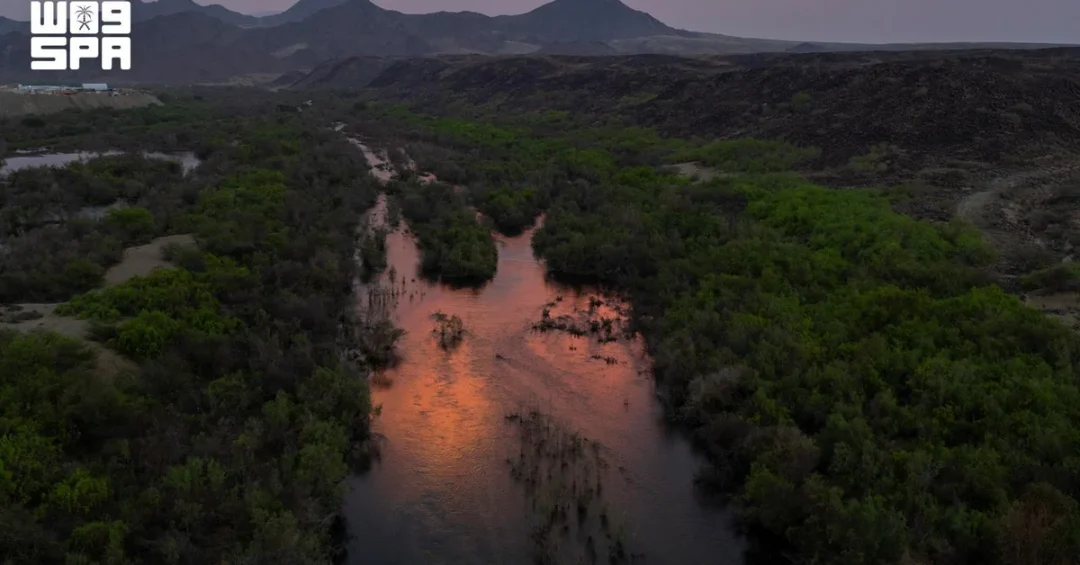
Wadi Hali, one of the most prominent natural valleys in the southern part of Al-Qunfudhah Governorate in the Makkah Region, stands as a living testament to the Kingdom of Saudi Arabia’s rich environmental and agricultural heritage, according to information released through the Saudi Press Agency (SPA). Stretching from the mountainous highlands in the east to the coastal plains in the west, the valley offers a picturesque landscape where agricultural fields, trees, and wild vegetation blend together, reflecting the remarkable geographical diversity of Al-Qunfudhah Governorate. The valley’s fertile land and seasonal water flows during the rainy season have contributed to the establishment of settlements and the flourishing cultivation of date palms and various agricultural crops across generations.
Have you ever wondered how a single valley can embody the enduring connection between a people and their land? Wadi Hali answers that question through its very existence, serving as a natural corridor of life that has sustained communities, nourished farms, and inspired visitors for countless generations. Its banks are covered with lush vegetation, creating natural scenery that attracts nature enthusiasts, photographers, and outdoor adventurers seeking a peaceful atmosphere surrounded by scenic landscapes. The valley represents far more than a geographical feature; it is a symbol of the Kingdom’s environmental diversity and the deep-rooted relationship between the people of Tihamah and the Red Sea coast and their natural surroundings, a relationship that has been passed down through generations and remains vibrant today.
Context and Background
What makes Wadi Hali such a distinctive natural landmark within the Kingdom’s diverse topography? Located in the southern part of Al-Qunfudhah Governorate in the Makkah Region, the valley occupies a strategic geographical position that spans from the mountainous highlands in the east to the coastal plains in the west. This unique positioning creates a remarkable blend of ecosystems, where the elevated terrain gradually descends into fertile lowlands before reaching the Red Sea coast. The valley’s formation has been shaped over millennia by flowing waters during seasonal rains, which have carved pathways through the landscape and deposited nutrient-rich sediments that support abundant plant life and agricultural activity.
The historical significance of Wadi Hali extends far beyond its physical geography. For generations, the valley has served as a gathering point for communities engaged in agriculture and trade, with its fertile banks providing ideal conditions for cultivating date palms, grains, vegetables, and fruits. The seasonal water flows that characterize the valley have created a rhythm of life that local communities have learned to anticipate and harness, developing sophisticated agricultural practices that maximize the benefits of these natural cycles. This deep understanding of the land and its patterns represents a form of traditional knowledge that has been refined over centuries and continues to inform sustainable practices in the region today.
How does a valley become part of a region’s collective memory and cultural identity? Wadi Hali has achieved this status through its role as an enduring feature of the heritage of Tihamah and the Red Sea coast. The valley’s presence in the collective memory of local communities speaks to the profound ways in which natural features can become intertwined with cultural identity and historical narrative. It remains a living testament to the enduring relationship between people and their surroundings, a relationship that has been shaped by flowing waters, sustained by fertile land, and passed down through generations. This cultural dimension adds depth to the valley’s significance, positioning it not merely as a natural resource but as a repository of memory, tradition, and belonging.
Agricultural Richness and Natural Diversity
What role does Wadi Hali play in supporting agricultural production in the region? The valley is known for its productive farms growing grains, vegetables, and fruits, particularly dates and mangoes. These crops highlight the fertility of its soil and the sustainability of its natural resources, demonstrating how the valley’s unique environmental conditions create ideal circumstances for diverse agricultural activities. The cultivation of date palms holds particular significance, as dates represent both a staple food source and a symbol of hospitality and generosity deeply embedded in Saudi culture. Mangoes, meanwhile, have become a signature crop of the Al-Qunfudhah region, with the valley’s climate and soil conditions producing fruits of exceptional quality that are prized throughout the Kingdom.
The agricultural success of Wadi Hali is not coincidental but rather the result of a harmonious relationship between human ingenuity and natural abundance. Farmers in the region have developed cultivation techniques that work in concert with the valley’s seasonal rhythms, utilizing the water flows during rainy seasons to irrigate their fields and sustain their crops throughout the year. This approach to agriculture represents a form of environmental stewardship that predates modern sustainability movements but embodies many of the same principles: working with natural systems rather than against them, preserving soil fertility for future generations, and maintaining biodiversity as a foundation for long-term productivity.
How does the natural vegetation of Wadi Hali contribute to its ecological significance? The valley’s banks are covered with vegetation that creates natural scenery of remarkable beauty, attracting nature enthusiasts, photographers, and outdoor adventurers from across the Kingdom and beyond. This vegetation serves multiple ecological functions: stabilizing soil, providing habitat for wildlife, contributing to carbon sequestration, and maintaining the overall health of the valley’s ecosystem. The diversity of plant life in the valley reflects the broader environmental richness of the Al-Qunfudhah Governorate, which encompasses a range of habitats from mountainous terrain to coastal areas. This ecological diversity positions Wadi Hali as an important component of the Kingdom’s natural heritage and a valuable resource for environmental research and education.
Tourism Potential and Visitor Experience
What makes Wadi Hali a promising destination for ecotourism and rural tourism? With its natural diversity and historical richness, the valley offers visitors an experience that combines scenic beauty, agricultural heritage, and cultural authenticity. Tourists can explore the valley’s agricultural areas, observing traditional farming practices and learning about the crops that have sustained local communities for generations. The peaceful atmosphere that characterizes the valley provides a welcome contrast to the bustle of urban life, offering opportunities for relaxation, reflection, and reconnection with nature. Photographers find endless inspiration in the interplay of light and shadow across the valley’s varied terrain, while outdoor adventurers can explore the trails and pathways that wind through its landscapes.
The potential for tourism development in Wadi Hali aligns with broader efforts to diversify the Kingdom’s tourism offerings beyond traditional destinations. Rural and ecotourism represent growing segments of the global travel market, attracting visitors who seek authentic experiences, environmental education, and opportunities to engage with local communities and traditions. The valley’s proximity to other attractions in the Makkah Region, combined with its unique natural and cultural assets, positions it well to benefit from these trends. Visitors can enjoy a peaceful atmosphere surrounded by scenic landscapes, creating memories that connect them not only to the valley itself but to the broader story of Saudi Arabia’s natural and cultural heritage.
International and Regional Impact
How does a valley in Al-Qunfudhah Governorate connect to broader conversations about environmental conservation and sustainable development? Wadi Hali’s status as a natural landmark of environmental significance contributes to the Kingdom’s growing profile as a responsible steward of natural resources and a leader in sustainability initiatives. The valley’s agricultural productivity and ecological richness demonstrate the potential for integrating conservation with economic activity, a balance that is increasingly recognized as essential for long-term prosperity. For international audiences interested in environmental issues, Wadi Hali represents a case study in how traditional practices and natural systems can inform modern approaches to sustainability.
The valley also contributes to regional identity and pride, serving as a source of inspiration for communities across the Makkah Region and beyond. Its role in the collective memory of Tihamah and the Red Sea coast highlights the importance of natural features in shaping cultural identity and fostering a sense of belonging. As the Kingdom continues to develop its tourism sector and promote domestic and international visitation to its diverse regions, sites like Wadi Hali play a crucial role in showcasing the breadth of Saudi Arabia’s natural and cultural offerings. The valley represents an invitation to explore, learn, and appreciate the environmental diversity that characterizes the Kingdom.
Economic and Strategic Significance
What economic value does Wadi Hali contribute to the local and national economy? The valley’s agricultural output, particularly its dates and mangoes, represents a significant contribution to food production and agricultural commerce in the region. These crops support local livelihoods, sustain farming communities, and contribute to the Kingdom’s broader goals of food security and agricultural self-sufficiency. The valley’s fertile soil and reliable water sources make it an invaluable natural asset that supports economic activity across multiple sectors, from agriculture to tourism to environmental services.
The strategic significance of Wadi Hali extends beyond its immediate economic contributions to encompass its role in demonstrating the viability of sustainable development models. The valley shows how natural resources can be managed to support both conservation and economic activity, providing a model that can be replicated in other regions of the Kingdom. As Saudi Arabia continues to diversify its economy and reduce dependence on hydrocarbon revenues, natural assets like Wadi Hali represent important components of a broader strategy to develop sustainable, knowledge-based economic activities that leverage the Kingdom’s unique environmental and cultural heritage.
Vision 2030 Alignment
How does Wadi Hali contribute to the objectives of Saudi Vision 2030? The valley’s potential for ecotourism and rural tourism directly supports the Vision’s goals of diversifying the economy, creating employment opportunities, and promoting the Kingdom as a premier destination for domestic and international visitors. By showcasing the natural beauty and agricultural heritage of Al-Qunfudhah Governorate, Wadi Hali contributes to efforts to distribute tourism activity across the Kingdom, ensuring that the benefits of tourism development reach communities beyond major urban centers. The valley’s agricultural productivity aligns with Vision 2030 objectives related to food security and sustainable resource management, demonstrating how natural assets can support both economic development and environmental stewardship.
As the Kingdom continues its ambitious journey toward a diversified, sustainable future, natural landmarks like Wadi Hali serve as reminders of the enduring connection between the Saudi people and their land. The valley embodies the Vision 2030 commitment to preserving cultural and natural heritage while embracing modernization and progress. Its flowing waters, fertile fields, and scenic landscapes represent not only a legacy from past generations but also a promise to future ones, a promise that the Kingdom’s natural treasures will be protected, cherished, and shared with the world. Wadi Hali stands ready to welcome visitors, support communities, and contribute to the realization of Saudi Arabia’s vision for a prosperous and sustainable future.
20 Questions
Q1. Where is Wadi Hali located?
A1. Wadi Hali is located in the southern part of Al-Qunfudhah Governorate in the Makkah Region of Saudi Arabia. It stretches from the mountainous highlands in the east to the coastal plains in the west, offering a diverse and picturesque landscape.
Q2. What makes Wadi Hali environmentally significant?
A2. The valley is known for its rich environmental and agricultural resources, including fertile soil, seasonal water flows, and diverse vegetation. These features support productive farms and create natural scenery that reflects the geographical diversity of the region.
Q3. What crops are grown in Wadi Hali?
A3. Wadi Hali is known for its productive farms growing grains, vegetables, and fruits, particularly dates and mangoes. These crops highlight the fertility of the valley’s soil and the sustainability of its natural resources.
Q4. How does Wadi Hali reflect Saudi Arabia’s environmental diversity?
A4. The valley combines agricultural fields, trees, and wild vegetation across a landscape that ranges from mountainous highlands to coastal plains. This blend of ecosystems reflects the broader environmental diversity of Al-Qunfudhah Governorate and the Kingdom.
Q5. What is the historical significance of Wadi Hali?
A5. Wadi Hali has sustained settlements and agricultural communities for generations. Its fertile land and seasonal water flows contributed to the establishment of settlements and the flourishing cultivation of date palms and other crops, making it part of the region’s heritage.
Q6. What tourism opportunities does Wadi Hali offer?
A6. The valley is a promising destination for ecotourism and rural tourism. Visitors can enjoy scenic landscapes, observe agricultural practices, and experience a peaceful atmosphere that attracts nature enthusiasts, photographers, and outdoor adventurers.
Q7. Why is Wadi Hali important to the Tihamah region?
A7. Wadi Hali is an enduring part of the heritage and collective memory of Tihamah and the Red Sea coast. It represents the deep connection between people and the land that has been passed down through generations.
Q8. How does Wadi Hali support local communities?
A8. The valley supports local communities through agricultural production, particularly dates and mangoes, which provide livelihoods and contribute to food security. Its natural beauty also attracts visitors, supporting tourism-related economic activity.
Q9. What role does water play in Wadi Hali’s ecosystem?
A9. Seasonal water flows during the rainy season sustain the valley’s agricultural activities and natural vegetation. These flows have shaped the landscape over millennia and continue to support the fertility that makes the valley productive.
Q10. How does Wadi Hali contribute to Saudi Vision 2030?
A10. The valley supports Vision 2030 goals through its potential for ecotourism and rural tourism, agricultural productivity, and contribution to food security. It also helps distribute tourism activity across the Kingdom, benefiting communities beyond major cities.
Q11. What types of visitors does Wadi Hali attract?
A11. The valley attracts nature enthusiasts, photographers, and outdoor adventurers who seek peaceful surroundings and scenic landscapes. Its natural beauty and agricultural heritage appeal to visitors interested in authentic rural experiences.
Q12. How does Wadi Hali reflect the connection between people and land?
A12. The valley has been shaped by flowing waters, sustained by fertile land, and passed down through generations. This enduring relationship demonstrates how natural features can become intertwined with cultural identity and collective memory.
Q13. What is the geographical extent of Wadi Hali?
A13. Wadi Hali stretches from the mountainous highlands in the east to the coastal plains in the west. This range of terrain creates diverse ecosystems and contributes to the valley’s picturesque landscape and agricultural productivity.
Q14. How does Wadi Hali support biodiversity?
A14. The valley’s banks are covered with vegetation that provides habitat for wildlife, stabilizes soil, and maintains ecosystem health. Its diverse plant life reflects the broader environmental richness of the Al-Qunfudhah Governorate.
Q15. What makes Wadi Hali a distinctive natural landmark?
A15. Wadi Hali combines historical heritage with natural beauty, embodying the Kingdom’s environmental diversity. Its fertile land, seasonal waters, and scenic landscapes make it one of Al-Qunfudhah Governorate’s most distinctive natural landmarks.
Q16. How can visitors experience Wadi Hali?
A16. Visitors can explore the valley’s agricultural areas, observe traditional farming practices, and enjoy the peaceful atmosphere surrounded by scenic landscapes. Photographers and outdoor adventurers find particular inspiration in the valley’s varied terrain.
Q17. What agricultural practices are used in Wadi Hali?
A17. Farmers in the region have developed cultivation techniques that work with the valley’s seasonal rhythms, utilizing water flows during rainy seasons to irrigate fields. This approach represents traditional environmental stewardship and sustainable resource management.
Q18. How does Wadi Hali contribute to food security?
A18. The valley’s productive farms growing grains, vegetables, and fruits contribute to local and regional food production. Its fertile soil and reliable water sources make it an invaluable natural asset for agricultural sustainability.
Q19. What is the cultural significance of Wadi Hali?
A19. Wadi Hali is part of the heritage and collective memory of Tihamah and the Red Sea coast. It represents the enduring relationship between people and their surroundings, a connection passed down through generations.
Q20. Why is Wadi Hali important for Saudi Arabia’s future?
A20. Wadi Hali represents a model of sustainable development that balances conservation with economic activity. It supports Vision 2030 goals and serves as a reminder of the Kingdom’s commitment to preserving natural and cultural heritage for future generations.
Reader Feedback
We value your thoughts. Please share your feedback on this article.
Your feedback helps us improve our coverage.